
Choosing the right starting kettlebell weight requires balancing your current physical strength, your familiarity with weightlifting, and the specific exercises you plan to perform. For most beginners, a single kettlebell weighing between 8 kg and 16 kg serves as the ideal entry point. Selecting the correct load ensures you build a solid foundation of strength without risking acute joint strain or long-term injury.
In tropical environments like the Philippines, where high humidity and heat can quickly compromise your grip, weight selection becomes even more critical. A kettlebell that is too heavy becomes exceptionally difficult to control when sweat is factored into your training session. Conversely, an overly light kettlebell will not provide enough sensory feedback to engage your core and posterior chain. Finding your ideal weight range allows you to train safely, progress efficiently, and get the most out of your home or gym workouts.
Why Kettlebell Weight Selection Dictates Your Progress and Safety
Selecting an inappropriate kettlebell weight can severely stall your fitness progress and invite unwanted physical setbacks. When you train with a kettlebell that is too heavy, your body naturally compensates for the lack of target muscle strength by recruiting secondary muscles. This compensation typically manifests as a rounded lower back, strained neck muscles, or excessive stress on the shoulder joints. Over time, repeating movements with compromised form leads to chronic pain and joint wear rather than functional strength.
Products mentioned in this guide
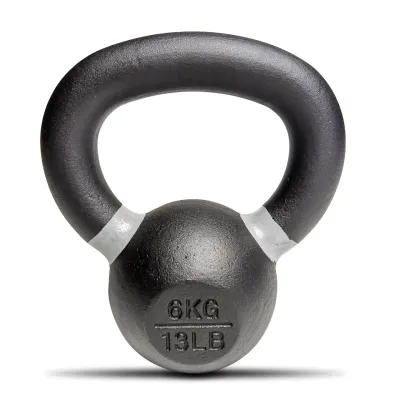
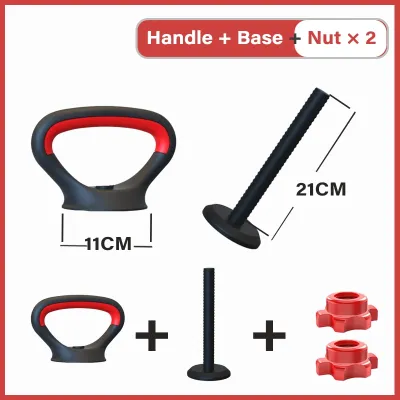
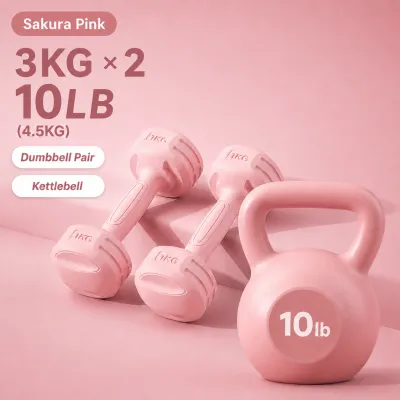
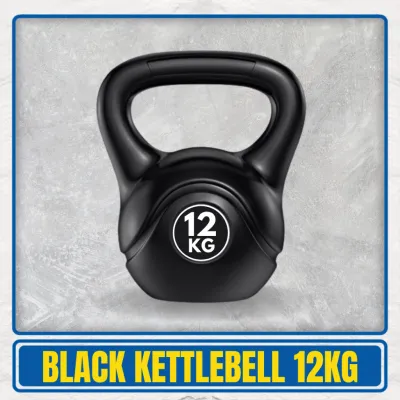

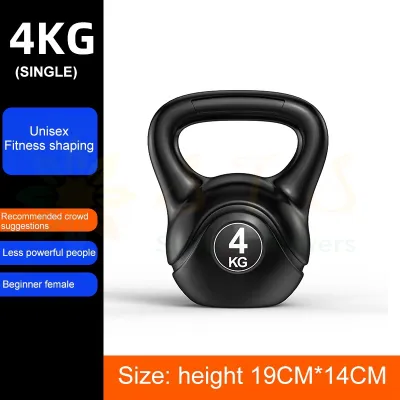
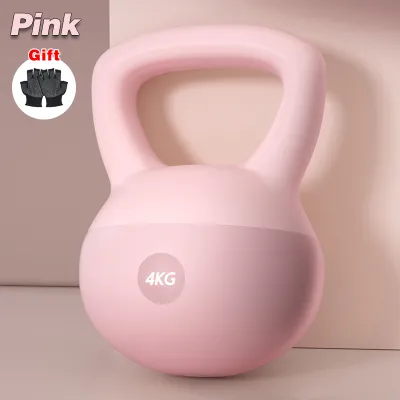
Prices are valid at publication and may change. Please refer to the product page for the latest price.
On the other end of the spectrum, utilizing a kettlebell that is too light presents its own unique set of training hurdles. Without sufficient resistance, your body fails to trigger the muscular adaptation required for strength gains and fat loss. Furthermore, a light weight allows you to bypass proper mechanics entirely; for instance, you might easily muscle a light kettlebell overhead using only your arm strength, completely ignoring the hip drive and core stability that the movement is designed to teach.
Your primary objective is to locate the sweet spot: a weight that challenges your muscular endurance while allowing you to maintain strict, safe technique throughout every single repetition. This balance ensures that your connective tissues adapt gradually to the load, reducing the risk of tendonitis or acute muscle tears. Remember that equipment can never replace proper training, technical judgment, and structural control.
Step 1: Match the Weight to Your Intended Exercises
Kettlebell training is highly dynamic, meaning a single weight will not perform the same way across different movements. To choose the right weight, you must first categorize your planned workouts based on their mechanical demands. Kettlebell exercises generally fall into two distinct categories: ballistic movements and grind movements.

Lower-body and explosive movements naturally allow you to handle heavier loads because they utilize the largest muscle groups in your body. In contrast, upper-body exercises and movements that require prolonged overhead stability demand lighter loads to protect smaller, more vulnerable joint structures. Understanding this division is key to planning your initial equipment investment.
Ballistic and Explosive Movements
Ballistic exercises are fast, powerful movements that rely on momentum, speed, and rapid muscle contraction. Common examples include the two-handed swing, the single-arm clean, and the high-intensity snatch. These movements are designed to build explosive power, cardiovascular endurance, and athletic coordination.
From a biomechanical standpoint, ballistic exercises rely heavily on the hip hinge—a powerful forward drive powered by your glutes, hamstrings, and core. Because these large muscle groups generate immense force, a ballistic kettlebell must be heavy enough to offer physical resistance. If the weight is too light, you will naturally pull the bell up with your shoulders and biceps, which defeats the purpose of the exercise and increases the risk of rotator cuff strain.
To perform a proper swing or clean, the kettlebell must provide enough tactile feedback to force your hips to snap forward. This resistance teaches your body to project the weight outward rather than lifting it upward, ensuring your posterior chain does the majority of the work.
Grind and Strength Movements
Grind exercises are slow, controlled movements performed under continuous muscle tension. Typical examples include the overhead press, the goblet squat, the windmill, and the highly technical Turkish get-up. These exercises focus on building raw muscular strength, joint mobility, and deep core stability.
Because grinds do not utilize momentum, your muscles must work consistently through the entire range of motion. This puts a premium on joint alignment and spinal safety. If you attempt a grind with a weight you cannot control, you risk drop-offs in form, such as arching your lower back during an overhead press or collapsing your knees inward during a goblet squat.
For these movements, the weight must allow for a slow, deliberate descent and a rock-solid overhead lockout. Your shoulder girdle and core must remain perfectly stable without any shaking or lateral leaning, which requires a much lighter, more manageable kettlebell than your ballistic exercises.
Step 2: Choose Your Starting Weight Based on Fitness Level
To help you determine your starting point, refer to the general guidelines below. These weight ranges are measured in kilograms, which is the standard increment for high-quality kettlebells.
- Beginner Female
- Ballistic Movements (Swings, Cleans): 8 kg to 12 kg
- Grind Movements (Presses, Get-ups): 4 kg to 8 kg
- Intermediate to Advanced Female
- Ballistic Movements (Swings, Cleans): 12 kg to 16 kg (or heavier based on lifting history)
- Grind Movements (Presses, Get-ups): 8 kg to 12 kg
- Beginner Male
- Ballistic Movements (Swings, Cleans): 12 kg to 16 kg
- Grind Movements (Presses, Get-ups): 8 kg to 12 kg
- Intermediate to Advanced Male
- Ballistic Movements (Swings, Cleans): 16 kg to 24 kg
- Grind Movements (Presses, Get-ups): 12 kg to 16 kg
These guidelines serve as general baseline references and are not absolute rules. Your unique physical background must always dictate your final choice. If you have a history of lower back issues, shoulder impingement, or limited wrist mobility, you should automatically scale down to the lighter end of the spectrum. Conversely, if you have years of experience with barbells and dumbbells, you may comfortably start at the higher end of these ranges.
When purchasing your first kettlebell from a local fitness retailer or online marketplace, always prioritize form over ego. If you find yourself caught between two sizes—such as deciding between a 12 kg and a 16 kg bell—it is highly recommended to choose the lighter option. Mastering the complex movement patterns of kettlebell training is much easier and safer when you are not constantly fighting to survive the weight.
Additionally, consider the material and handle construction of the kettlebell. In hot, humid climates, powder-coated cast iron kettlebells are highly favored because they hold gym chalk exceptionally well, preventing dangerous slippage when your hands begin to sweat. Standard vinyl or plastic-coated bells can become incredibly slick and difficult to manage in tropical heat.
Step 3: Test Your Form to Validate the Weight
Before committing to a full training routine or finalizing an online purchase, you can perform two simple physical tests to verify if your selected weight is appropriate. These tests act as an immediate safety check to ensure your body can handle the mechanical load.
The Overhead Press Test
Clean the kettlebell to your shoulder (the rack position) and attempt to perform 5 to 8 strict overhead presses.
- Pass Condition: You can press the weight to a full overhead lockout with a straight arm, keeping your torso completely upright. The last two repetitions should feel challenging, but you must not lean back, bend your knees to jump-start the lift, or experience any pinching in your shoulder joint.
- Fail Condition: Your elbow flares out excessively, your wrist bends backward under the weight, or you must tilt your torso sideways to push the bell up. If any of these occur, the kettlebell is too heavy for your upper-body grinds.
The Hip Hinge/Swing Test
Perform 10 to 15 continuous, two-handed kettlebell swings, focusing on driving the movement from your hips.
- Pass Condition: The kettlebell floats up to chest height naturally as a result of your hips snapping forward. Your arms should act merely as ropes guiding the bell, and you should be able to control the descent easily without your lower back rounding or your heels lifting off the floor.
- Fail Condition: You feel a dull pull or ache in your lower back, your knees bend deeply like a squat rather than hinging backward, or you have to physically pull the bell up with your shoulders. These signs indicate the weight is either too heavy for your current core strength or your technique needs professional adjustment.
Stop Conditions and Warning Signs
During any test or workout, you must immediately stop training if you experience any of the following warning signs:
- Sharp wrist pain: This usually occurs when the kettlebell handle rests incorrectly against your forearm, bending the wrist backward.
- Lower back fatigue: If your lower back feels pumped or tight before your glutes and hamstrings do, your spine is taking the brunt of the load.
- Severe grip fatigue: If your forearms burn so intensely after a few reps that you feel you might drop the bell, the handle diameter may be too thick or the weight is too heavy for your current grip strength.
If you experience any of these symptoms, stop immediately, double-check your technique against manufacturer or professional coaching guidelines, and consider dropping to a lighter weight.
When to Upgrade to a Heavier Kettlebell
As your body adapts to kettlebell training, your initial starting weight will eventually begin to feel less challenging. Progression is a natural part of strength training, but transitioning to a heavier load must be handled systematically to prevent injury.
There are several clear, observable signals that you are ready to move up in weight. If you can easily complete high-rep sets—such as 20 to 25 continuous swings—with flawless form and minimal cardiovascular fatigue, your body has adapted to the stimulus. Another common indicator is the feeling that the kettlebell is floating up too easily during your swings, requiring almost no aggressive hip snap to reach chest height. For grind movements, if you can complete 3 sets of 8 strict overhead presses with ease, it is time to look for a heavier bell.
When upgrading, the industry standard is to progress in 4 kg increments (for example, moving from 12 kg to 16 kg, or 16 kg to 20 kg). Because a 4 kg jump represents a significant percentage increase in total weight, you must use a safe transition strategy to allow your central nervous system and tendons to adapt:
- Reduce the volume: When you first introduce the heavier kettlebell, drop your total repetitions and sets by 30% to 50%.
- Use a mixed approach: Perform your warm-ups and early sets with your new, heavier kettlebell while your muscles are fresh, then switch back to your lighter kettlebell to finish the workout once fatigue sets in.
- Focus on grinds first: It is often safer to practice slow, controlled grinds with a new weight before attempting high-velocity ballistic movements.
Alternatively, you can explore “double kettlebell” training. Instead of purchasing a single, massively heavy bell, buying a matching pair of your current weight allows you to perform double swings, double cleans, and double front squats. This effectively doubles the total load on your body while keeping the individual hand weights familiar and manageable.
Frequently Asked Questions (FAQ)
Should I buy one or two kettlebells to start?
For absolute beginners who are focused on learning basic movement patterns like the goblet squat, deadlift, and two-handed swing, a single kettlebell is perfectly sufficient. Starting with one bell keeps your initial investment low—typically ranging from ₱1,500 to ₱3,500 depending on the weight and brand—and allows you to focus entirely on mastering foundational mechanics without distraction.
However, as you transition into a comprehensive, full-body routine, you will quickly find that a single kettlebell is highly limiting. A weight that is light enough for you to press safely overhead will be far too light to challenge your legs during swings and squats. Once you commit to regular training, owning at least two kettlebells—one lighter bell for upper-body grinds and one heavier bell for lower-body ballistics—is highly recommended for balanced development.
Can I use the same kettlebell weight for all exercises?
Using a single kettlebell weight for every exercise in your routine is rarely optimal because of the vast strength differences between your muscle groups. Your lower body and posterior chain (glutes, hamstrings, and lower back) are naturally much stronger and capable of generating far more force than your upper body (shoulders, chest, and arms).
If you try to use a single weight, you will either under-train your legs with a bell that is too light, or risk injuring your shoulders with a bell that is too heavy to press. If you are temporarily limited to a single heavy kettlebell, you can modify your exercises to match your strength. For example, instead of performing a strict overhead press, you can use a push press, which utilizes a slight leg drive to help propel the heavier weight overhead safely.
Community discussion
Share your experience or ask a question. Comments are reviewed before publication.