
Setting up a kickboxing training corner at home requires balancing your fitness goals with the physical realities of your living space. Unlike traditional boxing, which primarily requires upper-body movement, kickboxing demands a wider operational radius to accommodate high kicks, low sweeps, and rapid footwork. Selecting the wrong bag size or type can lead to damaged walls, cracked ceilings, or an unusable training area. To find the ideal fit, you must evaluate your room’s structural integrity, measure your actual clearance, and match the bag’s dimensions to your height and kicking style.
Measure Your Space: Clearance and Structural Checks
Before purchasing any equipment, grab a tape measure and assess the physical boundaries of your designated training zone. In many homes in the Philippines, rooms are equipped with ceiling fans or low-hanging light fixtures to keep the tropical heat at bay. You must ensure that any potential bag placement sits far away from these fixtures. Measure the floor-to-ceiling height accurately. Standard residential ceilings often range from 2.4 to 2.7 meters, but drop ceilings or decorative panels can reduce this clearance significantly.
Next, calculate the operational swing radius. A kickboxing punching bag does not remain static; when struck with a powerful roundhouse kick, it swings outward. For a standard hanging bag, you need a minimum clearance of 1.5 to 2 meters in every direction from the anchor point. This empty space allows you to move around the bag, practice footwork, and throw kicks without colliding with walls, furniture, or glass windows. If you plan to practice high-velocity kicks, the displacement will be even greater, requiring a wider safety perimeter.
Products mentioned in this guide
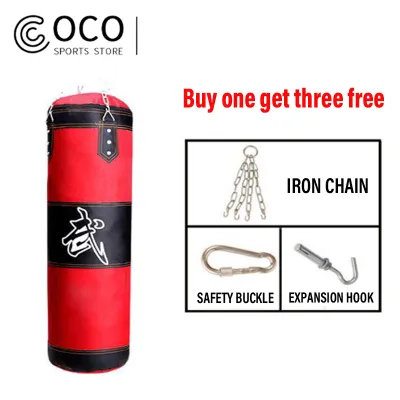
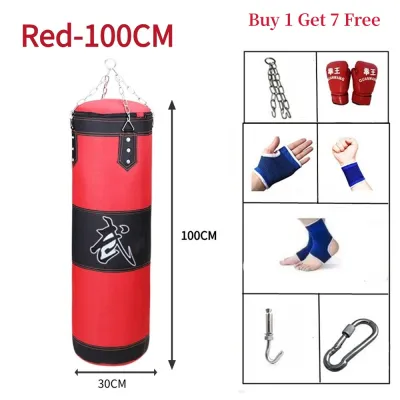
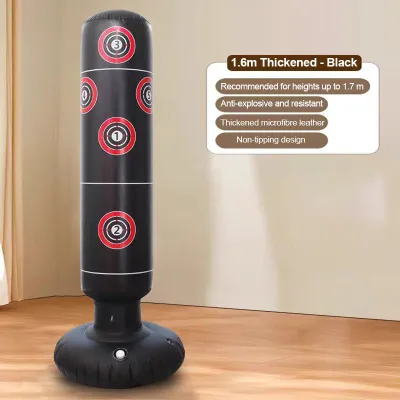
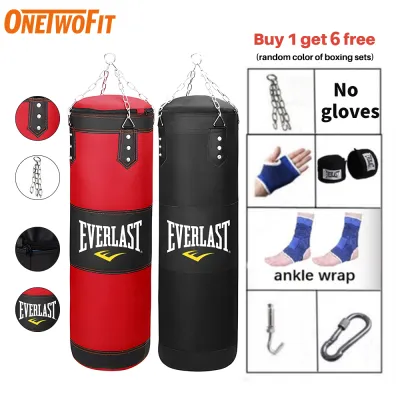

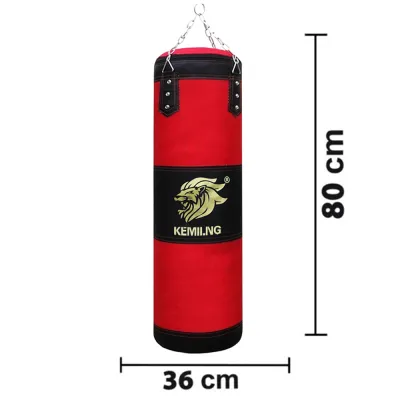
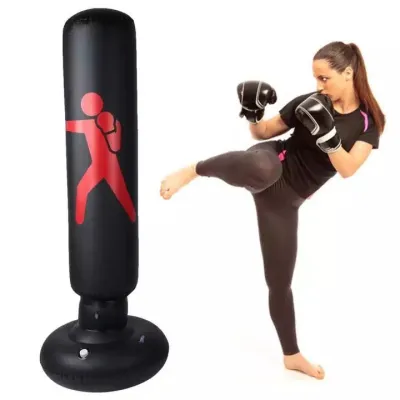
Prices are valid at publication and may change. Please refer to the product page for the latest price.
When measuring floor dimensions, do not just measure the static footprint of where you stand. You must map out a dynamic zone that accounts for your longest kick plus the length of your leg and the bag’s maximum swing displacement. For instance, if your leg length is 90 centimeters and the bag swings out by 60 centimeters, you need at least 1.5 meters of clear space from the center point of the bag just to avoid hitting surrounding objects. Furthermore, check the thickness of your walls. In many residential developments, partition walls are made of thin gypsum board or light concrete hollow blocks that cannot withstand accidental impacts from a stray kick or a swinging bag.
Structural verification is the most critical step before installing heavy training gear. Hanging bags exert massive dynamic force on your ceiling. If you have a wooden ceiling structure, you must locate a solid, load-bearing ceiling joist using a stud finder; never mount a heavy bag directly into plasterboard or thin plywood ceilings. For homes constructed with concrete slabs or concrete hollow blocks, which are highly common in local residential builds, you will need specialized masonry anchors and a hammer drill to secure the mount safely. If your floors are finished with ceramic tiles, polished concrete, or laminate, you must also consider how a heavy freestanding base might slide or scratch the surface during intense training sessions.
Hanging vs. Freestanding vs. Banana Bags: Which Fits Your Room?
Choosing between hanging, freestanding, and banana bags depends heavily on your room’s layout and whether you are permitted to drill into the structure. Hanging heavy bags are the traditional choice for martial artists, offering realistic swing and resistance. However, they require a permanent mounting location and a sturdy overhead structure. If your ceiling cannot support a dynamic load of 40 to 60 kilograms, or if you are renting an apartment where drilling is prohibited, a hanging bag is generally not a viable option. Additionally, because they hang from a chain, they require sufficient vertical clearance so the bottom of the bag aligns correctly with your low-kick target zone.

Hanging heavy bags are excellent for developing timing and rhythm because they swing naturally, mimicking the movement of an opponent. However, this movement requires a robust mounting system. If you choose this route, you must install a heavy-duty ceiling hanger or a wall-mount bracket. Wall-mount brackets are highly effective if you have solid concrete walls, but they limit your movement to a 180-degree arc around the bag.
Freestanding bags offer excellent flexibility for multi-purpose rooms or rental properties. These units feature a heavy plastic base filled with sand or water, supporting a padded vinyl column. The primary advantage is portability; you can roll the bag into a corner when it is not in use, keeping your living room or garage clear. However, freestanding bags behave differently under the impact of heavy kicks. A powerful roundhouse kick can cause the base to shift, slide, or tilt, especially on smooth tiled floors. To prevent this, you must ensure the base has a wide footprint and is filled to its maximum capacity, which often requires over 100 kilograms of dry sand or water.
Freestanding bags allow for full 360-degree movement, making them highly effective for footwork drills. The base must be filled completely to prevent it from tipping over. While water is easier to fill and drain, dry sand is significantly denser and provides better stability for heavy kickboxers. If you use water, you may also experience a sloshing sound during workouts, which can be distracting in a quiet home environment.
Banana bags, also known as Muay Thai bags, are exceptionally long and heavy, typically measuring 1.8 meters in length. They are designed to rest slightly on the floor or hang very close to it, allowing you to practice low leg kicks, sweeps, and knee strikes. Because of their length and weight, banana bags swing much less than standard hanging bags, making them highly predictable in tight spaces. The trade-off is their extreme weight and the absolute necessity of a heavy-duty ceiling mount or a specialized gantry stand. They also occupy a permanent vertical column of space from the ceiling to the floor, meaning you cannot easily move them out of sight.
Sizing Your Bag: Matching Dimensions to Your Height and Space
To get the most out of your kickboxing workouts, the physical dimensions of the bag must align with your body size and kicking reach. In kickboxing, you target multiple zones: low kicks to the thighs, mid-section body kicks, and high kicks to the head. A standard boxing heavy bag, which is typically 1.2 meters long, is often insufficient for kickboxing because it leaves the lower body target zones completely exposed. For a complete kickboxing experience, look for a bag that is at least 1.5 to 1.8 meters long. This length ensures you can transition smoothly from punches to low kicks without hitting empty air or the hard mounting chains.
The weight of the bag is equally important for safety and training efficiency. As a general rule of thumb, a heavy bag should weigh approximately half of your body weight. For example, if you weigh 70 kilograms, a bag weighing around 35 kilograms provides the ideal resistance. If the bag is too light, it will swing excessively upon impact, forcing you to constantly wait for it to settle and disrupting your training rhythm. Conversely, a bag that is too heavy will feel like hitting a concrete wall, increasing the risk of wrist, ankle, or shin injuries, especially if your striking technique is still developing.
When selecting the weight of your bag, consider your skill level as well. Beginners should start with a slightly lighter bag to allow their shins and wrists to condition gradually. A bag that is too heavy and hard can cause microfractures or severe bruising if struck with improper technique. As your striking power and technique improve, you can transition to a heavier bag or add extra filling to your existing bag if it features a zippered top.
If your home has low ceilings or limited floor space, you may need to compromise on standard dimensions. In tight spaces, a shorter but heavier bag can sometimes work if you adjust the hanging height to prioritize your primary strike zones. Alternatively, a high-quality freestanding bag with an adjustable neck can help you customize the target height without requiring permanent ceiling modifications. Always prioritize safety over bag size; it is far better to train on a slightly smaller bag with proper clearance than to crowd a massive bag into a room where you cannot safely execute a full-extension kick.
Safe Setup: Mounting, Swing Radius, and Floor Protection
A safe installation prevents structural damage to your home and protects your joints from repetitive impact stress. If you choose a hanging bag, do not rely on cheap, generic hooks. Purchase a heavy-duty, commercial-grade ceiling mount designed specifically for punching bags. These mounts often feature built-in swivel joints and heavy springs that absorb vertical vibrations, preventing the kinetic energy of your kicks from transferring directly into your home’s wooden joists or concrete slabs. When mounting into concrete, use high-tensile expansion bolts rather than standard plastic wall plugs, as the constant vibration of training can easily loosen weaker fasteners.
To further protect your home’s structure, consider using a heavy bag spring between the ceiling mount and the hanging chains. This simple accessory acts as a shock absorber, dramatically reducing the noise and vibration that travels up into the ceiling joists. This is especially important in wooden-framed homes where vibrations can cause drywall screws to pop or plaster to crack over time. Additionally, always inspect your mounting hardware regularly. The constant friction and vibration of training can cause bolts to loosen or chains to wear down. Make it a habit to check the tightness of your mounting bolts and the integrity of the carabiners every few weeks.
Maintaining a clear operational perimeter is vital for your safety. Before you begin training, clear the floor of all loose items, power cords, and furniture. The floor area directly beneath and around the bag must remain completely unobstructed. If you are training in a garage or on a concrete balcony, the hard surface can be unforgiving on your feet and joints. Installing high-density EVA foam interlocking mats or heavy-duty rubber gym tiles is highly recommended. These mats provide essential traction, prevent slipping when you sweat in the humid tropical climate, and cushion your joints during high-impact footwork and kicks.
For freestanding setups, floor protection serves a dual purpose. A heavy base filled with water or sand can scratch delicate hardwood or crack ceramic tiles when it shifts during a workout. Placing a non-slip rubber mat beneath the base dampens the noise, absorbs the downward impact, and increases friction to keep the unit from sliding across the room. If you live in a multi-story home or an apartment, this dampening effect is crucial for keeping peace with your family members or neighbors downstairs, as the low-frequency thuds of kickboxing can easily travel through concrete floors.
Frequently Asked Questions (FAQ)
Can I Hang a Punching Bag in a Standard Apartment?
Hanging a heavy punching bag in a standard apartment can be challenging due to structural limitations and noise concerns. Most apartment ceilings are made of concrete slabs or plasterboard over light metal framing, which cannot safely support the dynamic, swinging load of a kickboxing bag. Additionally, the vibrations from your strikes will travel through the building’s structure, likely disturbing your neighbors.
If you cannot drill into the ceiling, a heavy-duty wall-mounted bracket secured to a solid concrete load-bearing wall is a viable alternative. However, you must still ensure the wall bracket has sufficient projection to allow the bag to swing without hitting the wall. If wall mounting is also restricted by your landlord, a freestanding bag or a portable heavy bag stand is the most practical solution for apartment living.
What Is the True Footprint of a Freestanding Bag Base?
While the physical base of a freestanding punching bag typically has a diameter of 50 to 70 centimeters, its actual operational footprint is much larger. To train safely and effectively, you must account for the space required to step, pivot, and kick around the unit.
You should plan for a clear circular zone of at least 2 meters in diameter centered on the bag. This space allows you to execute roundhouse kicks with proper hip rotation without the risk of striking nearby walls or furniture. Additionally, if the base shifts slightly during heavy training, this extra clearance ensures the unit does not collide with household objects. Securing the base with dry sand rather than water provides maximum density and stability, minimizing the physical movement of the base in compact spaces.
Community discussion
Share your experience or ask a question. Comments are reviewed before publication.