
Selecting the right knee brace requires matching your physical symptoms and athletic demands to the correct support category. Whether you are dealing with a sharp ache after a basketball game on a local concrete court or managing mild swelling from running in tropical humidity, the correct brace can provide stability, compression, or targeted relief. However, a brace is not a one-size-fits-all solution, nor is it a substitute for professional medical diagnosis. This guide helps you assess your condition, understand the functional differences between brace types, and recognize when to seek professional care.
Assess Your Knee Condition and Activity Level
Before selecting a brace, perform a careful self-assessment of your knee’s behavior. Pay close attention to observable signals during daily activities and workouts. For instance, does your knee feel unstable, as if it might give way when you change directions? Do you experience localized pain directly below the kneecap during jumps, or do you notice a generalized, dull ache accompanied by mild swelling after a long run? Identifying these specific symptoms is the first step in narrowing down your options, as a structural issue requires a completely different level of support than simple muscle fatigue.
Your sport’s specific movement patterns also dictate the type of support your joint requires. High-impact jumping and landing, common in volleyball and basketball, place significant vertical stress on the patellar tendon. In contrast, sports like tennis or badminton demand rapid lateral cutting and sudden stops, which stress the collateral ligaments on the sides of the knee. If your activity consists primarily of steady-state endurance, such as running or cycling, your primary needs will be lightweight compression, warmth, and friction reduction rather than rigid mechanical restriction.
Products mentioned in this guide
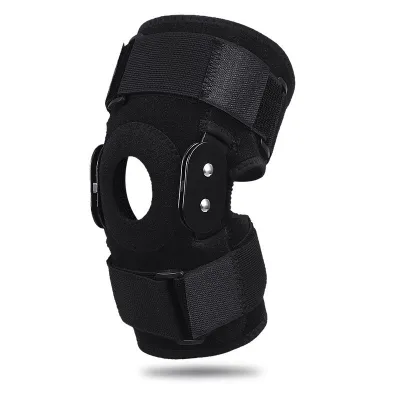
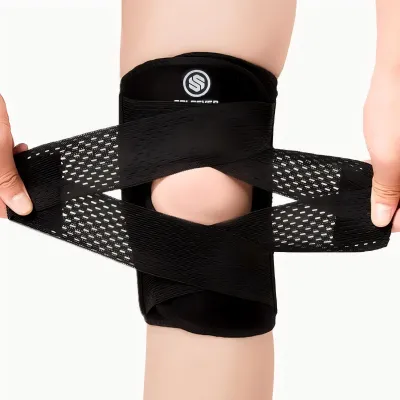
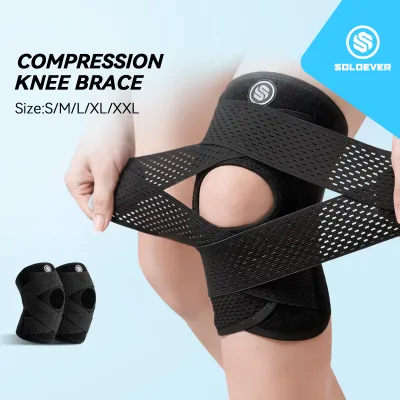
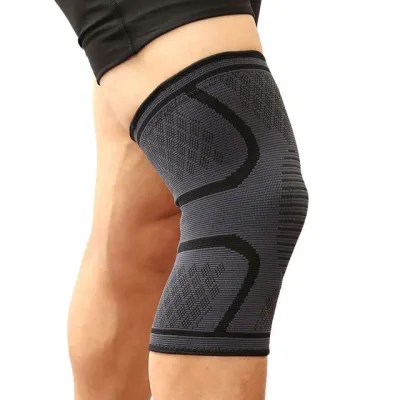
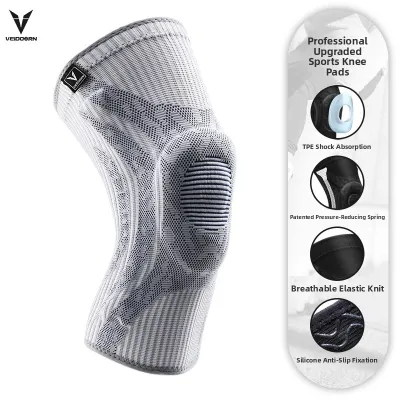
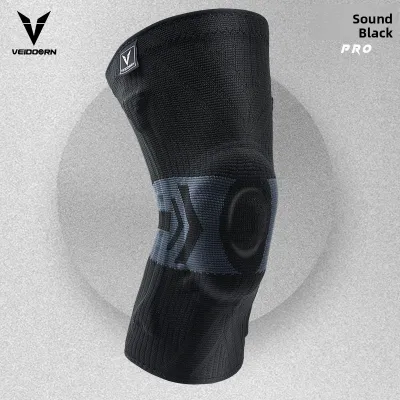
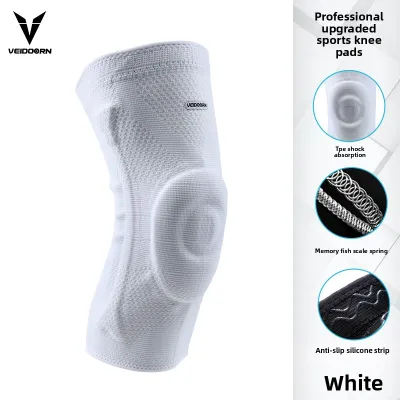
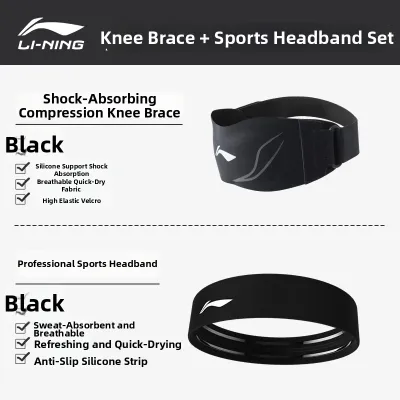
Prices are valid at publication and may change. Please refer to the product page for the latest price.
It is crucial to establish a clear boundary between minor discomfort and severe joint issues. While mild stiffness or occasional soreness can often be managed with basic compression or temporary support, symptoms like joint locking, severe swelling, or an inability to bear weight point to structural damage. These issues cannot be resolved by a retail brace and require professional medical imaging, such as an X-ray or MRI, and a comprehensive evaluation by an orthopedic specialist or physical therapist.
Matching Knee Brace Types to Common Injuries
Knee braces generally fall into three main categories: structural supports, targeted pressure devices, and compression sleeves. Choosing among them requires understanding how their physical designs interact with your anatomy. Rigid hinged braces and wrap-around designs are engineered to provide external structural stability, mimicking the function of your ligaments to prevent abnormal lateral or twisting movements. These are typically recommended for moderate to severe ligament sprains or post-surgical recovery where joint movement must be strictly controlled.

For localized discomfort, particularly around the patellar tendon, smaller targeted devices like patellar straps or bands are effective. Rather than covering the entire joint, these minimalist bands apply concentrated pressure directly to the tendon below the kneecap, altering how force is distributed during high-impact movements. Meanwhile, simple compression sleeves offer a non-restrictive option designed to promote blood flow, retain therapeutic warmth, and manage minor swelling. Regardless of the type you choose, always verify the manufacturer’s specific indications, sizing charts, and contraindications on the product label to ensure the device is safe for your intended use.
Support for Ligament and Joint Instability
If you experience a sensation of your knee “giving way” or sliding out of place, your joint requires structural reinforcement. Braces equipped with built-in side stays or mechanical hinges are specifically designed to address this lateral instability. The rigid or semi-rigid columns running along the inner and outer sides of the knee joint act as external splints, limiting excessive side-to-side movement while allowing the knee to bend and straighten along its natural path. This mechanical boundary is essential for protecting healing collateral or cruciate ligaments from further strain.
To provide effective structural support, a hinged or wrap-around brace must fit securely. If the brace is too loose, it will slide down your leg during movement, misaligning the hinges with your joint’s natural pivot point and rendering the support useless. Conversely, a brace that is too tight can pinch the skin, restrict circulation, and cause painful bunching behind the knee, especially during deep knee bends. If you experience persistent instability, pain, or if your joint continues to feel unsafe even while wearing a properly fitted hinged brace, stop using the device immediately and consult a healthcare professional.
Relief for Tendon and Patellar Issues
Discomfort located directly below or around the kneecap is often related to patellar tracking issues or tendonitis, commonly known as “jumper’s knee.” Patellar straps and bands address this by applying localized pressure to the patellar tendon, which lies between the bottom of the kneecap and the shinbone. This pressure slightly changes the angle at which the tendon pulls on the kneecap, effectively reducing the mechanical load and dampening the vibrations that travel through the tissue during repetitive jumping or running.
Proper placement is critical when using a patellar strap. The band must be positioned directly on the soft tendon below the kneecap, rather than on the bone itself, and tightened sufficiently to apply firm but comfortable pressure without cutting off circulation. Always refer to the manufacturer’s instructions to confirm the correct orientation and tensioning steps. Keep in mind that while a strap can alleviate superficial tendon pain, it cannot fix deep joint pain, meniscus tears, or acute structural trauma, all of which require a comprehensive medical assessment.
Compression for General Pain and Swelling
For athletes dealing with mild, non-specific knee stiffness, minor swelling, or general fatigue, a simple compression sleeve is often the most practical choice. These sleeves work by applying uniform pressure across the entire joint, which helps stimulate local blood circulation and enhances proprioception—your brain’s awareness of your joint’s position. The mild warmth retained by the fabric also helps keep synovial fluid warm and viscous, reducing the initial stiffness felt during warm-ups or early morning workouts.
Given the warm and humid tropical climate of the Philippines, selecting the right material for a compression sleeve is essential. Look for lightweight, breathable, and moisture-wicking fabrics, such as nylon-spandex blends or specialized circular knits, which allow sweat to evaporate quickly and prevent heat buildup. Heavy neoprene sleeves, while effective for heat retention in colder climates, can quickly become uncomfortably hot, leading to excessive sweating, skin chafing, and slipping. Remember that while a sleeve is helpful for comfort and swelling management, it offers no mechanical resistance against joint twisting or ligament failure.
Selecting a Knee Brace for Specific Sports
Matching your knee brace to the specific physical demands of your sport ensures you receive adequate protection without compromising your athletic performance. In high-intensity court sports like basketball and volleyball, players constantly execute vertical jumps, rapid lateral cuts, and sudden stops on hard surfaces. For these activities, a brace must offer a balance of shock absorption and patellar tracking support without restricting your vertical leap. A sleeve with an integrated gel buttress around the kneecap or a semi-rigid wrap-around brace with flexible side stays can provide the necessary stability while allowing the explosive knee extension required for jumping.
For endurance athletes engaged in running or cycling, the primary challenges are repetitive motion, friction, and heat. Because these sports involve thousands of identical joint flexions per session, any bulky or poorly fitted brace will quickly cause painful chafing, particularly in the sensitive area behind the knee. Runners and cyclists should prioritize ultra-lightweight, low-profile compression sleeves made from breathable, seamless fabrics. These designs fit easily under athletic wear, minimize skin irritation, and allow a full, unrestricted range of motion while still providing mild joint warmth and swelling control.
Racket sports played on indoor or outdoor courts, such as tennis and badminton, place unique lateral stress on the knees due to constant side-to-side shuffling, lunging, and sudden directional changes. To protect the collateral ligaments during these sharp lateral movements, players often benefit from a wrap-around brace featuring flexible side stabilizers or dual-axis hinges. When selecting a brace for court sports, carefully check the product specifications for sport-specific design claims, non-slip silicone strips that keep the brace secure during sweat-heavy matches, and reinforced stitching that can withstand rapid, multi-directional stretching.
Safety Limits and When to See a Professional
While a knee brace is a valuable tool for managing discomfort and providing temporary support, it is vital to recognize its limitations. A brace cannot cure structural damage, nor can it replace the natural stability provided by strong muscles and healthy ligaments. There are several “red flag” symptoms that indicate a serious injury requiring immediate medical attention rather than self-treatment with a brace. If you experience sudden, severe pain at the moment of injury, hear a distinct “pop,” are completely unable to bear weight on your leg, notice visible deformity, or find that your joint is physically locked in place, seek professional medical care immediately.
Over-relying on a supportive or rigid brace during daily activities or training can also lead to unintended consequences, such as muscle atrophy. When a brace does the mechanical work of stabilizing your joint, the surrounding muscles—particularly your quadriceps, hamstrings, and calves—do not have to work as hard, which can cause them to weaken over time. This muscle weakness actually increases your long-term risk of reinjury. To prevent this, rigid braces should only be used as temporary aids during recovery or high-risk activities, and they must always be paired with a targeted strength and mobility rehabilitation program.
Before returning to your sport after an injury, or if you find yourself relying on a brace constantly just to get through a normal workout, consult a physiotherapist or sports doctor. They can help identify the root cause of your joint instability and design a personalized exercise routine to rebuild your body’s natural support systems. Additionally, maintaining your equipment is essential for both skin health and brace longevity. In warm, humid environments, sweat, dirt, and bacteria accumulate rapidly in the fabric of a brace, which can cause skin rashes, fungal infections, and material degradation. Wash your brace regularly according to the manufacturer’s instructions—usually by hand-washing with mild soap and air-drying away from direct sunlight—to keep the materials elastic and hygienic.
Frequently Asked Questions (FAQ)
Should I wear a knee brace all day or only during sports?
You should generally wear a knee brace only during active sports or periods of physical exertion, rather than all day, unless specifically instructed otherwise by a medical professional. Wearing a supportive or rigid brace for prolonged periods during sedentary activities can restrict local blood circulation, cause skin irritation from sweat buildup, and lead to muscle weakness over time. For daily fatigue or mild swelling, a lightweight compression sleeve can be worn for longer intervals, but it is still important to remove it during rest periods and sleep to allow your skin to breathe and your muscles to engage naturally. Always follow the manufacturer’s guidelines regarding maximum daily wear times and recommended rest intervals.
How do I measure my leg for the correct knee brace size?
To find your correct knee brace size, you must take precise measurements using a flexible fabric measuring tape, as sizing standards vary significantly between different brands. Most manufacturers require measurements at three key points: the circumference of your mid-thigh (usually 10 to 15 centimeters above the center of your kneecap), the circumference of the knee joint directly over the center of the patella, and the circumference of your mid-calf (about 10 to 15 centimeters below the kneecap). Keep your leg slightly bent at a 30-degree angle while measuring, and compare your numbers directly to the brand’s specific size chart. If your measurements fall between two sizes, it is generally safer to choose the larger size to prevent restricted blood flow, painful pinching, or numbness during movement.
Can a knee brace prevent future injuries?
A knee brace can assist in injury prevention by providing mild mechanical support and enhancing proprioception—the sensory feedback that helps your brain monitor joint positioning—but it cannot guarantee complete protection against future injuries. True injury prevention relies on a comprehensive approach that includes targeted strength training for the quadriceps and hamstrings, hip and ankle mobility work, and proper warm-up routines. Relying solely on a brace can create a false sense of security, leading you to ignore early pain warning signs or push your body beyond its safe physical limits. Use a brace as a secondary tool to complement your physical conditioning, rather than a primary shield against athletic strain.
Community discussion
Share your experience or ask a question. Comments are reviewed before publication.