
Finding the right lawn tennis racket is less about picking the most popular model and more about matching the equipment to your physical capabilities and court tactics. In tropical climates like the Philippines, where high humidity can quickly sap your energy during long outdoor rallies, choosing a racket that complements your natural swing is crucial. Using a racket that conflicts with your current ability or playing style can lead to frustrating performance plateaus and increase the risk of arm or wrist discomfort. This guide will help you diagnose your specific needs, translate your on-court habits into concrete racket specifications, and verify your choice before making a final purchase.
Assess Your Current Tennis Skill Level
Beginners need a racket that offers maximum forgiveness. When you are still learning to consistently hit the center of the string bed, a larger sweet spot helps keep the ball in play even on off-center hits. Beginner frames are typically lightweight and designed with built-in power, which compensates for shorter, slower swing mechanics. This design allows you to focus on developing proper form without straining your muscles to push the ball over the net.
Intermediate players have developed a more consistent swing and are beginning to direct their shots with intent. At this stage, the focus shifts toward a balance of power and control. You no longer need the racket to do all the work, but you still benefit from some assistance as you refine your footwork and stroke depth. An intermediate racket offers a moderate weight and head size, allowing you to transition smoothly from defensive baseline play to offensive shots.
Products mentioned in this guide
![[ONLINE EXCLUSIVE] WILSON Essence 2 Tennis Recreational Racket](https://img.lazcdn.com/g/ff/kf/S3fb2b7b17eae419d89f766515871136aT.jpg_400x400q80.jpg_.webp)
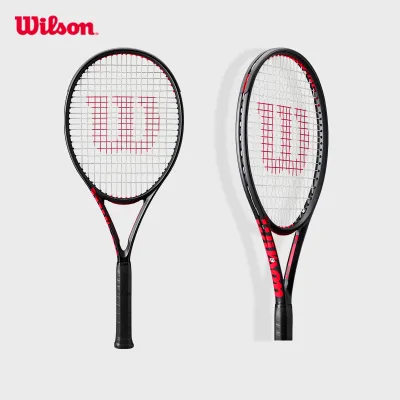

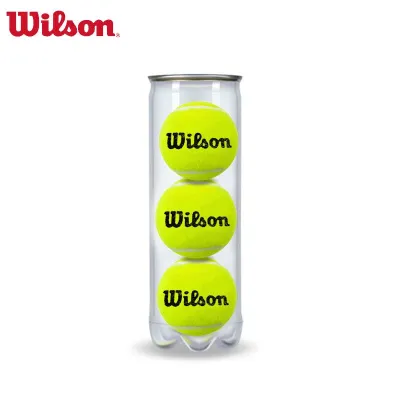
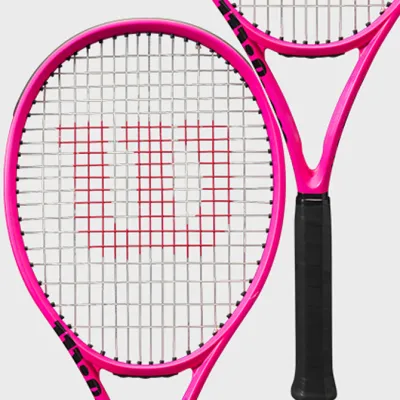
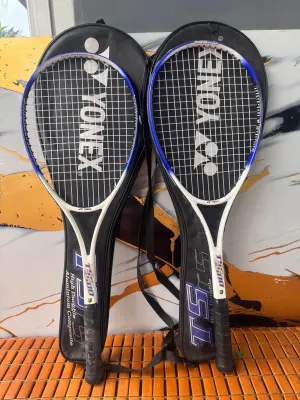
Prices are valid at publication and may change. Please refer to the product page for the latest price.
Advanced players possess fast, full swings and excellent physical conditioning. If you fall into this category, your priority is precision, feel, and control. Because you can generate your own power through body rotation and rapid racket head speed, you require a heavier, more flexible frame that does not launch the ball unpredictably. These rackets feature smaller head sizes and thinner beams, providing the feedback needed to place shots precisely along the lines.
Identify Your Playing Style on the Court
Your tactical preferences on the court dictate how a racket should distribute its weight. Baseline players, who prefer to stay near the back of the court and engage in long, heavy groundstrokes, require stability and power. If your game relies on deep topspin rallies to wear down opponents, you need a racket that can withstand heavy incoming balls without twisting in your hand. A slightly heavier frame or a head-heavy balance can help maintain momentum through your swing.

Net players and volleyers, who frequently rush the net or play doubles, prioritize quick maneuverability and fast reaction times. When defending against fast passing shots at the net, a fraction of a second makes the difference between a winning volley and a missed shot. Lighter frames or head-light balances allow you to reposition the racket face instantly, ensuring you can handle rapid exchanges during intense doubles matches under the midday sun.
All-court players need a versatile setup that adapts to any situation. If you enjoy mixing up your game with baseline defense, slice approaches, and drop volleys, a mid-weight racket with a neutral balance is ideal. This configuration ensures you have enough stability for deep groundstrokes while retaining the agility needed to finish points at the net.
Match Racket Specifications to Your Profile
To find the right lawn tennis racket, you must translate your skill level and playing style into concrete specifications. The first specification to check is head size, which is measured in square inches. Oversized frames (typically 105 square inches or larger) offer a generous sweet spot and high power, making them excellent for beginners and senior players. Midplus frames (98 to 102 square inches) provide a balanced blend of control and power, while midsize frames (under 97 square inches) are reserved for advanced players seeking maximum precision.
Weight and balance significantly affect how a racket feels during a swing. Rackets are categorized as head-light, head-heavy, or evenly balanced. Head-light rackets have more weight concentrated in the handle, which enhances maneuverability and reduces strain on the wrist and elbow during quick swings. Head-heavy rackets place more weight in the hoop, providing extra plow-through and power for players with shorter swings, though they can feel more cumbersome over long matches in humid conditions.
String pattern density is another critical factor to verify on the product label. An open string pattern (such as 16×19) has wider spacing between the strings, which allows the ball to sink deeper into the bed, generating more spin and a higher launch angle. A dense string pattern (such as 18×20) offers less string movement and a flatter trajectory, giving control-oriented players the predictable response they need for precise target hitting.
How to Test and Finalize Your Lawn Tennis Racket Choice
Before committing to a purchase, you must verify that the racket fits your hand physically. You can measure your grip size using the standard finger test: hold the racket in an Eastern grip (like shaking hands), and check if you can fit the index finger of your opposite hand in the space between your ring finger and palm. If there is not enough room, the grip is too small, which can cause excessive squeezing and forearm fatigue; if there is too much space, the grip is too large, limiting your wrist snap.
Whenever possible, demo rackets before buying. Many local tennis clubs, coaches, and specialized sports retailers in major cities offer demo programs that let you play a few sets with different models. Testing a racket on the court is the only way to feel how the frame handles vibration and how it responds to your natural swing speed.
If you are purchasing from an online sports store or ecommerce platform, carefully check their return, exchange, or demo policies. Ensure that you can return the racket if it does not meet your expectations, keeping in mind that most retailers require the plastic wrap on the handle to remain intact for a full refund.
Frequently Asked Questions (FAQ)
Does a more expensive lawn tennis racket automatically improve my game?
No, a higher price tag does not guarantee better performance on the court. While premium rackets utilize advanced carbon fiber composites to improve durability and reduce harsh vibrations, these high-end frames are often designed for advanced players who already possess precise swing mechanics. If a beginner uses an expensive, control-oriented professional racket, they may struggle to get the ball over the net. Matching the racket’s head size, weight, and balance to your current skill level is far more important than how much you spend.
How do I know if my current racket is the wrong fit for me?
Your body and your shots will provide clear warning signs if your racket is a poor match. Persistent discomfort or soreness in your elbow, wrist, or shoulder after a session is a strong indicator that your racket is either too heavy, too stiff, or has an incorrect grip size. On the court, if you consistently hit balls long despite using proper technique, your racket may be too powerful or have strings that are too loose. Conversely, if your volleys feel sluggish and you struggle to react in time at the net, your racket’s balance may be too head-heavy for your playing style.
Community discussion
Share your experience or ask a question. Comments are reviewed before publication.