
Selecting the ideal lifting band tension requires balancing your current physical strength with the specific demands of your training routine. Unlike free weights, which offer a static and predictable load, a resistance band provides progressive resistance that increases as the material stretches. To make an informed purchase, you must evaluate your baseline fitness, understand how different exercises interact with varying tension levels, and learn to read manufacturer specifications rather than relying on inconsistent color schemes. In the Philippines, where tropical humidity can impact both your physical preparation and the longevity of fitness gear, selecting the right band ensures your workouts remain both safe and highly effective.
Evaluate Your Baseline Strength and Fitness Level
To establish a safe and productive starting point, begin by assessing your current physical capabilities using familiar benchmarks. If you regularly train with free weights, your current working weights for key movements can guide your selection. For instance, those who struggle with bodyweight pull-ups or lift lighter dumbbells will require a different band profile than experienced lifters looking to add accommodating resistance to heavy barbell squats. If you are entirely new to resistance training, starting with a lighter, highly flexible band allows you to master the movement patterns before introducing significant load.
Your experience level, joint stability, and overall mobility play crucial roles in determining the right tension. Beginners often lack the stabilizer muscle strength required to control a heavy band during its rapid snapback phase. If your joints feel unstable or if you experience a limited range of motion during bodyweight exercises, a lighter band will help you build necessary motor control without overloading your connective tissues.
Products mentioned in this guide
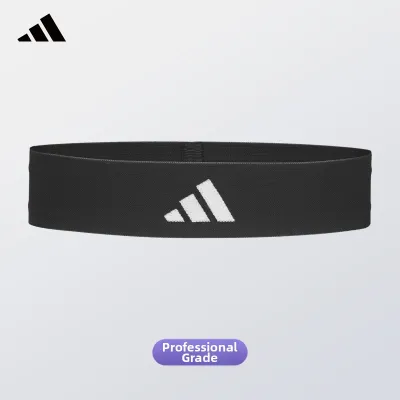
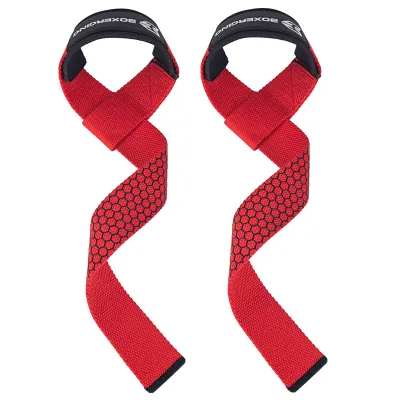
Prices are valid at publication and may change. Please refer to the product page for the latest price.
Additionally, any rehabilitation needs or previous injury history must dictate your initial choice. Recovering joints and healing tendons require controlled, low-tension movements to stimulate blood flow and tissue repair without causing reinjury. In these scenarios, choosing a light band allows you to perform high-repetition, low-impact movements that prioritize safety and joint alignment over sheer muscle fatigue.
Match Tension Levels to Your Target Exercises
Different exercises target distinct muscle groups, each possessing unique load capacities and mechanical advantages. Light tension bands are highly versatile tools designed primarily for smaller muscle groups, mobility work, and joint preparation. Exercises targeting the rotator cuffs, rear deltoids, or ankles benefit immensely from the gentle, progressive pull of a light band. These bands are also excellent for high-repetition endurance sets and dynamic warm-ups, helping to prepare your muscles for heavier lifts without causing premature exhaustion.

Medium tension bands serve as the workhorses of general strength training and hypertrophy. They provide sufficient resistance for standard compound movements that involve medium-sized muscle groups, such as bicep curls, tricep presses, overhead presses, and horizontal rows. If your goal is to stimulate muscle growth and maintain moderate resistance throughout a full range of motion, a medium band offers the balanced tension necessary to challenge your muscles without compromising your lifting form.
Heavy to extra-heavy tension bands are engineered for large, powerful muscle groups and advanced training techniques. These thick bands are ideal for lower-body movements like squats, deadlifts, and hip thrusts, where smaller bands would offer negligible resistance. They are also widely used to provide assistance during challenging bodyweight exercises; for example, looping a heavy band around a pull-up bar can help support your body weight, allowing you to complete full-range repetitions and build baseline strength.
Remember that you can easily adjust the effective tension of any band during an exercise without switching to a different product. By narrowing your grip, widening your stance, or increasing the distance from your anchor point, you force the band to stretch further, which instantly increases the resistance. This adaptability makes a single band highly versatile, provided you understand how to manipulate its length safely.
Decode Band Labels and Manufacturer Specifications
When shopping on local online marketplaces or at fitness specialty stores in Manila, you will quickly notice that there is no universal color-coding standard for lifting bands. A red band from one manufacturer might represent light resistance, while a red band from another brand could be rated as medium or even heavy. To avoid purchasing the wrong level, always check the manufacturer’s printed specifications, packaging, or official online listings for exact weight equivalents, which are typically expressed in ranges like 5 to 15 kilograms.
These weight equivalents represent a tension range based on the percentage of stretch applied to the band during use. For example, a band might offer 10 kilograms of resistance when stretched to twice its original length, but scale up to 25 kilograms when stretched to three times its length. Understanding this dynamic relationship helps you visualize how heavy the band will actually feel at the peak contraction of your specific exercises.
To ensure accuracy, look for reputable brands that clearly define their testing parameters and tension ranges. Investing around ₱300 to ₱1,200 in a quality set of bands with clear specifications prevents the frustration of receiving a band that is either too stiff to stretch or too weak to provide a meaningful workout. Avoid generic listings that offer vague descriptions like “super strong” without providing concrete numerical ranges.
Recognize When to Change Your Lifting Band Tension
As your strength and endurance improve, you must monitor observable indicators to determine when your current lifting band is no longer serving your training goals. A clear sign that your band is too light is a complete lack of muscle fatigue at the end of your target repetition range. If you can easily complete your sets without feeling a distinct burn or resistance at the peak contraction point of the movement, the band is no longer providing the stimulus needed for physical adaptation.
Conversely, using a band that is too heavy introduces significant safety risks and limits your progress. If you find your lifting form compromised—such as arching your back excessively, shrugging your shoulders, or using momentum to complete a repetition—the tension is too high. Other warning signs include sharp joint pain, an inability to complete the full range of motion, or excessive, uncontrollable shaking during the exercise. When these signs appear, it is crucial to downgrade to a lighter band to protect your joints and maintain strict movement mechanics.
Applying the principle of progressive overload is key to long-term success with lifting bands. Once you can perform your exercises with perfect form and minimal effort, upgrade to the next tension level or combine bands to introduce a new stimulus. If you experience a setback, fatigue, or joint discomfort, do not hesitate to temporarily step down to a lighter tension to allow your body to recover while keeping your movement patterns active.
Frequently Asked Questions (FAQ)
Is It Safe to Combine Multiple Lifting Bands?
Yes, stacking multiple lifting bands is an effective way to customize your resistance levels, provided you take proper safety precautions. Before performing any exercise with combined bands, verify that your anchor point, handles, and carabiners are rated to support the cumulative load. Additionally, ensure that the stacked bands have similar stretch limits and material compositions; mixing highly worn, inelastic bands with brand-new ones can cause uneven tension distribution, increasing the risk of sudden snapping during a high-tension movement.
When Should You Replace Your Lifting Bands?
You should inspect your lifting bands for signs of wear and tear before every single workout to prevent painful snapping injuries. Look closely for micro-tears, discoloration, white stress marks, or areas where the latex has lost its elasticity or feels unusually thin. In the warm, humid climate of the Philippines, environmental factors can accelerate the degradation of natural rubber and latex. If you spot any structural imperfections, replace the band immediately, regardless of how recently you purchased it, as a snapped band under high tension can cause severe injury.
Community discussion
Share your experience or ask a question. Comments are reviewed before publication.