
Selecting the right McDavid knee sleeve requires matching the support level of the brace to your specific knee condition and the physical demands of your sport. McDavid categorizes its knee supports into three distinct protection levels, ranging from basic compression sleeves to highly structured hinged braces. By identifying your primary physical needs, understanding how different sports impact your joints, and verifying the structural features of each model, you can select a sleeve that aids your performance without compromising safety.
Because every knee issue and athletic activity is unique, there is no single sleeve that works perfectly for every scenario. A runner seeking mild warmth and compression requires a completely different design than a basketball player recovering from a ligament sprain. Taking a systematic approach to your selection ensures that you get the exact level of stabilization your joint needs while maintaining the mobility required for your active lifestyle.
Identify Your Knee Condition and Required Support Level
Before browsing specific models, you must evaluate your current knee health to determine your baseline support category. McDavid uses a standardized three-tier protection framework to help users align their physical condition with the appropriate product design. Identifying where your knee falls on this spectrum is the first step toward making an informed and safe choice.
Products mentioned in this guide
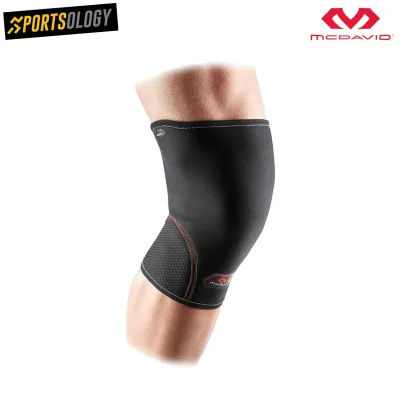
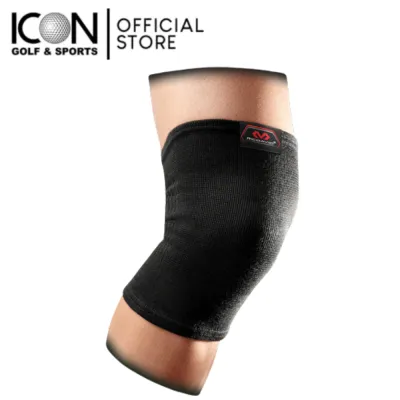
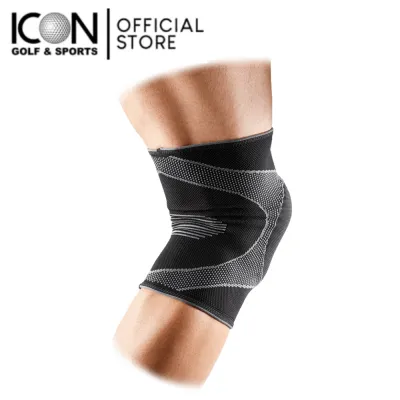
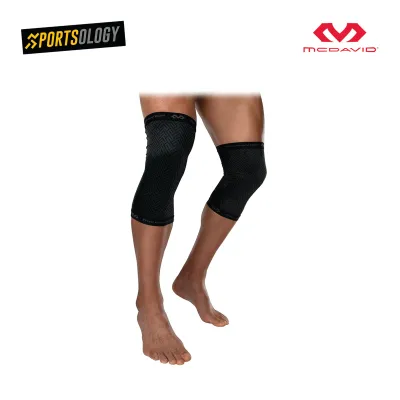
Prices are valid at publication and may change. Please refer to the product page for the latest price.
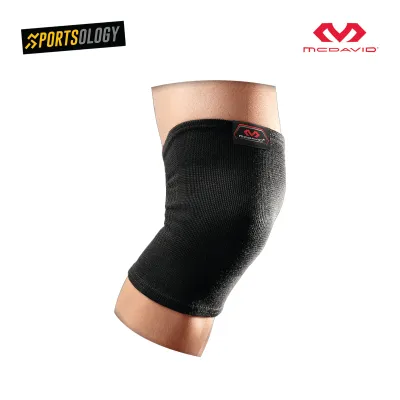
Level 1 protection is designed for minor discomfort, mild swelling, general joint fatigue, or injury prevention. These are typically basic pull-on compression sleeves made of neoprene or elastic knit fabrics. They work by providing therapeutic warmth and gentle compression, which increases blood flow and enhances proprioception—your body’s natural awareness of joint positioning. This level is ideal if you have structurally sound knees but experience occasional stiffness or want to prevent minor strains during long workouts.
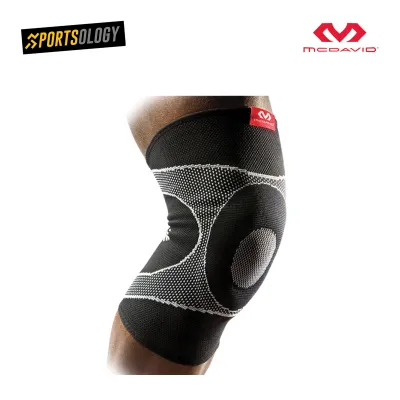
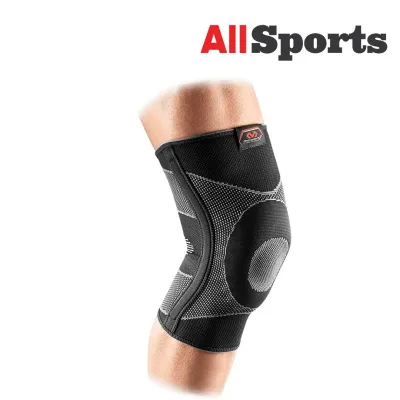
Level 2 protection is engineered for moderate instability, mild ligament sprains, patellar tracking issues, or recovering from a minor injury. These supports often feature additional structural elements, such as flexible lateral spring stays, adjustable hook-and-loop straps, or built-in gel pads around the kneecap. They offer a balance of compression and physical reinforcement, helping to guide the joint through its natural range of motion while preventing minor lateral shifting.
Level 3 protection provides maximum support and is intended for severe joint instability, major ligament sprains, meniscus tears, or post-surgical rehabilitation. These braces incorporate rigid, dual-axis hinges or heavy-duty strapping systems designed to physically restrict harmful movements, such as hyperextension or lateral buckling. They are highly structured and are designed to protect a vulnerable joint from further damage during high-stress activities.
While knee sleeves are excellent assistive tools, they have clear safety boundaries. If you experience acute swelling, severe pain, an inability to bear weight, or a sensation of the joint locking or giving out completely, you must stop physical activity and seek immediate medical evaluation. A knee sleeve cannot replace a professional medical diagnosis, and attempting to mask severe pain with a brace can lead to chronic joint degradation.
Match McDavid Protection Levels to Your Sport
Once you have identified your required support level, you must align it with the biomechanical demands of your specific sport. Different activities place unique stresses on the knee joint, and choosing a sleeve that matches these movement patterns is essential for both performance and safety.

For linear, repetitive sports like running, cycling, or light gym training, a Level 1 compression sleeve is generally the most appropriate choice. These activities primarily involve forward and backward motion with minimal lateral twisting. A lightweight sleeve keeps the joint warm, improves circulation, and helps manage minor swelling without restricting your natural stride or pedaling motion.
Court sports such as basketball, volleyball, tennis, and badminton demand sudden lateral movements, rapid deceleration, and frequent jumping. These high-impact, multi-directional forces place immense stress on the lateral ligaments of the knee. For these activities, a Level 2 support with lateral stabilizers or crossing straps is highly beneficial, as it helps absorb sudden side-to-side forces and keeps the kneecap properly aligned during quick pivots.
For contact sports, heavy powerlifting, or activities where the knee is subjected to extreme external loads, Level 3 hinged braces provide the necessary mechanical reinforcement. In these scenarios, the risk of joint hyperextension or severe lateral impact is high. The rigid hinges of a Level 3 brace act as an external skeleton, absorbing high-impact forces and preventing the joint from moving into unsafe angles while allowing safe, linear flexion and extension.
Verify Fit, Materials, and Structural Features
To ensure your selected knee sleeve functions as intended, you must verify its physical characteristics, sizing, and material composition against your personal needs and local environment.
Proper sizing is critical for both safety and effectiveness. You should always follow the manufacturer’s specific measurement guide, which typically requires measuring the circumference of your knee directly over the patella, as well as a few inches above and below the joint. Do not guess your size based on height, weight, or standard clothing sizes. A sleeve that is too tight can restrict blood circulation and cause nerve compression, while a sleeve that is too loose will slip down during movement, rendering its supportive features useless.
Material selection is especially important when training in the hot and humid climate of the Philippines. Neoprene is a popular choice because it provides excellent heat retention and joint warmth, which is highly beneficial for soothing stiff joints. However, in tropical conditions, solid neoprene can trap excessive sweat, leading to skin chafing, rashes, and unpleasant odors. If you train in high-temperature environments, look for breathable, moisture-wicking engineered knits or perforated neoprene alternatives that allow heat and sweat to escape.
Additionally, verify that the structural features of the sleeve align with your specific pain points. If you suffer from patellar tendonitis or kneecap misalignment, look for a sleeve with an open patella design or a built-in gel buttress to relieve pressure on the kneecap. If you require side-to-side stability without the bulk of a rigid hinge, look for integrated flexible spring stays that move naturally with your joint while providing lightweight lateral support.
Recognize Warning Signs and Replacement Triggers
Using a knee sleeve safely requires paying close attention to how your body responds to the support and knowing when the product has reached the end of its functional lifespan.
You must monitor your leg for immediate stop conditions while wearing a sleeve. If you experience numbness, tingling, a cold sensation in your foot, skin discoloration, or increased pain, remove the sleeve immediately. These symptoms indicate that the brace is restricting your blood circulation or pinching a nerve, which can cause serious tissue damage if ignored.
Regularly inspect your knee sleeve for signs of physical degradation. Over time, the elastic fibers in knit sleeves will break down, causing the material to stretch out and lose its compression capacity. In neoprene sleeves, look for frayed seams, tearing around the patella opening, or bent structural stays. If the sleeve no longer stays securely in place during movement or feels noticeably looser than when it was new, its supportive properties are compromised, and it must be replaced.
Finally, always remember that a knee sleeve is an assistive tool, not a permanent cure for joint weakness. Relying solely on a brace to mask pain can lead to muscle dependency, where the surrounding muscles weaken because the brace is doing the work for them. To maintain long-term joint health, always combine the use of a knee sleeve with a targeted strengthening and mobility routine prescribed by a physical therapist or fitness professional.
Frequently Asked Questions (FAQ)
Can I wear a McDavid knee sleeve all day?
It is generally not recommended to wear a knee sleeve all day unless specifically instructed by a medical professional. Prolonged wear can restrict healthy blood circulation, cause skin irritation from trapped sweat—especially in humid climates—and lead to muscle dependency. It is best to wear the sleeve during physical activity, training sessions, or specific recovery periods, and remove it during rest or sleep to allow your muscles to engage and your skin to breathe.
How do I wash and maintain my knee sleeve?
To preserve the elasticity and structural integrity of your knee sleeve, hand wash it in cold water using a mild detergent. Avoid using bleach, fabric softeners, or harsh chemicals, as these can break down the elastic fibers and damage neoprene. Do not machine wash or tumble dry the sleeve. Instead, gently squeeze out excess water without wringing the fabric, and lay it flat to air dry in a shaded, well-ventilated indoor area away from direct sunlight.
Community discussion
Share your experience or ask a question. Comments are reviewed before publication.