
Selecting the right medicine ball for hand, wrist, and grip exercises requires a shift in mindset from traditional full-body fitness training. Unlike dynamic throwing or slamming movements that engage large muscle groups, isolated hand exercises target delicate tendons, small joints, and intricate muscle networks in the fingers and forearms. To train these areas safely, you need a ball scaled to your hand size and grip capacity. A ball that is too heavy or too large can quickly lead to joint strain, while one that is too light or slippery will fail to provide the necessary resistance.
In tropical climates like the Philippines, high humidity adds another layer of complexity, as sweat can easily compromise your grip on smooth surfaces. Finding the ideal balance of weight, diameter, and texture ensures that your hand conditioning remains safe, productive, and comfortable. By focusing on precise specifications rather than maximum weight, you can build functional grip strength and wrist stability without risking injury.
Understanding Why Hand Exercises Need Specific Ball Specs
Standard medicine balls are engineered for explosive, multi-joint movements like wall balls, overhead throws, and rotational slams. These exercises distribute force across the shoulders, core, and legs, allowing you to handle significant weight safely. When you isolate the hand and wrist, however, those large supporting muscle groups are taken out of the equation, leaving the small joints of the hand to bear the entire load.
Products mentioned in this guide
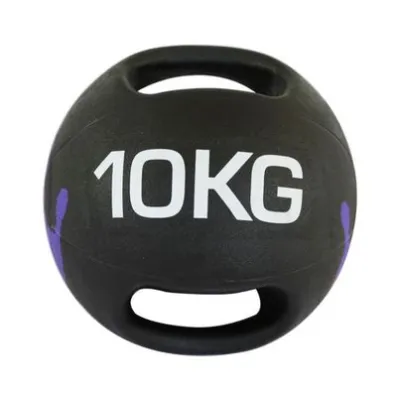

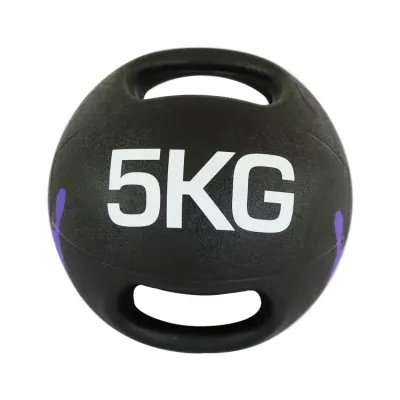
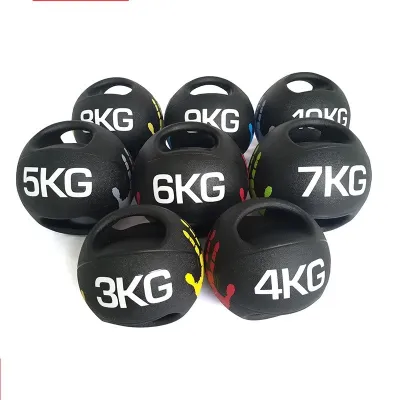
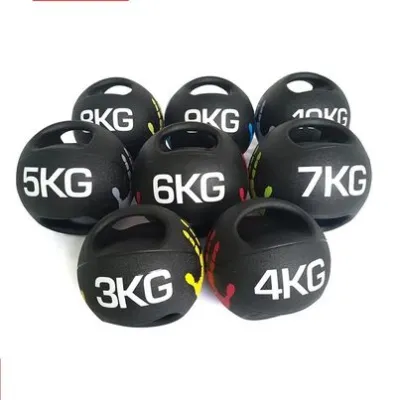

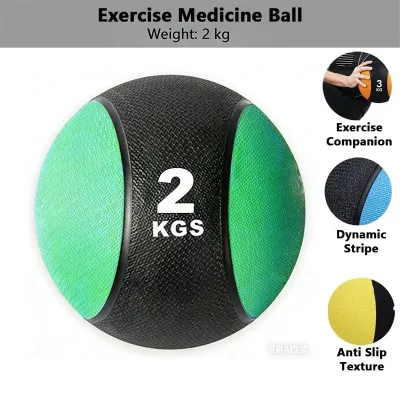
Prices are valid at publication and may change. Please refer to the product page for the latest price.
Using an oversized or overly heavy ball for isolated hand work introduces severe leverage disadvantages. Because the weight sits further from the pivot point of your wrist, it exerts a high amount of torque on the joint. This concentrated force can easily overload the tendons, leading to repetitive strain injuries or acute wrist pain.
To protect these delicate structures, you must prioritize specifications that match your hand anatomy. The key factors to evaluate are weight, diameter, and surface texture. Together, these elements determine how securely you can hold the ball and how precisely you can control its movement through a safe range of motion.
How to Select the Right Weight for Grip and Wrist Resistance
When training the hands and wrists, the relationship between ball weight and joint load is highly sensitive. During exercises like wrist flexion, extension, or radial deviation, even a slight increase in weight can exponentially increase the stress on your tendons. For this reason, hand-focused resistance training requires much lighter weights than general strength training.

To find your ideal starting weight, perform a simple self-assessment of your current grip capacity. Hold a lightweight ball in one hand with your arm supported on a flat surface, allowing your wrist to hang over the edge. Attempt to perform slow, controlled wrist curls both upward and downward; if your wrist shakes, collapses, or cannot complete the full movement, the ball is too heavy.
The choice of weight also depends on the type of exercise you plan to perform. High-repetition movements, such as wrist curls or figure-eight rotations, require very light resistance to build muscular endurance without overloading the joints. Static holds, where you simply grip and support the ball for a set duration, can accommodate slightly more weight, but the priority must always remain on maintaining a neutral wrist position.
Ultimately, maximum weight capacity is far less important than controlled, pain-free resistance. Your goal is to stimulate the muscles of the forearm and hand, not to test the absolute limits of your joint strength. Starting with minimal resistance allows your tendons to adapt gradually to the training stimulus.
Choosing the Right Diameter for a Secure and Comfortable Hand Fit
The physical size of the medicine ball dictates how your fingers interact with its surface and how your wrist aligns during movement. If a ball’s diameter is too large, your fingers cannot wrap around it securely, forcing your hand into an excessively open position. This open-grip stance reduces your mechanical advantage and makes it difficult to maintain control.
An overly large diameter also forces the wrist into extreme extension angles to support the weight. When the wrist is bent backward while trying to grip a large object, the tendons in the carpal tunnel are compressed under tension. This combination of wide finger extension and wrist deviation is a common trigger for tendon strain and discomfort.
To estimate a comfortable maximum diameter, you can measure your hand span. Spread your dominant hand as wide as possible and measure the distance from the tip of your thumb to the tip of your pinky finger. For single-handed exercises, the ball’s diameter should be small enough that your fingers can easily wrap past the halfway point of the sphere, ensuring a secure hold.
For most isolated wrist and grip work, smaller diameters are highly preferred. A compact ball allows you to maintain a neutral, strong grip where your fingers can actively squeeze and stabilize the weight. This structural alignment protects the wrist joint and ensures the target muscles do the work.
Evaluating Surface Texture to Prevent Slipping During Hand Work
A secure grip is essential for safety, especially when performing repetitive hand movements. Medicine balls are available in various finishes, including smooth rubber, textured polyurethane, and synthetic leather covers. Each material behaves differently under tension and reacts uniquely to moisture.
In warm and humid environments, sweat can quickly turn a smooth rubber ball into a slippery hazard. When a ball slips, your hand muscles must suddenly contract harder to prevent it from falling, which can cause sudden, uncontrolled joint strain. Textured surfaces, such as dimpled rubber or cross-hatched PVC, provide the necessary mechanical friction to maintain a secure hold even when your hands are damp.
Over time, constant squeezing and exposure to sweat can degrade the ball’s surface, making some materials sticky or causing them to lose their texture. It is important to inspect the ball regularly for signs of wear, such as smoothing of the grip pattern or cracking. Choosing high-quality, sweat-resistant materials ensures consistent friction over long-term use.
Additionally, check the ball’s surface for prominent seams, mold lines, or rough patches. During repetitive squeezing or rotating exercises, these raised edges can rub against the skin of your palms and fingers, leading to painful blisters or calluses. Finally, keep in mind that bounce capability is largely irrelevant for static or slow-tempo hand exercises, so you do not need to prioritize high-rebound rubber compounds.
Testing Your Medicine Ball and Safely Progressing Hand Exercises
Before integrating a new medicine ball into your regular fitness routine, it is crucial to run a preliminary testing protocol. Begin by holding the ball in one hand and performing a few slow, deliberate wrist circles in both directions. Pay close attention to how your fingers, palm, and forearm feel during these movements, checking for any signs of early fatigue or joint pinching.
Establish clear stop conditions for your training sessions to prevent overuse injuries. If you experience sharp pain, numbness, tingling in your fingers, or a sudden loss of grip control, stop the exercise immediately. These symptoms indicate that the joint or nerves are being compressed, and continuing the movement could lead to injury.
To progress your hand training safely, focus on increasing the volume or duration of your exercises before trying to increase the weight. You can achieve this by adding more repetitions to your sets, slowing down the tempo of each movement, or extending the duration of your static holds. Only when you can complete your target sets with perfect form and zero discomfort should you consider moving to a slightly heavier ball.
If you are using a medicine ball for post-injury rehabilitation or to address a specific medical condition, always consult a physical therapist or qualified healthcare professional. They can provide a tailored exercise plan and verify that your chosen ball specifications align with your recovery goals.
Frequently Asked Questions (FAQ)
Can I use a standard slam ball for hand and wrist exercises?
Standard slam balls are generally not suitable for isolated hand and wrist exercises. They are designed for high-impact, full-body throwing movements and typically feature a thick, heavy-duty outer shell filled with sand. This construction results in a shifting center of gravity, a large diameter, and heavy starting weights that can easily overload the delicate joints of your hand and wrist during isolated movements.
How do I know if the medicine ball is too heavy for my wrists?
You can identify an excessively heavy medicine ball through several clear physical cues. If your wrist bends sideways or collapses under the weight, or if you experience forearm shaking and joint pain, the ball is too heavy. Additionally, an inability to complete the full range of motion smoothly and slowly, or needing to use momentum from your arm or shoulder to move the ball, indicates that you need to reduce the weight.
Community discussion
Share your experience or ask a question. Comments are reviewed before publication.