
Starting your fitness journey with a medicine ball is an excellent way to build explosive power, core stability, and coordination. However, choosing the wrong weight can quickly stall your progress or lead to painful joint strain. For most beginners, the ideal starting weight ranges from 2 kg to 4 kg (approximately 4 to 9 pounds) for dynamic, high-speed movements, and up to 6 kg (about 13 pounds) for slower, strength-focused exercises.
The key is selecting a weight that challenges your muscles without forcing your body to compromise on form or movement speed. In a warm, humid climate like the Philippines, where sweat can quickly affect your grip and physical fatigue sets in faster, starting light is especially crucial for maintaining control during dynamic workouts. Your choice should ultimately depend on your baseline strength, the specific exercises you plan to perform, and your ability to maintain perfect control from the first repetition to the last.
The Core Rule for Beginners: Form and Speed Over Load
When training with a medicine ball, your primary goal is usually to develop power and coordination rather than raw strength. Power is the combination of strength and speed. If you select a ball that is too heavy, your movement velocity drops significantly, turning what should be an explosive, dynamic exercise into a slow, grinding lift. This defeats the purpose of medicine ball training and limits your athletic development.
Products mentioned in this guide
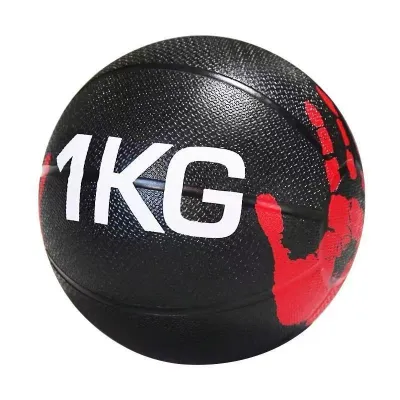
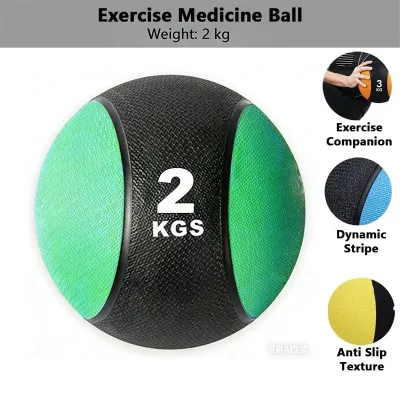
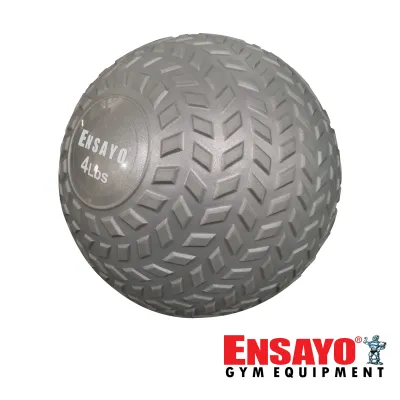
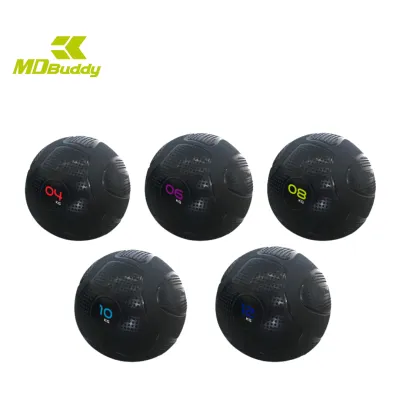
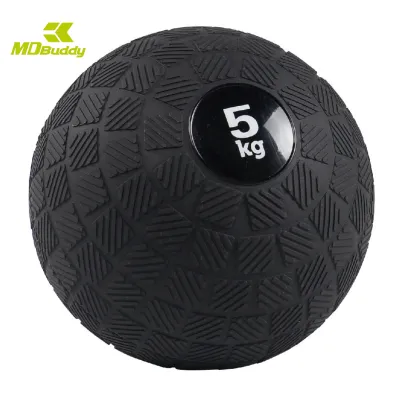
Prices are valid at publication and may change. Please refer to the product page for the latest price.
Using an excessively heavy ball also forces your body to compensate by recruiting the wrong muscle groups. For example, during an overhead throw, a heavy weight might cause you to hyperextend your lower back or strain your rotator cuffs to complete the movement. This compensation greatly increases your risk of acute joint injuries and chronic muscle strains.
Unlike traditional weightlifting, where the focus is on moving a heavy load slowly, medicine ball training relies on acceleration and deceleration. You must be able to throw, catch, and rotate with fluid, rapid movements. Prioritizing a lighter weight allows your nervous system to learn the correct movement patterns safely, laying a strong foundation before you attempt to increase the resistance.
Assess Your Baseline Strength Before You Buy
Before purchasing your first medicine ball, it is essential to evaluate your current physical capabilities. Your baseline strength determines whether you should start at the lower end of the beginner spectrum (2 kg) or if you can safely handle a slightly heavier option (4 kg to 6 kg).

To establish your baseline, assess your performance in fundamental bodyweight movements. If you can comfortably perform 15 controlled bodyweight squats, 10 standard push-ups with proper alignment, and hold a stable high plank for at least 45 seconds, you likely possess the foundational core and joint stability required for a 4 kg ball. If these movements are highly challenging, starting with a 2 kg ball is a much safer path.
It is also important to distinguish between absolute beginners and those transitioning from other fitness disciplines. If you are already accustomed to resistance training with dumbbells or resistance bands, you may have the muscular strength for a heavier ball, but you might still lack the specific wrist stability and grip strength needed for dynamic catching and throwing.
Your grip strength and wrist stability play a massive role in how heavy a ball feels. In tropical conditions where humidity is high, a sweaty grip can make a medicine ball feel much heavier and harder to control. If your wrists buckle or bend backward when holding the ball, or if you struggle to maintain a firm grip, the weight is too heavy for your current joint stability.
Match the Weight to Your Intended Exercises
A single medicine ball weight is rarely optimal for an entire workout routine. Different movement patterns target different muscle groups, meaning a weight that feels perfect for a lower-body squat might be dangerously heavy for an overhead throw. Understanding how to match the weight to the movement pattern is key to a safe workout.
To build a balanced routine, you must categorize your planned exercises into distinct movement types. Each category demands a specific approach to weight selection to ensure you achieve the desired training effect without risking injury.
Explosive Throws, Slams, and Catches
For high-velocity movements like overhead slams, chest passes, and wall balls, speed and acceleration are your top priorities. To maintain proper release mechanics and ensure safe deceleration, you must use a lighter ball. A weight of 2 kg to 3 kg is generally ideal for beginners performing these explosive exercises.
Using a ball that is too heavy during throws can lead to severe joint stress. When you throw a heavy ball overhead, your shoulders and upper back must absorb massive forces during the transition and release phases. If your muscles cannot decelerate the weight safely, the stress is transferred directly to your shoulder joints and cervical spine. Always prioritize a weight that you can throw with maximum effort without losing your balance.
Core Rotations and Controlled Movements
Exercises like Russian twists, standing woodchoppers, and figure-eights focus on rotational power and core stability. Because these movements are typically performed at a more controlled pace, you can opt for a slightly heavier ball, such as 3 kg to 5 kg, provided you can maintain strict spinal alignment.
During rotational exercises, your core must work hard to control the momentum of the ball. To protect your lower back, you must keep your spine neutral and rotate from your thoracic spine (mid-back) rather than twisting your lumbar spine (lower back). If you feel your lower back rounding or if your torso collapses to the side, reduce the weight immediately to prevent spinal strain.
Squats, Lunges, and Full-Body Integration
When using a medicine ball as an added load for lower-body movements like squats, lunges, or step-ups, your legs can naturally handle more weight than your upper body. For these compound exercises, a beginner can often use a 4 kg to 6 kg ball to provide adequate resistance for the glutes and quadriceps.
However, the holding position drastically alters the perceived weight and your overall balance. Holding the ball in a goblet position close to your chest keeps the center of gravity near your torso, making it easier to maintain balance. If you transition to holding the ball overhead during a lunge, the lever arm increases, which heavily taxes your shoulders and core. Always start with a chest-level hold before attempting overhead variations.
The Practical Test: How to Know if the Weight is Right
Once you have a medicine ball in hand, you can use three simple, observable checks during your workout to verify if the weight is appropriate for your current fitness level.
- The Form Breakdown Test: Perform five consecutive repetitions of your chosen exercise. Watch for key warning signs: are you arching your lower back, shrugging your shoulders toward your ears, or shortening your range of motion? If you must alter your natural movement path to complete the repetition, the ball is too heavy.
- The Speed Drop Test: For explosive exercises like slams, the ball should move at a high velocity. If you notice a significant drop in speed or if your movements look sluggish by the third or fourth repetition, the weight is too heavy to build power effectively.
- The Fatigue Factor: Evaluate how you feel during the final repetitions of a target set (typically 10 to 12 reps). You should feel your muscles working hard, but you must be able to complete the final two repetitions with the exact same form and control as the first two. If you have to use momentum or "cheat" to finish the set, stop the exercise and select a lighter ball.
When and How to Upgrade Your Medicine Ball
As your strength, coordination, and stamina improve, the initial weight will begin to feel light. You will know it is time to upgrade when you can complete three full sets of 12 to 15 repetitions with perfect form, maximum speed, and minimal physical fatigue.
When upgrading, avoid making massive jumps in weight. Moving from a 3 kg ball to a 6 kg ball doubles the load, which can easily compromise your technique. Instead, progress in small increments of 1 kg or 2 kg.
In the Philippines, high-quality medicine balls generally cost between ₱800 and ₱2,500 depending on the brand, size, and outer material. If you are on a budget, investing in a single, high-quality 3 kg or 4 kg textured rubber ball is often the most versatile starting point. If your budget allows, purchasing a two-ball set—such as a 2 kg ball for explosive upper-body throws and a 5 kg ball for lower-body and core work—provides the most effective and adaptable home workout setup.
Frequently Asked Questions (FAQ)
Does the size or material of the ball change the weight I need?
Yes, the physical dimensions and surface material of a medicine ball significantly affect how heavy and controllable it feels. A large-diameter ball, such as a soft-shell wall ball, distributes its weight over a wider area, which can make it awkward to grip and balance if you have smaller hands. Conversely, a compact, hard-shell slam ball concentrates its weight in a smaller area, making it easier to hold but more intense upon impact.
Additionally, surface texture is critical for safety. In hot, humid environments, sweat can make smooth synthetic leather balls incredibly slippery. For beginners, verifying that a ball has a textured rubber grip or dual-handle design is highly recommended to prevent accidental drops during dynamic movements.
Can I use a dumbbell or kettlebell if I lack the right medicine ball?
You can safely substitute dumbbells or kettlebells for slow, controlled movements such as squats, lunges, or basic Russian twists. However, you must never use them as substitutes for explosive throws, overhead slams, or partner catches.
Free weights are solid, rigid metal objects that do not absorb impact. Attempting to slam a dumbbell onto the floor or catch a thrown kettlebell can result in severe impact injuries, broken bones, and extensive damage to your flooring. For any exercise that involves releasing or catching the weight, a dedicated, impact-absorbing medicine ball or slam ball is non-negotiable.
Community discussion
Share your experience or ask a question. Comments are reviewed before publication.