
Selecting a Mesuca volleyball requires matching the ball’s construction, cover material, and weight to your current playing level and environment. Whether you are a casual player setting up a net on a local outdoor court, a school athlete preparing for varsity games, or a competitive player in a regional league, the right ball directly impacts your skill development, hand comfort, and overall performance. Mesuca offers a diverse lineup of volleyballs designed to cater to different skill levels, balancing affordability with performance features. By understanding how different materials and construction methods affect playability, you can select a model that enhances your performance, prevents unnecessary arm fatigue, and lasts for seasons to come.
Quick Guide: Matching Mesuca Volleyballs to Your Skill Level
To choose the right Mesuca volleyball, you must first evaluate how often you play, where you play, and your tolerance for impact sting. Beginners and recreational players benefit most from soft-touch synthetic or foam-backed covers that reduce forearm pain during passing drills. Intermediate players, such as high school varsity athletes and regular weekend club players, should focus on durable polyurethane (PU) models that offer better grip and standard weight. Competitive players require high-performance microfiber composite balls that meet official size and weight regulations for consistent flight and high-speed handling.
Because specific model numbers and seasonal releases frequently change on retail shelves and online marketplaces, memorizing a single product code is rarely the best approach. Instead, learning to read the material and construction details printed on the ball or packaging ensures you get the right performance regardless of the exact model name. In terms of budget, entry-level PVC balls generally fall into the budget-friendly price band under ₱500, while intermediate PU balls range from ₱500 to ₱1,500, and premium match-grade models can exceed ₱2,000. When purchasing a Mesuca volleyball in the Philippines, look for authorized sports distributors, official brand stores, or verified online sports retailers to guarantee you are buying an authentic product rather than a low-quality counterfeit.
Products mentioned in this guide
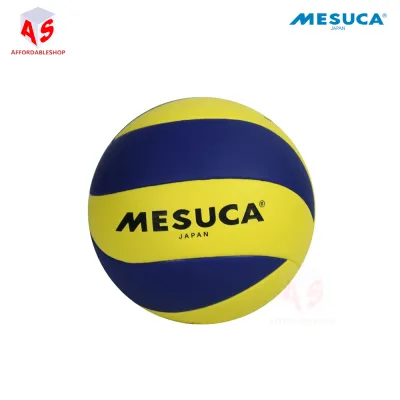
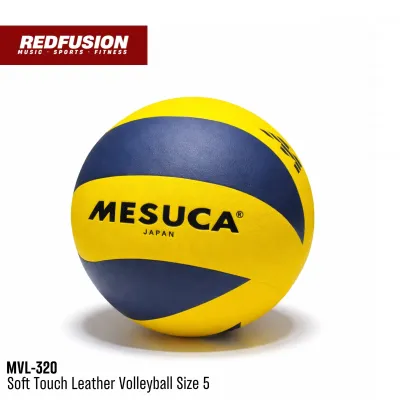
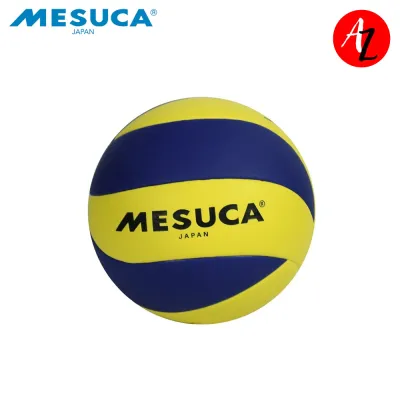
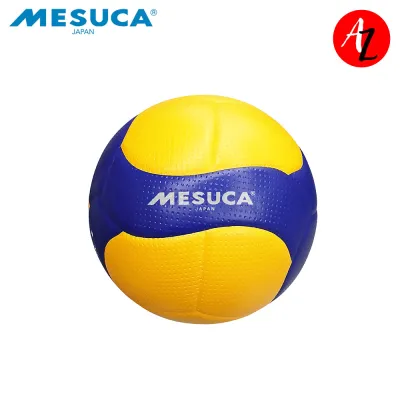
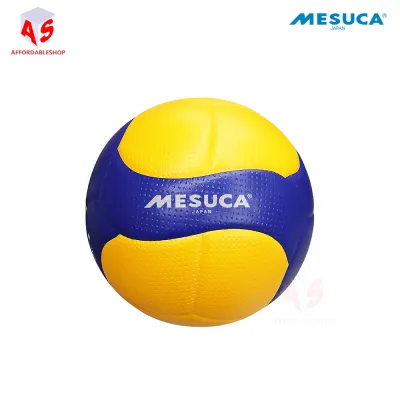
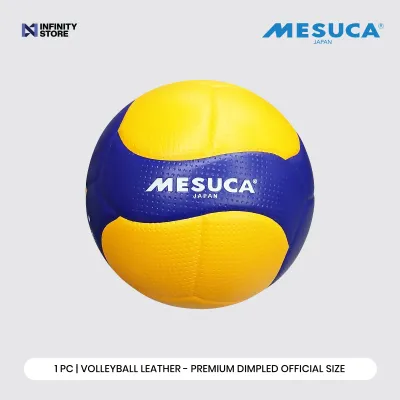
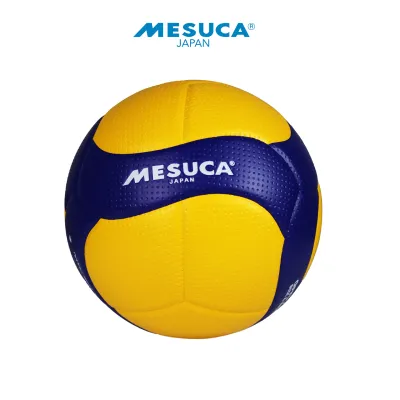
Prices are valid at publication and may change. Please refer to the product page for the latest price.
How to Read Mesuca Volleyball Specs and Labels
Understanding the technical specifications printed on a volleyball’s packaging allows you to assess its quality and suitability instantly. Manufacturers use specific terms to describe the outer shell, internal construction, and air retention capabilities of each ball. Deciphering these labels helps you avoid buying a ball that is either too hard for a beginner or too fragile for competitive team training.

Cover Material The outermost layer of a volleyball determines its tactile feel, durability, and cost. Polyvinyl chloride (PVC) is a common synthetic material used in entry-level balls because it is highly durable, water-resistant, and cost-effective, though it can feel stiff in cooler conditions and slick when wet. Polyurethane (PU) and premium microfiber composite materials offer a much softer, leather-like feel, providing superior grip and moisture absorption, which are essential for precise setting and hitting.
Construction Methods How the panels are joined together affects the ball’s aerodynamic flight and long-term shape retention. Machine-stitched panels are typical for recreational and beginner balls; they are highly cost-effective but have visible seams that can wear out faster on rough surfaces. Hand-stitched or hybrid-bonded constructions are found on mid-range and premium balls, offering tighter seams, better water resistance, and a more uniform spherical shape for a predictable trajectory. Laminated or thermally bonded balls have no stitching lines, resulting in a perfectly smooth surface that ensures consistent bounce and flight.
Bladder Type The bladder is the inner chamber that holds the air. Standard recreational balls often use synthetic rubber bladders, which are inexpensive but require frequent reinflation. High-quality training and match balls utilize butyl rubber bladders, which offer excellent air retention over weeks of play, or latex bladders, which provide a highly responsive bounce but lose air more rapidly and require daily pumping.
Certifications and Logos If you plan to play in organized leagues, school tournaments, or sanctioned athletic meets, look for official certification stamps on the ball. These logos indicate that the ball has undergone rigorous testing for weight, circumference, roundness, bounce height, and pressure limits to meet local or international federation standards.
What Beginners Should Look for in a Mesuca Volleyball
For those who are new to the sport, the primary barrier to enjoying volleyball is often the physical discomfort of repetitive forearm contact. Beginners, young students, and casual players setting up temporary nets on grass or neighborhood concrete courts need a ball designed for comfort and ease of learning.
Soft-Touch Covers Forearm passing, or bumping, requires absorbing the impact of a falling ball. Standard match balls can feel like bricks to untrained forearms, causing bruising and discouraging players from practicing. Beginners should prioritize Mesuca models labeled as “Soft Touch,” “Foam Backed,” or “EVA Foam,” which feature a cushioned outer layer that dampens impact sting.
Weight and Bounce A lighter ball is easier to control and put into the air, making it ideal for young children or absolute beginners who are still building shoulder and wrist strength. However, older teens and adults should quickly transition to standard-weight beginner balls (around 260 to 280 grams) that offer a forgiving, moderate bounce to help develop proper timing and muscle memory. Correct inflation is also critical; over-inflating a beginner ball makes it feel rock-hard, so always check that the ball yields slightly under firm thumb pressure.
Outdoor Durability In the Philippines, casual volleyball is frequently played outdoors on concrete driveways, barangay plazas, or sandy patches. These abrasive surfaces can quickly shred delicate premium leather. Beginners playing in these environments should opt for thick PVC covers with reinforced machine stitching, which resist scuffs and scrapes far better than high-end indoor match balls.
Key Labels to Identify When browsing options, look closely at the product description or package printing. Actionable terms to search for include “Recreational,” “Training,” “Soft Play,” “Beginner,” or “School Use,” which indicate the ball is optimized for comfort, basic skill development, and multi-surface durability.
Choosing a Mesuca Volleyball for Intermediate and School Play
As players transition from basic recreation to organized school leagues, club training, or competitive weekend tournaments, their equipment needs shift toward performance, control, and consistency. Intermediate players require a ball that behaves predictably during high-velocity plays, serves, and sets.
Grip and Moisture Management In warm, humid environments, players accumulate significant sweat on their hands. A slippery ball makes setting clean, double-contact-free passes incredibly difficult and causes serves to slip off the hand. Intermediate Mesuca balls made from textured PU covers provide a reliable grip even when wet, helping setters maintain precise control. This is especially important when transitioning to structured team rotations where setters need high ball-to-hand friction to execute quick tempo sets.
Transitioning to PU Covers While soft foam-backed balls are excellent for avoiding bruises, they lack the structural stiffness required for advanced techniques. Transitioning to a standard PU cover allows intermediate players to feel the ball properly during a spike or set, providing the tactile feedback necessary to adjust hand positioning and spin.
Consistent Flight and Weight To develop reliable muscle memory for serving and passing, players must practice with a ball that adheres strictly to the standard weight range of 260 to 280 grams. The ball’s flight path must be stable, without unexpected dipping or drifting caused by uneven panel weight or poor spherical balance.
Key Labels to Identify Intermediate players should bypass basic recreational balls and search for models marked with labels such as “Club,” “Competition Training,” “School Match,” or “Advanced Practice.” These models strike the ideal balance between durable construction and high-performance playability.
Advanced and Competitive Match Requirements
At the competitive level, minor variations in ball performance can dictate the outcome of a match. Advanced athletes, varsity players, and tournament organizers require volleyballs built to the highest technical specifications to ensure absolute fairness and peak performance.
Premium Microfiber Covers Elite competitive play demands the best tactile feedback and moisture control. Premium Mesuca match balls utilize advanced microfiber composite covers with specialized surface dimples or textures. This material absorbs sweat rapidly, prevents slipping, and offers an exceptionally soft yet firm grip for precise fingertip control during rapid sets and powerful spikes. The micro-textures also disrupt airflow around the ball, stabilizing its trajectory during float serves.
Strict Size and Weight Standards Every competitive ball must conform precisely to official Size 5 specifications, maintaining a circumference of 65 to 67 centimeters and a weight of 260 to 280 grams. The internal pressure must remain highly stable throughout intense rallies, ensuring that every hit produces a predictable bounce off the hands and the court floor.
High-Quality Bladder and Panel Tension Match-grade balls feature premium butyl bladders wrapped in nylon or polyester threads to maintain a perfect sphere under high impact. The panel tension is carefully calibrated during manufacturing—often using advanced thermal bonding or high-grade hand-stitching—to eliminate dead spots on the ball’s surface.
Verification and Venue Limitations Before purchasing a match ball, verify if your specific league or tournament requires a particular governing body’s approval stamp. Additionally, keep in mind that premium microfiber match balls are designed almost exclusively for indoor wooden or synthetic courts. Using these high-end balls on concrete, gravel, or rough outdoor surfaces will rapidly degrade the cover material, ruin the grip, and void any manufacturer performance expectations.
Caring for Your Volleyball in Tropical and Humid Weather
The tropical climate of the Philippines, characterized by high temperatures and intense humidity, presents unique challenges for sports equipment. Proper maintenance is essential to prevent your Mesuca volleyball from warping, losing air, or suffering from material degradation.
Cleaning After Use Sweat, dirt, and body oils can accumulate on the surface of the ball, slowly breaking down synthetic leather and PU covers. After every play session, wipe the ball thoroughly with a soft, damp microfiber cloth. Avoid using harsh household detergents, bleach, or abrasive scrubbing pads, as these chemicals can dissolve the synthetic coatings, weaken the panel adhesives, and ruin the ball’s grip. Ensure the ball is completely dry before storage to prevent the growth of mold and mildew, which thrive in high-humidity environments.
Proper Storage Conditions Never leave your volleyball in direct sunlight, inside a hot car trunk, or in a damp outdoor storage bin. Extreme heat causes the air inside the bladder to expand rapidly, which can stretch the outer panels, weaken the glued seams, and permanently warp the ball’s shape. Store the ball in a cool, dry, well-ventilated indoor space, preferably inside a breathable mesh sports bag.
Pressure Maintenance Fluctuations in ambient temperature and humidity directly affect the internal air pressure of your volleyball. Always use a reliable pressure gauge and a standard inflation needle lubricated with glycerin or soapy water before inserting it into the valve to avoid damaging the seal. If you plan to store your volleyball for an extended period, slightly deflate it to relieve tension on the seams and bladder, then pump it back to the recommended pressure (typically printed near the valve, around 4.26 to 4.61 psi) before your next game.
Frequently Asked Questions (FAQ)
Can I use an indoor Mesuca volleyball for outdoor beach play?
Indoor volleyballs are not recommended for outdoor beach play due to differences in material design and environment. Indoor balls feature heavier constructions and softer, sweat-absorbing covers that can become waterlogged, heavy, and permanently stained when exposed to wet sand, saltwater, or rain. Beach volleyballs are typically lighter, slightly larger, and constructed with water-resistant, heavily stitched covers designed to withstand wind, sand abrasion, and direct sunlight. For outdoor sand games, always select a Mesuca model explicitly labeled for beach or outdoor use.
How do I know if a Mesuca volleyball is the correct size for my age group?
Selecting the correct volleyball size depends on the age and physical development of the players. Size 5 is the standard official size used for adults, collegiate players, and teens aged 12 and older. Size 4 is slightly smaller and lighter, making it the ideal choice for youth players, primary school students, and junior training programs where standard balls might be too heavy for developing wrists and shoulders. Always check the size number printed directly on the ball’s surface or packaging before making a purchase.
Why does my new volleyball feel slippery during practice?
New synthetic leather and PU volleyballs often have a thin protective factory coating or finish applied during manufacturing, which can make the ball feel slick or slippery during its first few uses. To resolve this, wipe the ball down with a clean cloth slightly dampened with lukewarm water, then dry it thoroughly with a towel. Playing a few practice sessions or passing drills will naturally wear off this factory finish, breaking in the cover material to reveal its optimal grip and soft texture.

Community discussion
Share your experience or ask a question. Comments are reviewed before publication.