
Selecting the right Muay Thai glove weight is a critical decision for your safety, your training partners’ protection, and your overall skill development. Because Muay Thai involves punching, kicking, blocking, and clinching, your glove requirements will shift depending on whether you are hitting the heavy bag, running drills, or sparring.
In warm, humid tropical climates like the Philippines, managing sweat and moisture inside your gear is also an ongoing challenge. Excess moisture can degrade internal padding over time, making proper glove selection and maintenance essential for extending the lifespan of your equipment. Choosing the correct weight ensures you balance hand speed, impact absorption, and shoulder conditioning during long training sessions.
Understanding Muay Thai Glove Weights and Padding Design
The weight of a Muay Thai glove is measured in ounces (oz), which represents the total weight of the glove rather than just the thickness or density of the padding. This total weight includes the internal foam layers, the outer leather or synthetic shell, and the inner lining.
Products mentioned in this guide
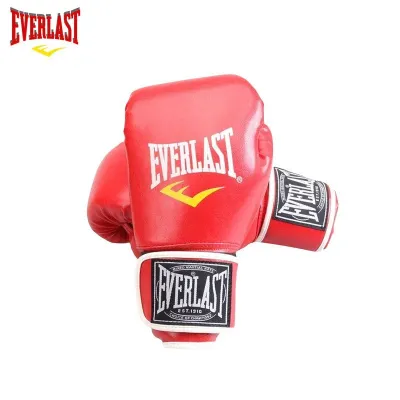
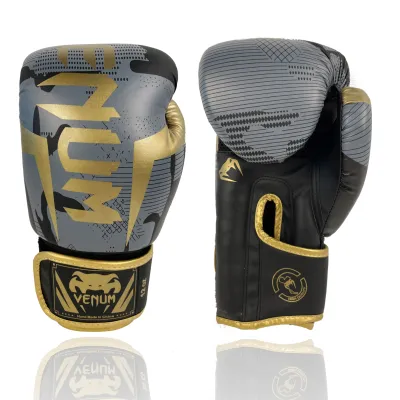
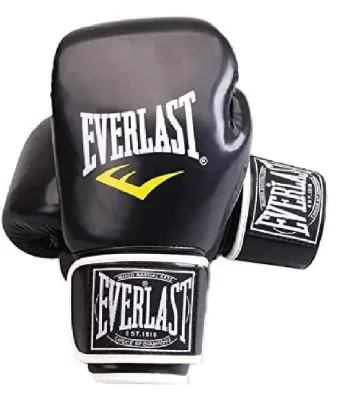
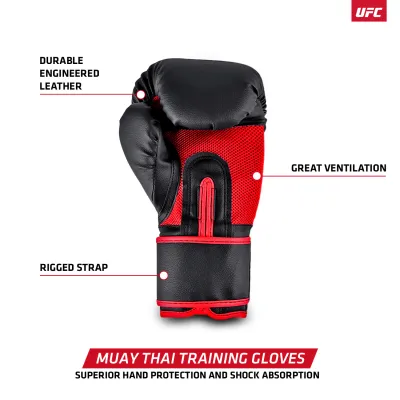
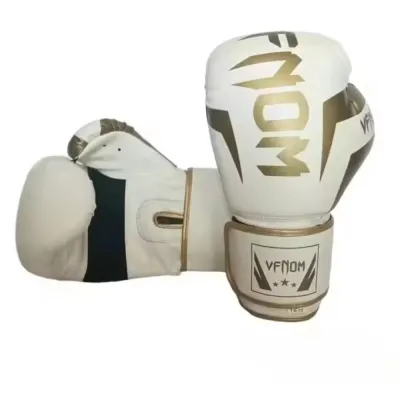
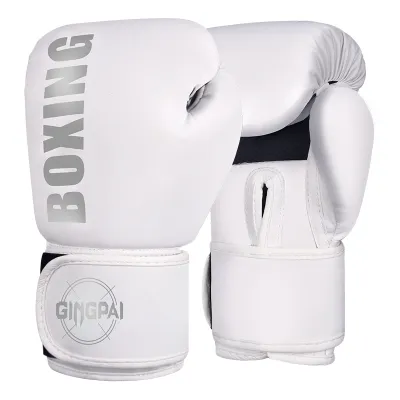
Prices are valid at publication and may change. Please refer to the product page for the latest price.
Muay Thai gloves feature a distinct design optimized for multi-dimensional combat. Unlike traditional boxing gloves that have a rigid, pre-curved thumb and stiff wrist support, Muay Thai gloves offer a more flexible thumb and an open-palm design. This flexibility is essential for catching kicks, parrying strikes, and controlling your opponent during clinch work.
Additionally, the padding is distributed more uniformly across the back of the hand and wrist to absorb the impact of incoming kicks. Choosing the correct weight helps balance hand speed, impact absorption, and shoulder fatigue during long training sessions. Heavier gloves require more effort to keep your guard up, which naturally builds shoulder endurance over time.
Matching Glove Weight to Your Training Activities
To train safely and effectively, you must match your glove weight to your specific daily activities. Using the wrong weight can limit your technical development or increase the risk of injury to yourself and others.

A general decision matrix helps map common weights to their primary training purposes:
- 8oz to 10oz: Used for professional competition, speed work, and light pad drills for smaller fighters.
- 12oz: Ideal for pad work, heavy bag training, and light technical drilling.
- 14oz: The entry-level weight for sparring for lighter individuals, and an excellent all-around training glove.
- 16oz: The standard safety weight for sparring and heavy partner work, offering maximum protection.
While lighter gloves allow you to focus on speed and precise hand placement, heavier gloves build shoulder endurance and condition your arms. Always check with your local gym or camp before purchasing, as many facilities enforce strict minimum weight rules for partner contact to maintain a safe training environment.
Striking the Heavy Bag and Thai Pads
When working on the heavy bag or striking Thai pads, your primary goal is to develop power, accuracy, and conditioning. For these activities, most practitioners opt for gloves in the 10oz to 12oz range. This weight class provides a balanced middle ground, offering enough knuckle protection to prevent bruising while still giving you clear tactile feedback on your strikes.
Using a lighter glove on the bag allows you to feel exactly how your knuckles align upon impact, which is crucial for correcting your punching technique. However, if you have pre-existing wrist issues or are working on an exceptionally hard heavy bag, moving up to a 14oz glove can provide extra shock absorption to protect your joints.
Regardless of the glove weight you choose, never strike without wearing hand wraps underneath. Hand wraps secure the small bones in your hands and provide essential wrist alignment, working in tandem with your gloves to prevent hyperextension and acute impact injuries.
Sparring and Clinch Work
Sparring and clinch drills require a strict focus on safety. In most gyms, the standard minimum weight for sparring is 16oz, though lighter fighters may sometimes be permitted to use 14oz gloves. This rule is strictly enforced to protect your training partners from unnecessary trauma and to minimize the risk of cuts and injuries.
The extra padding in a heavier glove slows down your hand speed slightly, which encourages a focus on control, timing, and technique rather than raw power. Furthermore, the wider profile of a heavier glove makes it easier to block incoming head kicks, while the flexible palm design allows you to catch kicks and secure a grip during clinch work.
Before stepping onto the mats, always communicate with your coach and sparring partner. Ensure your gloves are in good condition and match the gym’s safety guidelines. Sparring is about mutual skill development, and wearing the correct glove weight is a fundamental sign of respect for your training partners.
Competition and Fight Night Rules
If you plan to transition to active competition, you must familiarize yourself with official fight rules. In standard Muay Thai promotions, fighters compete in either 8oz or 10oz gloves, depending on their weight class. These lighter gloves dramatically increase hand speed and make defensive blocks much tighter, as there is less glove surface area to hide behind.
In most sanctioned bouts, you do not bring your own gloves to the ring. The event organizers or sanctioning body provide brand-new, inspected gloves to ensure a level playing field.
To prepare for the physical reality of a fight, it is wise to occasionally train in competition-weight gloves during pad work sessions. This helps you adapt to the lighter feel, adjust your defensive guard to the smaller glove size, and build the specific wrist stability required when striking with reduced padding.
Factoring in Body Weight, Hand Size, and Hand Wraps
Your physical dimensions play a major role in determining the right glove weight. A heavier fighter naturally generates more kinetic energy and punching power, requiring a heavier glove with denser padding to absorb the impact. Conversely, a lighter fighter may find that a 16oz glove is overly bulky and restricts natural movement, making a 12oz or 14oz glove more appropriate for general training.
Hand size and finger length also dictate how a glove fits internally. If the internal compartment is too loose, your hand can slide around inside, leading to wrist instability and skin friction. If it is too tight, it can restrict blood circulation and cause cramping.
When trying on gloves, always account for the added bulk of your hand wraps. A standard 180-inch hand wrap adds significant volume to your hand. If a glove feels snug without wraps, it will likely be painfully tight once your hands are properly wrapped, so always test the fit with your wraps on.
Verifying Fit, Closure Type, and Safety Before Buying
Before finalizing your purchase, evaluate the closure system and physical construction of the glove. Muay Thai gloves generally come in two closure styles: Velcro (hook-and-loop) and lace-up. Velcro closures are highly popular for daily training because they allow you to put on and remove your gloves independently. Lace-up gloves offer superior wrist support and a more customized fit, but they require a coach or training partner to tie and untie them every time.
When trying on a new pair of gloves, perform a few physical checks to verify the fit. Your fingertips should touch the end of the glove gently without being bent or pressed painfully against the compartment wall. Make a fist and ensure that your wrist remains straight and aligned; the glove should not force your wrist into an awkward angle.
Finally, inspect the overall build quality of the glove. Check that the stitching along the seams is tight and double-reinforced, especially around the thumb and wrist. The thumb should be securely attached to the main body of the glove to prevent it from catching on an opponent’s gear or bending backward. Press down on the knuckle area to verify that the padding feels firm and resilient, as soft or uneven padding will degrade quickly under heavy use.
Frequently Asked Questions (FAQ)
Can I use one pair of gloves for all Muay Thai training activities?
If you can only purchase one pair of gloves, a 14oz glove is generally the most versatile option for average-weight practitioners. It provides enough padding for light sparring while remaining light enough for pad and bag work. However, using a single pair means the padding will wear out much faster. You must never use light bag gloves (8oz or 10oz) for sparring, as the minimal padding poses a severe injury risk to your training partners.
How do I properly break in new Muay Thai gloves?
The safest way to break in new Muay Thai gloves is through natural use. Spend your first few sessions performing light bag work, pad drills, and gently flexing the glove leather with your hands. Avoid using artificial heat sources, soaking them in water, or applying harsh chemical softeners, as these methods can permanently damage the internal foam layers and compromise the structural safety of the glove.
Community discussion
Share your experience or ask a question. Comments are reviewed before publication.