
Choosing the right PE (polyethylene) line for boat fishing in the Philippines requires matching the line’s diameter and strength to your target species, accounting for deep-water currents, and selecting a braid structure that can withstand the abrasive tropical marine environment. By balancing these factors with a reliable leader setup, you can ensure your gear performs flawlessly under the intense pressure of offshore game fish.
Quick Guide to Selecting PE Lines for Boat Fishing
Boat fishing in the Philippine archipelago presents unique challenges, from the strong tidal currents of deep straits to the sharp volcanic drop-offs of offshore reefs. In these diverse marine environments, selecting the right PE line is the foundation of a successful trip. Unlike traditional monofilament lines, PE braided lines offer near-zero stretch, providing unmatched sensitivity that allows you to feel the faintest nibbles even hundreds of meters below the surface. This lack of stretch also ensures instant hooksets, which is critical when targeting fast-striking pelagic fish or powerful bottom dwellers.
Furthermore, the incredibly thin diameter of PE line relative to its breaking strength allows you to pack more line onto your reel spool. This is a vital advantage when a hooked fish decides to make a long, uninterrupted run into the deep. However, using PE line requires a clear understanding of its trade-offs. While it excels in strength and casting distance, raw braid lacks the abrasion resistance of monofilament and is highly visible in clear water. Balancing these factors by pairing your main line with an appropriate leader is essential for protecting your gear and securing your catch.
Products mentioned in this guide
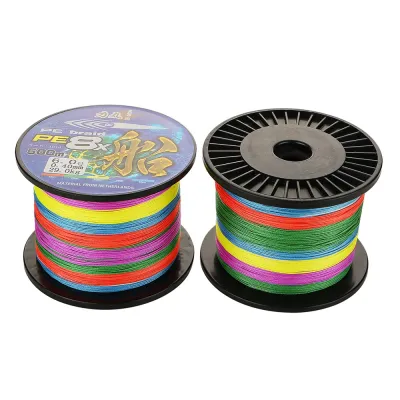
Prices are valid at publication and may change. Please refer to the product page for the latest price.
Match Line Strength to Your Target Species
Understanding how to read PE line labels is the first step in matching your gear to your target species. The Japanese PE numbering system (such as PE 2.0, PE 4.0, or PE 6.0) is a measure of the line’s diameter rather than its direct breaking strength. While a higher PE number generally indicates a stronger line, the actual breaking strain in pounds or kilograms can vary between manufacturers due to differences in raw materials and weaving techniques. When preparing for a boat trip, always verify both the PE rating and the rated breaking strain on the packaging to ensure your line can handle the expected load.

Your choice of line strength must align with the fighting style of your target species. For aggressive, fast-running pelagic fish like yellowfin tuna, dorado, and wahoo, you need a line that can withstand high-speed runs and intense friction heat. A rating of PE 3.0 to PE 5.0 is often suitable for medium offshore trolling and casting. Conversely, if you are targeting powerful bottom dwellers like lapu-lapu (grouper) or red snapper, your primary challenge is preventing the fish from diving into sharp coral crevices or rocky caves. For this style of heavy bottom fishing or deep-sea jigging, stepping up to PE 6.0 or even PE 8.0 provides the raw pulling power needed to steer these stubborn fighters away from structure.
Because PE line has virtually no stretch, it cannot absorb the sudden, violent shocks of a striking fish on its own. Without a buffer, a hard hit can snap the line instantly or pull the hook straight out of the fish’s mouth. To prevent this, you must integrate a shock leader—typically made of fluorocarbon or nylon monofilament—into your rigging. The leader acts as a shock absorber, stretching slightly under sudden loads to protect your main PE line while providing crucial abrasion resistance against sharp teeth, scales, and underwater obstacles.
Adapt Line Choice to Depth and Water Conditions
Deep-water fishing and strong tidal currents require careful consideration of line drag. When fishing in deep offshore waters, a thick line acts like a sail under the water, catching the current and creating a massive bow or curve in your line. This drag makes it difficult to keep your jig or bait on the bottom and severely reduces your sensitivity. To minimize this current resistance, opt for the thinnest possible PE line diameter that still meets your strength requirements. A thinner profile cuts through the water column efficiently, allowing you to use lighter sinkers or jigs and maintain a direct, vertical connection to your lure.
When your fishing adventures take you near shallow coral reefs, rocky drop-offs, or underwater pinnacles, abrasion resistance becomes your primary concern. Raw PE fibers are highly susceptible to fraying and snapping when dragged across sharp surfaces like volcanic rock or brain coral. In these high-risk environments, choosing a slightly thicker PE line or one specifically engineered with a tight, dense weave can provide a small margin of safety. However, the most effective strategy remains pairing your PE line with a long, heavy fluorocarbon leader that can take the brunt of the physical contact with the reef.
Water clarity also plays a significant role in how fish perceive your line. In the crystal-clear offshore waters of the Philippines, highly visible lines can spook wary game fish. While a bright pink, chartreuse, or multi-colored metered line is incredibly useful for the angler to track depth and detect subtle line movements, it must be paired with a stealthy leader. Multi-colored metered lines, which change color every ten meters, are particularly advantageous for vertical jigging, as they allow you to drop your lure precisely to the depth where fish are marking on the fishfinder.
Choose the Right Braid Structure and Coating
The physical construction of a PE line heavily influences its performance, handling, and durability on the boat. Braided lines are typically constructed from four, eight, or twelve individual strands of polyethylene fiber, commonly referred to as 4-strand, 8-strand, or 12-strand lines. A standard 4-strand weave uses thicker individual strands, resulting in a rougher, more textured surface. While this texture can create more friction and noise as it passes through your rod guides, 4-strand lines are highly valued for their superior abrasion resistance, making them excellent for rough bottom fishing.
In contrast, 8-strand and 12-strand lines are woven from finer fibers, creating a much rounder, smoother, and silkier profile. This smooth surface reduces friction through the rod guides, enabling longer, quieter casts and faster vertical sink rates. However, these finer strands are more delicate and can fray more easily when exposed to sharp structures. For general boat fishing, vertical jigging, and casting lures to surface-feeding fish, an 8-strand line offers an excellent balance of smoothness, strength, and handling.
To prolong the lifespan of your line in harsh tropical environments, look for PE lines featuring specialized protective coatings. The intense tropical sun and highly saline waters can accelerate the degradation of untreated fibers. High-quality coatings seal the braid, preventing saltwater intrusion, reducing water absorption, and shielding the line from damaging UV rays. Additionally, ensure your reel is spooled correctly. Verify your reel’s line capacity specifications to spool the optimal length—typically 200 to 300 meters for boat fishing—leaving a small gap below the spool lip to prevent loose loops and frustrating wind knots during your trip.
Finalize Your Purchase With a Pre-Trip Checklist
Before heading out to the boat ramp, run through a quick checklist to ensure your tackle is fully compatible and ready for action. First, cross-reference your chosen PE line diameter and strength with the specifications printed on your fishing rod. Using a line that exceeds the rod’s recommended PE rating can put excessive stress on the blank, risking a catastrophic rod breakage under heavy loads. Conversely, a line that is too light may snap before the rod can fully load and cushion the fight.
Next, verify your knot compatibility. Because PE line is incredibly smooth and slick, standard fishing knots like the Clinch knot can easily slip and unravel under tension. You must master specialized friction knots, such as the FG knot or the PR knot, to connect your PE main line to your fluorocarbon leader. Practice tying these knots until they are slim enough to pass smoothly through your rod’s guide rings without catching, which can damage the guides or cause casting tangles.
Finally, inspect the physical condition of your line. Check the first few meters of the spool for any signs of fraying, discoloration, or stiffness from previous trips. If you detect any rough spots by running the line between your fingers, cut away the damaged section until you reach fresh, supple line. Ensuring your line is in pristine condition before you leave the dock is the best insurance against losing the fish of a lifetime.
Frequently Asked Questions (FAQ)
How often should I replace my PE line after saltwater boat trips?
The lifespan of your PE line depends heavily on usage, maintenance, and environmental exposure. In tropical saltwater conditions, salt crystals can dry and harden inside the braid’s fibers, acting like tiny blades that weaken the line from the inside out. To maximize longevity, always rinse your reel spool thoroughly with fresh, running water after every saltwater trip. With proper rinsing and storage away from direct sunlight, a high-quality PE line can last for several seasons. However, you should inspect the line regularly and trim away any frayed or faded sections before each outing.
Does the color of the PE line affect catch rates in clear waters?
The color of your main PE line has minimal impact on catch rates, provided you use an adequate leader. While bright colors like orange, yellow, or multi-colored metered patterns are highly visible to fish in clear water, they are essential for the angler to monitor line angle, depth, and subtle bites. To prevent fish from becoming line-shy, always tie a clear fluorocarbon leader of at least 1.5 to 3 meters between your colorful PE line and your lure or bait. This setup gives you the visibility benefits of colored braid while presenting a completely stealthy profile to the fish.
Can I use the same PE line for both shore casting and vertical boat jigging?
While it is technically possible, using the same line for both techniques involves significant trade-offs. Shore casting requires a highly supple, thin, and smooth 8-strand line to maximize casting distance and minimize wind resistance. Vertical boat jigging, on the other hand, prioritizes depth control, vertical sink speed, and resistance to heavy vertical tension, where a metered multi-colored line is highly advantageous. If you plan to do both, a high-quality, general-purpose 8-strand line is the most versatile compromise, but dedicated spools optimized for each technique will always yield the best performance.
Community discussion
Share your experience or ask a question. Comments are reviewed before publication.