
Selecting the correct Ping golf grip is one of the most direct ways to improve your connection to the club, stabilize your shot dispersion, and manage hand fatigue during a round. Many golfers play with grips that are either too worn or poorly suited to their hand dimensions, which unconsciously forces them to compensate with excessive grip pressure. By systematically evaluating your hand size, matching your tactile preferences to your regional climate, and understanding how grip geometry affects your release, you can find a grip that feels like a natural extension of your hands.
Diagnose Your Hand Size to Find the Correct Grip Diameter
To establish a baseline for your ideal grip diameter, you must first measure your hand using a standard two-step physical assessment. Start by measuring from the crease of your wrist (where your hand meets your forearm) to the very tip of your longest finger. Next, measure the length of that longest finger itself. These two measurements correspond to standard sizing charts used by major manufacturers, including Ping, to categorize hands into Undersize, Standard, Midsize, or Jumbo (Oversize) profiles.
Ping simplifies this process by utilizing a proprietary color-coded sizing system, which is visible on the grip cap. Each color represents a specific outside diameter. For example, a standard grip is typically color-coded as White, while smaller hands might require a Red (undersize) grip, and larger hands or those seeking reduced hand tension might opt for Gold (midsize) or Orange (oversize). Checking these color codes ensures you do not accidentally purchase a size that conflicts with your physical dimensions.
Products mentioned in this guide
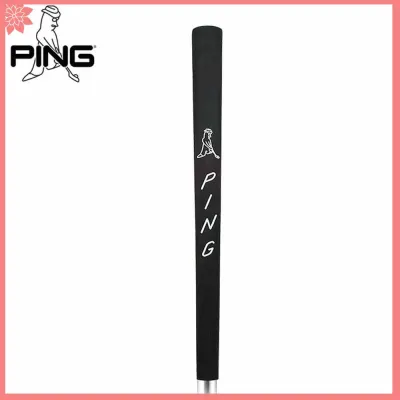
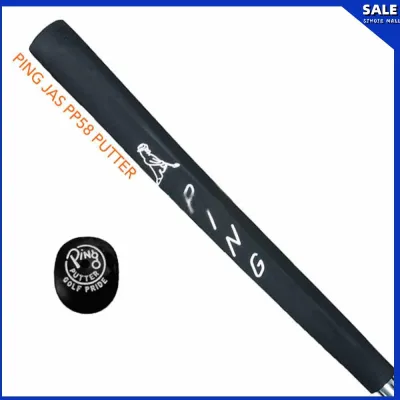
Prices are valid at publication and may change. Please refer to the product page for the latest price.
While measurements provide an excellent starting point, your physical feedback during the swing serves as the ultimate diagnostic tool. If a grip is too small, your fingers will dig deeply into your palm, forcing your hand muscles to over-tighten to maintain control. This excess tension travels up your forearms, restricting your natural wrist hinge and leading to premature fatigue.
Conversely, if a grip is too large, your fingers cannot wrap securely around the club, reducing your overall clubhead awareness and making the club feel unwieldy. Pay close attention to these physical cues during your practice sessions to determine if your current setup is working against your anatomy.
Match Your Feel Preference and Climate to Grip Materials
The material composition of your grip directly dictates how securely you can hold the club under varying environmental conditions. Standard rubber grips, manufactured from high-grade synthetic rubber compounds, offer a balanced blend of moderate tackiness, feedback, and durability. They perform exceptionally well in mild climates but require regular cleaning to prevent oils and dirt from degrading the surface. For players who prefer a smooth, traditional feel, rubber remains the industry baseline.

For golfers playing in high-humidity regions like the Philippines, managing moisture from sudden tropical downpours or intense sweat is a constant challenge. In these damp conditions, corded grips provide a distinct performance advantage. By weaving brushed cotton cords into the rubber compound, corded grips wick moisture away from the surface, ensuring a non-slip texture even when thoroughly wet. While some players find the abrasive texture of corded grips rough on unprotected hands, the trade-off is unparalleled traction and firm, highly communicative feedback on off-center hits.
Alternatively, soft wrap or polyurethane grips cater to golfers seeking maximum shock absorption and a plush, tacky feel. These materials are excellent for dampening harsh vibrations, making them a preferred choice for players managing joint discomfort or arthritis. However, polyurethane wraps tend to absorb water rather than repel it; if you play frequently in wet weather, they require diligent drying with a towel to maintain their tacky surface. Before finalizing your choice, cross-reference these material properties with the current textures offered in Ping’s grip lineup to ensure your selection matches your local playing environment.
Influence Your Shot Pattern with Grip Profile and Taper
The physical profile of your grip exerts a powerful influence on your wrist biomechanics and, consequently, your ball flight. When you swing a club with an undersized grip, your hands are highly active, which naturally encourages a rapid release and rotation of the clubface through impact. This active hand motion can help golfers who struggle with a chronic push or slice, but it can also exacerbate a tendency to pull or hook the ball if your hands become overly dominant.
Conversely, an oversized or midsize grip limits your ability to rotate your wrists fully during the swing. By restricting this hand action, larger diameters help stabilize the clubface, making them highly effective for players who struggle with over-active hands or a persistent hook. The trade-off is that a larger grip can make it more difficult to square the clubface in time, potentially promoting a slight fade or push for golfers with slower hand speeds.
Beyond thickness, the shape of the grip profile plays a critical role in alignment. Ping offers both round and ribbed (often called “reminder”) grips. Ribbed grips feature a subtle, raised internal ridge running along the spine of the grip. When installed, this ridge rests in the creases of your fingers, providing instant tactile feedback that helps you square the clubface consistently. Round grips, on the other hand, lack this ridge, offering uniform texture all the way around. This makes round grips highly versatile for wedges and specialty clubs, where you frequently open or close the clubface to execute different short-game shots.
Taper is another critical design variable to evaluate. Traditional grips feature a pronounced taper, meaning they are significantly thicker at the top than at the bottom. This design can cause the lower hand to grip too tightly or become overly active. To counter this, many modern Ping grips feature a reduced taper profile, which mimics the feel of adding extra layers of grip tape under the lower hand. This design encourages even grip pressure in both hands, promoting a smoother, more synchronized release. However, it is vital to remember that while grip profile can influence your shot shape, it is a supportive adjustment rather than a substitute for sound swing mechanics and professional instruction.
Action Plan: Selecting and Fitting Your New Ping Grips
To execute a successful grip transition, begin by consolidating your diagnostic findings into a clear selection profile. Combine your physical hand measurements with your primary climate challenges—such as prioritizing moisture-wicking cord materials for humid afternoon rounds—and your desired shot-shape adjustments. This structured approach allows you to quickly narrow down the official Ping grip models that align with your specific performance profile.
Once you have identified a candidate, verify the exact specifications on Ping’s official website or through an authorized local dealer. Pay close attention to the model’s weight, as changing the weight of your grip can alter the club’s swing weight. A lighter grip will make the clubhead feel heavier, while a heavier grip will make the clubhead feel lighter. Ensuring that the replacement grip matches your club’s original specifications is essential for maintaining a consistent feel across your entire set.
For the best results, have your new grips installed by a certified club fitter or professional technician. Proper installation requires precise alignment, uniform tape application, and the correct use of solvents to prevent the grip from slipping or twisting during play. A professional can also customize the feel by adding extra layers of tape to fine-tune the diameter or adjust the taper to your liking. If you continue to experience hand discomfort or inconsistent ball flight after regripping, consult a professional fitter to analyze your setup.
Frequently Asked Questions (FAQ)
How often should I replace my Ping golf grips?
As a general rule, active golfers should replace their grips once a year or every 40 rounds of play. However, environmental exposure is often a more significant factor than a calendar date. In hot, humid climates, exposure to sweat, dirt, and UV rays accelerates the degradation of rubber compounds. Inspect your grips regularly for physical signs of wear, such as a shiny surface, slick texture, visible wear spots under your thumbs, or cracking along the edges. If the grip feels hard or slips during your swing, it is time for a replacement.
Can I mix different Ping grip models on my clubs?
Yes, you can mix different grip models within your bag, and many players do so to suit the specific roles of different clubs. For example, you might prefer highly textured cord grips on your driver and fairway woods for maximum traction, while choosing softer, round grips on your wedges to facilitate delicate short-game shots. However, you should avoid mixing significantly different weights or thicknesses across your standard iron set. Keeping your irons uniform ensures consistent swing weight and muscle memory throughout your approach shots.
Do Ping putter grips require a different fitting approach?
Putter grips require a unique fitting approach because the putting stroke prioritizes stability, face alignment, and a quiet lower hand rather than wrist release and power. Putter grips are often much larger, featuring flat fronts, pistol profiles, or non-tapered shapes designed to minimize wrist movement and encourage a smooth, pendulum-like stroke. When choosing a putter grip, select a shape and size that feels comfortable in your palms and helps you keep the putter face square to your target line, regardless of your standard full-swing hand measurements.
Community discussion
Share your experience or ask a question. Comments are reviewed before publication.