
Choosing the right portable tennis ball machine requires balancing your current playing ability with the machine’s technical capabilities and your physical transport limits. A machine that is too basic will quickly limit your growth, while an overly complex model might sit unused in your storage room due to its weight and setup complexity. To find the perfect match, you must evaluate your skill level, analyze key features like spin and oscillation, and assess how the unit handles local court logistics.
Diagnose Your Tennis Skill Level and Practice Needs
Before browsing technical specifications, you must honestly assess your current playing ability and training goals. Buying a machine with advanced features you do not need can lead to frustration, while an underpowered unit will fail to challenge you as your skills improve. Evaluating your stroke consistency is the first step in identifying the right equipment class.
To help you determine where you stand, consider this self-assessment of your playing consistency and training requirements:
Products mentioned in this guide
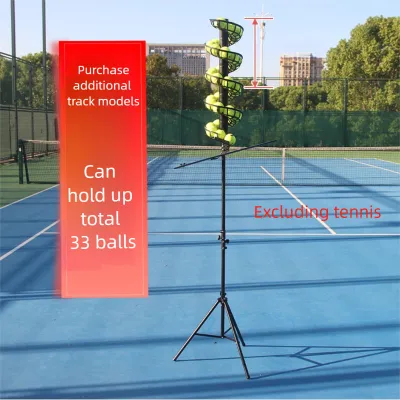
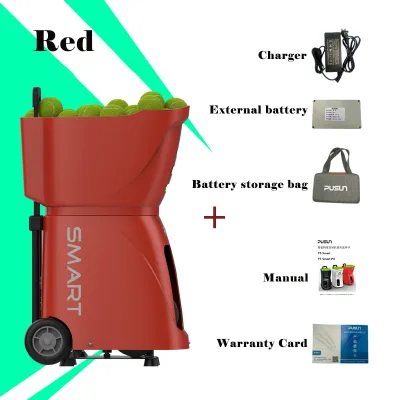
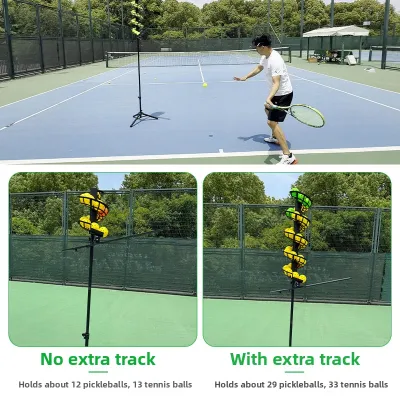
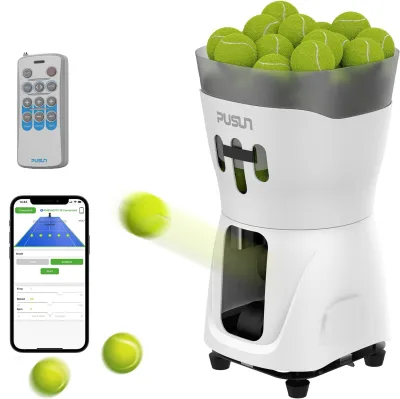
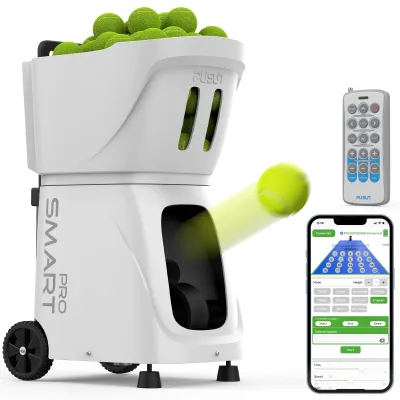
Prices are valid at publication and may change. Please refer to the product page for the latest price.
- Beginner Level: You are working on basic stroke mechanics, struggle with consistent ball contact, and need a steady, predictable feed to build muscle memory. Your primary goal is to hit flat balls from a stationary position at the baseline.
- Intermediate Level: You can sustain a short rally, are learning to control ball depth, and need to practice moving to the ball. Your training requires basic oscillation to force you to hit on the run and adjust to moderate topspin.
- Advanced Level: You play competitive matches, require realistic topspin and slice simulations, and need varied drills that test your footwork and recovery times. You need a machine that can replicate high-speed, unpredictable shots.
Your primary practice goals will dictate the type of machine that best suits your routine. If you are focusing on net play, you need a machine with precise elevation control to feed high lobs or low volleys. If you are training for endurance and footwork, horizontal oscillation is essential to keep you moving across the entire width of the court.
Finally, consider how often you will transport and use the machine. If you play on public courts in your local subdivision or barangay, you will need to load and unload the device from your car trunk frequently. A heavy, bulky machine might discourage you from practicing, whereas a highly portable unit will easily integrate into your weekly routine.
Match Machine Features to Your Playing Ability
Once you have diagnosed your skill level, you can begin matching technical specifications to your training needs. The most critical features to evaluate are ball speed, feed intervals, spin capabilities, and oscillation patterns. These settings determine how well the machine can simulate real-world playing conditions.

Ball Speed and Feed Intervals Beginners should look for machines that can feed balls slowly, allowing ample time to prepare for each shot. Intermediate and advanced players require higher speeds to simulate fast-paced match play. Always check the product manual to verify the minimum and maximum speed limits. A wide speed range ensures the machine can grow with you as your reaction time improves.
Spin Capabilities Flat feeds are excellent for beginners mastering their swing path. However, as you progress, you will need to practice against topspin and backspin (slice). Look for dual-motor designs that allow you to adjust the spin levels independently. This feature helps you learn how to brush up or down on the ball to counter heavy spin on the court.
Oscillation and Elevation Basic machines shoot balls in a single, fixed direction, which is ideal for isolating specific strokes. To practice footwork, look for horizontal oscillation, which sweeps the ball from side to side. Advanced players should verify if a machine offers random vertical and horizontal oscillation, or programmable drills, to simulate realistic match play where no two shots land in the same spot.
Ball Capacity and Hopper Design Check the manufacturer’s specifications for the hopper capacity. A capacity of 70 to 100 balls is usually sufficient for individual drills without making the machine too bulky. Larger hoppers holding 150 or more balls allow for longer, uninterrupted practice sessions but will increase the overall size and weight of the unit during transport. Ensure the hopper design allows for easy folding or reversal to protect the internal components when not in use.
Check Portability and Court Logistics
A portable tennis ball machine must be easy to transport, set up, and maintain within your typical practice environment. Physical logistics can make or break your investment, especially when dealing with outdoor court conditions. You must evaluate the physical design of the machine to ensure it fits your lifestyle.
Weight and Ergonomics Evaluate the total weight of the machine and the design of its handles. Models with extendable, luggage-style handles and large, heavy-duty wheels are much easier to transport across uneven surfaces, grass, or rough concrete paths. If you must lift the machine into a high SUV trunk, look for lightweight models or those with dedicated lifting grips.
Battery Specifications and Tropical Conditions Most portable machines run on either sealed lead-acid (SLA) or lithium-ion batteries. Lithium-ion batteries are significantly lighter and offer longer lifespans, though they come at a higher cost. In warm, humid tropical climates, high temperatures can accelerate battery degradation. Check the manufacturer’s guidelines regarding operating temperatures and expected runtime per charge to ensure the battery can withstand local conditions.
Court Footprint and Setup Ensure the machine’s dimensions allow it to fit easily into your vehicle alongside your rackets and gear. On the court, a compact footprint ensures the machine does not obstruct the baseline or safety zones. Verify how quickly the hopper can be assembled, as a fast setup time maximizes your actual hitting time on court. Additionally, outdoor courts can be dusty, so check if the machine’s wheels require regular cleaning to maintain grip and accuracy.
Set a Realistic Budget and Value Expectations
Tennis ball machines are significant investments, and understanding the general price tiers can help you set realistic expectations. Balancing your required features with a practical budget ensures you get the best value for your money without overspending on unnecessary technology.
Entry-Level (Under ₱50,000) These models typically offer manual elevation, basic horizontal oscillation, and flat feeds. They are ideal for beginners and families looking for a reliable ball launcher to practice basic strokes. They are often lighter and highly portable, though they lack advanced programming options.
Mid-Range (₱50,000 to ₱100,000) In this tier, you will find machines with electronic elevation, basic spin controls, and wider oscillation angles. These units suit intermediate players looking to improve their movement and adapt to different ball spins. They offer a solid balance of performance and portability.
Advanced (Above ₱100,000) These high-end machines feature fully programmable drills, random multi-angle oscillation, heavy spin capabilities, and smartphone app integration. They are designed for competitive players, coaches, and tennis academies who require precise control over every shot parameter.
Warranty and Local Support Before making a purchase, verify the local warranty terms and the availability of spare parts. Because tennis ball machines have moving parts like throwing wheels and motors that wear out over time, having access to a local distributor or service center in the Philippines is essential for long-term maintenance. Check if the warranty covers the battery, motors, and electronic control boards.
Renting vs. Buying Second-Hand If you are uncertain about your long-term commitment to the sport, consider renting a machine or hiring a coach who provides one. If buying second-hand, thoroughly inspect the throwing wheels for wear, test the battery health, and ensure the casing has no structural cracks that could affect the internal electronics. A worn throwing wheel can cause erratic ball launches and reduce overall accuracy.
Frequently Asked Questions (FAQ)
Can a beginner safely use an advanced tennis ball machine?
Yes, a beginner can safely use an advanced machine, provided they adjust the settings to match their current skill level. Always start by configuring the machine to its lowest speed and longest feed interval to allow ample time to prepare for each shot. Before turning the machine on, consult the user manual to identify the safety clearance zones and locate the emergency stop button or remote control switch. Never stand directly in front of the machine’s launch chute while the power is on, and ensure the court is clear of stray balls to prevent tripping hazards.
How should I maintain the battery of a portable ball machine?
Proper battery maintenance is key to extending the lifespan of your portable tennis ball machine. Avoid deep discharges by charging the battery after every practice session, rather than waiting until it is completely empty. Store the machine and its battery in a cool, dry place away from direct sunlight and extreme tropical heat, which can degrade the battery cells. If you plan to store the machine for an extended period, charge the battery fully beforehand and top it up every few weeks to prevent it from falling into a state of deep discharge.
Community discussion
Share your experience or ask a question. Comments are reviewed before publication.