
Selecting the right power twister resistance is a critical decision that directly impacts both your workout safety and your muscle-building progress. To choose the correct level, you must match the equipment’s rated resistance to your current upper body strength, focusing on your chest, shoulders, wrists, and grip. Beginners should generally start with a lower resistance level, typically between 20 kg and 30 kg, while intermediate and advanced fitness enthusiasts can safely progress to 40 kg, 50 kg, or heavy-duty adjustable models. Prioritizing a resistance level that allows you to maintain strict form throughout a full range of motion is far more effective than struggling with a bar that is too stiff.
Using a power twister that is too heavy often leads to compromised form, which shifts the training load away from your target muscles and onto your joints. This compensation increases the risk of acute injuries, particularly in the shoulders and wrists, which are highly vulnerable during spring-bending exercises. Conversely, selecting a bar with too little resistance will fail to provide the mechanical tension necessary to stimulate muscle growth or strength adaptations. By understanding how these ratings work and honestly assessing your physical capabilities, you can select a tool that integrates seamlessly into your strength training routine.
Understanding Power Twister Resistance Ratings
When shopping for a power twister on an online marketplace, you will notice that each bar is labeled with a specific weight rating, such as 20 kg, 30 kg, or 50 kg. Whether you are investing ₱500 in a basic starter bar or ₱1,500 in a heavy-duty model, understanding how these ratings work is essential. This rating does not represent a static weight that you lift, like a dumbbell or a barbell plate. Instead, the kilogram rating indicates the approximate amount of force required to bend the heavy-duty steel spring to a specific target angle, usually a full 90-degree or 180-degree curve. Because this resistance is dynamic, the tension increases progressively the further you bend the bar, reaching its peak at the midpoint of the movement.
Products mentioned in this guide
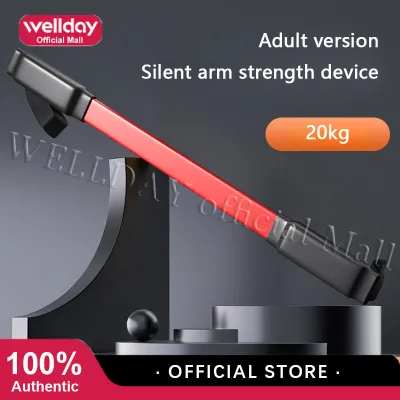
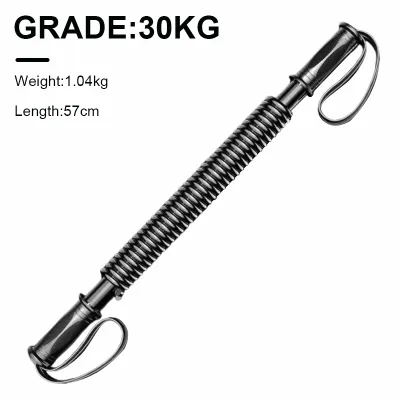
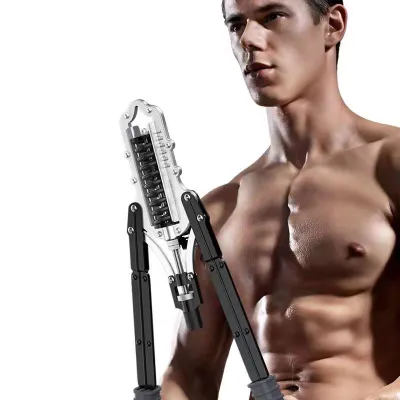
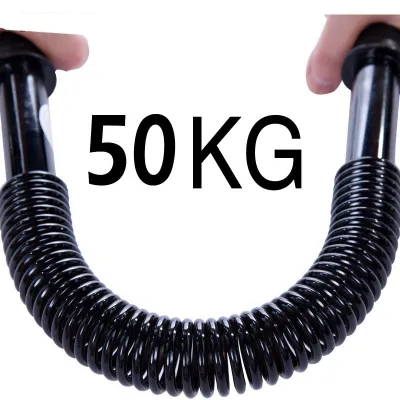
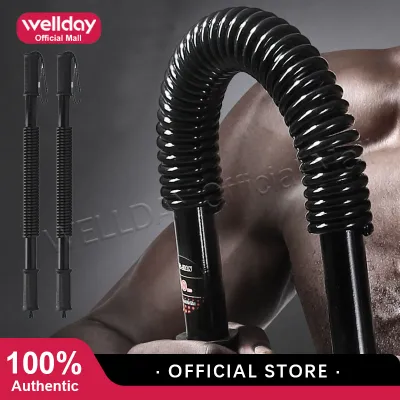
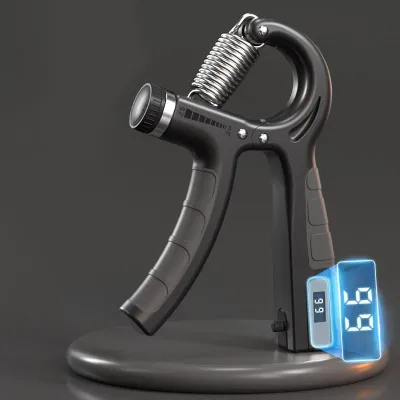
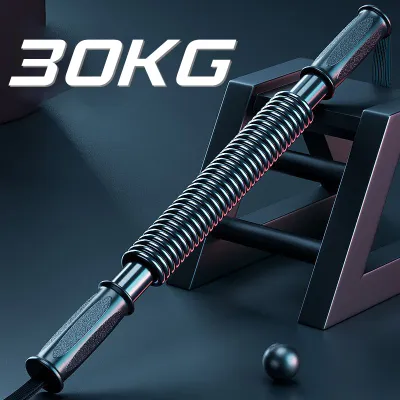
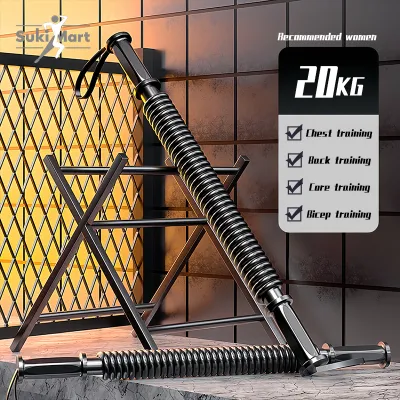
Prices are valid at publication and may change. Please refer to the product page for the latest price.
The perceived difficulty of a specific rating can vary significantly between different manufacturers and product designs. Factors such as the thickness of the carbon steel spring, the overall length of the bar, the width of the handles, and the quality of the materials used all influence how heavy the bar feels in your hands. A longer bar provides more leverage, making a 30 kg spring feel slightly easier to bend than a shorter bar with the exact same rating. Additionally, cheaper materials may lose their tension over time, while high-quality springs maintain a consistent level of resistance throughout their lifespan.
Because of these manufacturing variations, you should treat the printed kilogram ratings as baseline estimates rather than absolute standards. If you are transitioning from one brand to another, do not assume that a 40 kg bar from a new manufacturer will feel identical to your old one. When purchasing online, always check the manufacturer’s detailed specifications, user feedback regarding stiffness, and sizing charts to get a realistic sense of the actual resistance feel before making your choice.
Assessing Your Current Upper Body Strength
Before purchasing a power twister, you need to establish a realistic baseline of your current upper body strength to avoid choosing an unusable piece of equipment. Since you cannot easily test a spring bar before it arrives at your home, you can use familiar bodyweight and free-weight exercises as reliable indicators. For example, your performance in standard push-ups and dumbbell chest flyes serves as an excellent proxy for the pressing strength required to bend a power twister.

If you can comfortably perform 15 to 20 consecutive, high-quality push-ups with strict form, your chest and triceps likely possess the baseline endurance needed for a standard 20 kg or 30 kg power twister. If you regularly perform dumbbell chest flyes, being able to complete sets with 10 kg to 12 kg dumbbells in each hand suggests you are ready for a 30 kg bar. However, if you struggle to complete five clean push-ups, or if you are completely new to resistance training, you should start with the lowest available resistance tier, typically 20 kg, or opt for an adjustable model that starts even lower.
Beyond your chest and shoulders, your grip strength, wrist stability, and forearm endurance are critical limiting factors when using a power twister. Bending a heavy steel spring requires your hands and wrists to remain completely rigid under intense pressure. If your wrists bend backward or wobble during the movement, you lack the joint stability required for that specific resistance level. Always assess whether your grip can support the tension of the spring; if your hands slip or fatigue after just one or two repetitions, the resistance is too high for your current joint capacity.
Matching Resistance to Your Fitness Level and Goals
An appropriate starting resistance is one that allows you to complete your target repetition range with controlled form, a steady tempo, and a full range of motion. For general strength and hypertrophy goals, you should aim for a resistance level where you can perform 8 to 12 controlled repetitions per set. The movement should feel challenging toward the end of the set, but you must be able to bring the handles close together without jerking your body, arching your back excessively, or using momentum.
Your specific fitness goals should also dictate the resistance level you choose for your workouts. If your primary objective is muscular endurance, active recovery, or warming up before a heavy lifting session, a lower resistance level that allows for 15 to 20 repetitions is ideal. This high-rep approach increases blood flow to the chest and shoulder joints without overtaxing the central nervous system. Conversely, if you are focusing on raw strength and muscle hypertrophy, you will want a heavier spring that limits your repetitions to a lower range, provided you can still control the negative, or releasing, phase of the exercise.
Avoid the common pitfall of ego-lifting, which involves choosing an excessively heavy spring simply because of the high number printed on the bar. When you attempt to bend a bar that is beyond your current strength level, your body naturally compensates by shortening the range of motion. You might only bend the bar a few inches, which fails to fully activate the target chest muscles and places immense, dangerous stress on your elbow and shoulder joints. It is always more beneficial to achieve a complete, deep squeeze with a lighter bar than a partial, shaky bend with a heavy one.
Safety Boundaries and Usage Limits
Safety must be your absolute priority when training with a power twister, as the high-tension spring stores a significant amount of potential energy during each repetition. The most critical safety rule is to always slip your hands through the attached nylon safety straps before gripping the handles. These wrist straps are designed to prevent the bar from slipping out of your hands if your grip fails, which could otherwise cause the heavy steel bar to snap back violently toward your face, teeth, or chest.
Maintaining proper posture throughout the exercise is equally vital for protecting your joints from acute strain. Stand with your feet shoulder-width apart to establish a stable base, and keep a slight bend in your elbows rather than locking them out. As you bend the bar, focus on a slow, deliberate squeeze, and match that control during the release phase. Never allow the spring to snap back quickly; the eccentric, or releasing, portion of the movement should take just as long as the concentric portion to ensure your muscles are doing the work rather than your joints absorbing the shock.
You must establish clear stop conditions for your workouts to prevent serious injury or equipment failure. Immediately stop your set if you experience sharp joint pain in your shoulders, elbows, or wrists, as this indicates harmful joint loading rather than productive muscle fatigue. Additionally, halt the exercise if your hands begin to slip due to sweat, which is a common challenge in the warm, humid climate of the Philippines. Finally, inspect the power twister before every session; if you notice any visible deformation, cracks, or gaps in the central spring, discard the tool immediately to avoid a sudden structural failure during use.
Signs It Is Time to Upgrade Your Resistance
As your upper body strength and endurance improve through consistent training, the resistance level that once challenged you will eventually become too easy. Recognizing these performance plateaus is key to maintaining progressive overload and continuing to see physical results. A clear sign that you are ready to upgrade is when you can easily exceed your target repetition range—such as performing 15 to 20 repetitions—with strict form, a full range of motion, and minimal muscle fatigue at the end of your sets.
When you reach this stage, you have a few options for progressing your workouts. You can choose to purchase a heavier fixed-resistance bar, moving up by 10 kg increments to keep challenging your muscles. Alternatively, you might consider upgrading to an adjustable hydraulic or spring-based power twister. Adjustable models allow you to increase the resistance in smaller, more manageable increments, making it easier to apply progressive overload without the sudden, jarring jump of buying a completely new fixed bar.
Before you make the decision to upgrade to a heavier resistance, always perform a strict self-audit of your current technique. Ensure that you are not relying on momentum, body swinging, or shortened ranges of motion to complete your repetitions with your current bar. If you can honestly say that your form is strict, your tempo is controlled, and your joints feel completely stable, then you are fully prepared to safely transition to a higher resistance level.
Frequently Asked Questions (FAQ)
Can I use a power twister every day?
No, using a high-resistance power twister every day is generally counterproductive and increases your risk of overuse injuries. Like any other form of strength training, the chest, shoulder, and arm muscles targeted by the power twister require adequate recovery time to repair and grow stronger. Training the same muscle groups daily can lead to chronic joint inflammation, particularly in the shoulders and elbows, and can stall your overall progress. For best results, integrate the power twister into your routine two to three times a week, allowing at least 48 hours of rest between intense sessions.
Is an adjustable power twister better than a fixed-resistance one?
An adjustable power twister offers greater versatility and long-term value, especially if you plan on progressing your strength over time or sharing the equipment with other family members who have different fitness levels. It allows you to adjust the tension gradually, which is safer for progressive overload. However, fixed-resistance power twisters are highly valued for their simplicity and durability. Because they do not have adjustable dials, hydraulic chambers, or extra moving parts, high-quality fixed bars are less prone to mechanical wear and tear, making them a reliable, straightforward option for dedicated lifters.
Community discussion
Share your experience or ask a question. Comments are reviewed before publication.