
Selecting the ideal pull rope resistance band requires matching your specific fitness objectives with the correct material, resistance range, and safety features. Whether you aim to build muscle at home, recover from an injury, or maintain your fitness routine while traveling, the right band serves as a versatile, space-saving alternative to traditional weights. In tropical environments where high humidity and heat can accelerate material wear, understanding the physical characteristics and safety limits of your equipment is crucial for a safe and effective workout.
Define Your Primary Fitness Objective
Before browsing online marketplaces or local fitness stores, you must identify your primary training goal. Muscle hypertrophy and strength building require a progressive increase in resistance over time. To stimulate muscle growth, you need a band system that can scale with your progress, allowing you to add tension as your muscles adapt. This typically means looking for stackable band sets that let you clip multiple tubes to a single pair of handles, simulating the progressive weight stack of a gym cable machine.
Conversely, if your focus is joint rehabilitation, physical therapy, or improving mobility, your requirements are entirely different. Rehabilitation exercises demand highly controllable, low-level resistance with a smooth, predictable tension curve. Sudden spikes in resistance can strain healing tissues or compromise joint alignment. For these goals, single, light-to-medium tension bands with integrated, comfortable handles or simple loop designs are often preferred over heavy, complex stackable systems.
Products mentioned in this guide
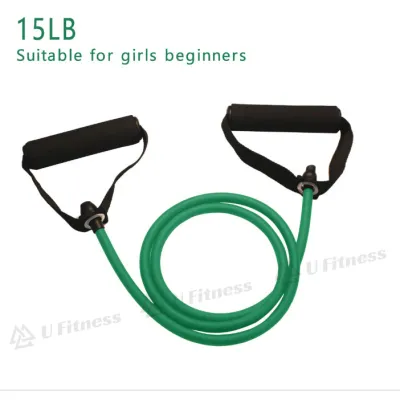
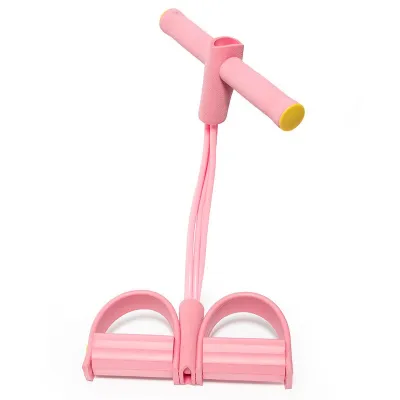
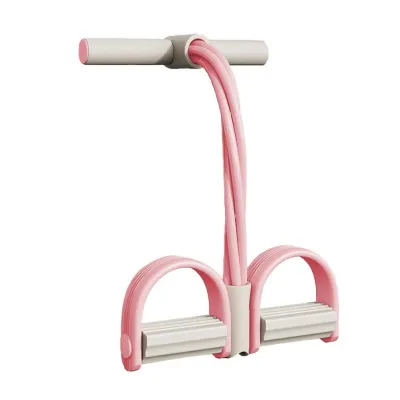
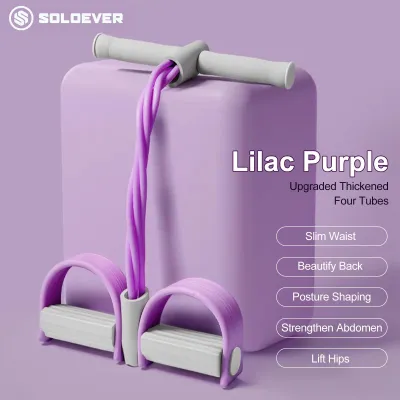
Prices are valid at publication and may change. Please refer to the product page for the latest price.
For general cardiovascular conditioning and high-repetition endurance training, the priority shifts to comfort, grip security, and rapid transitions between exercises. These workouts involve continuous movement, meaning the handles must not cause chafing or blisters during high-speed repetitions. Lightweight bands that allow quick adjustments are ideal for keeping your heart rate elevated without long pauses between sets.
Your physical workout environment also dictates the best equipment choice. In urban living spaces where floor space is at a premium, a pull rope resistance band offers a complete training setup that easily packs away into a drawer. If you plan to exercise outdoors in local parks or while traveling, portability and the availability of secure anchor points become your primary constraints, requiring a lightweight kit with a versatile door anchor or strap system.
Finally, honestly assessing your current fitness level prevents injury and ensures steady progress. Beginners should start with lower resistance ranges to master proper form and control before moving to heavier tensions. Advanced lifters will need to verify that the maximum resistance offered by a band set is sufficient to challenge their muscles, keeping in mind that band tension behaves differently than free weights due to the variable resistance curve.
Core Features to Evaluate in a Pull Rope Resistance Band
The material composition of a pull rope resistance band directly influences its durability, elasticity, and safety. Natural latex is the industry standard for high-quality bands because it provides a highly consistent, smooth stretch and excellent snap resistance. However, natural latex is sensitive to environmental factors; exposure to sweat, body oils, and the high humidity typical of tropical climates can cause the material to dry out, discolor, or develop micro-cracks over time.

Thermoplastic Elastomer (TPE) is a common synthetic alternative to latex. TPE bands are generally more resistant to moisture and UV exposure, making them a durable option for humid environments or outdoor workouts. However, TPE tends to have a slightly less fluid stretch profile compared to natural latex and may lose its elasticity more quickly under heavy, repeated use.
Fabric-covered resistance bands feature an internal latex or rubber tube encased in a protective nylon or polyester sleeve. This design offers two major advantages: it protects the inner tube from external damage, such as scratches from shoes or rough anchor points, and it acts as a safety barrier. If the internal tube snaps under tension, the fabric sleeve contains the broken pieces, preventing them from snapping back and causing injury to your face or body.
Understanding how manufacturers measure and label resistance is essential for selecting the right tension. Resistance is typically specified in kilograms or pounds, representing the force required to stretch the band to its maximum safe limit, which is usually two to three times its resting length. It is important to remember that a band labeled “15 kg” does not feel like a 15 kg dumbbell at the start of the movement; the resistance starts very light and only reaches the maximum labeled weight when the band is fully stretched.
The design of the handles and attachment mechanisms is another critical factor for comfort and safety. Foam-padded handles offer a soft, comfortable grip that reduces hand fatigue, but they can absorb sweat and moisture, which may lead to bacterial growth and material degradation in warm climates. Textured rubber or hard plastic grips are highly durable, easy to wipe clean, and provide a non-slip surface even when your hands are sweaty.
Attachment systems generally fall into two categories: fixed-handle bands and interchangeable clip systems. Fixed-handle bands have the tubing permanently attached to the grips, offering maximum simplicity and reducing the number of potential failure points. Interchangeable systems use metal carabiners to connect different bands to a single set of handles. While highly versatile, these systems require you to carefully inspect the quality of the carabiners, D-rings, and stitching to ensure they can handle the combined tension of multiple bands.
Matching Band Specifications to Your Workout Goals
To build muscle and increase strength, your equipment must support progressive overload. Look for stackable pull rope resistance band sets that include a variety of tension levels, typically ranging from light (around 4.5 kg) to extra-heavy (22 kg or more). A high-quality stackable set allows you to clip multiple bands onto a single handle, enabling you to customize the resistance for different muscle groups. For example, you can use a lighter combination for lateral raises and a much heavier stack for chest presses or deadlifts.
Strength training also demands robust anchoring options. Exercises like rows, chest presses, and lat pulldowns require a secure anchor point that can withstand heavy pulling forces. Ensure your chosen set includes a heavy-duty door anchor with a thick, padded stop that will not slip through the door frame or damage the wood. The connection points on the bands, such as the webbing and stitching near the carabiners, must be heavily reinforced with double or triple stitching to prevent tearing under high loads.
For physical rehabilitation and mobility work, the focus shifts to safety, precision, and gentle progression. Choose bands that offer very low starting resistance and a highly predictable, linear tension curve. This allows you to perform controlled movements without sudden jerks or resistance spikes that could aggravate an injury. Fabric-covered bands or smooth latex bands with comfortable, secure ankle straps and wrist cuffs are ideal for isolating specific muscle groups during physical therapy exercises.
When recovering from an injury, non-abrasive materials are essential. If the band rubs against your skin during exercises like leg abductions or shoulder external rotations, it can cause irritation. Opt for bands with soft fabric sleeves or use protective wraps to ensure comfort. Additionally, look for manufacturers that provide detailed exercise guides or instructional videos to help you maintain proper alignment and form throughout your recovery process.
When your primary goal is maintaining a fitness routine while traveling or working out in limited spaces, portability and versatility are paramount. A compact travel kit should include lightweight bands, detachable handles, a door anchor, and a breathable mesh carrying bag that allows moisture to escape. This setup weighs less than a kilogram and fits easily into a backpack or suitcase, allowing you to turn any hotel room or outdoor space into a personal gym.
For travel-friendly workouts, multi-functional accessories are highly valuable. A versatile door anchor that can be positioned at various heights along a door frame allows you to perform a wide range of exercises, from high-anchor tricep extensions to low-anchor bicep curls. Ensure the bands you select are highly durable and resistant to various environmental conditions, as you may find yourself anchoring them around outdoor structures like park posts or tree branches, which can have rougher surfaces than indoor doors.
Safety Checks and Pre-Purchase Verification
Before using any pull rope resistance band, performing a thorough safety inspection is vital to prevent equipment failure and personal injury. Always check the manufacturer’s specifications for the maximum stretch limit of the bands. Stretching a band beyond its designated limit—typically three times its resting length—can cause the material to snap violently or permanently lose its elasticity. If your workout requires a longer range of motion, use a longer band or adjust your positioning rather than overstretching a short one.
Regularly inspect the physical integrity of all connection points on your resistance bands. Examine the stitching where the fabric webbing connects to the rubber tubing or metal rings; look for any loose threads, fraying, or separation of the materials. If you are using a stackable system, check the metal carabiners and D-rings for signs of bending, cracking, or rust, and ensure the spring-loaded gates close completely and securely.
Proper anchoring is one of the most critical aspects of resistance band safety. Always review the product manual for specific anchoring instructions and warnings. When using a door anchor, place it on the side of the door that closes toward you, so that the pulling force pulls the door shut against the frame rather than pulling it open against the latch. Ensure the door is fully latched and, if possible, locked to prevent someone from opening it while you are exercising. Never anchor bands to sharp edges, rough wooden posts, or unstable furniture that could tip over or cut into the material under tension.
Frequently Asked Questions (FAQ)
How do I know when it is time to replace my pull rope resistance band?
You should replace your pull rope resistance band immediately if you notice any visible signs of material degradation. Inspect the band regularly for micro-tears, small cracks, discoloration, or areas that feel brittle or sticky, which are common signs of dry rot caused by humidity and UV exposure. Fraying or loose stitching at the connection points where the band meets the handles or carabiners is also a clear indicator that the band is no longer safe to use. Following the manufacturer’s recommended replacement timeline, even if the band looks intact, helps ensure your safety during high-tension workouts.
Can I combine multiple pull rope resistance bands for a heavier workout?
Yes, you can combine multiple bands if your equipment is explicitly designed with a stackable clip system. When stacking bands, calculate the combined tension to ensure it does not exceed the maximum weight capacity of the handles, carabiners, or door anchor. Avoid mixing bands of different materials, such as combining a highly elastic latex band with a stiff TPE band, as this can cause uneven tension distribution and increase the risk of one band snapping. Always check the manufacturer’s guidelines to confirm that your specific model supports stacking before attempting to use multiple bands together.
What is the safest way to anchor a pull rope resistance band at home?
The safest way to anchor a pull rope resistance band at home is to use a dedicated, heavy-duty door anchor on a solid-core door. Position the anchor on the hinge side of the door or at the top of the door frame, ensuring the door closes toward you so the frame supports the pulling force. Avoid wrapping bands directly around heavy furniture, table legs, or structural pillars unless they are completely immovable and free of sharp edges that could cut the band. Always test the security of your anchor point with a gentle tug before initiating your full workout routine.
Community discussion
Share your experience or ask a question. Comments are reviewed before publication.