
Choosing the right push-up board for a home gym in the Philippines requires balancing structural durability, grip stability, and personal fitness goals. In a tropical climate where high humidity and sweat can compromise your grip, a reliable push-up board offers a structured, slip-resistant platform to elevate your bodyweight training. Rather than relying on basic floor exercises that can strain your wrists, these boards provide designated angles to target specific muscle groups safely.
By elevating your hands and offering customizable grip positions, a push-up board transforms a standard bodyweight movement into a highly targeted strength-training routine. This tool is particularly valuable for home fitness enthusiasts who want to maximize chest, shoulder, and tricep development without investing in bulky weight benches or dumbbells. However, selecting the right model involves looking past flashy marketing claims and focusing on the physical specifications that ensure safety and longevity.
Understanding how these boards interact with your body and your home environment is the first step toward making an informed purchase. From the type of flooring in your living space to your current level of joint mobility, several factors dictate which board will serve you best over months of consistent training.
Products mentioned in this guide



Prices are valid at publication and may change. Please refer to the product page for the latest price.
Why Add a Push-Up Board to Your Home Gym?
Standard floor push-ups force the wrists into extreme extension, placing significant pressure on the carpal bones, tendons, and median nerve. Over time, this repetitive stress can lead to discomfort or chronic strain, especially during high-volume workouts. A push-up board utilizes elevated handles that allow you to maintain a neutral, straight wrist position throughout the entire movement. This alignment distributes your body weight more evenly through the forearms and reduces localized joint strain, making your training sessions much more comfortable and sustainable.
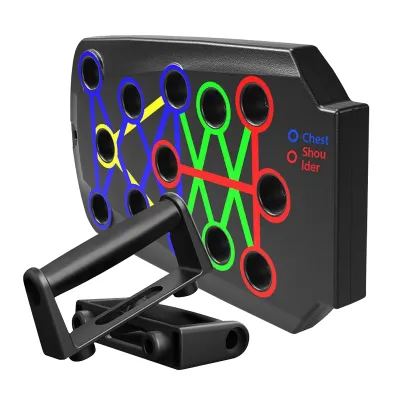
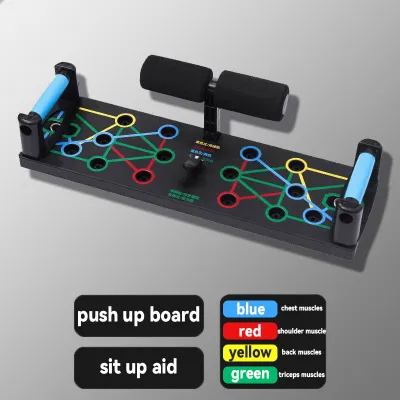
Beyond joint protection, a push-up board offers systematic muscle targeting through varied grip angles and widths. Most boards feature color-coded guide lines that map out precise hand placements designed to emphasize different muscle groups. For example, wide placements recruit the outer pectorals, while narrow, parallel placements shift the primary load to the triceps and anterior deltoids. This visual guidance removes the guesswork from your workouts, allowing you to structure balanced routines that target the chest, shoulders, triceps, and upper back with precision.
Additionally, the elevated design of the handles increases your range of motion by allowing your chest to descend past the level of your hands. This deeper descent stretches the pectoral muscles under load, which can lead to greater muscle fiber recruitment and improved strength gains. However, this increased range of motion also demands greater shoulder flexibility and stability. Users must progress gradually and maintain strict form to avoid overextending the shoulder joints during the deepest part of the movement.
Key Structural Features to Evaluate Before Buying
The base material of the board is the foundation of its safety and durability. Most consumer-grade push-up boards are molded from ABS (Acrylonitrile Butadiene Styrene) plastic, which offers a lightweight yet rigid structure. However, the quality of ABS plastic can vary significantly between manufacturers. It is essential to look for boards with thick walls and reinforced ribbing on the underside, as thin plastic can flex, bow, or even crack under heavy dynamic loads.

Non-slip mechanisms are critical, especially in tropical environments where humidity and sweat are constant factors. Many homes in the Philippines feature smooth ceramic tiles, polished concrete, or varnished hardwood floors, all of which become incredibly slick when wet. Ensure the board you choose includes high-density rubber non-slip pads or suction cups on the underside to prevent the board from sliding mid-rep. A sliding board can cause sudden, painful joint hyperextension or lead to a fall.
Handle ergonomics and grip texture directly impact your comfort and control during exercise. Look for handles wrapped in textured rubber or high-density foam, which provide a secure grip even when your hands are sweaty. Smooth plastic handles should be avoided, as they quickly become slippery and difficult to hold. Additionally, consider the mechanical difference between fixed and rotating handles; fixed handles offer absolute stability for beginners, while rotating handles pivot on a central axis to allow natural joint movement at the cost of requiring more stabilization strength.
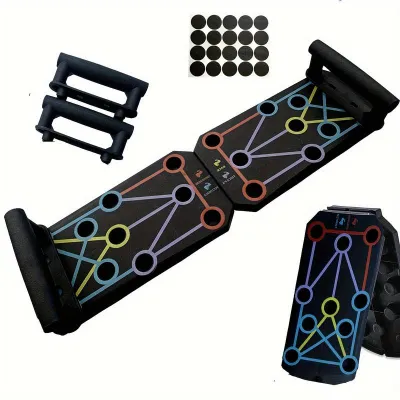
Portability is another key factor if you have limited workout space or prefer to train in different areas of your home. Folding push-up boards split down the middle, allowing you to store them easily in a closet or under a bed. When evaluating a folding model, inspect the hinge mechanism, as a weak hinge is a common point of structural failure. Detachable handles should snap or slide into their slots with minimal play or wobbling, ensuring a solid feel during use.
Matching Board Types to Your Fitness Level
For beginners, a color-coded multi-angle board is highly recommended. These boards provide a clear, structured framework that helps you learn correct hand placements and explore muscle targeting without risking injury. The fixed slots ensure that your hands remain perfectly symmetrical, preventing muscle imbalances and helping you build a solid foundation of upper-body strength. This predictable, stable setup allows you to focus entirely on mastering your form and controlling your descent.
Intermediate and advanced users may benefit from rotating push-up boards. These boards feature handles that pivot as you push up, mimicking the natural rotation of your shoulders and elbows during a pressing movement. This rotation engages the rotator cuff muscles and core stabilizers to keep the movement smooth and controlled. The added instability increases the difficulty of the exercise, making it an excellent progression for those who find standard push-up boards too easy or want to improve their functional joint mobility.
For high-volume training, weighted calisthenics, or explosive plyometric push-ups, heavy-duty fixed boards or steel push-up bars are the safest choice. These setups eliminate moving parts and folding hinges, providing a rock-solid foundation that can withstand intense, repetitive impact and additional external resistance, such as a weighted vest. If you are a larger individual or plan to push your limits with advanced calisthenics progressions, prioritizing structural rigidity over portability is essential.
Essential Safety Checks and Setup Guidelines
Before starting any workout on a push-up board, performing a thorough wrist and shoulder warm-up is essential. Even though the board promotes a neutral wrist alignment, the increased range of motion places extra demands on your shoulder joints and chest muscles. Spend a few minutes performing wrist circles, dynamic chest stretches, and light shoulder mobility exercises to lubricate the joints and prepare the surrounding muscles for the load. Equipment can support your training, but it cannot replace proper physical preparation.
Surface compatibility is another crucial safety check that must be performed before every session. Place your push-up board on your intended training surface and apply downward pressure to ensure the non-slip pads grip the floor securely. If you are training on smooth tiles, wipe both the floor and the rubber pads with a damp cloth to remove any dust or lint, which can severely compromise traction. Avoid using the board on loose rugs, carpets, or uneven surfaces that could cause the board to tilt or slide.
Always establish clear stop conditions for your workouts. If you experience sharp joint pain, if the board wobbles or flexes excessively, or if your hands begin to slip from the handles, stop the exercise immediately. Do not attempt to push through pain or equipment instability, as this significantly increases the risk of acute injury. Regularly inspect the board for signs of wear, such as hairline cracks in the plastic, worn-out rubber pads, or loose handle slots, and replace any compromised parts before training again.
Building Your Shortlist: Verifying Options on E-Commerce Platforms
When browsing local e-commerce platforms, it is important to look past polished marketing images and verify the actual quality of the products. Do not rely solely on the seller’s listed weight capacity, as these figures are often exaggerated or untested. Instead, scroll down to the user reviews and look for photos or videos uploaded by buyers of a similar build. Pay close attention to feedback mentioning “flexing,” “bending,” or “cracking” under load, as these are clear indicators of substandard plastic quality.
Be highly skeptical of listings that claim “unbreakable” materials or universal suitability for all fitness levels without providing specific technical details. High-quality manufacturers will provide clear specifications, including the exact dimensions of the board, the material used (such as high-grade ABS), and the weight of the product itself. A heavier board generally indicates thicker, more durable plastic and a more robust internal structure, which translates to better stability and safety during your workouts.
Additionally, evaluate the seller’s responsiveness and the platform’s return policies before making your purchase. A reputable seller will promptly answer questions about replacement parts, such as extra rubber feet or replacement handles, and offer a clear return policy in case of manufacturing defects. Compare the price in ₱ against the features offered; while a very cheap board may save you money initially, investing slightly more in a board with a wider base, thicker rubber pads, and robust handle connections ensures a safer, more effective, and longer-lasting home workout setup.
Frequently Asked Questions (FAQ)
Can a push-up board completely prevent wrist pain?
While a push-up board significantly reduces wrist strain by keeping your wrists in a neutral, straight alignment, it cannot completely prevent or cure pain caused by underlying medical conditions or poor biomechanics. If you have pre-existing wrist injuries, carpal tunnel syndrome, or severe joint instability, using a board may still cause discomfort if your form is incorrect or if you overload the joint too quickly.
If you experience persistent, sharp, or throbbing pain during or after your workouts, it is essential to stop using the equipment and consult a qualified medical professional. A push-up board is a tool to assist with alignment, but it should be used in conjunction with proper mobility training, gradual progression, and professional medical advice when necessary.
How do I clean and maintain rotating mechanisms?
To keep rotating push-up boards operating smoothly, regular maintenance is required to prevent dust, sweat, and debris from clogging the rotation track. After every workout, wipe down the handles and the base with a damp microfiber cloth to remove sweat residue, which can corrode internal components or make the grips slippery.
Avoid using liquid lubricants, oils, or WD-40 on the rotating joints, as these substances attract dust and lint, creating a sticky buildup that can jam the mechanism over time. If the rotation becomes stiff, check the track for visible debris and use a dry brush or compressed air to clear it out.
Are push-up boards suitable for tall or heavy individuals?
Yes, but tall or heavy individuals must be highly selective when choosing a push-up board. Larger users place significantly more stress on the board’s structure, making it critical to verify the maximum weight capacity and prioritize boards with reinforced ABS plastic, steel, or thick wood construction.
Additionally, tall individuals should look for boards with a wider base to ensure lateral stability and prevent the board from tipping during wide-grip exercises. Ensure the handle height provides adequate clearance for your chest to descend comfortably without bottoming out against the board’s surface.
Community discussion
Share your experience or ask a question. Comments are reviewed before publication.