
To choose the right PVC baton holder size, you must match your baton’s widest point—typically the rubber end caps or custom grip tape—with the holder’s Inner Diameter (ID), ensuring an interior clearance of at least 5 to 10 millimeters. Additionally, the internal length of the holder must be 2 to 3 centimeters longer than your baton’s total length from tip to tip. This precise fit prevents your equipment from rattling during transit, ensures lightning-fast draws during high-energy routines, and protects delicate finishes from the harsh, humid tropical climate.
Why the Right PVC Baton Holder Size Matters
Cheerleaders often travel long distances for regional meets, school pep squad competitions, and national tournaments. Whether you are navigating a crowded jeepney, riding a tricycle to a local sports complex, or packing your gear into a tight bus compartment, your baton is constantly vulnerable to external pressure and impacts. A sturdy PVC holder acts as an armor shell, ensuring that your equipment arrives at the venue in perfect condition.
Using a holder with the correct dimensions prevents the metal or fiberglass shaft from bending under pressure. It also protects delicate rubber tips or decorative star-shaped end caps from getting scuffed, torn, or lost during transit. When your gear is securely housed, you do not have to worry about other heavy sports equipment in your bag crushing your performance tools.
Products mentioned in this guide
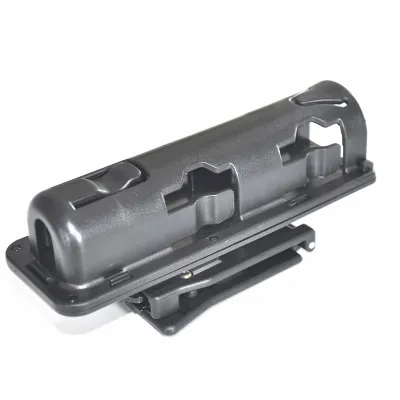
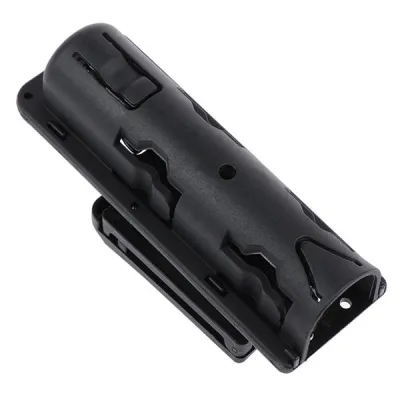
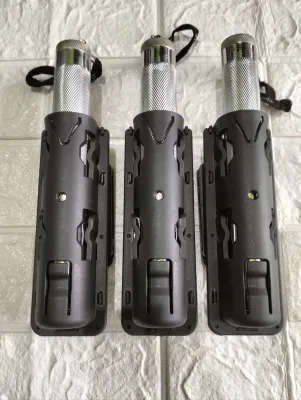
Prices are valid at publication and may change. Please refer to the product page for the latest price.
Routine efficiency is another critical factor that depends heavily on proper sizing. During fast-paced cheer and dance routines, transitions happen in a matter of seconds, and equipment changes must be seamless. If your holder is too tight, extracting the baton becomes a struggle that can disrupt the timing of your entire team’s performance.
Conversely, a holder that is too loose allows the baton to slide back and forth constantly. This continuous rattling causes micro-scratches on the shaft, chips away custom paint, and can even loosen the adhesive on your grip tape or decorative rhinestones. A snug, calculated fit eliminates these risks entirely, keeping your gear quiet and secure.
How to Measure Your Cheerleading Batons and Pom-Pom Sticks
Accurate measurements are the foundation of a perfect fit. Do not rely on standard manufacturer sizes alone, as custom modifications can alter your baton’s profile. Gather your equipment and take precise measurements before looking for a holder.

To measure your gear accurately, you will need a few basic tools:
- A rigid metal ruler or a heavy-duty tape measure for length.
- A flexible vinyl measuring tape to find the circumference of the widest points.
- A pencil and paper to note down the exact millimeter measurements.
Total Length Lay your baton flat on a level surface. Use your rigid ruler to find the distance from the outermost edge of one end cap to the outermost edge of the other. If your baton has decorative star tips, rubber grips, or flashing LED caps, make sure these are fully installed before measuring, as they add significant length.
Maximum Diameter Many cheerleaders make the mistake of only measuring the thin metal shaft of the baton. However, the holder must accommodate the widest part of the equipment. This is almost always the rubber end caps, the weighted balance balls, or the flared ends of a pom-pom stick. Wrap your flexible measuring tape around the widest point to find the circumference, then divide by 3.1416 to calculate the diameter, or use a caliper for a direct reading.
Accounting for Modifications Personalized gear is a staple of competitive cheer culture. If you wrap your baton shaft in thick athletic tape, colorful vinyl stickers, or sparkling rhinestone sheets, you must re-measure. These custom layers add measurable thickness to the diameter and can significantly increase friction inside a tight PVC tube.
Understanding PVC Baton Holder Specifications
When browsing hardware stores or looking at online listings, you will encounter various technical terms. Understanding these specifications prevents costly purchasing mistakes and ensures you get the right utility out of your materials.
Inner Diameter (ID) vs. Outer Diameter (OD)
- Inner Diameter (ID): This is the actual open space inside the tube where your baton will rest. This is the only diameter metric that determines if your baton will fit inside the holder.
- Outer Diameter (OD): This includes the thickness of the plastic walls. OD is important for determining if the holder will fit into the side pockets of your sports backpack or the dedicated slots of your team gear bag.
Internal Length vs. External Length
- Internal Length: This is the actual usable space inside once the end caps, plugs, or screw fittings are installed.
- External Length: This is the total length of the physical PVC pipe from end to end. Always look for the internal length specification, as heavy-duty end caps can reduce the usable interior space by several centimeters.
Wall Thickness PVC pipes are categorized by wall thickness, often labeled as Schedule 40, Schedule 20, or class ratings in local stores. Thicker walls offer superior crush resistance, which is excellent if your gear bag is regularly stacked under heavy luggage. However, thicker PVC is significantly heavier. For young performers or those who commute long distances on foot, a medium-thickness pipe provides the best balance of protection and lightweight portability.
Step-by-Step Guide to Matching Batons to PVC Holders
Once you have your measurements and understand the specifications, follow this systematic matching process to find the ideal holder for your cheer gear.
Step 1: Match the Diameter Take your baton’s maximum diameter (including tape and end caps) and compare it to the holder’s Inner Diameter (ID). The holder’s ID must be larger than your baton’s widest point. Select a PVC tube with an ID that is 5 to 10 millimeters wider than your baton’s maximum diameter to prevent the rubber tips from sticking to the plastic walls.
Step 2: Match the Length Compare your baton’s total length to the holder’s internal length. The internal length must exceed your baton’s length by at least 2 to 3 centimeters. This extra space ensures that the delicate tips of your baton do not press constantly against the hard end caps, which can cause premature wear or deformation of the rubber.
Step 3: Check Clearance Guidelines A proper fit should allow the baton to slide in smoothly under its own weight when the holder is held vertically. It should not wobble excessively from side to side. If the clearance gap is too wide (greater than 15 millimeters), the baton will bang against the inner walls during transport, potentially throwing off its balance.
Step 4: Verify Closure Compatibility Consider how the holder seals. If you are using push-on vinyl end caps, screw-on cleanout adapters, or internal expansion plugs, check how far they penetrate into the tube. Some internal plugs can take up to 3 centimeters of interior length. If your measurements are tight, choose external slip-on caps or screw caps that do not compromise the internal storage space.
Ensuring a Secure Fit for Transport and Routines
Even with careful measurements, you might end up with a holder that is slightly too loose or requires minor adjustments for peak performance during active training cycles.
Adjusting a Slightly Loose Fit If your baton rattles inside the holder, you can easily customize the interior. Place a small piece of soft foam, bubble wrap, or a clean microfiber cloth at the bottom of the tube to act as a shock absorber. You can also wrap a small strip of felt or soft velcro tape around the inside rim of the holder’s opening to cushion the upper end cap and eliminate noise.
Testing the Draw Speed Before heading to a competition or field performance, practice retrieving your baton from the holder. Simulate the exact movements of your routine’s starting sequence. The baton should slide out effortlessly without catching on the rim or requiring you to shake the tube violently. If it sticks, check for adhesive residue inside the tube or consider upgrading to a slightly wider holder.
Environmental Care High humidity and intense heat can cause PVC to soften slightly or warp if left in direct sunlight, such as on concrete outdoor bleachers or inside a hot vehicle. Always store your PVC holders in a cool, shaded area. Excessive heat can also melt the adhesive on your baton’s grip tape, causing it to transfer to the inside of the holder and create a sticky, hard-to-clean residue that ruins the smooth draw.
Frequently Asked Questions (FAQ)
Can I use the same PVC holder for both standard batons and pom-pom sticks?
Standard twirling batons and pom-pom sticks usually require different sizes. Twirling batons are long and slender, requiring narrow, elongated tubes. Pom-pom sticks, especially those with pre-attached, bulky metallic or plastic poms, have much wider handles and shorter overall lengths. Trying to fit a pom-pom stick into a standard baton holder often results in a tight squeeze that crushes the pom fibers, while putting a twirling baton into a wide pom-pom holder leads to excessive rattling and damage. Measure each piece of equipment individually and use dedicated holders for the best results.
What should I do if my baton gets stuck in the PVC holder?
If your baton becomes lodged inside the tube, do not panic or use brute force. First, check if the sticking is caused by vacuum suction or sticky tape residue. Gently tap the capped end of the holder against a soft, carpeted floor or a rubber mat to encourage the baton to slide down. If that fails, try using a soft, dry cloth to get a firm grip on any exposed part of the baton and pull straight outward. Never use metal pliers, hammers, or sharp tools, as these can easily crack the PVC pipe or scratch your baton’s finish. If the baton remains firmly stuck, stop immediately and ask your coach, equipment manager, or a hardware professional for assistance to avoid damaging your gear.
Community discussion
Share your experience or ask a question. Comments are reviewed before publication.