
Finding the right quad roller skates for girls in the Philippines requires balancing safety, comfort, and adaptability to local environments. Whether your child is skating on a smooth indoor rink, a covered barangay basketball court, or a concrete driveway, the ideal pair must provide reliable stability and room to grow. Quad skates, with their classic four-wheel configuration, offer an excellent entry point for young beginners, helping them build confidence and coordination. By focusing on key features like adjustable sizing, appropriate wheel hardness, and robust ankle support, parents can ensure a safe and enjoyable skating experience that keeps pace with their child’s development.
Finding the Right Fit and Adjustability for Growing Feet
To ensure a safe and comfortable skating experience, finding the correct boot size is the most critical step. Children’s feet grow rapidly, which often tempts parents to buy skates that are several sizes too large. However, oversized skates can cause the foot to slide around inside, leading to painful blisters, poor control, and an increased risk of ankle rolls or falls. A proper fit means the foot is snug but not pinched, with just enough room to wiggle the toes slightly.
To get an accurate measurement, have your child stand on a blank sheet of paper with their heel flat against a wall. Trace the outline of both feet and measure the distance from the heel to the tip of the longest toe in millimeters. Compare this measurement directly against the manufacturer’s specific size chart, as skate sizing rarely aligns perfectly with standard school shoe sizes. Always measure both feet, as one foot is often slightly larger than the other, and size the skates to the larger foot.
Products mentioned in this guide
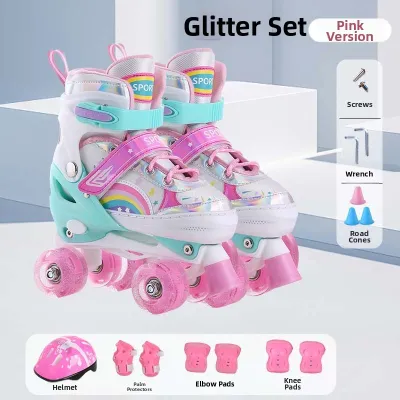
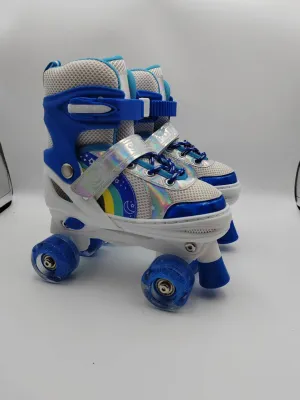
Prices are valid at publication and may change. Please refer to the product page for the latest price.
Adjustable boot mechanisms are an excellent, cost-effective solution for growing children. Many modern quad skates feature a push-button adjustment system, typically located near the heel or under the sole. Pressing this button allows you to slide the toe cap forward or backward, expanding the boot across three to four distinct sizes. When evaluating these models, verify that the adjustment track is made of durable materials and locks securely into place without any wiggle room, ensuring the boot remains structurally sound at every size setting.
The interior lining of the boot plays a vital role in comfort and foot health, especially in the tropical climate of the Philippines. High humidity and heat can cause feet to sweat excessively, which increases friction and the likelihood of chafing. Look for skates with breathable mesh panels, moisture-wicking fabric liners, and thick, high-density foam padding that cushions the ankle and instep. Removable liners are also highly beneficial, as they can be easily washed and air-dried to maintain hygiene.
Matching Wheels and Bearings to the Riding Surface
The performance and safety of quad skates depend heavily on the wheels, which must match the surface where your child will skate most often. Wheel hardness is measured on the durometer “A” scale. For outdoor skating on rough asphalt, subdivision roads, or concrete driveways, softer wheels rated between 78A and 82A are highly recommended. These wheels are made of a resilient polyurethane that absorbs vibrations and grips uneven ground, preventing the skater from tripping over small pebbles or cracks.

Conversely, if your child will primarily skate on smooth indoor rink floors, polished concrete, or covered basketball courts, harder wheels rated 85A to 95A are more suitable. Harder wheels offer less rolling resistance, allowing for smoother glides and faster speeds, but they provide very little shock absorption on rough outdoor surfaces. Using hard wheels outdoors can cause uncomfortable vibrations that quickly fatigue a child’s legs and make balancing more difficult.
Wheel diameter and width also affect stability and maneuverability. For young girls who are just learning to balance, wider wheels with a larger contact patch—the area of the wheel that touches the ground—provide a more stable, secure platform. Standard recreational wheels for kids usually range from 58mm to 62mm in diameter, which strikes an ideal balance between stability for beginners and maneuverability as their skills progress.
Bearings are the small metal components inside the wheels that allow them to spin, and they are rated using the ABEC scale, typically ABEC-1, 3, 5, 7, or 9. For young beginners, high-speed bearings like ABEC-7 or ABEC-9 are unnecessary and can make the skates roll too quickly, making it difficult for a child to maintain control. An ABEC-3 or ABEC-5 bearing is generally preferred for beginners, as it offers a smooth, controlled roll that helps the skater focus on balance and form.
In the Philippines, the combination of high humidity, dust, and sudden rain showers can easily damage bearings. Moisture and dirt can enter the bearing casing, leading to rust and a gritty, sluggish spin. When choosing skates, look for wheels equipped with shielded or sealed bearings, often labeled as ZZ or 2RS, which help keep out environmental debris. Regularly checking that the wheels spin freely and wiping down the skates after outdoor use will significantly prolong their lifespan.
Ensuring Ankle Support and Safe Braking Mechanisms
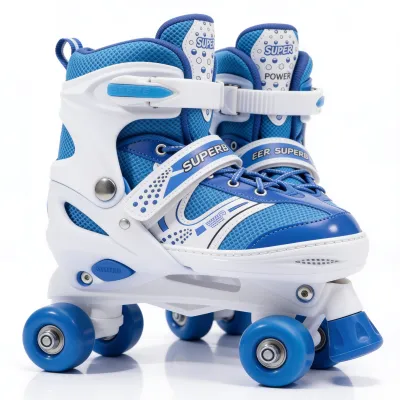
Proper ankle support is essential for preventing injuries and helping young skaters maintain an upright posture. Quad skates generally come in two main styles: hard-shell boots and soft-boot designs. Hard-shell boots, constructed from molded plastic or composite materials, provide rigid lateral support that prevents the ankles from bowing inward or outward. This structural rigidity is highly beneficial for young beginners who are still developing the muscle strength required for skating.
Soft-boot designs, which resemble high-top sneakers, are lighter, more flexible, and often more comfortable out of the box. However, they offer less structural support around the ankle. If you choose a soft-boot model, ensure it features reinforced ankle cuffs or internal plastic inserts to provide a baseline level of stability. For absolute beginners, a hard-shell boot is usually the safer choice to build foundational balance.
A secure, multi-layered closure system is critical for keeping the foot locked firmly in place. The most reliable setups utilize a triple-closure system: traditional laces on the lower boot to customize the fit over the instep, a hook-and-loop power strap across the ankle to pull the heel back into the boot pocket, and a micro-adjustable safety buckle at the top of the cuff to secure the lower leg. This combination prevents heel slippage, which is a major cause of blisters and loss of control.
The braking mechanism on quad skates is the toe stop, located at the front of the boot. For beginners, a wide, non-marking rubber toe stop is essential for safe stopping. Avoid cheap plastic toe stops, which slide across smooth surfaces instead of gripping them, making it difficult for a child to stop safely. Check whether the skates feature adjustable toe stops, which allow you to raise or lower the brake height as the rubber wears down, or fixed bolt-on toe stops, which are simpler but less customizable.
Before every skating session, parents should verify that the toe stop is tightly secured. A loose toe stop can wobble or fall off mid-skate, leading to sudden loss of balance. Regularly inspect the rubber for wear and replace the toe stops when they become worn down to the safety line, ensuring your child always has reliable stopping power.
Building Your Shortlist and Verifying Retailer Policies
When shopping for quad roller skates in the Philippines, setting a realistic budget is the first step toward finding a safe, durable pair. High-quality, adjustable entry-level skates typically range from ₱1,500 to ₱3,500. Mid-range to premium models, which often feature aluminum frames, high-rebound polyurethane wheels, and superior bearing sets, can cost between ₱4,000 and ₱8,000. It is wise to avoid ultra-cheap toy skates priced under ₱1,000, as they often use brittle plastic frames and hard plastic wheels that offer poor grip and safety.
Before making a purchase on local ecommerce platforms or official brand stores, take the time to read customer reviews carefully. Look for feedback from other parents regarding the accuracy of the manufacturer’s size chart, the durability of the buckles and straps, and how well the wheels spin out of the box. Pay close attention to reviews that mention how the skates perform on local outdoor surfaces like concrete or asphalt, as this provides practical insight into real-world durability.
Because getting the perfect fit is crucial for safety, always verify the retailer’s return and exchange policies before checking out. Ensure the store offers a clear exchange window, typically 7 to 14 days, allowing you to swap the skates for a different size if they do not fit comfortably. Additionally, check if the skates come with a manufacturer’s warranty that covers structural defects on the frame, plates, or closure buckles, giving you peace of mind with your investment.
Frequently Asked Questions (FAQ)
Should beginners start with quad skates or inline skates?
For most young children who are completely new to roller sports, quad skates are generally considered the easier and more stable option to start with. The four-wheel rectangular configuration provides a wide, self-supporting base that allows the child to stand upright and balance easily even when they are not moving. This immediate stability helps build confidence quickly, reducing the initial fear of falling.
Inline skates, which feature wheels arranged in a single line, require a different type of balance and stronger ankle muscles to keep the skates upright. While inline skates are excellent for speed and maneuvering around obstacles once a child has mastered the basics, quad skates offer a gentler learning curve and a more forgiving platform for absolute beginners.
What protective gear is essential for a child learning to skate?
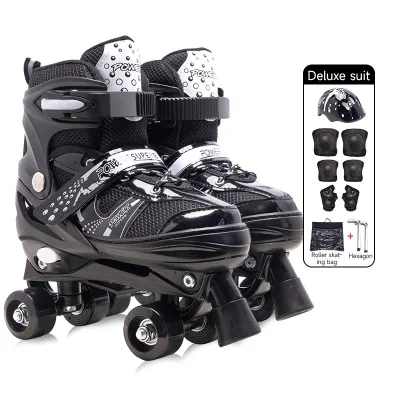
Safety gear is an absolute necessity for any child learning to skate, as falls are an inevitable part of the learning process. A complete protective set must include a properly fitted helmet, knee pads, elbow pads, and wrist guards. Wrist guards are especially critical, as children naturally extend their hands to break their fall, which can lead to wrist injuries without proper impact absorption.
When purchasing protective gear, look for items that carry recognized safety certifications and feature adjustable straps to ensure a snug, secure fit. The hard plastic caps on the knee and elbow pads should align directly over the joints without restricting the child’s natural range of motion. Investing in high-quality protective gear not only prevents physical injuries but also gives young skaters the confidence to practice and improve their skills.
Community discussion
Share your experience or ask a question. Comments are reviewed before publication.