
Finding the perfect racket string tension is a balancing act that directly shapes your performance on the court. Instead of copying the setups of professional players, you must align your string tension with your current physical capabilities, playing style, and racket specifications. The ideal tension is the one that allows you to execute your shots consistently without straining your muscles or joints. By understanding how tension alters the behavior of the string bed, you can make informed adjustments that elevate your game and protect your body from injury.
Understanding How Racket String Tension Affects Your Game
The relationship between racket string tension and ball or shuttlecock behavior is governed by fundamental physics, primarily centered on the “trampoline effect” versus the “board effect.” When a racket is strung at a lower tension, the strings deflect more upon impact, storing elastic energy and transferring it back to the ball or shuttlecock. This trampoline effect provides easy depth and power, requiring less physical effort from your arm to send the ball deep into the opponent’s court. Conversely, higher tension creates a stiff, flat surface often compared to a wooden board. With minimal string deflection, the ball leaves the string bed almost instantly, giving you precise control over the angle and direction of your shots at the expense of natural power.
Tension also directly dictates the size of your racket’s sweet spot and its capacity for shock absorption. A lower tension expands the sweet spot, making the racket highly forgiving on off-center hits because the entire string bed can flex to cushion the impact. When you increase the tension, the sweet spot shrinks toward the center of the frame. Off-center hits on a highly strung racket feel harsh, sending intense vibrations down the shaft and directly into your wrist, elbow, and shoulder.
Products mentioned in this guide
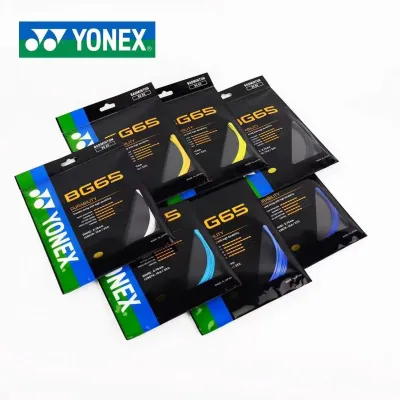
196 Lazada user ratings
BG65 Badminton String is perfect for beginners!, YONEX Badminton String BG66 ULTIMAX is amazing!, BG65 Badminton String offers great durabil…Read full reviewShow less
BG65 Badminton String is perfect for beginners!, YONEX Badminton String BG66 ULTIMAX is amazing!, BG65 Badminton String offers great durability!, BG80 Badminton String is a game-changer!,
YONEX Badminton String BG66 ULTIMAX is amazing!, BG65 Badminton String offers great durability!, BG65 Badminton String is perfect for beginn…Read full reviewShow less
YONEX Badminton String BG66 ULTIMAX is amazing!, BG65 Badminton String offers great durability!, BG65 Badminton String is perfect for beginners!,
BG65 Badminton String offers great durability!, BG65 Badminton String is perfect for beginners!Badminton String is a game-changer!,
Dumating na po yong parcel maayos naman at walang damage mabilis higitbpa sa inaasahan ko salamat seller
🔨Durability:and Sunday napo update on your way 🎧Comfort:and size Po pala ang ✋Grip:you want to go
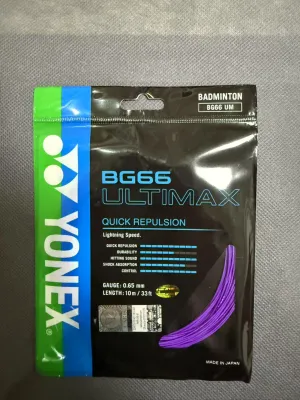
74 Lazada user ratings
the strings looked brand new and in packaging. it is the same as what has been posted of the seller. i think these strings will serve their …Read full reviewShow less
the strings looked brand new and in packaging. it is the same as what has been posted of the seller. i think these strings will serve their purpose. will update the review if i experience any issues but so far im okay with it
Good power transmission, Smooth tension for consistent hits, Ideal yahwahhakaksinfu hshisndhxudjsihdbdixbjd djdjxjbfixndiksnsjshfor advanced…Read full reviewShow less
Good power transmission, Smooth tension for consistent hits, Ideal yahwahhakaksinfu hshisndhxudjsihdbdixbjd djdjxjbfixndiksnsjshfor advanced players,
D po Durable, lumang stock at madaling maputol.. Sayang ang pera
Thankyouu po dumating na po
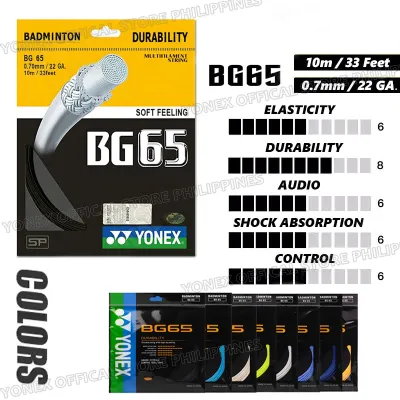
203 Lazada user ratings
thank u seller i got my ordered item in good condition and i like it satisfied too🤗 Until next time around ,very responsible seller deserve …Read full reviewShow less
thank u seller i got my ordered item in good condition and i like it satisfied too🤗 Until next time around ,very responsible seller deserve good rating!🙂
Shop goods are exquisite workmanship, good service, give a good review!
Good quality and Thank you i would love buy more at your store anytime
Very good, Hehe, continue to patronize!
mabilis dumating, sana matibay
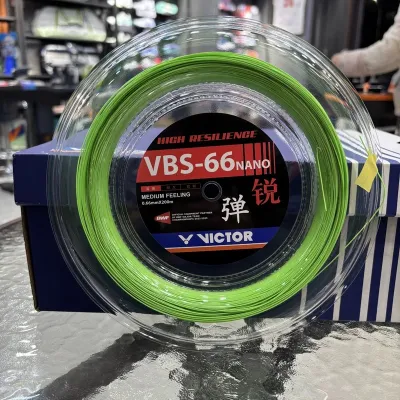
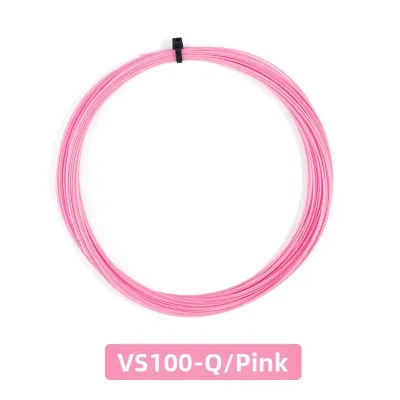
8 Lazada user ratings
Control:Superior control,
Tension:Reliable tension,
Tension:Stable tension,
Durability:100
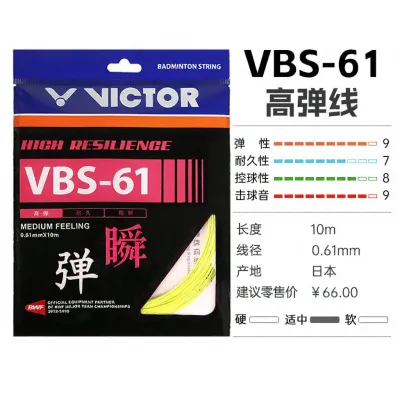
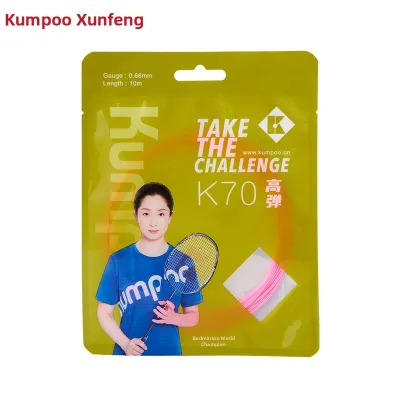
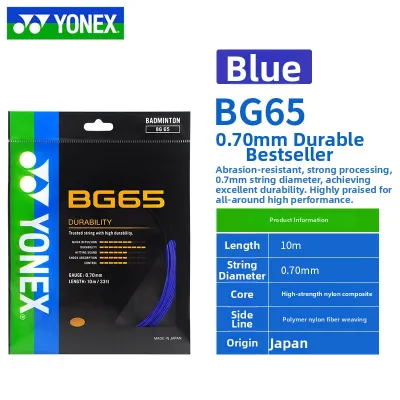
44 Lazada user ratings
Excellent quality, Nice packaging, Good seller service, Compatible with machines, Compatible with machines, Durable for long use, Durable fo…Read full reviewShow less
Excellent quality, Nice packaging, Good seller service, Compatible with machines, Compatible with machines, Durable for long use, Durable for long use, Good tension control,
I've been using this brand of badminton string, and it's great quality. I've been using it for a while now and it hasn't broken. Definitely …Read full reviewShow less
I've been using this brand of badminton string, and it's great quality. I've been using it for a while now and it hasn't broken. Definitely worth recommending!
Good seller service, Excellent quality, Easy to install, Perfect for badminton, Durable for long use, Fast shipping,
it's good quExcellent quality, ality I haven't stringed it to my racket that's all I can say
Good tension control, Fast shipping, High elasticity string, Sobrang ganda at original
Prices are valid at publication and may change. Please refer to the product page for the latest price.
A common misconception among developing players is that higher tension automatically generates more power. In reality, a stiff string bed requires exceptionally fast swing speeds and precise timing to compress the ball or deflect the shuttlecock effectively. If your swing speed is moderate or slow, high tension will actually decrease your depth and force you to overswing, which quickly leads to fatigue and poor shot execution.
Assessing Your Skill Level and Physical Capabilities
Your current skill level and physical strength should serve as the primary filters when deciding on a string tension. Beginners generally benefit most from lower tension ranges because their swing mechanics and contact points are still developing. During this learning phase, a forgiving string bed that offers easy depth helps build confidence and keeps rallies going. Relying on the trampoline effect of lower tension allows you to focus on proper footwork and stroke mechanics rather than straining to generate depth.

As you transition to an intermediate level, your swing speed becomes more consistent, and you begin to actively shape your shots with spin and varied placement. At this stage, a moderate increase in tension provides the predictability needed to keep your shots from flying out of bounds. You no longer need the racket to do all the work to generate power, as your improved timing and body rotation naturally produce ball speed.
Advanced players possess the refined technique and rapid swing speeds necessary to handle high string tensions. Because they can easily generate their own power through clean contact and explosive acceleration, they prioritize maximum control and directional accuracy. High tension allows these players to swing aggressively without fear of overhitting, enabling precise placement near the lines.
However, physical capabilities and injury history must always override skill-level recommendations. High string tension places significant stress on your arm muscles and tendons. If you have a history of tennis elbow, golfer’s elbow, or wrist strain, high tension can exacerbate these conditions. In tropical climates like the Philippines, where heavy, humid air can make balls feel heavier and require more effort to push deep, choosing a slightly lower, more forgiving tension can prevent chronic joint fatigue and keep you playing safely.
Matching Tension Ranges to Your Playing Style
Your strategic approach on the court dictates whether you should lean toward the lower or upper limits of your racket’s capabilities. Power-oriented players, such as baseline hard-hitters or aggressive smashers, often prefer lower tension ranges within the manufacturer’s limits. This setup maximizes energy return and ball pocketing, allowing them to hit deep, heavy shots with less physical strain. The extra dwell time—the split second the ball remains on the strings—also helps transfer maximum kinetic energy into the shot.
Control-oriented players, including tactical placement specialists and net players, thrive on higher tension ranges. The reduced string deflection minimizes the launch angle variation, meaning the ball goes exactly where the racket face is pointing at the moment of contact. This stiffness is also highly beneficial for generating spin, as the strings do not slide or pocket the ball as much, allowing the player to brush up against the ball with sharp, predictable feedback.
All-court or balanced players who transition between defense and attack should aim for a middle-ground tension. This balanced approach provides enough depth for defensive lobs and baseline rallies while retaining sufficient control for delicate drop shots and volleys. Finding this sweet spot requires using the racket manufacturer’s recommended tension range printed on the frame as your mandatory baseline variable, then adjusting slightly up or down based on your personal preference.
Verifying Racket Specifications and Safety Limits
Before requesting a specific tension, you must verify the structural limits of your equipment. Racket manufacturers print the recommended tension range directly on the frame, usually located on the inside of the throat, along the shaft, or near the head. This range is carefully calculated based on the frame’s material composition, wall thickness, and structural geometry.
Exceeding the maximum recommended tension carries severe physical risks for your racket. The immense pulling force of the strings can warp the frame, cause micro-fractures in the graphite composite, or even cause the head to collapse entirely during the stringing process. Furthermore, stringing a racket beyond its specified limits almost always voids the manufacturer’s warranty, leaving you without recourse if the frame breaks.
Different materials and designs handle tension differently. Modern high-modulus carbon fiber frames can tolerate higher tensions than older aluminum or low-grade composite rackets, which are prone to bending under pressure. Larger head sizes also experience more frame flex, meaning they may require a slightly different tension strategy than smaller, stiffer mid-plus frames.
Always inspect your racket frame thoroughly before taking it to a stringer. If you spot any pre-existing stress fractures, hairline cracks, or severely worn grommets, stop and consult a professional. Stringing a damaged frame under high tension is highly dangerous and will likely result in a catastrophic frame failure on the stringing machine or during your next hard hit.
Ordering Stringing Services and Communicating Your Preferences
When you visit a local sports shop or utilize an online stringing service in the Philippines, clear communication with your stringer is essential to getting the results you expect. You should specify your exact tension preferences in pounds (lbs) or kilograms (kg). Some players prefer a uniform tension across the entire racket, while others request a main-and-cross differential, where the cross strings are strung one to two pounds lower than the main strings to soften the string bed and expand the sweet spot.
Do not hesitate to ask the stringer about their equipment and methods. Inquire if their electronic or manual crank machine is regularly calibrated, as an uncalibrated machine can result in a tension that is several pounds off from your request. You should also discuss string type compatibility; for instance, stiff polyester strings should generally be strung 5% to 10% lower than soft multifilament or synthetic gut strings to maintain a similar feel and protect your arm.
Be prepared for initial tension loss, a natural physical phenomenon known as tension creep. Immediately after a racket is pulled off the machine, the strings begin to stretch and relax. You can expect to lose about 5% to 10% of the reference tension within the first twenty-four hours, even before you hit a single ball. This drop is normal, so do not be surprised if the racket feels slightly softer during your first session than it did right off the machine.
Finally, factor the ongoing maintenance costs into your playing budget. A standard stringing service fee in local shops typically ranges from ₱200 to ₱500, excluding the cost of the strings themselves. High-performance strings that offer exceptional spin or durability may cost more, so balancing your performance needs with how often you break strings will help you maintain a sustainable budget.
Testing Your Setup and Making Incremental Adjustments
Evaluating your new string job requires paying close attention to how the racket behaves during your first few on-court sessions. Focus on the depth of your groundstrokes and the feedback traveling up your arm. If you find your shots consistently landing short or your arm feeling sore and buzzy after an hour of play, your tension is likely too high. If your shots are flying long or you feel a lack of control when trying to place the ball, your tension is likely too low.
When making changes, always follow the rule of small adjustments. Avoid making massive jumps in tension, such as leaping from 50 lbs to 60 lbs. Instead, adjust your tension in small increments of one to two pounds (or half a kilogram) at a time. This controlled approach allows you to isolate the effects of the tension change without completely disrupting your stroke timing and muscle memory.
Keep a simple log of your setups, noting the string brand, gauge, tension, and the date of stringing. It is also helpful to note environmental factors, as the tropical heat and high humidity in the Philippines will cause strings to lose tension and elasticity much faster than they would in cooler, drier climates. If you play frequently in hot outdoor courts, you might need to string your racket one or two pounds higher to compensate for the rapid softening of the material.
Lastly, recognize when it is time to restring your racket. Strings do not need to snap to be considered dead; over time, they lose their elasticity, develop deep notches where they intersect, and fail to snap back into place. If your racket starts to feel dead, boardy, or completely unpredictable, it is time to cut the strings out and start fresh with a newly optimized tension.
Community discussion
Share your experience or ask a question. Comments are reviewed before publication.