
Finding the perfect resistance band set is the most efficient way to build a versatile home gym without bulky weights, but choosing the wrong tension can stall your progress or lead to injury. The key is matching the band type and resistance level to your current physical strength, specific training goals, and target exercises, rather than relying on arbitrary color-coding. A well-chosen set allows you to progress seamlessly as your muscles grow stronger, offering a customizable workout experience that adapts to your environment.
Assess Your Current Fitness Level and Baseline Strength
Before looking at product specifications, you must establish an honest baseline of your current physical capabilities. Strength is highly specific to individual muscle groups and movement patterns, meaning a single band will never suit your entire body. For instance, your legs and glutes can naturally handle far more resistance than your shoulders or triceps.
To determine your baseline, you can use simple bodyweight benchmarks as a diagnostic tool:
Products mentioned in this guide
![THE SWEAT CLUB [5 PCS/SET] Rubber Resistance Bands Exercise Bands Flex Bands Different Intensity Level For Hip Legs Butt Home Indoors Sports Exercise Workout Resistance Endurance Training](https://img.lazcdn.com/g/p/13d9ac804327c9899003ee7192e1b221.png_400x400q80.png_.webp)

Prices are valid at publication and may change. Please refer to the product page for the latest price.
- Beginner Level: If you can perform fewer than 5 standard push-ups or struggle to complete 10 full bodyweight squats with proper form, your baseline strength is in the developmental stage. You will benefit most from ultra-light to light bands that prioritize joint stability and movement control.
- Intermediate Level: If you can comfortably complete 10 to 15 standard push-ups and 20 consecutive bodyweight squats with clean technique, you have established a solid foundation. An intermediate user requires a set with medium to heavy bands to provide adequate muscular stimulation.
- Advanced Level: If you can easily execute more than 20 strict push-ups, consecutive pull-ups, or single-leg pistol squats, your neuromuscular pathways are highly developed. You will require heavy to extra-heavy bands, or the ability to stack multiple bands together, to trigger further muscle growth.
Remember that your upper and lower body will require completely different starting points within the same resistance band set. A band that challenges your chest press will feel virtually weightless when wrapped around your thighs for a squat. This is why purchasing a multi-band set is far superior to buying a single isolated band.
Match Resistance Levels to Your Specific Training Goals
Your primary fitness objective dictates the level of tension you need from your resistance band set. Different training modalities require different physiological stimuli, which are directly influenced by the resistance rating of each band:

- Rehabilitation and Warm-Ups: If you are recovering from an injury or preparing your joints for a heavy lifting session, light resistance (typically 2 to 10 lbs or 1 to 4.5 kg) is ideal. This level of tension allows for high-repetition movements that increase blood flow and activate stabilizing muscles without overloading delicate connective tissues.
- Muscular Endurance and Toning: To build endurance and definition, you should target high-repetition ranges (15 to 20 reps) using light-to-medium resistance (typically 10 to 30 lbs or 4.5 to 13.5 kg). The goal is to create a deep muscular burn while maintaining strict, fluid form throughout the entire range of motion.
- Hypertrophy and Strength Building: For muscle growth and strength, you must challenge your muscles within a lower repetition range (8 to 12 reps). This requires heavy resistance (typically 30 to 50 lbs or 13.5 to 22.5 kg) that makes the final few repetitions highly challenging to complete.
- Power and Explosive Movements: Advanced athletic training, such as sprint assistance or explosive jump training, demands extra-heavy resistance (often exceeding 50 lbs or 22.5 kg). These bands provide intense deceleration forces that force your muscles to contract rapidly and powerfully.
When shopping, always check the exact weight ratings in pounds or kilograms printed on the bands or detailed in the manufacturer’s user manual. Never rely solely on color-coding systems, as there is no universal industry standard; a “red” band from one brand might offer 15 pounds of tension, while a “red” band from another might offer 40 pounds. In the Philippines, online marketplaces feature an array of unbranded fitness gear with highly inconsistent color schemes, making direct verification of the manufacturer’s specifications essential to avoid buying a set that is either too weak or dangerously stiff.
Choose the Right Band Type for Your Target Exercises
Selecting the right physical format of your resistance band set is just as critical as choosing the correct tension. The shape, length, and attachment options of the bands determine which muscle groups you can target effectively and how safely you can perform each movement.
Flat Loop Bands and Pull-Up Assist Bands
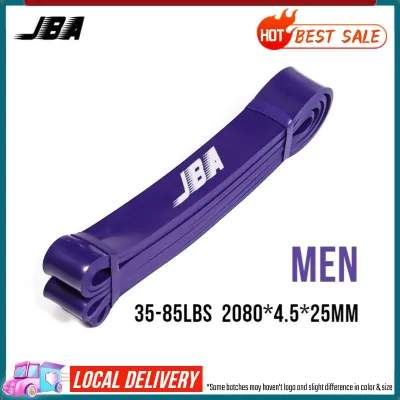
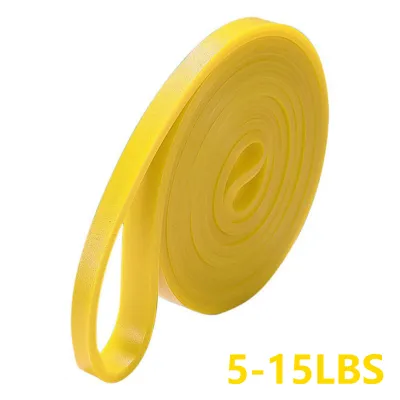
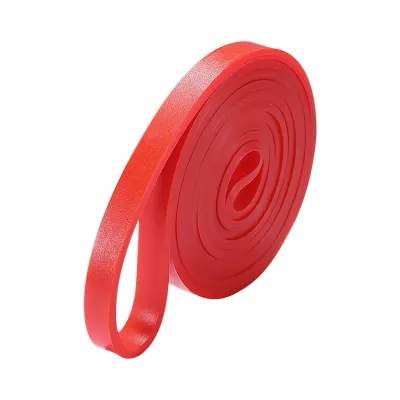
Continuous flat loop bands, often measuring about 41 inches in length, are the workhorses of functional fitness and calisthenics. These wide, heavy-duty bands are designed to withstand high levels of tension and are exceptionally useful for full-body compound movements, stretching, and mobility work.
If your goal is to master bodyweight pull-ups or dips, these loops can be safely anchored around a pull-up bar to provide vertical assistance, effectively reducing the amount of body weight you have to lift. They are also highly durable when anchored to sturdy vertical poles or heavy furniture for horizontal pulling and pushing exercises. Because of their length, they are highly favored by athletes focusing on functional strength, powerlifting setups, and dynamic outdoor workouts.
Tube Bands with Handles and Mini Bands
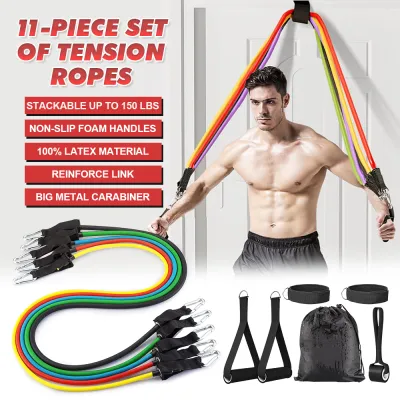
Tube bands are hollow, cylindrical rubber cords equipped with carabiners on each end, allowing you to attach padded foam handles, ankle straps, or door anchors. This design is specifically engineered to mimic cable machine exercises found in commercial gyms, making them the ultimate tool for upper body isolation work.
With a door anchor properly secured, you can perform chest presses, lat pulldowns, bicep curls, and tricep extensions with a smooth, continuous resistance curve. This setup allows you to adjust the angle of resistance easily, targeting specific muscle fibers that are difficult to reach with free weights.
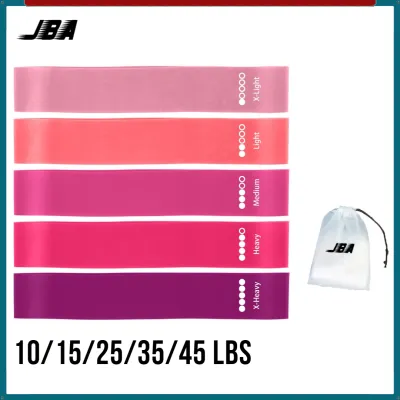
In contrast, mini bands are small, flat loops (usually 10 to 12 inches long) designed primarily for lower body activation. They are placed around the thighs, calves, or ankles to target the glutes, outer hips, and core stabilizers during lateral walks, squats, and clamshells. If your routine focuses heavily on lower body sculpting, hip rehabilitation, or warming up before heavy squats, a set that includes high-quality mini bands is indispensable.
Test Your Bands and Know When to Progress
Once you have your resistance band set, you must test the bands under active load to ensure they match your current capacity. A practical way to evaluate this is by using the Reps in Reserve (RIR) framework, which measures how many additional repetitions you could have performed with good form before reaching complete muscle failure.
During your workout, aim for an RIR of 1 to 3 on your working sets, meaning that when you finish your target repetition count, you feel you could have only completed 1 to 3 more reps with perfect technique. If you finish a set of 12 repetitions and feel you could have easily done 10 more, the resistance is far too light to stimulate adaptation. Conversely, if your form breaks down, your joints ache, or you must rely on momentum to complete the movement, the band is too heavy and poses a risk of muscle strain.
Before swapping to a completely different band, you can easily micro-adjust the tension of your current band by modifying your setup:
- Adjusting Foot Stance: For standing exercises like bicep curls or squats, widening your feet stretches the band further at the starting position, instantly increasing the baseline tension.
- Modifying Grip Position: Choking up on a tube or flat band by gripping it closer to the anchor point shortens the active length of the rubber, making the movement significantly harder.
- Folding the Band: Doubling a long flat loop band in half instantly doubles the resistance, allowing you to bridge the gap between two different bands in your set.
You will know it is time to permanently progress to the next heavier band in your set when you can consistently complete your target workout routine with an RIR of 4 or more for two consecutive weeks, without experiencing any degradation in your movement mechanics.
Material Choices and Essential Safety Checks
The material of your resistance band set directly impacts its durability, comfort, and safety, especially in challenging environments.
- Natural Latex and Rubber: These materials offer unmatched elasticity, a smooth resistance curve, and a long range of motion, making them ideal for full-body workouts and pull-up assistance. However, latex can sometimes roll up, pinch the skin, or pull body hair, and it can trigger allergic reactions in sensitive individuals.
- Fabric and Cotton Blends: Usually woven with elastic latex threads inside, fabric bands are incredibly comfortable, wide, and non-slip, making them the premier choice for mini bands used in lower body training. They do not roll up or pinch, but they offer limited stretch capacity and are generally unsuitable for upper body exercises that require a long range of motion.
In tropical climates like the Philippines, high ambient heat and humidity can accelerate the degradation of natural latex, causing it to dry out, become brittle, and crack prematurely. To prevent catastrophic snap-back injuries, you must perform a mandatory pre-workout safety inspection before every single session. Hold the band up to the light and stretch it slightly to check for micro-tears, tiny punctures, white stress marks, or areas of localized thinning. If you discover any visible wear or structural compromise, immediately stop using the band and replace it.
When anchoring your bands, always refer to the manufacturer’s instructions for safe setup. Avoid wrapping bands around sharp metal edges, rough concrete posts, or threaded pipes that can saw through the material under tension. When using a door anchor, always place it on the side of the door that closes toward you so that your pulling force pulls the door shut against the frame, rather than pulling it open, and ensure the door is fully latched before beginning your exercise.
Frequently Asked Questions (FAQ)
Can I combine multiple resistance bands for a heavier workout?
Yes, combining or stacking multiple bands is a highly effective way to increase total resistance. If your tube band set features metal carabiners, you can easily clip two or three bands onto a single pair of handles to combine their weight ratings. However, always ensure that you do not stretch the stacked bands beyond their maximum recommended elongation limit, as uneven tension can cause one band to snap prematurely, potentially leading to injury.
How do I know if my resistance band is too light or too heavy?
Your resistance band is too heavy if you cannot complete your target number of repetitions with strict, controlled form, or if you must swing your body to complete the movement. It is too light if you finish your exercise set without feeling any muscular fatigue or tension, and could easily continue performing repetitions indefinitely without your form breaking down.
Are fabric resistance bands better than latex ones?
Neither material is universally better; their suitability depends entirely on the exercise. Fabric bands are vastly superior for lower body movements like squats and lateral walks because they do not roll up, slip, or pinch your skin. Latex bands are far better for upper body exercises, stretching, and pull-up assistance because they offer the high elasticity and long range of motion required for these complex movement patterns.
Community discussion
Share your experience or ask a question. Comments are reviewed before publication.