
Selecting the ideal resistance level for a resistance band with handles is the key to unlocking an effective home or outdoor workout. Unlike traditional weights, these elastic tools provide progressive tension that increases as you stretch them, making your choice of starting resistance critical. To find your ideal match, you must evaluate your current physical strength, define your specific fitness goals, and understand how different exercises alter the tension of the band.
Assess Your Current Fitness Level and Strength Baseline
Before purchasing a resistance band with handles, establishing an accurate baseline of your physical strength prevents premature wear on your joints and ensures your muscles receive an adequate training stimulus. You can perform a simple self-assessment using basic bodyweight movements. If you can comfortably complete fifteen controlled bodyweight squats and ten full push-ups with correct form, you likely possess the baseline stability required for intermediate resistance levels. If these movements prove challenging, starting with a light band is the safest path to building foundational motor patterns.
Beginners should always prioritize mastering the path of motion before adding significant tension. In a tropical climate like the Philippines, where high humidity can make workouts more fatiguing and hands more slippery, maintaining strict form is crucial to avoid losing control of the band. Intermediate fitness enthusiasts who regularly engage in bodyweight training or light weightlifting can typically manage medium bands for most movements. Advanced lifters, accustomed to heavy external loads, will require heavy or extra-heavy bands to stimulate muscle growth, though they should still utilize lighter bands for dynamic warm-ups and joint stabilization.
Products mentioned in this guide
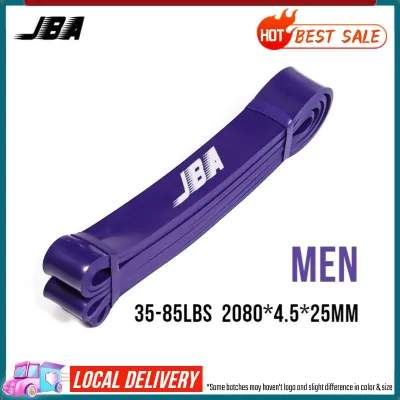
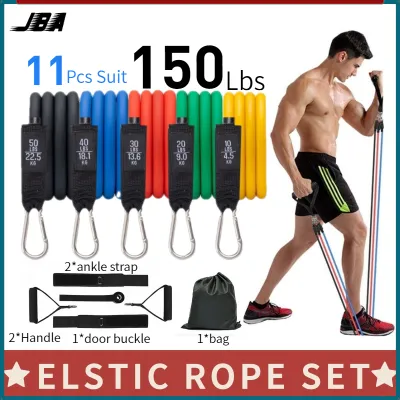
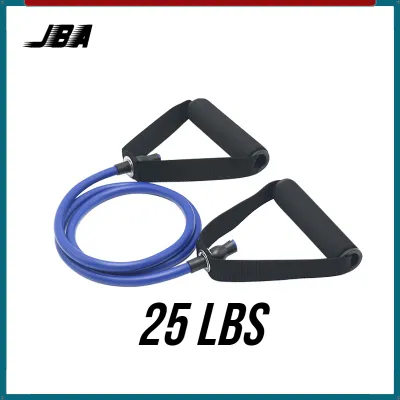
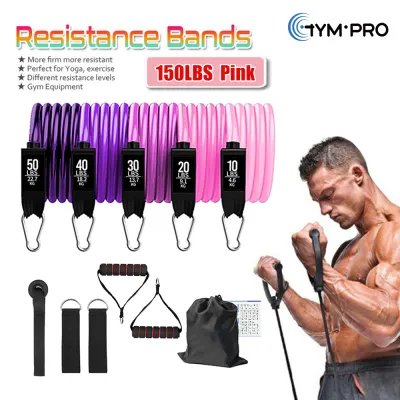
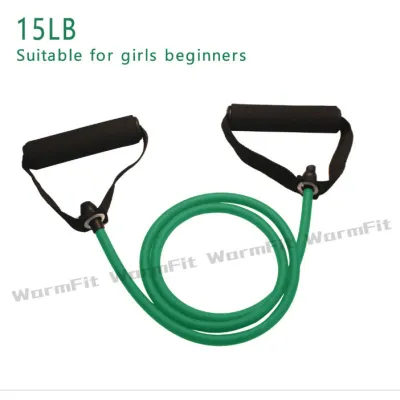
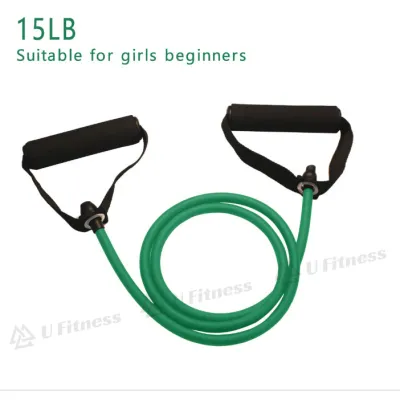
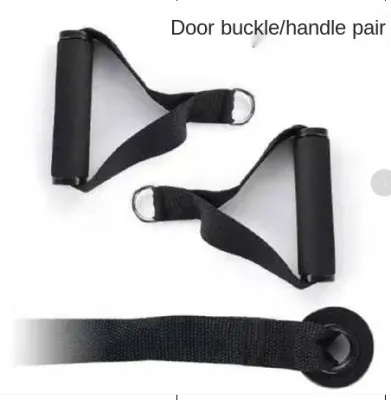
Prices are valid at publication and may change. Please refer to the product page for the latest price.
Match Resistance Levels to Your Specific Training Goals
Your primary fitness objective dictates the level of tension your resistance band with handles should provide. Light resistance bands, which often feel highly pliable and stretch with minimal effort, are designed for joint rehabilitation, mobility routines, and high-repetition muscular endurance. If you are recovering from an injury or looking to improve shoulder health before a sports session, a light band allows you to perform high-volume movements without overloading sensitive connective tissues.

Medium resistance bands serve as the versatile workhorse for general fitness, muscle toning, and hypertrophy. These bands offer enough tension to challenge your muscles within the moderate repetition range of eight to twelve repetitions. They are well suited for active individuals aiming to maintain lean muscle mass and improve daily functional strength. The resistance is substantial enough to stimulate muscle fibers but forgiving enough to allow a full range of motion.
Heavy and extra-heavy resistance bands are reserved for strength building, low-repetition power sets, and advanced athletic conditioning. These bands require significant force to stretch and are best suited for compound movements where you can leverage your entire body weight. If your goal is to replicate heavy barbell or dumbbell lifts at home, heavy bands provide the necessary mechanical tension to trigger strength adaptations, provided your anchor points and handles are rated for the load.
Factor in Exercise Type and Muscle Group Targeting
A single resistance level will rarely suffice for a full-body workout because different muscle groups possess vastly different force capacities. Larger muscle groups, such as your glutes, hamstrings, and back, naturally require heavier bands to experience an effective workout. Performing a bent-over row or a resistance band deadlift with a light band will yield minimal physical benefit, as these large muscle complexes can easily overcome low levels of tension.
Conversely, smaller, isolation-focused muscles like the biceps, triceps, and lateral deltoids require much lighter resistance. Attempting a lateral raise with a heavy band often leads to compensatory movements, such as swinging the torso or shrugging the shoulders, which diverts the work away from the target muscle and increases the risk of neck strain.
Furthermore, the range of motion of the specific exercise dramatically alters the actual resistance you feel. Because a resistance band with handles generates more tension the further it is stretched, exercises with a long path of travel, like an overhead press, will feel significantly heavier at the peak of the movement than exercises with a short path of travel, like a chest press. You must select a band level that allows you to complete the entire range of motion safely, rather than just the starting portion of the lift.
How to Test and Safely Adjust Your Band Tension
To verify if your chosen resistance band with handles is appropriate during a workout, apply the concept of repetitions in reserve. When performing a set of twelve repetitions, the final two reps should feel challenging, as if you could only complete two or three more with correct form before failure. If you finish your set feeling as though you could easily perform another ten repetitions, the band is too light; if your form breaks down before reaching your target rep count, the band is too heavy.
Fortunately, you do not always need to purchase a new band to modify the tension. You can easily adjust the resistance of a handled band mechanically by altering your physical setup. To increase tension on a standing exercise, widen your stance to step on more of the band’s length, which shortens the active portion of the tube. Alternatively, you can wrap the tubing around your feet or hands to increase the starting stretch.
Safety must remain your primary focus before initiating any high-tension exercise. Inspect the handle attachments, stitching, and metal carabiners for any signs of wear, cracking, or fraying, especially since humid conditions in the Philippines can accelerate the degradation of natural rubber and synthetic components. Always ensure your door anchors or outdoor posts are completely secure before applying your full body weight to the band.
Signs It Is Time to Upgrade or Downgrade Your Resistance
As your body adapts to training, your relationship with your resistance band with handles will change, requiring you to recognize when your current equipment no longer matches your physical capabilities. The clearest indicator that you need to upgrade to a heavier band is when you can consistently complete your target repetitions with complete ease, correct form, and zero muscular fatigue or metabolic burn afterward. Progressive overload is necessary for continued progress, and staying with a band that is too light will eventually stall your fitness journey.
On the other hand, you must be willing to downgrade your resistance immediately if you experience joint discomfort, sharp pain, or find yourself using momentum to complete a movement. If you cannot control the eccentric phase—the lowering portion of the exercise—and the band snaps your hands back violently, the tension is too high. If adjusting your stance or grip does not resolve these form issues, stop the exercise immediately. If joint pain persists despite using a lighter band, consult a physical therapist or a certified fitness professional to evaluate your movement patterns.
Frequently Asked Questions (FAQ)
Can I combine multiple handled resistance bands for a heavier workout?
Yes, many resistance band sets with handles feature stackable designs utilizing metal carabiners that allow you to clip multiple bands onto a single pair of handles. This is an excellent way to scale your workouts as you get stronger. However, you must verify the maximum load capacity of both the handles and the carabiners before stacking. Overloading plastic handles or lightweight clips can cause them to snap under high tension, posing a significant safety risk.
Are handled resistance bands better than loop bands for upper body workouts?
Handled resistance bands are highly practical for upper body pressing and pulling movements because the rotating handles provide a natural, ergonomic grip that keeps your wrists in a neutral alignment. This reduces joint strain during exercises like chest presses and bicep curls. However, continuous loop bands offer greater versatility for lower body movements, anchoring options, and assisted pull-ups, making them a valuable complement to your handled setup.
Community discussion
Share your experience or ask a question. Comments are reviewed before publication.