
Choosing the right resistance level for your fitness bands is the difference between an effective workout and a frustrating exercise in futility. If the band is too light, your muscles will not receive the stimulus needed to grow; if it is too heavy, your form will break down, risking joint strain. The ideal resistance level depends on your current strength, target muscle groups, and training goals.
When shopping for resistance bands for women, finding the perfect tension requires looking past generalized marketing and understanding how your body interacts with elastic tension. Unlike free weights, which provide a constant gravitational pull, resistance bands exert variable tension that increases the further you stretch them. Finding your starting point involves assessing your baseline capability, learning how to read manufacturer indicators, and matching the right band to the right movement.
Assess Your Current Strength and Fitness Goals
To select the correct starting tension, you must first establish an honest baseline of your physical strength. Ask yourself a few key questions: Can you comfortably perform fifteen bodyweight squats with perfect form? If you use free weights, do you regularly lift dumbbells heavier than five kilograms for upper-body movements? Beginners who are new to resistance training should start with light to medium-light bands to master the mechanics of elastic resistance. Intermediate and advanced lifters who already train with heavy free weights will likely require medium-heavy to extra-heavy bands, particularly for lower-body compound movements.
Products mentioned in this guide
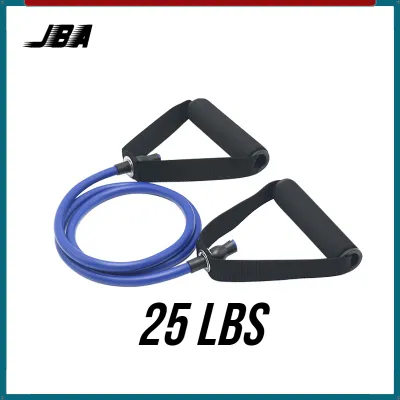
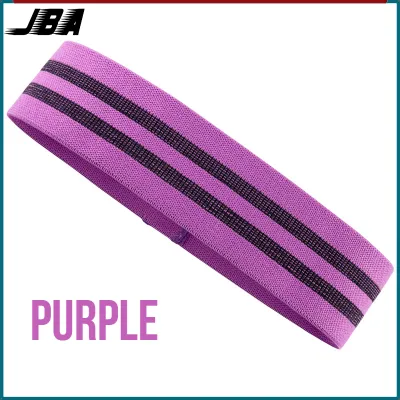
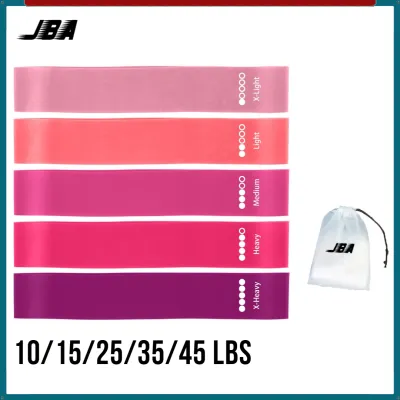
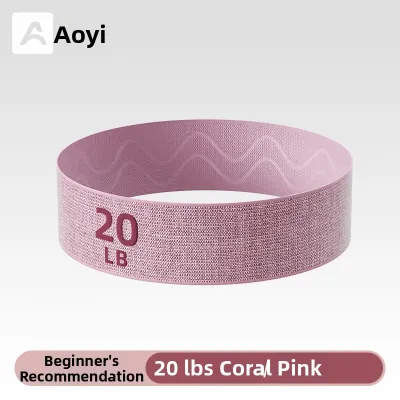
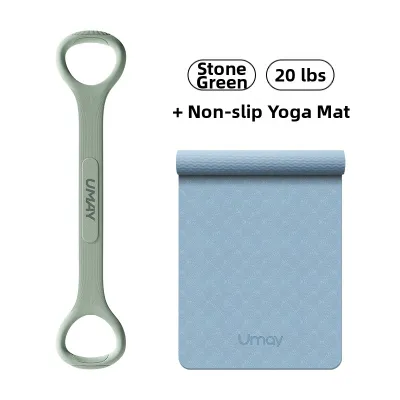
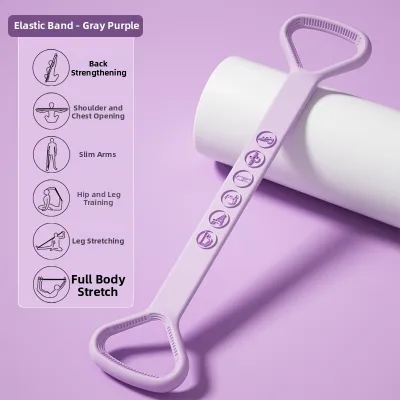
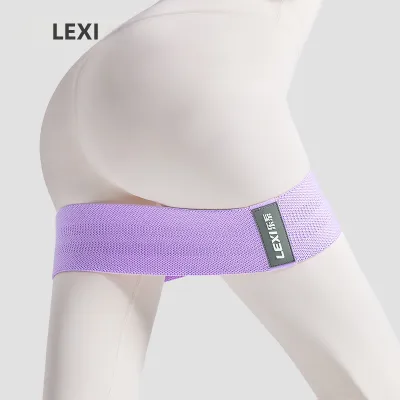
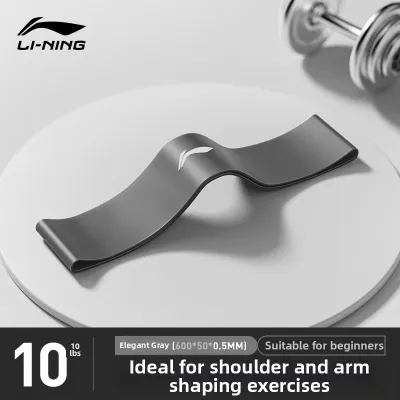
Prices are valid at publication and may change. Please refer to the product page for the latest price.
Your specific fitness objectives also dictate the ideal tension level and repetition ranges. If your goal is muscular endurance or cardiovascular conditioning, you will want a lighter band that allows you to perform high-repetition sets of twenty to twenty-five reps without losing form. For muscular hypertrophy or strength development, you need a heavier band that challenges you within the eight-to-twelve repetition range. If you are using bands for physical rehabilitation or mobility work, very light tension is necessary to isolate small stabilizing muscles without overloading healing tissues.
It is vital to recognize that a one-size-fits-all approach fails. When evaluating resistance bands for women, individual strength baselines and personal workout histories are infinitely more important than generic, gendered marketing labels. A woman who regularly performs heavy deadlifts will find standard “women’s beginner” bands completely useless for her lower body, whereas a sedentary beginner could easily strain a shoulder by starting with a medium band. Your fitness level is unique, and your equipment selection must reflect your actual physical capacity.
Decoding Resistance Band Colors and Tension Levels
When browsing local online marketplaces or sporting goods stores in the Philippines, you will quickly notice a rainbow of band options. Most manufacturers follow a general color-coding system to denote tension levels, starting with light pastel shades and progressing to darker colors. Typically, yellow or pink represents extra-light resistance; green or teal indicates medium resistance; red or blue represents heavy; and black or grey signifies extra-heavy tension. However, because there is no universal industry standardization, a “heavy” blue band from one brand might feel like a “medium” green band from another.

Furthermore, the exact pound or kilogram ratings printed on packaging or product descriptions are merely estimates. These numbers represent the tension generated when the band is stretched to a specific percentage of its resting length—often two to three times its original size. In a real-world workout, you rarely stretch a band to its absolute limit, meaning the actual resistance you experience will vary throughout the movement. Instead of relying solely on printed numbers, verify the tension by physical stretch and feel; the band should feel taut and challenging at the peak of the exercise, not loose or impossibly rigid.
The physical format of the band also heavily influences how you perceive and experience its tension. Loop bands, which are flat and continuous, distribute tension evenly and are highly versatile for both upper and lower body work. Tube bands with handles offer a more linear, elastic pull that mimics traditional cable machines, making them excellent for pressing and pulling exercises. Fabric mini bands, on the other hand, offer much higher initial resistance and limited stretch, which makes them ideal for high-tension lower-body movements like glute bridges and lateral walks where slipping must be avoided.
Matching Resistance Levels to Target Muscle Groups
Your body is not uniformly strong, which means a single resistance band cannot effectively train every muscle group. Your lower body, dominated by large muscle groups like the glutes, quadriceps, and hamstrings, is naturally capable of producing significantly more force than your upper body. For instance, while you might require a heavy or extra-heavy band to feel a deep burn during squats or glute bridges, that same band would be completely unmovable if you attempted a shoulder lateral raise or a tricep extension. To achieve a balanced workout, you must match the band’s tension to the size and capacity of the target muscle group.
Fortunately, elastic resistance allows you to adjust tension dynamically during a workout without even switching bands. If a movement feels slightly too easy, you can increase the resistance by widening your foot stance to stretch the band further at its starting point, or by shortening your grip on a tube band to reduce the slack. Conversely, if an exercise is too difficult, narrowing your stance or letting out some slack will immediately reduce the tension. Always consult the manufacturer’s instructions to ensure your adjustments, such as folding a band or anchoring it to an object, are safe and do not exceed the material’s structural limits.
To help organize your training, use a simple conceptual framework to pair exercise types with tension levels. For small, delicate muscle groups and stabilizing movements—such as rotator cuff rotations, rear delt flyes, and ankle mobility work—stick to light or extra-light bands. For medium-sized muscle groups and compound upper-body movements—such as bicep curls, overhead presses, and lat pulldowns—opt for medium tension. Reserve heavy and extra-heavy bands for your largest muscle groups and lower-body compound lifts, including deadlifts, squats, and dedicated glute activation drills.
Signs Your Current Resistance Level Is Wrong
Using the wrong resistance level can stall your fitness progress and lead to chronic joint issues. If your band is too light, you will notice a distinct lack of muscle fatigue even after completing twenty-five or more repetitions. Your workouts will feel more like casual stretching than resistance training, and you will fail to achieve the progressive overload necessary to build strength or tone muscle. If you can breeze through your entire routine without your heart rate rising or your muscles feeling a deep, warm burn, it is time to transition to a heavier band.
On the other hand, using a band that is too heavy presents immediate safety hazards. If you find yourself arching your lower back, swinging your torso, or shrugging your shoulders to complete a movement, your form is compromised because the tension is too high. You might also experience sharp joint pain rather than dull muscle fatigue, or find yourself completely unable to complete the full range of motion of the exercise. A band that is stretched beyond its capacity is also highly unstable; losing control can cause the band to snap back dangerously, potentially causing painful welts or facial injuries.
To find the sweet spot, utilize the “two-rep reserve” concept, also known as Repetitions in Reserve (RIR). When you reach the end of a set—typically between ten and fifteen repetitions—you should feel as though you could only complete two more reps with absolutely perfect form before your muscles temporarily fail. If you finish a set feeling like you could easily perform another five or ten reps, the band is too light. If you cannot complete your target reps without sacrificing your posture or range of motion, the band is too heavy.
Safety must always remain your top priority when working with elastic materials. Before every workout, inspect your bands for micro-tears, small punctures, discoloration, or a powdery white residue, which are common signs of material degradation, especially in hot and humid tropical climates like the Philippines. Never stretch any band beyond the manufacturer’s stated maximum limit, which is typically three times its resting length. If you notice any signs of wear, or if the band begins to lose its elasticity and feels brittle, discard it immediately to prevent a dangerous snap during use.
How to Build a Versatile Resistance Band Set
Instead of trying to find one single band to rule your entire workout, the most practical and cost-effective solution is to invest in a multi-level resistance band set. Purchasing a set that includes light, medium, and heavy options allows you to seamlessly transition between upper-body and lower-body exercises. It also ensures that as your body grows stronger over the coming weeks and months, you have the necessary tools to apply progressive overload without having to wait for a new package to arrive. High-quality multi-band sets are highly accessible, with durable options often ranging from ₱300 to ₱1,200 on local online marketplaces.
When selecting a high-quality set, look for stable, observable physical features that indicate durability. For rubber or latex loop and tube bands, search for anti-snap layered construction, which uses multiple layers of latex rolled together to prevent sudden, catastrophic snapping. Ensure that tube bands feature heavy-duty metal carabiners and double-stitched nylon webbing at the connection points rather than cheap plastic clips. If you prefer fabric mini bands for lower-body work, look for interior non-slip latex grips or rubberized threading woven into the fabric to prevent the band from rolling up your thighs during dynamic movements.
Proper maintenance is essential to preserve the tension and structural integrity of your bands over time. Keep your bands stored in a cool, dry place away from direct sunlight, as ultraviolet rays and extreme heat can dry out latex, causing it to crack and snap. Avoid anchoring your bands around sharp metal posts, rough concrete pillars, or door frames with exposed screws, as these can create microscopic tears that compromise safety. Regularly wiping your bands down with a damp cloth to remove sweat and oils will keep the material supple and ensure your home gym setup remains safe for years to come.
Frequently Asked Questions (FAQ)
Can I combine two resistance bands for a heavier workout?
Yes, stacking two or more resistance bands of the same type is an excellent, highly effective way to increase tension without buying heavier equipment. For example, layering two medium loop bands together will create a combined resistance that is perfect for heavy squats. However, always ensure both bands are in pristine condition, anchor them securely to a smooth surface, and avoid mixing vastly different materials—such as stacking a thin latex band directly over a thick, rigid fabric band—as this can cause uneven tension, slipping, and premature wear.
Do fabric resistance bands provide more tension than latex ones?
Fabric resistance bands generally provide a higher level of perceived tension and resistance because the material is thicker, stiffer, and has a much lower maximum stretch capacity than latex. This makes fabric bands exceptionally well-suited for lower-body isolation movements like glute kickbacks and lateral band walks, where you need high resistance over a short range of motion without the band rolling or sliding. Latex bands, conversely, offer a much longer, smoother, and more continuous stretch, making them the superior choice for upper-body exercises, overhead presses, and full-body mobility routines.
Community discussion
Share your experience or ask a question. Comments are reviewed before publication.