
Choosing the right Rocket badminton racket requires matching your personal playing style—whether you are an aggressive smasher, a defensive retriever, or an all-around player—to specific racket specifications like weight, balance point, shaft flexibility, and string tension. In the tropical climate of the Philippines, where high indoor humidity can rapidly affect string elasticity and grip traction, selecting a racket that complements your physical stamina and court environment is essential for maintaining peak performance.
By understanding how different engineering elements interact with your swing mechanics, you can avoid common injuries like tennis elbow and significantly improve your shot accuracy. This guide breaks down the essential technical specifications of Rocket rackets, helping you make an informed decision that elevates your game on any covered court.
Identify Your Dominant Playing Style
Before looking at technical specifications, you must analyze how you naturally behave during a match. Your dominant playing style dictates the physical demands you place on your equipment. If you find yourself constantly hunting for high clears to execute powerful overhead smashes, you fall into the aggressive smasher category. This style relies on raw power, steep angles, and backcourt dominance to force errors from your opponents.
Products mentioned in this guide
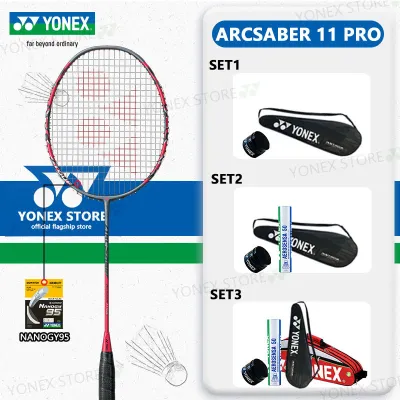
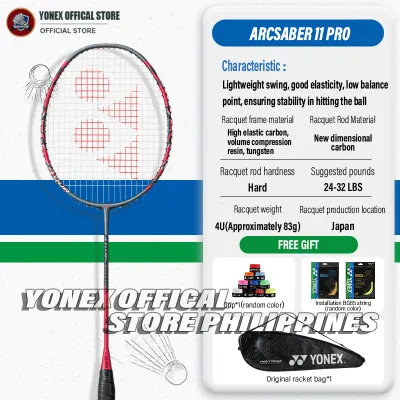
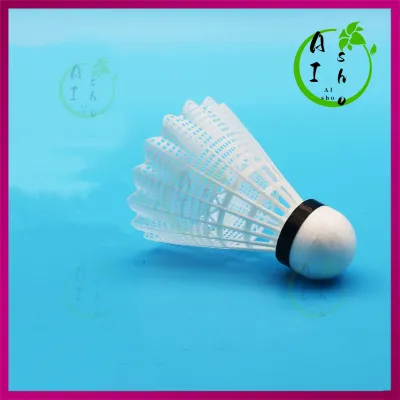
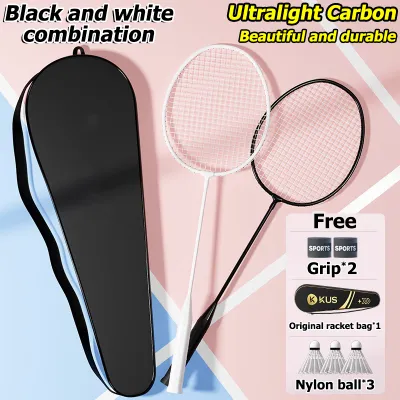
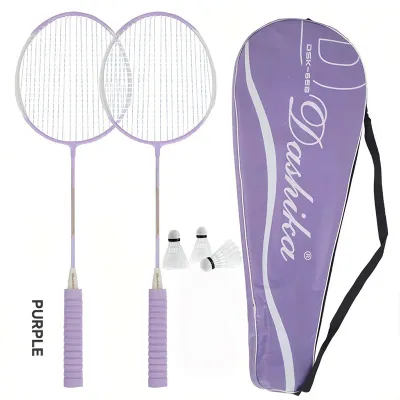
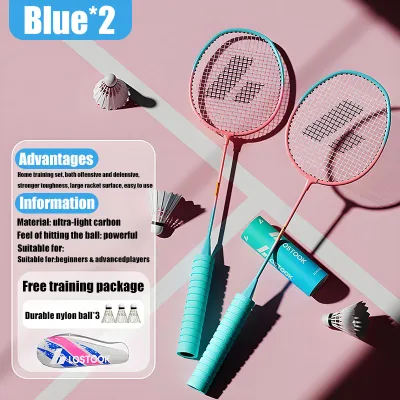
Prices are valid at publication and may change. Please refer to the product page for the latest price.
Conversely, if your strength lies in quick reflexes, tight net drops, and retrieving difficult smashes, you are a defensive retriever. Defensive players thrive on long rallies, using control and placement to wear down opponents. This style requires rapid racket recovery and exceptional maneuverability, especially during fast-paced doubles matches where reaction times are minimal.
If you transition smoothly between attacking from the backcourt and defending at the net, you are an all-around player. All-around players value tactical versatility, requiring a racket that does not compromise on either speed or power. Identifying where you sit on this spectrum is the first step toward filtering out unsuitable racket specifications.
Match Racket Weight to Your Swing and Stamina
Badminton racket weight is categorized using the standard “U” classification system, which you can find printed on the racket cone or handle. A lower number indicates a heavier racket, while a higher number represents a lighter frame. For example, a 3U racket typically weighs between 85 and 89 grams, whereas a 4U racket ranges from 80 to 84 grams. Choosing the correct weight is a balance between generating power and preserving your physical stamina.

Lightweight rackets, such as those in the 4U or 5U categories, are highly recommended for defensive players, beginners, and those who play long sessions in warm, humid indoor courts. A lighter frame allows for faster swing speeds and quicker defensive blocks. It also reduces the cumulative strain on your shoulder and wrist, helping to prevent fatigue-related injuries during extended rallies.
Medium-weight rackets, primarily in the 4U range, offer a practical balance of power and maneuverability for the average club player. They provide enough mass to generate decent shuttle speed without requiring elite-level forearm strength. This makes them highly versatile for both singles and doubles play.
Heavier rackets, such as 3U models, are favored by advanced offensive players who possess strong wrists and shoulders. The extra mass of a heavier racket provides greater momentum during a swing, resulting in more powerful smashes. However, wielding a heavier frame requires proper technique; using one without sufficient physical conditioning can lead to rapid fatigue and joint strain.
Choose the Balance Point for Your Shot Preference
How weight is distributed across the racket frame determines its balance point, which heavily influences how heavy the racket feels during a swing. You can verify this specification by checking the product details on the packaging or by balancing the racket shaft on your index finger. The distance from the bottom of the handle to the balance point determines whether a racket is head-heavy, head-light, or even-balanced.
Head-heavy rackets have a balance point exceeding 295mm. By concentrating more weight at the top of the frame, these rackets act like a hammer, generating extra downward momentum during overhead clears and smashes. This design is ideal for aggressive backcourt players who want to maximize their power output, though it does slow down defensive reaction times at the net.
Head-light rackets feature a balance point below 285mm. With more weight concentrated near the handle, these rackets feel incredibly nimble and easy to maneuver. They are perfect for defensive retrievers and front-court doubles players who need to react instantly to fast drives and execute delicate net drops.
Even-balance rackets sit in the 285mm to 295mm range. They offer a middle ground, providing decent smash power while remaining agile enough for defensive play. If you are an all-around player or are still developing your personal playing style, an even-balance Rocket racket offers the most adaptable platform.
Select Shaft Flexibility Based on Your Arm Speed
Shaft flexibility determines how much the racket bends during a swing and how that energy is transferred to the shuttlecock. Manufacturers generally classify shaft stiffness into flexible, medium, and stiff categories. Matching this to your natural arm speed and wrist snap is crucial for optimizing your power and control.
Stiff shafts are designed for advanced players with fast, explosive swing speeds. Because a stiff shaft bends very little, it offers highly precise shuttle placement and immediate feedback. However, to generate power with a stiff shaft, you must have excellent timing and high forearm speed; otherwise, the racket will feel like a solid plank, and your shots will lack depth.
Flexible shafts bend easily, creating a whip effect that assists players with moderate or slower swing speeds. As you swing, the shaft bends and snaps back, generating extra power with less physical effort. This is highly beneficial for beginners, intermediate players, or defensive players who need help clearing the shuttle from baseline to baseline.
Medium-flex shafts offer a balanced compromise. They provide a touch of power assistance while retaining enough structural stability for controlled shot placement. When browsing Rocket rackets, always verify the flex rating printed directly on the shaft to ensure it matches your physical capabilities.
Finalize Grip Size and String Tension
Once you have selected the frame’s weight, balance, and flexibility, you must configure the grip and strings to match your hand size and playing conditions. Grip sizes are denoted by the letter “G” followed by a number, where larger numbers represent smaller circumferences (e.g., G5 is smaller than G4). When holding the racket, there should be a comfortable gap of about one finger’s width between your fingertips and your palm.
String tension is measured in pounds (lbs) and directly affects the racket’s sweet spot and control. Lower tensions, between 20 and 24 lbs, allow the string bed to stretch more, creating a trampoline effect that provides effortless power and a larger, more forgiving sweet spot. This setup is highly recommended for beginners and casual players.
Higher tensions, ranging from 25 to 30 lbs, offer exceptional control and sharp repulsion because the shuttle spends less time on the string bed. However, high tension shrinks the sweet spot and requires precise hitting technique to avoid off-center shots that can shock your arm. Additionally, high humidity in local covered courts can cause strings to lose tension faster, meaning frequent players may need to adjust their tension targets accordingly.
Before stringing your racket, always confirm the recommended string tension limits printed on the racket frame. Exceeding these limits can warp or crack the graphite frame under pressure, which will void the manufacturer’s warranty.
Verify Your Selection Before Buying
To ensure you are purchasing an authentic and structurally sound Rocket racket, perform a few physical checks before finalizing your transaction. Start by cross-referencing the physical labels on the shaft and cone with the official manufacturer specifications to confirm the weight, balance, and tension limits match your requirements.
Next, carefully inspect the racket frame, shaft, and grommet strips. Look closely for any hairline cracks, paint chips, or unevenness in the frame’s shape, as these can indicate manufacturing defects or shipping damage. Ensure all plastic grommets are intact and properly seated, as damaged grommets can cause your strings to snap prematurely.
Finally, perform a dry swing in a safe, open space to assess how the racket feels in your hand. Pay attention to the weight distribution and how the grip fits your palm. If any specifications are unclear, or if the racket feels structurally compromised, stop the purchase and consult the store staff or contact the manufacturer directly.
To protect your investment from the local heat and humidity, always store your racket in a padded thermal carrying bag. Avoid leaving your gear in hot areas, such as a parked car, as extreme temperatures can warp the graphite frame and degrade the string tension.
Frequently Asked Questions (FAQ)
How often should I restring my badminton racket?
You should restring your racket when you notice visual signs of wear, such as fraying, deep notches where the strings cross, or a significant loss of tension that makes your shots feel mushy. Casual players who play once a week generally benefit from restringing every three to six months. If you play three or more times a week, you may need to restring every four to six weeks, as high humidity accelerates tension loss and string degradation.
Can I use an even-balance racket for competitive tournaments?
Yes, even-balance rackets are highly effective in competitive tournaments, particularly in doubles play where tactical adaptability is key. While they do not offer the extreme power of a head-heavy racket or the extreme speed of a head-light model, their versatility allows you to transition seamlessly between defense and attack. Your success with an even-balance racket depends on your tactical positioning, physical conditioning, and ability to exploit your opponent’s weaknesses.
Community discussion
Share your experience or ask a question. Comments are reviewed before publication.