
Choosing the right roller skate shoes for kids requires balancing their physical development, balance, and foot size with the appropriate skate design. In the Philippines, where children frequently skate outdoors on concrete neighborhood basketball courts, paved subdivision roads, or smooth park pathways, selecting the correct gear is essential for both safety and enjoyment. The tropical climate and high humidity also mean that factors like boot ventilation, wheel durability, and moisture-resistant materials must be carefully evaluated. By understanding how different skate types support growing feet and learning how to measure sizing accurately, parents can make an informed investment that keeps their children active and safe.
To ensure a successful introduction to the sport, parents must look beyond aesthetics and focus on structural integrity. A proper fit prevents common injuries such as ankle sprains, blisters, and falls, while the right skate configuration matches the child’s natural coordination level. Whether your child is a toddler taking their first rolling steps or an older kid ready to transition to faster inline models, this guide provides a practical framework to help you select the ideal pair of roller skates.
Understanding Roller Skate Types for Different Age Groups
Selecting the right skate configuration depends heavily on your child’s age, motor skills, and physical milestones. Children develop balance and core strength at different rates, meaning a skate that works perfectly for an older sibling might cause frustration or injury for a younger child. Matching the skate type to these developmental stages ensures a smoother learning curve and builds confidence on the wheels.
Products mentioned in this guide
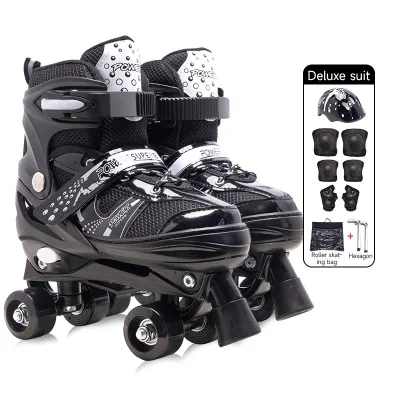
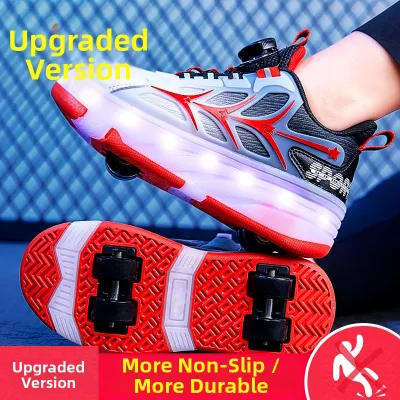
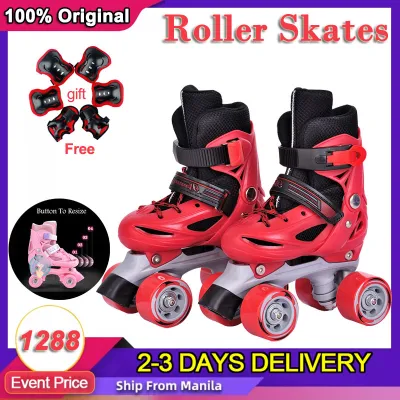
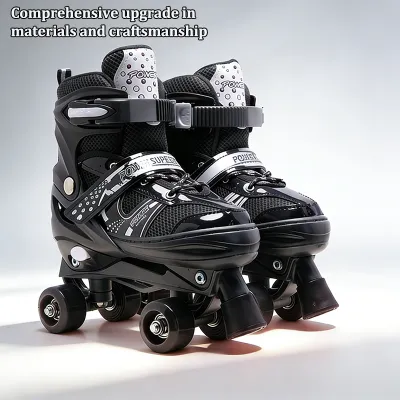
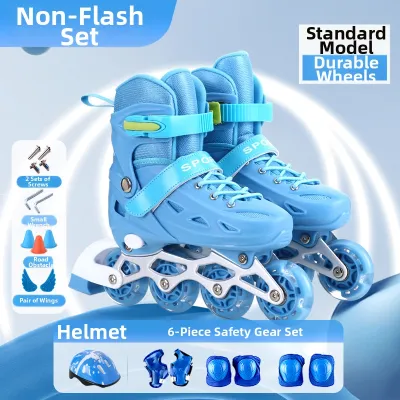
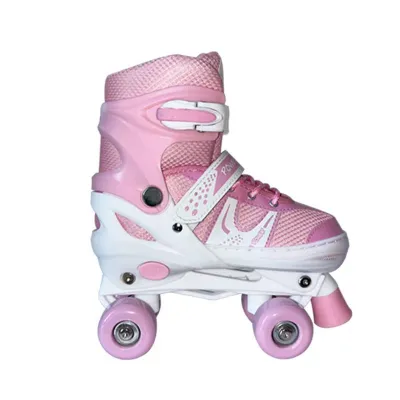
Prices are valid at publication and may change. Please refer to the product page for the latest price.
Quad skates and inline skates distribute weight and handle balance in fundamentally different ways. Quad skates, with their four-corner wheel arrangement, offer excellent static stability, allowing a child to stand upright with minimal effort. Inline skates, which feature wheels aligned in a single row, require active dynamic balance and lateral ankle strength to keep the blades upright. Introducing inline skates too early can lead to inward ankle pronation, where the feet roll inward, causing discomfort and poor skating habits.
Ankle support is the most critical structural feature to evaluate when choosing skates for developing feet. Young children have highly flexible bones and joints that are susceptible to strain under repetitive impact. A high-cut boot with a rigid cuff is necessary to stabilize the ankle joint, regardless of whether you choose quads or inlines. This support prevents the foot from twisting sideways during strides, ensuring that the child’s weight is distributed evenly across the frame.
Quad Skates for Beginners and Younger Kids
Quad skates are widely considered the traditional starting point for younger children, typically between the ages of 3 and 6. The wide wheelbase provides a stable platform that resists tipping sideways, making it easier for early learners to master the basic posture of skating. This stability allows toddlers and young kids to focus on the mechanics of moving forward and stopping without the constant fear of losing their balance.
When evaluating quad skates, parents should pay close attention to the placement of the toe stop and the stiffness of the boot. The toe stop should be securely attached to the front of the plate, positioned at an angle that allows the child to brake safely or push off without tripping. Avoid extremely soft, fabric-only boots that offer no lateral resistance; instead, look for molded plastic shells or reinforced synthetic leather boots that maintain their shape when pressure is applied to the sides.
Inline Skates for Older Kids and Active Skaters
For older children, generally aged 7 and up, inline skates offer a more dynamic and versatile skating experience. At this stage, kids have typically developed the core strength and ankle stability required to maintain a straight edge on a single line of wheels. Inline skates allow for longer strides, higher speeds, and greater maneuverability, making them ideal for active kids who want to explore different skating styles.
Because inline skating places more lateral stress on the ankles, the boot must feature a rigid composite or plastic cuff that wraps securely around the lower leg. Additionally, parents must consider the wheel hardness and frame material based on where the child will skate. For outdoor concrete surfaces common in local neighborhoods, softer polyurethane wheels (typically rated between 80A and 85A) are preferred as they absorb vibrations and provide better grip, while a lightweight aluminum or reinforced nylon frame ensures durability without adding excessive weight.
How to Measure and Select the Correct Skate Size
Securing the correct size is the single most important factor in preventing discomfort and ensuring safety on wheels. Many parents make the mistake of buying skates that are one or two sizes too large, hoping the child will grow into them. However, oversized skates allow the foot to slide inside the boot, leading to severe friction blisters, a lack of control, and an increased risk of ankle rolls.

To find the true size, you must measure your child’s feet using a precise tracing method rather than relying on their current street shoe size. Have your child stand flat-footed on a blank sheet of paper placed against a straight wall, wearing the exact socks they plan to use while skating. Trace the outline of both feet carefully, keeping the pencil completely vertical. Measure the distance from the heel to the tip of the longest toe in centimeters, and use the larger measurement of the two feet as your primary reference point.
Once you have the measurement in centimeters, compare it directly to the manufacturer’s specific sizing chart. Sizing standards vary significantly between brands; a size 30 in one brand may have a completely different interior length than a size 30 in another. Many reputable skate manufacturers provide exact interior liner measurements (often referred to as Mondopoint or millimeter sizing) on their charts, which eliminates the guesswork associated with regional shoe sizes.
When the skates arrive, perform a series of physical fit checks before allowing your child to skate outdoors. Have your child put on the skates, lace them up securely, and stand up with their knees slightly bent. In this position, their toes should gently touch the front of the liner without being cramped or bent. Next, check for heel lock by gently pulling up on the back of the skate while your child keeps their foot flat; the heel should remain firmly seated in the pocket of the boot without lifting or sliding.
Adjustable vs. Fixed-Size Skates: Which is Better?
Parents shopping for kids’ roller skates face a common dilemma: choosing between adjustable skates that expand as the child grows, or fixed-size skates that offer a single, dedicated fit. Both options have distinct structural characteristics, durability profiles, and performance trade-offs that cater to different skill levels and budgets.
Adjustable skates feature an expanding mechanism, usually operated by a push-button or a rotating lever, that allows the toe box of the boot to slide forward. This mechanism typically covers three to four full shoe sizes, making them an exceptionally cost-effective choice for rapidly growing children. While highly convenient, the moving parts of an adjustable boot can add slight weight and may introduce minor structural play over years of heavy use. However, for recreational skaters and beginners, the convenience and cost savings of adjustable models far outweigh these minor performance trade-offs.
Fixed-size skates, by contrast, are built around a single, solid shell and liner. Because they lack the sliding joints of adjustable models, fixed-size skates are generally lighter, more rigid, and offer superior power transfer from the foot to the wheels. This structural rigidity provides the precise control needed for advanced skating disciplines, such as slalom, aggressive park skating, or speed skating. If your child is highly committed to the sport, practices multiple times a week, or participates in structured lessons, a fixed-size skate is often necessary to support their skill development.
To decide which option is best, evaluate your child’s current skating intensity and growth rate. For casual weekend skating around the neighborhood or at local parks, an adjustable skate is almost always the most practical and economical choice. If your child has reached a stable foot size or is training for competitive disciplines, investing in a high-quality, fixed-size model will provide the structural support and responsiveness they need to progress safely.
Essential Safety Gear and Fit Checks Before Buying
No roller skate purchase is complete without a full set of protective gear. Equipment cannot replace proper training and parental supervision, but high-quality safety gear significantly reduces the risk of scrapes, bruises, and fractures during the inevitable learning process. Ensuring that this gear fits correctly is just as important as selecting the right skates.
Every child should wear a complete safety set consisting of a certified helmet, wrist guards, elbow pads, and knee pads. The helmet must sit level on the head, covering the forehead, and should not tilt backward or slide side-to-side when the chin strap is buckled. Wrist guards are particularly critical, as children instinctively extend their hands to break a fall; the rigid plastic splint of the guard must sit flat against the palm to prevent hyperextension of the wrist. Elbow and knee pads should feature secure, adjustable elastic straps that keep the protective cups centered over the joints without cutting off circulation.
Before purchasing any pair of skates, perform a thorough hardware inspection to verify that all components are secure and functional. Check that the wheels spin freely and smoothly without excessive side-to-side wobble, which indicates properly tightened axle bolts. Inspect the closure systems, ensuring that the ratchet buckles click firmly into place and do not slip under tension. If the skates feature laces, verify that the eyelets are reinforced and can withstand being pulled tight without tearing the boot material.
Finally, always check the manufacturer’s packaging or documentation for specific weight limits and age recommendations. Skates designed for toddlers often have lower weight thresholds and lighter frame constructions that cannot safely support older, heavier children. Operating skates beyond their rated capacity can lead to frame warping, wheel failure, or buckle breakage, compromising your child’s safety on the pavement.
Building Your Shortlist: What to Look for When Shopping
When you are ready to shop, creating a structured decision matrix will help you filter through the numerous options available in local sports shops and online marketplaces. By focusing on key material specifications and practical purchasing terms, you can find a high-quality pair of skates that fits your budget and meets your child’s specific needs.
Establish a realistic budget that reflects your child’s commitment level and intended skating environment. In the local market, entry-level recreational skates typically range from ₱1,500 to ₱3,500, offering basic adjustable boots and plastic frames suitable for casual use. Mid-range to high-performance models, which cost between ₱4,000 and ₱8,000 or more, feature aluminum frames, high-rebound polyurethane wheels, and precision bearings that offer a much smoother ride and greater durability on rough outdoor concrete.
| Feature | Entry-Level (₱1,500 – ₱3,500) | Mid-to-High Range (₱4,000 – ₱8,000+) |
|---|---|---|
| Boot Material | Standard plastic shell, basic foam liner | Breathable mesh, high-density memory foam |
| Frame Type | Reinforced composite / plastic | CNC-machined aluminum |
| Wheel Type | Hard plastic or low-rebound polyurethane | High-rebound polyurethane (80A – 85A) |
| Closure System | Standard buckles and velcro straps | Micro-adjustable ratchet buckles, secure laces |
Evaluate the boot materials and closure systems to ensure they can withstand local tropical conditions. Look for boots that incorporate breathable mesh panels or ventilation ports to help manage heat and sweat during long afternoon sessions. A secure closure system combining traditional laces, a mid-foot velcro power strap, and a top micro-adjustable ratchet buckle provides the best combination of heel retention and ankle support.
Lastly, pay close attention to return policies and sizing guarantees, especially when purchasing from online retailers. Because precise fit is so critical, you should choose sellers that offer hassle-free exchanges if the skates do not pass your home fit checks. Verify that the return policy allows you to try the skates on indoors on a clean surface, ensuring you can swap them for a different size without voiding the warranty.
Frequently Asked Questions (FAQ)
How often should I replace my child's roller skates?
You should replace your child’s roller skates as soon as they show signs of physical discomfort or structural wear. Growth indicators include the child complaining of pinched toes, red pressure marks on the feet after skating, or the heel slipping out of the pocket because the boot can no longer be tightened securely. From a structural standpoint, inspect the skates regularly for flat spots on the wheels, loose or bent frames, cracked plastic shells, or worn-out buckle straps that no longer hold tension. If you are using adjustable skates, they must be replaced once the child’s foot length exceeds the maximum setting on the adjustment mechanism.
Can kids use regular shoe sizes to buy roller skates?
No, you should not rely on regular shoe sizes when purchasing roller skates. Street shoes are designed with flexible soles and often feature extra wiggle room or inconsistent vanity sizing across different fashion brands. Roller skates require a highly precise, performance-oriented fit to ensure proper control and prevent ankle injuries. A skate boot that is even slightly too loose can cause the foot to slide, leading to painful friction blisters and reduced stability. Always measure your child’s feet in centimeters using a tracing method and compare that measurement directly to the specific sizing chart provided by the skate manufacturer.
Are three-wheel skates better for toddlers?
Three-wheel skates, often called tri-skates, can be a useful transitional option for toddlers, but they are not universally better than traditional quad skates. Some tri-skate models allow parents to convert the wheel configuration from a stable triangular setup (two wheels in the back, one in the front) to an inline setup as the child’s balance improves. While this offers versatility, the elevated height of some three-wheel designs can actually make lateral balance more challenging for very young children compared to low-profile quad skates. Before introducing any wheeled footwear, ensure your child has achieved steady walking proficiency, basic running coordination, and can follow simple safety instructions.
Community discussion
Share your experience or ask a question. Comments are reviewed before publication.