
Finding the right pair of roller skates for a young girl starting her skating journey is about balancing safety, comfort, and confidence. Appropriate skates should support her developing muscles, protect her from falls, and provide a smooth, manageable roll that matches her skill level. In tropical climates like the Philippines, where outdoor skating often happens on warm, humid afternoons on concrete subdivision roads, barangay courts, or park pathways, choosing the right materials and design is crucial. By focusing on key structural features, adjustable sizing, and proper protective gear, you can ensure her introduction to this active sport is both safe and highly engaging.
Understanding the Basics: Quad vs. Inline Skates for Beginners
Quad skates have four wheels arranged in a two-by-two grid. This configuration provides a stable base when standing still, making them highly popular for very young beginners. They offer a classic look and are excellent for indoor roller rinks or smooth, flat concrete surfaces. Because the wide wheel base prevents tipping sideways, many children feel an immediate sense of security when they first slip them on. However, the wider profile can sometimes make lifting the feet and transitioning to a stride slightly more awkward for some kids.
Inline skates, often called rollerblades, feature wheels arranged in a single straight line. This design mimics the motion of ice skating and allows for greater maneuverability and speed once the basic stride is mastered. For outdoor skating on slightly uneven surfaces, such as paved park paths or neighborhood streets, inline skates can glide over small pebbles and cracks more easily than quads. The narrower wheel profile requires more active ankle stabilization, which can feel challenging at first but helps build core balance and leg strength quickly.
Products mentioned in this guide
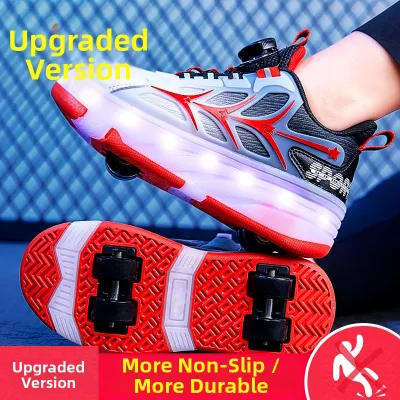
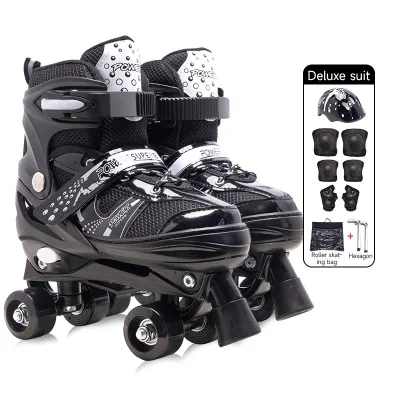
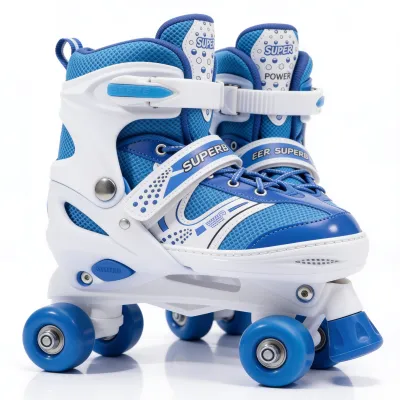
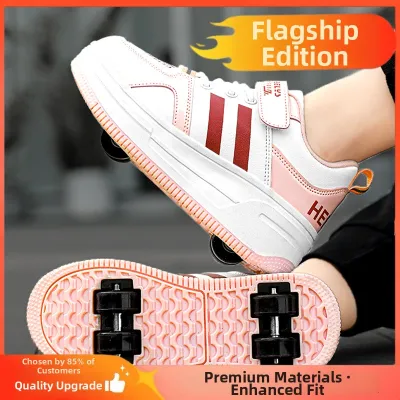
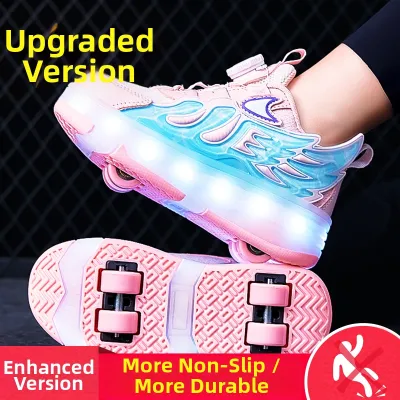
Prices are valid at publication and may change. Please refer to the product page for the latest price.
The choice between the two often comes down to where the child will skate and her personal confidence. If she plans to skate mostly indoors or on flat driveways, quads are an excellent, reassuring starting point. If she is highly active, enjoys fast-paced movement, or wants to join friends who use inline skates, an inline configuration might be her preferred choice. Letting her participate in this decision can boost her enthusiasm and commitment to learning.
Essential Safety and Support Features to Check
Ankle support is the most critical structural element of any beginner skate. Young children have developing muscles and joints that require external stabilization when balancing on wheels. Look for high-top boots made from stiff, durable composite plastics or reinforced synthetic leather. A rigid cuff that wraps securely around the ankle prevents the foot from rolling inward or outward, which is a common cause of fatigue and strain. Padded collars around the top rim of the boot are equally important, as they cushion the lower calf and prevent painful chafing during extended practice sessions.

The braking system is another vital safety feature that beginners must learn to use immediately. Quad skates typically feature a toe stop located at the front of the boot. Beginners use this stopper by dragging it behind them or tipping their foot forward to slow down. Inline skates, on the other hand, usually come with a heel brake attached to the rear of one skate. This allows the skater to lift the toes of that foot and press the rubber pad against the ground to stop. When purchasing, verify that the brake pad is made of durable, non-slip rubber rather than hard, slippery plastic, and check that replacement pads are easily obtainable.
A secure closure system ensures the skate functions as an extension of the child’s foot. Reliable beginner skates utilize a triple-closure system: traditional laces, a wide Velcro power strap across the instep, and a locking buckle at the ankle cuff. Laces allow for a customized fit along the top of the foot, the Velcro strap locks the heel back into the pocket of the boot, and the ankle buckle provides the rigid support needed for balance. Avoid skates that rely solely on loose laces or weak plastic clips, as these can loosen during play, leading to blisters and a loss of control.
Sizing, Fit, and Adjustability for Growing Feet
Getting the correct fit is essential for safety and skill development, yet children’s feet grow rapidly. To find the right size, measure your child’s feet at home rather than relying on their current street shoe size. Place a piece of paper against a flat wall, have her stand on it with her heel touching the wall, and mark the longest point of her toes. Measure this length in millimeters or centimeters, and compare it directly to the manufacturer’s specific size chart. Repeat this process for both feet, as one foot is often slightly larger than the other, and always size to the larger foot.
To address rapid growth, many modern beginner skates feature an adjustable sizing mechanism. These skates allow the toe cap of the boot to slide forward or backward, typically expanding across three to four full sizes at the push of a button or the turn of a lever. This is a highly practical and cost-effective option for parents, as a single pair of skates can last for multiple seasons. When evaluating adjustable skates, ensure the locking mechanism is robust and does not slip when pressure is applied to the toe area.
It is highly tempting to buy skates that are one or two sizes too large to “grow into,” but this is a significant safety hazard. In an oversized boot, the child’s foot will slide forward and backward, causing painful friction blisters and heel lift. More importantly, when the foot is not properly aligned with the wheels and frame, the child loses the leverage needed to push off, steer, and brake effectively. This lack of control increases the likelihood of awkward falls and can quickly discourage a beginner from continuing with the sport.
Wheels, Bearings, and Frame Materials Explained
The performance and safety of a roller skate are heavily influenced by the wheels, which are rated by hardness using a durometer scale (indicated by a number followed by the letter “A”). For beginners, especially those skating outdoors on concrete or asphalt, softer wheels rated between 78A and 82A are highly recommended. Softer polyurethane wheels grip the ground more effectively, absorbing vibrations from rough surfaces and providing a smoother, more controlled ride. Harder wheels (85A and above) roll faster and last longer on smooth indoor floors but can feel slippery and harsh on outdoor pavements.
Bearings sit inside the wheels and determine how smoothly they spin, rated under the ABEC system (typically ABEC-1 to ABEC-9). While higher ratings indicate tighter manufacturing tolerances and faster potential speeds, high-speed bearings are unnecessary and sometimes counterproductive for young beginners. An ABEC-3 or ABEC-5 bearing is ideal for a child learning the basics, as it provides a smooth, predictable roll without letting the skates get away from her too quickly. Avoid unrated plastic bearings often found on toy-grade skates, as they create excessive friction and make learning difficult.
The frame holds the wheels in place and attaches to the bottom of the boot. Beginner skates generally feature frames made of either lightweight composite plastic (such as nylon) or aluminum. Composite frames are excellent for younger, lighter children because they absorb road vibrations well and keep the overall weight of the skate low, reducing leg fatigue. Aluminum frames are stiffer and more durable, transferring energy more efficiently as the skater grows heavier and more powerful. For a young beginner girl, a high-quality composite frame is usually a comfortable and practical starting point.
Must-Have Protective Gear for a Complete Setup
No roller skate purchase is complete without a full set of high-quality protective gear. The non-negotiable safety kit includes a properly fitted helmet, knee pads, elbow pads, and wrist guards. Falls are an inevitable part of the learning process, and having the right armor transforms a potential injury into a minor bump that she can quickly laugh off. Wrist guards are particularly critical for beginners, as the natural instinct when falling is to reach out with open hands, making wrist sprains and fractures the most common skating injuries.
When selecting protective gear, verify that the items meet recognized safety standards, such as the CE certification or local equivalent standards for impact resistance. The helmet must sit flat on the head, covering the forehead, and should not rock side to side or front to back when the chin strap is buckled. Pads should feature durable plastic caps to slide along the concrete during a fall, backed by thick foam padding to absorb the impact. Ensure the straps are adjustable and fit snugly without cutting off circulation or slipping down during movement.
In hot and humid environments, comfort plays a major role in how long a child is willing to practice. Pair the skates and protective gear with high-quality, breathable socks that extend above the collar of the skate boot. Moisture-wicking synthetic blends or thin wool socks are more effective than thick, heavy cotton socks, which tend to trap sweat, bunch up, and cause painful friction blisters. Keeping the feet dry and cool not only prevents skin irritation but also helps maintain a secure, non-slip fit inside the boot.
A Step-by-Step Pre-Purchase Checklist
Before finalizing your purchase, whether at a local sporting goods store or through an online marketplace, run through a quick physical checklist to ensure the skates are safe and suitable. Have your child try on the skates with the exact socks she plans to wear. Once the boot is fully buckled and strapped, check that her heel is locked firmly into the back of the skate and does not lift when she bends her knees. Her toes should lightly brush the front of the boot when standing straight, but they should pull back slightly when she drops into a basic skating stance.
If you are purchasing online, carefully review the retailer’s return and exchange policies. Sizing can vary significantly between different brands, and a skate that is too tight or too loose must be exchanged immediately to prevent injury. Look for sellers that offer straightforward, hassle-free returns so you can swap sizes if the initial fit is not correct. Additionally, factor the cost of the complete protective gear set into your overall budget; it is far better to reserve a portion of your budget in ₱ for high-quality safety gear than to spend your entire funds on the skates alone.
Frequently Asked Questions (FAQ)
At what age can a child safely start roller skating?
Most children develop the necessary gross motor skills, balance, and coordination to begin roller skating between the ages of three and five. At this stage, they should be able to run confidently, jump with both feet, and balance on one foot for a few seconds. However, physical readiness varies for every child, and interest is often a strong indicator of readiness. Initial sessions for very young beginners should be kept short, highly supervised, and focused on simple balance exercises, such as marching in place on a carpeted floor or grass before moving onto smooth pavement.
Should I buy roller skates a size larger for thick socks?
No, you should not buy roller skates a size larger to accommodate thick socks, as this compromises the ankle support and overall control of the skate. Instead, select the skate size that matches your child’s actual foot measurement, and pair them with medium-weight, moisture-wicking athletic socks. Modern skate liners are heavily padded and designed to conform to the foot, so wearing excessively thick socks can actually cause cramping and reduce air circulation, leading to sweaty, uncomfortable feet. Always try on the skates with the specific socks your child will wear to ensure a snug, secure fit.
Community discussion
Share your experience or ask a question. Comments are reviewed before publication.