
Choosing the right roller skates for your daughter is an exciting milestone that can spark a lifelong love for outdoor adventure, fitness, and balance. However, standing in front of a wall of colorful skates or scrolling through endless online listings can quickly feel overwhelming for any parent. The primary decision you will face is choosing between classic quad skates, which feature a two-by-two wheel arrangement, and inline skates, which align the wheels in a single row.
For most young beginners, quad skates generally offer better initial stability because their wider wheelbase makes it much easier to stand still without tipping over. This immediate sense of balance builds confidence quickly, making quads an excellent entry point for toddlers and younger children. On the other hand, inline skates are often preferred for older kids, outdoor fitness, or those who may eventually transition to ice skating, as their design is highly efficient at rolling over uneven ground. Ultimately, the right choice for your daughter depends on her specific age, physical balance, and the environment where she plans to skate.
Understanding the Core Differences: Quad vs. Inline
To make an informed decision, it is essential to understand how the physical structure of each skate type influences how your daughter will balance, roll, and stop. The most obvious difference is the wheel configuration, which fundamentally changes how the body interacts with the ground.
Products mentioned in this guide
![IMUTO[Free protective gear]Roller Skate Shoes for Kids Adjustable Quad Skates Roller Blades Skate Shoes for Girls Boys](https://img.lazcdn.com/g/p/825ea35eea06c587864d651862874cfc.png_400x400q80.png_.webp)
Prices are valid at publication and may change. Please refer to the product page for the latest price.
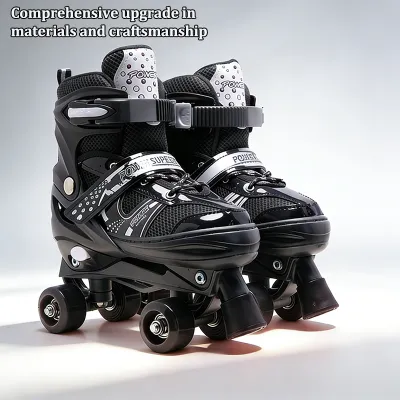
Quad skates feature four wheels arranged in a rectangular, two-by-two pattern, similar to a car. This configuration provides excellent lateral stability, meaning the skate resists tipping to the left or right when standing still. This makes it highly intuitive for a child to step into the skates and stand upright immediately. However, this wider footprint means that quad skates have a shorter wheelbase from front to back, which can make them more sensitive to falling forward or backward if the skater leans too far.
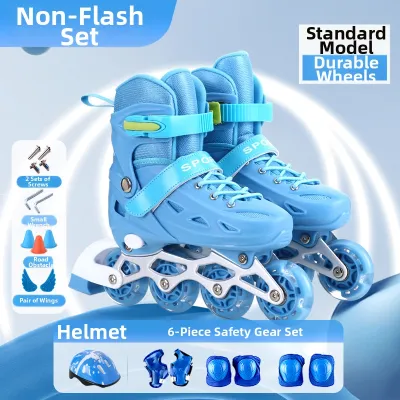
Inline skates, commonly referred to as rollerblades, place three to four wheels in a single straight line. This narrow profile requires active ankle stabilization to keep the skates upright, which can feel challenging for very young children who are still developing their ankle strength. However, the longer front-to-back frame of inline skates provides superior stability against falling forward or backward. Once your daughter learns to keep her ankles straight, she will find that inline skates glide with less effort and roll over small outdoor debris much more easily than quads.
The braking mechanisms of these two skate types also require completely different physical techniques. Quad skates are equipped with a toe stop located at the very front of the boot. To stop, the skater must lift her heel and drag the rubber toe stop behind her, or turn around and use the toe stop to come to a halt. This motion can feel counterintuitive to beginners who naturally want to lean back when they feel off-balance.
In contrast, most beginner inline skates feature a single heel brake attached to the rear of one skate. To slow down or stop, the skater slides the braking foot forward and lifts her toes, pressing the rubber pad directly into the pavement. This action allows the skater to maintain a forward-facing, stable stance while decelerating, which many children find easier to master during their first few outdoor sessions.
Ankle support and boot flexibility are also critical structural elements that vary between the two styles. Quad skates are available in both high-top and low-cut designs, with high-tops offering traditional ankle support for recreational and artistic skating. Inline skates almost always feature a high, rigid plastic cuff that wraps securely around the ankle. This stiff outer shell is necessary to prevent the ankles from rolling inward or outward, ensuring that every push of the leg translates directly into forward motion.
Matching Skates to Her Age and Skill Level
A child’s physical development, muscle strength, and coordination should play a major role in determining which skate type is most appropriate. Choosing a skate that matches her developmental stage ensures she stays safe and enjoys the learning process without getting discouraged.

For toddlers and young beginners between the ages of 3 and 6, adjustable quad skates are highly recommended. At this stage of development, children are still refining their gross motor skills, and their ankle joints are relatively flexible. A lightweight quad skate with a soft, padded boot provides a comfortable, non-intimidating introduction to rolling. Look for models that offer adjustable sizing, allowing the boot to expand as her feet grow, which ensures a snug fit without requiring you to purchase new skates every few months.
As children reach the ages of 7 to 12, their physical strength and balance improve significantly, opening up more options. Older beginners and pre-teens can successfully start on either quad or inline skates. If your daughter is highly active, enjoys fast-paced outdoor activities, or has already tried ice skating, inline skates are an excellent match. However, if she is drawn to dance, gymnastics, or the classic aesthetic of roller rinks, sticking with quad skates will allow her to explore artistic maneuvers and rink culture.
As her skills progress, you will need to evaluate when to transition her from soft, recreational boots to stiffer, hard-shell boots. Beginner skates often feature soft, flexible materials designed primarily for comfort during short sessions. However, as your daughter begins to skate faster, attempt turns, or try basic tricks, these soft boots may no longer provide sufficient support. Upgrading to a hard-shell boot with a rigid cuff offers the precise power transfer and robust ankle protection needed for advanced maneuvers and longer skating sessions.
Choosing Based on Intended Use and Skating Environment
Where your daughter plans to spend most of her skating time is just as important as her age and skill level. Different surfaces interact uniquely with wheel sizes and materials, making certain skates far better suited for specific environments.
If your daughter will primarily skate on smooth indoor surfaces, such as polished wooden rink floors, covered basketball courts, or smooth concrete garage floors, quad skates are the traditional standard. The maneuverability of quad skates makes them perfect for tight turns, roller dance, and artistic skating. The smooth, predictable nature of indoor floors allows the wider, flat wheels of quad skates to grip the surface effectively without the risk of catching on unexpected obstacles.
For outdoor paths, neighborhood sidewalks, and public parks, inline skates are generally the practical choice. Outdoor pavement is rarely perfectly smooth; it is often marred by expansion cracks, small pebbles, twigs, and rough asphalt. Because inline wheels are narrower and have a curved profile, they tend to deflect small debris rather than stopping abruptly. This reduces the risk of sudden trips and falls, allowing your daughter to maintain her momentum and enjoy a much smoother ride on public pathways.
When evaluating skates, always pay close attention to the wheel hardness and size, which are indicated by specific labels on the wheels or in the product specifications. Wheel hardness is measured using the durometer scale, represented by a number followed by the letter “A.” Softer wheels, typically rated between 78A and 82A, provide excellent shock absorption and grip, making them ideal for rough outdoor concrete. Harder wheels, rated 85A and above, roll faster and last longer on smooth indoor surfaces but will transmit a lot of vibration if used outdoors.
Wheel diameter, measured in millimeters, also affects performance. Smaller wheels (typically 58mm to 64mm for kids’ skates) keep the skater lower to the ground, lowering her center of gravity and making it easier to maintain balance. Larger wheels (70mm and above) roll faster and roll over cracks more easily but require more ankle strength to control. Always verify the manufacturer’s specifications to ensure the pre-installed wheels match your daughter’s primary skating environment.
Sizing, Fit, and Essential Safety Gear Checks
No matter how high the quality of the skate, a poor fit can lead to painful blisters, foot fatigue, and an increased risk of injury. Taking the time to measure her feet and verify the fit of the skates is crucial for a safe and comfortable experience.
When shopping, you will encounter both adjustable and fixed-size skates. Adjustable skates are highly cost-effective for growing children, as they typically cover three to four shoe sizes with a simple push-button mechanism. This design allows you to extend the life of the skates over several growth spurts. However, fixed-size skates often offer superior structural support, lighter weight, and better overall longevity because they do not require the moving parts and overlapping plastic shells found in adjustable models. If your daughter is already a dedicated skater or has stopped growing rapidly, a fixed-size skate is often the better investment.
To verify the fit of the skates, have your daughter put them on while wearing the exact socks she plans to use while skating. Once the skates are fully laced and buckled, ask her to stand up and bend her knees slightly. In this position, her toes should gently touch the front of the toe box without feeling cramped, curled, or pinched. Next, check for heel lock by asking her to lift her heel inside the boot; if her heel slips upward significantly, the skates are too large, which can cause severe blisters and reduce her control. The ankle cuff should feel snug and supportive without cutting off her circulation.
Safety gear is a non-negotiable part of the skating experience and should be worn during every single session, regardless of skill level. A complete safety setup includes a properly fitted helmet, wrist guards, knee pads, and elbow pads. When selecting a helmet, do not assume all options offer equal protection; always look for certified safety labels, such as CPSC or EN 1078, to ensure the helmet is rated for impact protection. In warm, tropical climates, look for protective pads featuring breathable mesh backings and moisture-wicking fabrics to keep her comfortable and prevent skin irritation during long outdoor sessions.
Building Your Shopping Shortlist
When you are ready to browse online marketplaces or visit a local sporting goods store, having a clear set of criteria will help you filter out low-quality options and find the best value for your budget.
Begin by carefully evaluating the product descriptions rather than relying solely on flashy colors, light-up wheels, or marketing buzzwords. Look for specific material specifications: high-quality frames are typically made of reinforced nylon composite or aluminum, which offer durability and efficient power transfer. Avoid skates that list “plastic” frames without any reinforcement, as these can flex excessively under weight. Check the bearing ratings, which are often listed as ABEC ratings (such as ABEC-5 or ABEC-7); while higher numbers generally indicate smoother rotation, the overall build quality and dust seals of the bearings are what keep them rolling smoothly over time.
Because sizing can vary significantly between different brands, always check the return and exchange policies of the e-commerce platform or local retailer before making a purchase. Footwear is notoriously difficult to size perfectly on the first try, and having the flexibility to exchange the skates for a different size without hassle ensures you do not end up stuck with a pair that is too tight or too loose.
Finally, remember to budget for the entire skating setup rather than spending your entire allowance on the skates alone. High-quality protective gear is just as important as the skates themselves. Allocating a portion of your budget for a certified helmet, durable pads, and potential future maintenance items—such as replacement outdoor wheels or fresh bearings—will ensure your daughter has a safe, comfortable, and highly enjoyable introduction to the wonderful world of roller skating.
Frequently Asked Questions (FAQ)
Can I put outdoor wheels on indoor quad skates?
Yes, swapping wheels is generally possible if the axle and frame sizes match. You will need to check the manufacturer’s specifications for compatible wheel diameters and bearing sizes before purchasing replacement outdoor wheels. Installing softer outdoor wheels (typically rated between 78A and 82A) on indoor boots will help absorb shock and provide better grip on rough concrete surfaces, allowing your daughter to use the same pair of skates in both environments.
How do I know if the roller skates are too big?
If your daughter’s heel slips up and down when she walks or rolls, or if her foot slides side-to-side inside the boot, the skates are too large. You can perform a quick check by sliding a finger behind her heel when her toes are touching the front of the boot; if there is more than a finger’s width of space, the skates do not provide adequate support. Always have her wear thick athletic socks during the fitting process to simulate actual skating conditions and prevent painful blisters.
Community discussion
Share your experience or ask a question. Comments are reviewed before publication.