
Selecting the right running belt bag depends entirely on your training environment and what you need to carry. Trail runners require high-capacity, highly stable gear to secure hydration and safety essentials over unpredictable terrain. Road runners benefit most from ultra-lightweight, bounce-free designs that manage heavy sweat during high-cadence runs. Gym-goers need accessible compartments to organize keys, cards, and phones during stationary or strength-training workouts.
By matching your belt bag to your specific workout environment, you can prevent chafing, protect your electronics from moisture, and keep your hands free. Choosing the wrong style can lead to constant bouncing, skin irritation, or even dropped gear.
Quick Guide: Matching Your Belt Bag to Your Primary Activity
Every runner faces a fundamental trade-off between storage capacity and weight, as well as stability and quick accessibility. A bulky bag that holds everything might bounce uncontrollably during a fast road sprint, while a minimalist band may fail to hold the hydration flasks required for a remote trail run. Finding the right balance requires identifying your most frequent training environment.
Products mentioned in this guide
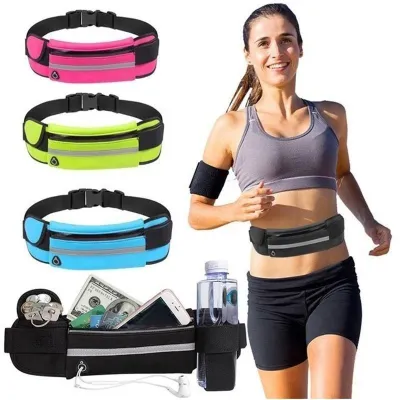
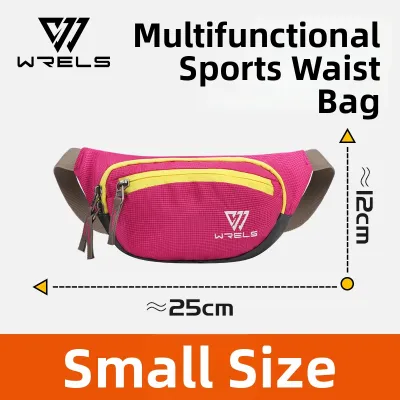
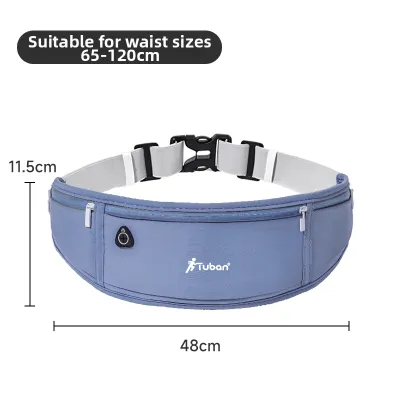
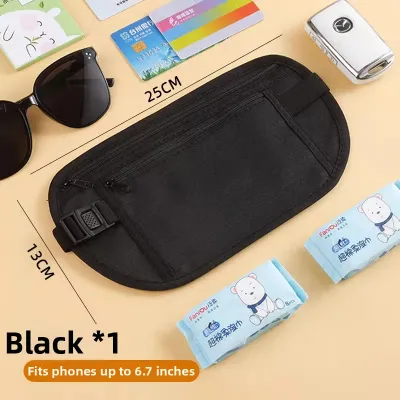
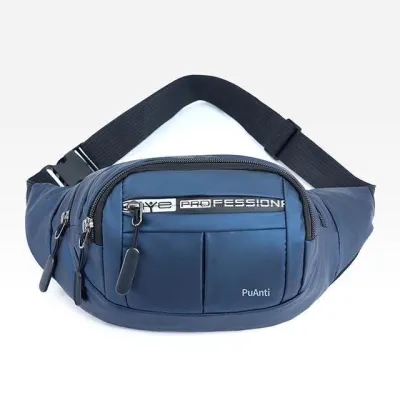
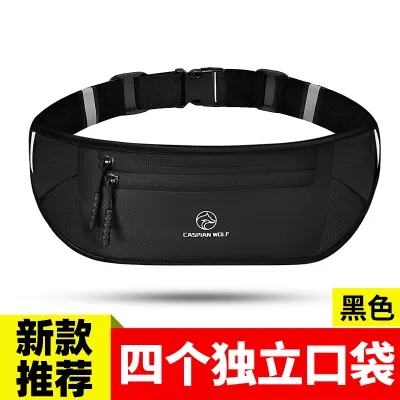
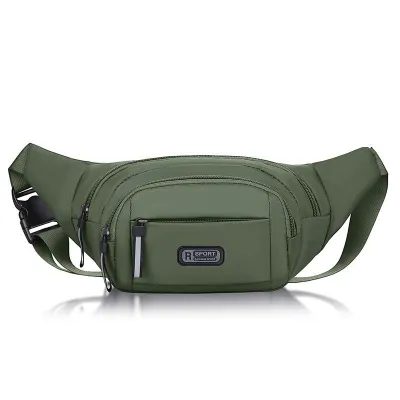
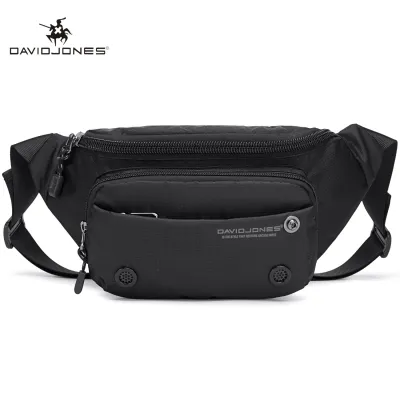
Prices are valid at publication and may change. Please refer to the product page for the latest price.
To help you narrow down your options, use this quick decision matrix to map your primary activity to the essential features you should look for when shopping:
| Activity Type | Primary Focus | Top Two Must-Have Features |
|---|---|---|
| Trail Running | Capacity & Stability | Wide waistband, hydration flask compatibility |
| Road Running | Lightweight & Sweat Management | Moisture-wicking backing, flush elastic fit |
| Gym & Indoor | Accessibility & Load Support | Easy-access zippers, padded or wide straps |
Trail Running: Prioritizing Capacity, Stability, and Weather Resistance
Trail running demands self-sufficiency because help and amenities are often far away. Your belt bag must act as a compact utility kit, carrying enough gear to keep you safe without restricting your breathing or movement. Look for specialized trail belts that feature dedicated sleeves for soft flasks, loops for trekking poles, and secure pockets for energy gels, a basic first-aid kit, and a lightweight windbreaker.

Stability is critical when navigating technical descents, jumping over roots, or climbing steep ridges. Standard single-buckle belts often shift or bounce under the weight of water flasks. To prevent this, prioritize wide, tubular waistbands or dual-buckle adjustment systems that distribute weight evenly across your hips. Look for designs featuring anti-bounce mesh linings or silicone grip strips on the interior to keep the pack firmly in place.
Durability and weather resistance are equally vital when you are exposed to the elements. In tropical climates like the Philippines, sudden afternoon downpours can quickly soak your gear. Check manufacturer specifications for water-resistant coatings, sealed zippers, and abrasion-resistant fabrics like ripstop nylon. These materials protect your phone and dry layers from rain and sweat while resisting tears from trailside brush and rocks.
Road Running: Focusing on Lightweight Fit and Sweat Management
Road running is characterized by a repetitive, high-cadence stride on hard pavement, which amplifies any minor bounce or friction. For these structured runs, a minimalist belt bag is ideal. Your storage needs are typically limited to a flat smartphone, house keys, and an ID or payment card. Choose a low-profile, expandable pocket design that sits flush against your lower back or pelvis to minimize movement.
Sweat management is a major consideration during warm, humid outdoor runs. A heavy, non-breathable belt can trap heat and moisture against your skin, leading to painful chafing and potentially damaging your phone. Look for back panels made of breathable mesh or moisture-wicking fabrics that pull sweat away from your body. Some runners also prefer placing their phone in a water-resistant internal sleeve within the belt to keep it dry from heavy perspiration.
To ensure absolute bounce prevention on paved surfaces, evaluate the belt’s closure and tensioning system. Elastic tension belts that pull on like a sleeve offer a snug, uniform fit that moves naturally with your body. If you prefer a buckled belt, look for high-tension elastic straps that allow you to adjust the tightness on the fly as your clothing shifts or as you consume any carried nutrition.
Gym and Indoor Training: Balancing Accessibility and Heavier Loads
Indoor training and gym sessions present a different set of challenges. You do not need to carry hydration flasks or emergency weather gear, but you do need quick access to personal items between sets. Your belt bag should easily accommodate bulkier everyday items such as locker keys, wireless earbud cases, and larger smartphones without requiring you to constantly take the belt off.
Look for storage layouts that prioritize accessibility, such as wide-mouth zippered compartments or quick-access magnetic clasps. Having separate internal dividers is highly beneficial in a gym setting; it prevents your metal keys from scratching your phone screen while you transition between the treadmill, weight machines, and floor exercises.
Because gym essentials can be surprisingly heavy, pay close attention to weight distribution. A thin, unpadded strap can dig uncomfortably into your waist when you are performing squats, planks, or stretching routines. Look for slightly wider straps with soft edge binding or light padding to cushion the load against your midsection. Additionally, opt for durable, wipe-clean synthetic fabrics or machine-washable materials that can easily handle contact with dusty gym floors and shared equipment mats.
Cross-Scenario Compatibility: Can One Belt Bag Cover All Your Workouts?
If your weekly routine includes a mix of road runs, gym sessions, and occasional weekend trail hikes, you might wonder if a single belt bag can do it all. A versatile hybrid bag is possible if you look for moderate capacity combined with high adjustability. Features like expandable mesh pockets, compression straps, and water-resistant zippers allow a single bag to compress flat for a road run or expand to hold a soft flask on a short trail.
However, a single bag rarely excels at the extreme ends of the spectrum. An ultra-lightweight road band will sag and bounce if you try to stuff it with trail safety gear and water. Conversely, a heavy-duty trail belt with bottle holsters and pole attachments will feel unnecessarily bulky and hot during a quick road session or a gym workout.
If you prefer to own just one bag, apply this practical decision rule: prioritize the requirements of your most demanding or frequent activity. If you run trails twice a week and visit the gym once, buy a stable, high-capacity trail belt and simply wear it empty or lightly loaded during your indoor sessions. If your budget allows, investing in two distinct styles—a minimalist elastic band for road and gym, and a dedicated hydration belt for the trail—often provides the most comfortable experience.
Final Fit and Sizing Checklist Before You Buy
To avoid the frustration of a belt bag that rides up to your waist or chafes your hips, take time to verify the fit before making a purchase. Do not rely solely on your standard pant size, as running belts are designed to sit at different heights depending on their style and your body shape.
Follow these steps to ensure a perfect fit:
- Measure your anatomy correctly: Use a flexible measuring tape to measure the circumference of your hips or waist, depending on where you prefer the belt to sit. Many runners find that wearing the belt lower on the hips reduces bouncing.
- Verify the adjustment range: Check the manufacturer's sizing chart to ensure your measurement falls comfortably within the belt's adjustable range. Avoid buying a belt if your measurement is at the absolute maximum or minimum limit of the strap.
- Perform a dry run load test: Once you receive the belt, pack it with the exact items you plan to carry on a typical workout. Put it on, adjust the tension, and jog in place or take a short walk. If the belt bounces, slides upward, or pinches your skin during this brief test, adjust the tension or consider exchanging it for a different size or style.
Frequently Asked Questions (FAQ)
How tight should a running belt bag be to prevent bouncing?
A running belt bag should fit snugly against your hips or waist without restricting your breathing or causing discomfort. A good rule of thumb is the two-finger check: you should be able to slide two fingers flat beneath the strap. If the belt leaves deep red marks on your skin after a short run, it is too tight. Keep in mind that your midsection expands as you breathe heavily during intense efforts, so elastic straps are highly recommended because they stretch and contract with your breathing cycle.
Can I wash my sweat-soaked belt bag in a washing machine?
You should always check the manufacturer’s care label inside the bag first, as some technical fabrics and water-resistant coatings can be damaged by harsh machine cycles. If machine washing is permitted, place the belt bag inside a mesh laundry bag to prevent the straps and buckles from tangling or scratching the washing machine drum. Use cold water, a gentle cycle, and mild detergent. Never put your running belt in a mechanical dryer; the high heat can degrade the elastic fibers and melt technical laminates. Instead, hang the bag to air dry in a well-ventilated area out of direct sunlight.
Community discussion
Share your experience or ask a question. Comments are reviewed before publication.