
Choosing the right wooden sagwan for your traditional wooden bangka is a decision that directly impacts your safety, stamina, and control on the water. Unlike modern mass-produced watercraft, a wooden bangka features a unique hull shape, low seating, and lateral outriggers that require a highly specific paddling technique. To find the ideal paddle, you must balance the physical dimensions of your boat, your primary activity—whether it is coastal fishing, island-hopping, or cargo transport—and the structural characteristics of the wood itself. A well-matched paddle acts as an extension of your arm, allowing you to navigate coastal currents efficiently without putting unnecessary strain on your shoulders and lower back.
Before pushing off from the shoreline, it is vital to remember that no piece of equipment can substitute for proper water safety training, physical conditioning, and situational awareness. Tropical weather conditions can shift rapidly, and understanding your personal physical limits is your first line of defense. Selecting a paddle is not about finding a universally perfect tool, but rather about verifying how a specific sagwan performs in relation to your body size, your boat’s configuration, and the typical sea states you expect to encounter.
Understanding Your Bangka and Paddling Needs
To select a paddle that feels natural and efficient, you must first analyze the physical architecture of your wooden bangka. Traditional bangkas are characterized by their narrow hulls and stabilizing bamboo outriggers. The distance between your seated position and the outer edge of the hull, as well as the clearance height of the outrigger support structures, dictates how you must angle your stroke. If your boat has a wide beam or high freeboard—the distance from the waterline to the top of the gunwale—you will naturally require a different paddling reach than someone sitting in a low-slung, narrow fishing canoe.
Products mentioned in this guide

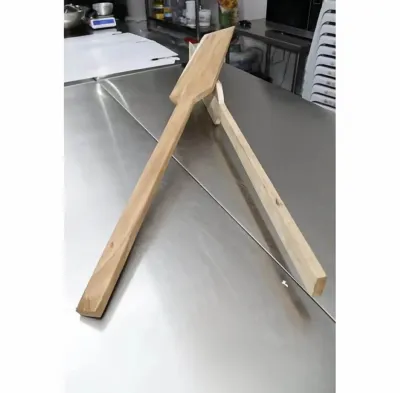
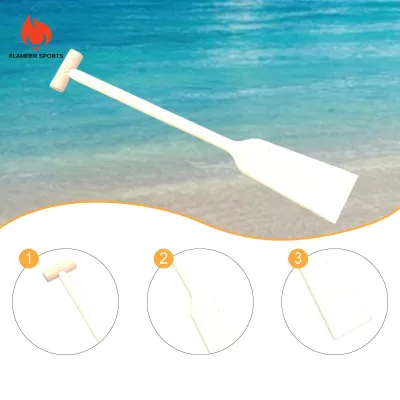

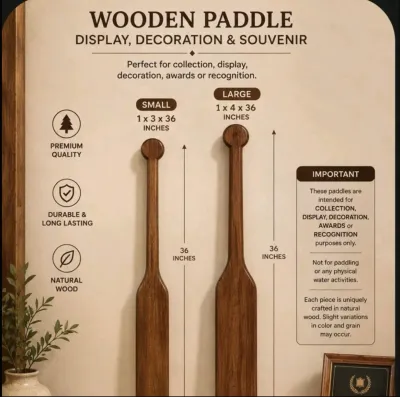
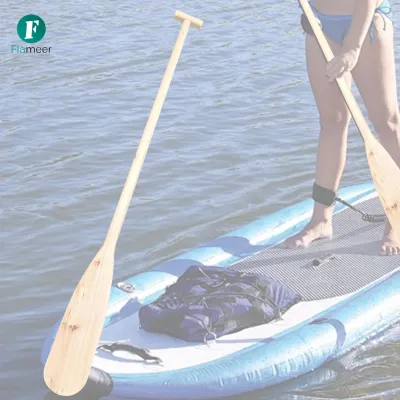
Prices are valid at publication and may change. Please refer to the product page for the latest price.
Your primary activity on the water also determines the performance characteristics you should prioritize in a sagwan. For long-distance island-hopping, your main goal is conserving energy over hours of continuous paddling, which demands a lightweight setup that minimizes muscle fatigue. Conversely, if you use your bangka for coastal fishing, you will need a paddle that excels at quick, precise maneuvers, allowing you to hold your position against a current or turn sharply around shallow reefs. For heavy transport or moving cargo, the priority shifts toward maximum displacement and structural leverage to push a loaded hull through resistant water.
The ergonomics of paddling a traditional bangka differ significantly from modern kayaking or canoeing. In a kayak, the paddler sits very low, often near the floor of the boat, and uses a double-bladed paddle in a continuous, high-angle rhythm. In a bangka, you are typically seated on a narrow wooden bench or crossbeam, positioned higher relative to the water, and you rely on a single-bladed sagwan. This elevated, single-sided stroke requires a deeper reach and a distinct pivot motion, making the relationship between your body height, the boat’s freeboard, and the paddle’s dimensions absolutely critical for preventing premature fatigue.
Determining the Correct Paddle Length
Finding the correct length for your sagwan ng bangka kahoy is a hands-on process that requires testing the physical relationship between your body, your boat, and the water. Rather than relying on rigid sizing charts, the most reliable method is to measure your reach while seated inside your actual bangka. Sit in your normal paddling position and hold a mock shaft or measuring tape down toward the water. The distance from your top hand grip down to the surface of the water, plus the depth of the blade itself, represents the functional length your paddle must cover to achieve a clean, efficient stroke.

A critical factor in this measurement is ensuring the shaft is long enough to submerge the entire blade without forcing you to lean excessively over the side of the boat. Leaning too far during every stroke quickly strains your lower back and compromises the stability of a narrow bangka. However, the shaft must also be short enough that the handle does not strike the outriggers or their supporting crossbeams during the recovery phase of your stroke. A paddle that is too long will force your arms into an awkwardly high, tiring position, while a paddle that is too short will limit your power and force you to work twice as hard.
To verify the fit before heading out into deep water, perform a dry-land test of your stroke arc. Hold the paddle with one hand on the top grip and the other hand about shoulder-width down the shaft. Mimic the entry, power, and exit phases of a stroke, checking that your lower shoulder remains relaxed and your upper hand does not rise above eye level at the peak of the motion. If you feel immediate tension in your neck or rotator cuff, the shaft length may be incorrect, and adjusting your grip or choosing a different paddle length is necessary to avoid repetitive strain injuries during long excursions.
Choosing the Right Blade Shape for Your Activity
The shape of your sagwan blade directly dictates how the paddle interacts with the water and how much resistance your muscles must overcome. Long, narrow blades—often resembling a slender leaf—are designed for low-resistance, high-cadence paddling. Because they slice into the water smoothly and displace less volume per stroke, they are highly suited for long-distance island-hopping where maintaining a steady, sustainable pace is more important than sudden bursts of speed. These blades allow you to maintain momentum with minimal strain on your joints over several hours of travel.
In contrast, short, wide blades provide a broad surface area that grabs a large volume of water instantly. This design offers maximum bite, delivering immediate acceleration and powerful leverage, which is highly beneficial when navigating tight fishing spots, maneuvering around shallow coral heads, or pushing a heavily laden transport bangka. The trade-off is that wide blades require significantly more physical strength to pull through the water, which can lead to rapid fatigue if you are not conditioned for long-distance use.
Regardless of the blade shape you choose, you must inspect the structural design of the blade’s spine and edges. A quality wooden sagwan should feature a subtle center spine or ridge running down the face of the blade, which helps split the water flow evenly and prevents the paddle from fluttering or twisting in your hands during a hard stroke. Additionally, check that the edges are slightly tapered but thick enough to withstand occasional impacts. When navigating shallow coastal waters in the Philippines, your blade will inevitably make contact with sandy bottoms, submerged rocks, or hard coral reefs, making edge durability a key safety consideration.
Selecting the Best Wood and Material for Durability
When evaluating a sagwan ng bangka kahoy, the choice of wood species involves a direct trade-off between weight, strength, and environmental resistance. Dense hardwoods, such as molave, yakal, or other local heavy timbers, offer exceptional impact resistance and are highly unlikely to snap when wedged against a rock or subjected to heavy loads. However, these dense woods are heavy, and the added weight can quickly exhaust your arms during a full day of paddling. Lighter woods, such as white lauan or specific softwoods, significantly reduce paddler fatigue but require careful handling to avoid structural damage.
To assess the quality of a wooden paddle, start by inspecting the direction and straightness of the wood grain. The grain should run parallel to the length of the shaft from the top grip all the way down into the blade. Cross-grain patterns, where the wood fibers run diagonally across the shaft, create natural weak points that are highly susceptible to snapping under pressure. Look for wood that naturally resists water absorption and decay, but remember that even the most resilient timber requires proper seasoning and treatment to survive the harsh tropical climate.
Before purchasing or using a paddle, verify with the craftsman or seller that the wood has been thoroughly cured and dried. Green or improperly seasoned wood contains residual moisture that will inevitably cause the paddle to warp, twist, or split when exposed to the intense tropical sun and saltwater of the Philippines. A well-cured paddle that has been treated with protective sealants or traditional oils will maintain its shape and structural integrity, ensuring that your primary means of propulsion remains reliable when you are far from the shoreline.
Inspecting and Maintaining Your Wooden Sagwan
Regular inspection of your wooden sagwan is a critical safety practice that should be performed before every trip onto the water. Begin with a thorough visual and tactile check, running your hands along the entire length of the shaft and the blade junction. Feel for any raised splinters, hairline cracks, or soft spots in the wood that could indicate internal rot or structural compromise. Pay close attention to the area where the shaft transitions into the blade, as this joint experiences the highest concentration of stress during a powerful stroke and is the most common point of failure.
To protect your paddle from the degrading effects of saltwater and high humidity, you must maintain its protective finish. Depending on the manufacturer’s or local boatwright’s instructions, apply a fresh coat of marine-grade varnish, polyurethane, or natural penetrating oils like linseed oil when the wood begins to look dry or dull. If you notice minor surface scratches or splinters, gently sand the area with fine-grit sandpaper to smooth the wood fibers before reapplying your chosen sealant. This simple maintenance step prevents water from seeping deep into the grain and causing localized rot.
Proper storage is equally important for extending the lifespan of your wooden paddle. When you return from the water, rinse the sagwan thoroughly with clean freshwater to remove salt crystals, sand, and organic debris that can abrade the finish. Store the paddle in a cool, shaded, and well-ventilated dry area, keeping it flat or hanging vertically. Never leave your wooden paddle lying directly on damp ground or exposed to direct, prolonged sunlight when not in use, as extreme heat cycles and trapped moisture will rapidly degrade the wood fibers and cause warping.
Frequently Asked Questions (FAQ)
Can I use a standard kayak paddle for a wooden bangka?
Using a standard, double-bladed kayak paddle is highly impractical and generally unsafe for a traditional wooden bangka. The wide outrigger assembly and the elevated seating position of a bangka mean that a double-bladed paddle would constantly strike the boat’s support structures during your stroke rotation. Additionally, the stroke mechanics required to propel a bangka rely on deep, single-sided leverage close to the hull, which cannot be achieved comfortably or safely with a long, double-sided kayak paddle.
How do I fix a splintered or cracked wooden sagwan?
For minor surface splinters, you can safely restore the paddle by lightly sanding the affected area with fine sandpaper until smooth, then sealing it with a marine-grade varnish or protective oil to prevent water intrusion. However, if you discover a deep, structural crack—especially near the shaft-blade junction or along the main body of the shaft—the paddle’s structural integrity is compromised. In such cases, attempting a temporary home repair is unsafe, and you should consult a local boatwright or replace the paddle entirely to prevent a sudden, dangerous failure while out at sea.
Community discussion
Share your experience or ask a question. Comments are reviewed before publication.