
Selecting the correct weight range for sandbag leg weights depends on your current lower-body strength, joint stability, and specific training objectives. For beginners, rehabilitation, or mobility work, a light range of 1 to 5 pounds (approximately 0.5 to 2.3 kg) per leg ensures you can master joint mechanics without overloading your connective tissues. Intermediate fitness enthusiasts aiming for muscular endurance and toning typically benefit from 5 to 10 pounds (approximately 2.3 to 4.5 kg) per leg, which adds progressive resistance to compound movements. Advanced athletes focusing on power and strength can progress to 10 pounds or more, though heavy loads require meticulous form to prevent joint shearing. Using adjustable sandbag weights for legs allows you to transition seamlessly between these levels by micro-loading the resistance as your lower body adapts.
Assess Your Current Fitness Level and Training Goals
Before fastening any resistance to your ankles, you must objectively evaluate your baseline lower-body strength. A reliable starting benchmark is your ability to perform basic bodyweight movements with pristine mechanics. If you can complete three sets of fifteen deep bodyweight squats with an upright torso, stable knees, and flat heels, your joints are likely ready for light external resistance. If you struggle with balance or experience knee tracking issues during unweighted lunges, your immediate focus must remain on joint stabilization rather than adding load.
Your primary training goal dictates how much weight your legs should carry. If you are recovering from an injury or looking to improve hip mobility, your priority is low-load, high-repetition movement that stimulates blood flow and strengthens tendons. For those aiming for muscular endurance or functional fitness in a humid home gym, moderate resistance keeps the heart rate elevated while challenging the quadriceps, hamstrings, and glutes. Conversely, if your goal is explosive athletic power or hypertrophy, you will need heavier, progressive loads that push your muscles close to failure within a lower repetition range.
Products mentioned in this guide
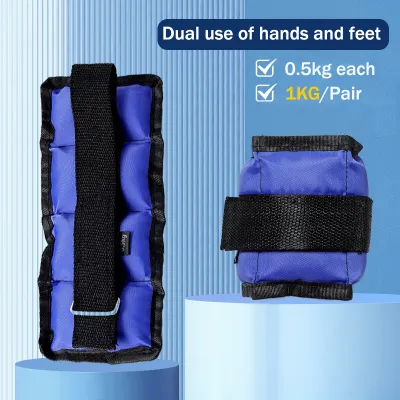
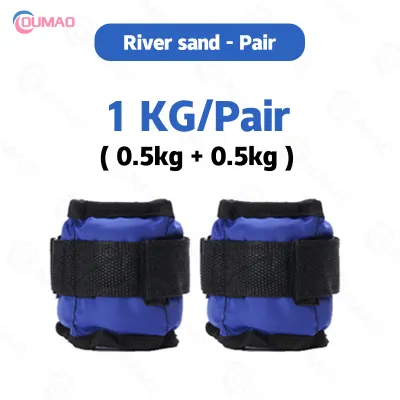
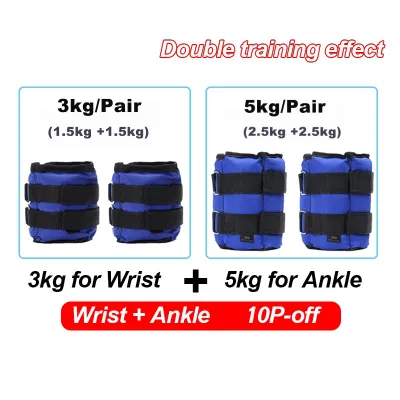
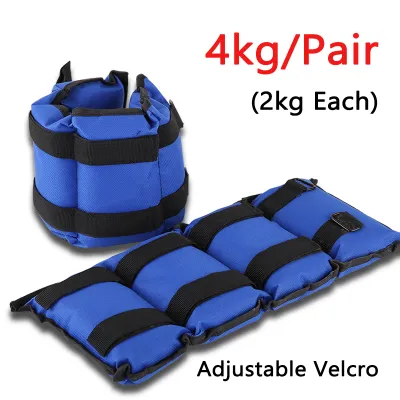
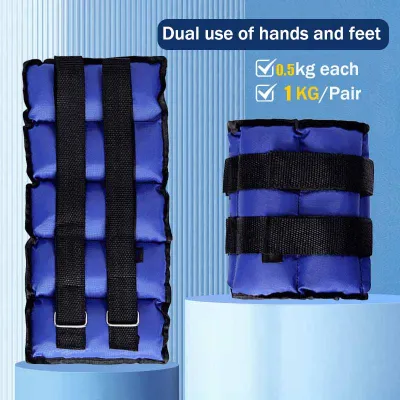
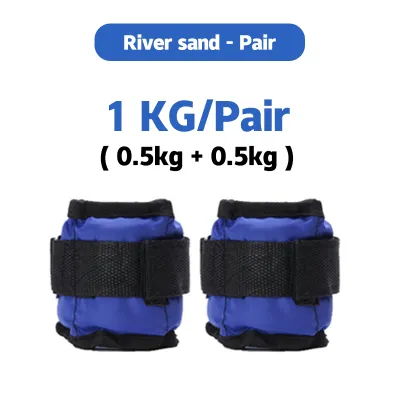
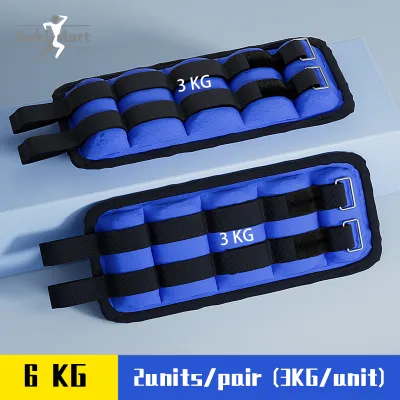
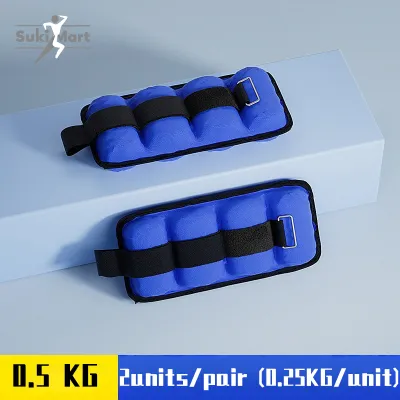
Prices are valid at publication and may change. Please refer to the product page for the latest price.
Mismatched weights pose a serious risk to your lower-body joints. Because leg weights are worn at the distal end of your limbs (far from your hip and knee joints), they create a long lever arm that amplifies the torque on your knees and hips. Selecting a sandbag that is too heavy before your connective tissues have adapted can lead to patellar tendonitis, hip flexor strains, or lower back compensation. Ensuring the load matches your current physical capacity keeps the stimulus on the target muscles rather than the joints.
Matching Weight Ranges to Your Fitness Profile
Sandbag leg weights are generally categorized into three broad tiers: light (1 to 5 pounds), moderate (5 to 10 pounds), and heavy (10 pounds or more). While these categories provide a helpful purchasing guide, the ideal weight for your body is dynamic and movement-dependent. The correct weight is defined by the point of muscular fatigue and form breakdown, not a fixed number on a product label.

A weight that feels perfectly manageable during a standing leg lift might compromise your lower back during a walking lunge. Therefore, you should select your sandbag range based on how your body responds to the specific exercises you intend to perform. Your goal is to reach target repetition fatigue while maintaining absolute control over the eccentric, or lowering, phase of every single movement.
Beginners and Rehabilitation (Lighter Loads)
For individuals new to resistance training or those transitioning out of physical therapy, the 1-to-5-pound range is the safest starting point. At this stage, your focus must be entirely on form mastery, joint preparation, and developing a strong mind-muscle connection. Adding even a small amount of weight to your ankles increases the sensory feedback from your muscles, helping you feel exactly which muscle groups are firing during leg lifts or donkey kicks.
If you are using an adjustable sandbag system, start with the lightest possible fill setting—often just a single pound—to test your ankle and knee stability. Perform a few slow, controlled repetitions of your planned exercises. If you notice any lateral wobbling in your ankles or if your knees cave inward, keep the weight at the absolute minimum until your stabilizer muscles adapt.
Controlled tempos are essential when first introducing wearable resistance to your lower body. Use a tempo of three seconds to lower the leg and two seconds to raise it, pausing briefly at the peak of the movement. This slow, deliberate pace minimizes momentum, ensuring that your muscles, rather than joint momentum, are doing the actual work.
Intermediate Lifters and Muscle Building (Moderate Loads)
If you have established a solid foundation of lower-body strength and can perform basic leg weight exercises without joint discomfort, transitioning to a moderate load of 5 to 10 pounds can help stimulate muscle growth and endurance. This range provides enough resistance to challenge intermediate lifters during compound movements like step-ups, walking lunges, and Bulgarian split squats.
To stimulate hypertrophy (muscle building) and endurance, you must find a balance between training volume and resistance. A moderate sandbag should make the final three repetitions of a 12-to-15-repetition set feel highly challenging, yet still executable with perfect form. If your lower back begins to arch or you must swing your torso to complete a leg lift, the load is too heavy for that specific movement.
You will know you have outgrown your moderate load when you can easily complete twenty repetitions of an exercise with zero form degradation and minimal cardiovascular or muscular fatigue. When this occurs, it is time to increase the resistance slightly or adjust your exercise selection to more challenging angles.
Advanced Athletes and Power Training (Heavier Loads)
Advanced athletes and seasoned fitness enthusiasts looking to maximize explosive power, speed, or high-intensity conditioning may require sandbag weights of 10 pounds or more. These heavier loads are highly effective for advanced variations of functional movements, such as weighted mountain climbers, hanging leg raises, or high-step progressions.
However, using heavy wearable ankle weights carries significant biomechanical risks. Unlike holding a heavy standalone sandbag or dumbbell close to your center of gravity, wrapping 10 or more pounds around your lower shins exerts massive pulling forces on your knee joints. For this reason, advanced users should reserve maximum loads for controlled, low-impact movements rather than explosive jumping or kicking exercises.
Before attempting any workout with heavy leg weights, dedicate at least ten minutes to a thorough dynamic warm-up. Focus on lubricating the hip, knee, and ankle joints with unweighted mobility drills, and perform light activation work for your glutes and core to ensure your body is fully prepared to stabilize the heavy load.
Maximizing Adjustable Sandbag Systems for Progressive Overload
One of the most practical investments you can make for your home fitness setup is an adjustable sandbag leg weight system. Unlike fixed-weight ankle straps, which force you to buy entirely new sets as you get stronger, adjustable systems feature a series of individual pockets that hold removable sand packets. This design allows you to customize the resistance of a single pair of straps from 1 pound up to 10 pounds or more. In the Philippines, high-quality adjustable sandbag leg weights typically range from ₱800 to ₱2,500, making them an affordable long-term investment for a home gym setup.
This adjustability is the key to executing progressive overload, the fundamental training principle of gradually increasing the stress placed on your musculoskeletal system. Instead of making a drastic, risky jump from a 5-pound weight to a 10-pound weight, an adjustable system allows for micro-loading. You can add a single half-pound sand packet to your straps every week or two, giving your tendons, ligaments, and muscle fibers ample time to adapt to the incremental stress.
Beyond convenience, the physical behavior of sand provides a unique training stimulus that solid iron weights cannot replicate. Because sand shifts and flows inside the packets as you move your legs, the center of gravity constantly changes. This shifting mass forces your deep stabilizer muscles—such as the gluteus medius, tibialis anterior, and core stabilizers—to work much harder to keep your limbs on a steady path, leading to improved balance and real-world functional strength.
Signs You Are Using the Wrong Weight
Monitoring how your body responds during and after your workouts is crucial for staying injury-free and ensuring your training remains productive. Paying close attention to physical feedback will tell you immediately whether you need to adjust your sandbag fill level.
- Too Heavy: The most prominent red flag that your sandbag weights are too heavy is sharp or persistent joint pain, particularly in your knees, hips, or lower back. If you find yourself arching your spine, swinging your body to create momentum, or cutting your range of motion short to complete a repetition, the load is excessive. Your body is compensating by shifting the stress away from your target leg muscles and onto your skeletal structure, which can quickly lead to chronic overuse injuries.
- Too Light: Conversely, if you complete your planned sets and feel as though you could easily perform another twenty repetitions, your sandbag is likely too light to stimulate any meaningful adaptation. Other indicators include a complete lack of muscle fatigue during the eccentric (lowering) phase of the exercise, or failing to see any improvement in your strength, muscle tone, or balance after four to six weeks of consistent training.
- Actionable Steps: If you identify any of these signs, take immediate action to correct your training load. If the weight is too heavy, remove one or two sand packets to reduce the load, or slow down your repetition tempo to focus on muscle activation at a lighter weight. If you cannot reduce the physical weight of the bag, switch to a simpler movement pattern that requires less joint stabilization. If the weight is too light, add more sand packets, increase the time under tension by slowing down your movements, or transition to single-leg exercises that naturally increase the relative resistance.
Frequently Asked Questions (FAQ)
Can I use sandbag leg weights for running or high-impact cardio?
No, you should avoid wearing sandbag leg weights during high-impact activities like running, jogging, or jumping rope. Because these weights are worn at the very bottom of your legs, they act as a heavy pendulum, drastically altering your natural running gait and putting excessive, unnatural stress on your knee and hip joints during foot strike. This repetitive impact can quickly lead to joint inflammation, shin splints, or ligament strain. For high-impact cardio or endurance training, a weighted vest is a much safer alternative because it distributes the extra load evenly across your torso and keeps it close to your center of gravity. Save your sandbag leg weights for controlled strength, walking, and low-impact mobility exercises.
How do I clean and maintain my sandbag leg weights?
To keep your sandbag leg weights clean and prevent unpleasant odors, especially in hot and humid tropical climates, you must establish a regular maintenance routine. After every workout, wipe down the outer fabric with a damp cloth lightly moistened with mild soapy water, then allow them to air dry completely in a well-ventilated, shaded area before storing them. Never submerge the entire weight in water or place it in a washing machine, as this can damage the internal sand packets and degrade the stitching. Regularly inspect the seams, zippers, and Velcro straps for any signs of wear, particularly around the high-stress attachment points, to ensure the sand packets remain securely contained during your leg workouts.
Community discussion
Share your experience or ask a question. Comments are reviewed before publication.