
Selecting the right skuter for kids depends on matching their physical development with the mechanical design of the ride. While age ranges offer a helpful starting point, your child’s balance, coordination, and spatial awareness are the true indicators of which model will keep them safe and engaged. Choosing a model that is too advanced can lead to frustration or injury, while an overly simplistic design may quickly lose its appeal.
By evaluating how your child moves and where they plan to ride, you can confidently select a model that supports their current skills while encouraging healthy physical development. This guide details how to assess your child’s physical readiness, compares the four primary scooter categories, and explains how to verify hardware specifications for local outdoor environments.
Assessing Your Child's Balance and Motor Skills
Before browsing different models, observe your child’s physical coordination in everyday situations to establish a clear developmental baseline. A child’s readiness for a specific scooter type relies heavily on their gross motor skills and core stability. You can easily test their balance by asking them to stand on one foot for three to five seconds, hop in place, or walk along a straight line on a flat surface. If they struggle to maintain their footing during these simple activities, they will require a highly stable, self-balancing scooter design.
Products mentioned in this guide
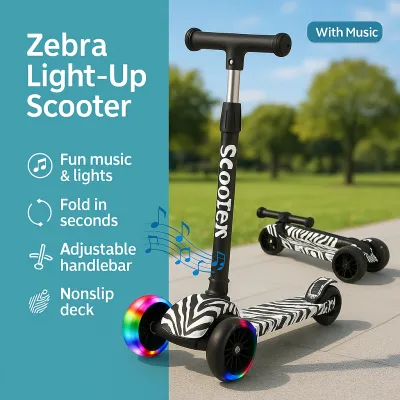
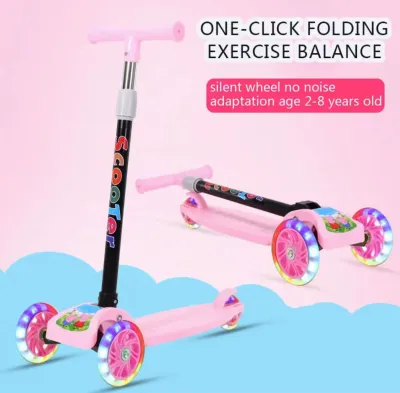
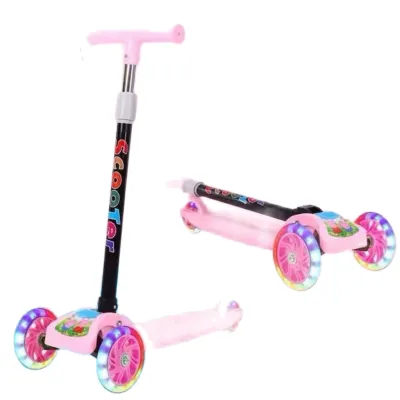
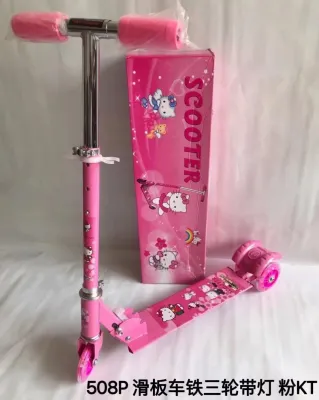
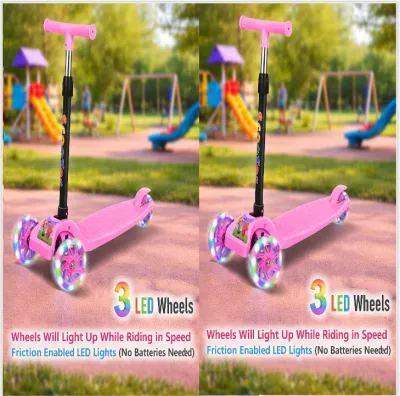
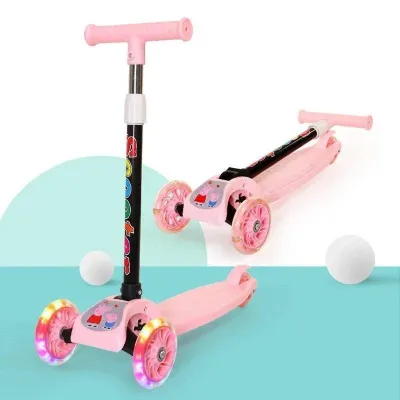
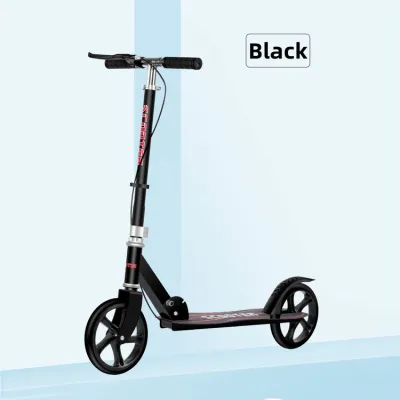
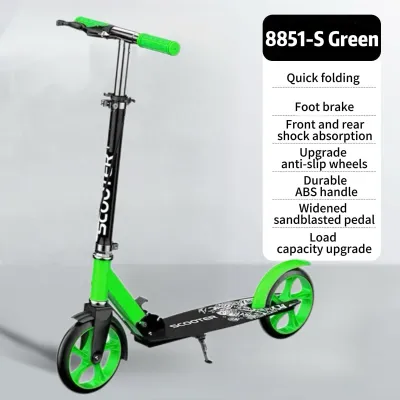
Prices are valid at publication and may change. Please refer to the product page for the latest price.
Motor skill indicators also dictate how well a child can steer and manage a moving platform. Grip strength is essential for maintaining control over the handlebars, especially when riding over uneven pavement or small cracks. You should also observe how they understand steering concepts. Younger children often find “lean-to-steer” mechanisms intuitive because they rely on natural body weight shifts. Conversely, traditional mechanical steering requires the child to actively turn the handlebars, which demands more advanced hand-eye coordination.
Environmental and spatial awareness are the final components of physical readiness. A child must be able to process external visual cues, judge distances, and stop immediately when commanded. If your child easily becomes distracted, struggles to recognize obstacles, or does not yet understand basic safety boundaries, they are not ready for faster, two-wheel, or motorized options. For these children, riding should be restricted to slow-speed, highly controlled settings under direct supervision.
Diagnosing the Right Scooter Type by Age and Skill
Once you have assessed your child’s physical coordination, you can map their abilities to one of the four primary scooter categories. Each type is engineered for a specific developmental stage, balancing stability with maneuverability.

3-Wheel Scooters: Signs Your Child Needs Extra Stability
Three-wheel scooters are designed primarily for toddlers and young beginners, typically ranging from 2 to 5 years old. This category is ideal for children who are still developing their core strength and basic equilibrium. The dual-wheel configuration at the front provides a self-standing base that prevents the scooter from tipping over when stationary, allowing young riders to focus entirely on the motion of pushing off and rolling.
When choosing a three-wheel model, look for these specific features:
- Lean-to-steer mechanism: This system helps children learn how weight distribution affects direction, preparing them for future balance-based sports.
- Wide front wheelbase: A wider stance at the front offers maximum lateral stability.
- Low deck height: A deck that sits close to the ground reduces the effort required to push and makes it easier for the child to step off safely.
You will know your child is ready to transition away from a three-wheel model when they start complaining that the scooter moves too slowly, when their heels constantly strike the rear wheel because they have outgrown the deck, or when they naturally coast for long distances with their feet side-by-side without relying on the third wheel for balance.
2-Wheel Kick Scooters: Signals of Ready Balance and Coordination
Two-wheel kick scooters are suited for children aged 5 to 8 who have mastered basic balance and can confidently stand on one foot without wobbling. Unlike three-wheel versions, these models require continuous forward momentum to remain upright, demanding active steering input and constant core engagement from the rider.
Key features to prioritize for this stage include:
- Direct steering: The handlebars turn the front wheel directly, allowing for sharper turns and more responsive handling.
- Narrow, lightweight decks: A slimmer deck allows the child to kick closer to their center of gravity, preventing ankle clips and improving speed.
- Foldable, aluminum frames: Lightweight materials make the scooter easier for the child to maneuver and simple for parents to carry when the child gets tired.
Before purchasing a two-wheel model, perform a quick skill check. Your child should be able to push off forcefully with one foot while keeping their supporting foot centered on the deck, maintaining a straight path without constantly putting their foot down to stabilize themselves.
Advanced Kick Scooters: Indicators for Speed and Progression
Advanced kick scooters, including stunt and high-performance models, are built for older children aged 8 to 12. These riders have developed rapid reflexes, excellent core strength, and a desire for greater speed or trick progression. Because these activities place high stress on the equipment, standard folding recreational scooters are unsuitable and can pose safety risks under heavy impact.
When evaluating advanced models, verify the following structural specifications:
- One-piece fixed handlebars: Avoid folding handlebars or adjustable-height stems, as these joints represent weak points that can snap or collapse during jumps and impacts.
- Reinforced aluminum decks: Look for heavy-duty welded decks with integrated headsets that can withstand high downward forces.
- High-rebound polyurethane (PU) wheels: These wheels should feature high-grade bearings (such as ABEC-7 or ABEC-9) to ensure smooth rolling and impact resistance.
Because stunt riding carries inherent risks, these scooters require dedicated practice in controlled environments like local skateparks or smooth, enclosed recreational courts. They are not intended for rough neighborhood commuting, and riders must understand their physical limits before attempting tricks.
Electric Scooters: Maturity and Traffic Awareness Checks
Electric scooters represent a significant jump in speed, weight, and responsibility, making them suitable only for older children and teenagers, typically aged 12 and up. Before introducing a motorized toy, you must conduct strict cognitive and physical checks. The child must possess the maturity to manage speeds that often exceed 15 kilometers per hour, understand the concept of stopping distances, and respect pedestrian right-of-way.
Ensure your child can meet these mandatory prerequisites:
- Sufficient hand strength: They must be able to squeeze mechanical hand brakes quickly and firmly enough to bring a heavy motorized frame to a complete stop.
- Sustained focus: The rider must maintain situational awareness, scanning the path ahead for rocks, wet patches, or pedestrians without becoming distracted.
- Adherence to local rules: They must understand and obey subdivision guidelines, park rules, and local ordinances regarding motorized transport.
Keep in mind that electric models are significantly heavier than manual kick scooters, making them harder to steer if the battery runs out. Speed-limiting settings should always be enabled for beginners, and adult supervision is highly recommended during initial rides.
Verifying Fit and Hardware for Local Conditions
To ensure a safe and comfortable ride, you must physically verify the scooter’s dimensions and material specifications, adapting them to your local climate and riding surfaces.
- Handlebar Height Check: Have your child stand flat-footed on the scooter deck. The handlebars should rest comfortably between their belly button and lower chest. Handlebars that are too high make steering difficult and can strike the child's face during a sudden stop, while handlebars that are too low force the child to hunch over, leading to back fatigue and reduced control.
- Deck Width and Grip: The deck must be wide enough to accommodate your child's riding shoe comfortably, with enough space to rest their foot at an angle. However, it should not be so wide that it interferes with their natural kicking stride. Ensure the deck surface features high-traction grip tape or deeply textured, slip-resistant plastic to keep their feet secure.
- Wheel Material for Tropical Climates: In the Philippines, outdoor riding surfaces like subdivision roads and barangay multi-purpose courts are often subjected to high humidity, intense heat, and sudden afternoon downpours. Avoid cheap, hard plastic wheels, which become extremely slippery on damp concrete and offer zero shock absorption. Instead, choose high-quality polyurethane (PU) wheels. PU wheels provide excellent traction, grip the road surface reliably even when slightly damp, and absorb vibrations from rough asphalt.
- Braking Systems: Rear foot fender brakes are standard on most manual kick scooters. They require the child to shift their weight to their back foot and press down on the metal or plastic guard. This requires good balance and leg coordination. For younger children or those riding heavier electric models, hand-activated lever brakes are highly recommended, provided the child has the hand span and grip strength to operate them effectively.
Setting Safety Boundaries and Gear Requirements
No amount of high-quality hardware can replace proper safety gear and clear operational boundaries. Protective equipment is non-negotiable for every ride, regardless of how experienced the child is or how short the distance.
Essential Protective Gear
- Helmets: A properly fitted, multi-impact helmet is the most critical piece of safety gear. It must sit level on the head, covering the forehead, and the straps must form a snug "V" shape under the ears. It should never tilt backward to expose the forehead.
- Pads and Shoes: Knee and elbow pads protect against painful road rash on hard concrete surfaces. Closed-toe athletic shoes with flat, rubber soles must always be worn; riding in slippers, sandals, or barefoot drastically increases the risk of foot injuries and prevents effective braking.
Environmental Rules Establish strict spatial boundaries for riding. Restrict scooter use to flat, well-lit, paved areas such as dedicated park paths, private driveways, or closed subdivision courts. Strictly prohibit riding on public roads with active vehicular traffic, near steep driveways, or around swimming pools. Avoid gravel, sand, and grass, as these loose surfaces can abruptly stop small scooter wheels, throwing the rider forward.
Routine Maintenance Checks Perform a quick safety inspection before every ride. Check that the steering column is securely locked, the folding latch is fully engaged, and the wheels spin freely without excessive side-to-side play. Tighten any loose bolts on the axle and handlebar clamps, and test the brakes to ensure they engage immediately when pressed.
Frequently Asked Questions (FAQ)
When should I transition my child from a 3-wheel to a 2-wheel scooter?
You should transition your child when they demonstrate consistent balance on one foot, show frustration with the speed limitations of a three-wheel model, or physically outgrow the deck. If they can coast smoothly without constantly putting their feet down to balance, they possess the core stability required for a two-wheel kick scooter.
Are electric scooters safe for young children?
No, electric scooters are not safe for young children. The heavy frame, motorized acceleration, and complex braking systems require physical strength and cognitive maturity that younger children have not yet developed. Motorized models are best reserved for children aged 12 and older who have fully mastered manual kick scooters and can strictly adhere to safety rules.
Community discussion
Share your experience or ask a question. Comments are reviewed before publication.