
When stepping onto the mats, selecting the proper Shift taekwondo uniform is one of the most critical decisions a practitioner can make. The right dobok does more than satisfy dojang etiquette; it directly influences your mobility, temperature regulation, and overall performance. Because training and competition demand vastly different physical outputs, a single uniform style rarely excels in both environments.
To choose the right uniform, you must balance durability and cost-effectiveness for daily training against lightweight speed and regulatory compliance for official tournaments. Daily dojang sessions require a resilient fabric blend that can withstand constant friction, stretching, and frequent washing. Conversely, official competitions demand ultra-lightweight, highly breathable materials that minimize physical drag and carry the necessary federation approval marks.
In tropical regions like the Philippines, where high humidity and elevated temperatures are standard, these material differences become even more pronounced. A heavy, non-breathable uniform can lead to rapid overheating and fatigue during intense training sessions. By understanding how design, fabric weight, and cuts differ across scenarios, you can make an informed investment that supports your martial arts journey.
Products mentioned in this guide
Prices are valid at publication and may change. Please refer to the product page for the latest price.
Training vs. Competition: Core Differences in Taekwondo Uniforms
The fundamental differences between daily training uniforms and competition-grade doboks lie in their weight, fabric composition, and overall cut. Martial arts uniforms are highly specialized tools, and treating them as interchangeable can lead to premature wear or tournament disqualification. Understanding these baseline variations ensures you select a garment tailored to your immediate athletic goals.
Fabric weight is typically measured in ounces or grams per square meter (GSM) and plays a major role in how a uniform behaves. Training doboks generally utilize mid-weight fabrics, ranging from 7 to 8 ounces (approximately 200 to 240 GSM). This thickness provides a sturdy structure that holds up under repetitive pulling and floor work. Competition doboks, on the other hand, prioritize weight reduction, often utilizing ultra-light fabrics of 5 to 6 ounces (150 to 180 GSM) to allow for maximum kicking velocity.
The weight of the fabric also dictates heat retention and the acoustic feedback of your techniques. Heavier cotton-polyester blends retain more warmth but offer a satisfying, loud “snap” sound when a kick or punch is executed with proper speed and form. Lightweight synthetic competition fabrics prioritize maximum ventilation and moisture evaporation, sacrificing some of that traditional auditory feedback to keep the athlete cool and agile under pressure.
Another key distinction is the cut and silhouette of the garment. Traditional training uniforms often feature a boxy, generous fit that allows for a wide range of motion and accommodates various body shapes. Modern competition uniforms favor an athletic, tapered cut. This streamlined design reduces the amount of excess fabric, making it significantly harder for an opponent to grab or snag your uniform during close-quarters sparring matches.
Choosing a Shift Taekwondo Uniform for Daily Dojang Training
Daily dojang training is characterized by high-volume repetition, intense conditioning, and constant contact. For these demanding sessions, your Shift taekwondo uniform must prioritize longevity, skin comfort, and exceptional resistance to wear and tear. When shopping for a training-grade dobok, focusing on material durability and structural reinforcement will ensure your gear survives the daily grind.

In humid tropical climates, managing sweat is a constant battle during multi-hour training sessions. A uniform that traps moisture becomes heavy, clings to the skin, and restricts your kicking range. To combat this, look closely at the fabric blend label rather than assuming performance based on brand reputation alone. A blend of 65% polyester and 35% cotton is a highly reliable standard for training, offering the natural softness of cotton alongside the strength and quick-drying properties of polyester.
Pure cotton uniforms are exceptionally soft but prone to severe shrinkage and tend to absorb moisture like a sponge, making them heavy and uncomfortable in humid dojangs. Synthetic-heavy blends resist shrinking, dry rapidly, and maintain their shape over hundreds of wash cycles. This makes a balanced poly-cotton blend the ideal choice for everyday practitioners who need a uniform that can go from the washing line to the gear bag multiple times a week.
Structural reinforcement is another critical factor to inspect before purchasing. Daily sparring, deep stances, and repetitive stretching put immense pressure on the seams. Ensure the uniform features reinforced multi-row stitching at high-stress areas, particularly the crotch gusset, the armpits, and the side slits of the jacket. Without these reinforced seams, the friction and tension of high kicks can easily lead to embarrassing tears mid-class.
The jacket’s closure system also affects your comfort during active movement. While some traditional martial arts uniforms utilize side ties, the modern V-neck pull-over style is the standard for taekwondo training. This design eliminates loose strings that can untie or snap during partner drills. A secure, well-fitted V-neck collar ensures the jacket remains centered and professional-looking, allowing you to focus entirely on your form and technique.
Selecting a Shift Uniform for Official Competitions
When transitioning from the dojang floor to the competition mat, your uniform requirements shift from rugged durability to peak athletic performance. In sanctioned tournaments, a fraction of a second can determine the outcome of a match. A competition-grade Shift uniform is engineered to minimize weight, maximize speed, and project a highly professional, sharp appearance to the judges.
Weight reduction is the primary engineering goal of competition doboks. These uniforms are crafted from advanced, ultra-light synthetic fabrics, often 100% polyester, featuring specialized weave patterns like micro-ribbing or honeycomb textures. These textures prevent the fabric from sticking to your skin when wet, ensuring that your legs can move freely and rapidly during high-performance kicks like the double roundhouse or spinning back kick.
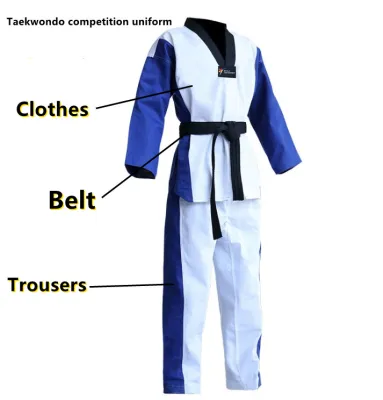
Before purchasing a uniform for tournament use, you must verify its official approval status. Major tournaments require uniforms to be officially approved by World Taekwondo (WT) or relevant national governing bodies. This approval is indicated by an official logo embroidered or printed on the chest and pants. Always physically inspect the product tags, inner labels, or manufacturer specifications to confirm these marks are present; never assume compliance based on product titles alone.
The cut of a competition uniform is highly functional and tightly regulated. Sleeves must cover the elbows and should not be rolled up, while pant legs must clear the ankles to allow judges and electronic scoring systems a clear view of the target areas. Tapered pant legs and narrower sleeves reduce wind resistance and prevent opponents from obtaining a grip during clinch situations, giving you a subtle but distinct tactical advantage.
Visual presentation plays a significant role, particularly in poomsae (forms) competitions. Judges look for crisp, precise movements, and the drape of your uniform contributes to this impression. While kyorugi (sparring) uniforms favor ultimate flexibility, poomsae uniforms often utilize slightly stiffer synthetic blends that hold their shape beautifully and deliver a sharp, resounding “snap” with every block and strike, emphasizing your power and control.
Cross-Scenario Compatibility: Can One Dobok Do Both?
For many practitioners, purchasing multiple specialized uniforms may not fit their immediate budget or level of commitment. It is natural to wonder if a single Shift uniform can successfully bridge the gap between daily training and official competition. While a single-uniform setup is entirely possible, it requires clear compromises in both settings.
A mid-weight, WT-approved dobok is the most viable candidate for a hybrid uniform. This option is highly suitable for beginners, color-belt students, or casual hobbyists who train a few times a week and participate in local, low-stakes tournaments. In these developmental stages, the slight performance weight penalty of a mid-weight uniform will not severely hinder progress, and local tournament organizers are often more flexible regarding strict uniform specifications.
However, active competitors and advanced black belts will quickly run into the limitations of a single-uniform approach. Using a delicate, ultra-light competition dobok for daily training will dramatically shorten its lifespan. The thin synthetic fibers are susceptible to pilling and tearing when subjected to the rough friction of floor drills, self-defense grabbing, and frequent heavy wash cycles. Within a few months, a premium competition uniform can look worn and lose its professional sheen.
Conversely, wearing a heavy training dobok to a high-level kyorugi tournament can put you at a physical disadvantage. The extra weight, especially when damp with sweat, increases fatigue and slows down your kicking speed. Furthermore, if your training uniform lacks the official WT approval logo, you risk being turned away at the tournament inspection desk, forcing an emergency purchase or disqualification.
To help you decide, consider this simple framework:
- Casual Training & No Competition: Opt for a single, durable poly-cotton training dobok.
- Casual Training & Occasional Local Tournaments: A single mid-weight, WT-approved uniform is highly practical.
- Regular Training & Frequent Sanctioned Tournaments: Invest in two separate uniforms—a robust training dobok for daily dojang wear and a dedicated, ultra-light WT-approved competition dobok reserved exclusively for tournament days.
Sizing, Fit, and Care Tips for Shift Uniforms
To maximize the lifespan of your Shift uniform and ensure it performs as intended, you must pay close attention to sizing and maintenance. Martial arts uniforms do not follow standard retail clothing sizes like small, medium, or large. Instead, they rely on a numerical system or height-based measurements in centimeters, making careful preparation essential before buying.
Always consult the specific Shift brand sizing chart, using your accurate height and weight as the primary reference points. If you possess a broader build, longer limbs, or fall between sizes, it is generally safer to size up. A uniform that is too tight will restrict your hip mobility and prevent deep stances, while an excessively baggy uniform can trip you up or violate tournament regulations regarding sleeve and pant length.
Once you have secured the correct fit, proper garment care is vital to preserve the fabric’s integrity and appearance. Always check the specific care label sewn inside your uniform before washing. As a general rule, wash your dobok in cold water to prevent thermal shrinkage, which is especially common in cotton-blend fabrics. Avoid using harsh chlorine bleach, as it can yellow white polyester fibers and degrade the embroidered logos over time.
Fabric softeners should also be avoided when washing modern synthetic or hybrid uniforms. Softeners leave a thin chemical coating on the fibers, which clogs the micro-pores designed for moisture-wicking and breathability, rendering the performance fabric less effective. Instead, use a mild detergent and hang the uniform to air-dry. Avoid high-heat tumble dryers, which can warp the stiff collar, damage elastic waistbands, and cause unpredictable shrinkage.
Frequently Asked Questions (FAQ)
The following common questions can help you finalize your selection and care strategy for your Shift taekwondo gear.
How do I verify if a Shift dobok is approved for official tournaments?
To verify tournament compliance, you must inspect the physical uniform for the official World Taekwondo (WT) approved logo, which is typically embroidered or printed on the front of the jacket and the upper thigh of the pants. Additionally, review the official product documentation or the manufacturer’s specification sheet prior to purchase. Do not rely solely on retail product names; look for explicit confirmation of WT approval in the technical details to ensure the uniform meets international competition standards.
Should I size up or down for a Shift taekwondo uniform?
If your measurements fall between two sizes on the Shift sizing chart, your choice should depend on the fabric composition and your primary usage. For uniforms with a high cotton content, sizing up is recommended to accommodate the natural shrinkage that occurs during the first few washes. For 100% synthetic competition uniforms, which do not shrink, choosing the closer size or sizing down slightly can provide a more tailored, athletic fit that prevents excess fabric from being grabbed by opponents.
Community discussion
Share your experience or ask a question. Comments are reviewed before publication.