
To choose the right bolster pillow for yoga, you must match the shape and dimensions to your body size and select a firmness level that supports your weight without collapsing. Your primary yoga style—whether restorative, Yin, or prenatal—dictates whether you need a stable, flat rectangular bolster or a contoured cylindrical one. Evaluating these physical specifications alongside the fill material ensures your joints remain properly aligned and strain-free during long-held poses.
Choosing Between Cylindrical and Rectangular Shapes
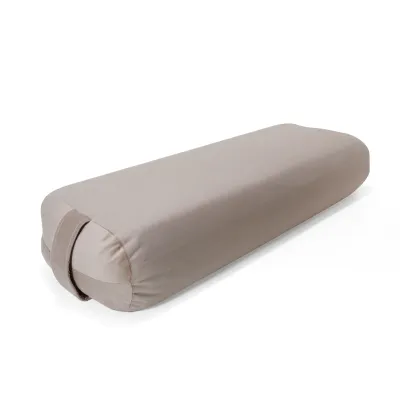
Cylindrical and rectangular bolsters serve distinct structural purposes in a yoga practice. A rectangular bolster features a wide, flat surface that offers exceptional stability. This flat design prevents the prop from rolling, making it an excellent choice for grounding poses, deep back bends, and seated meditation where you need a reliable base. If you are practicing restorative postures that require lying down for extended periods, the rectangular shape supports the entire width of your spine and torso evenly.
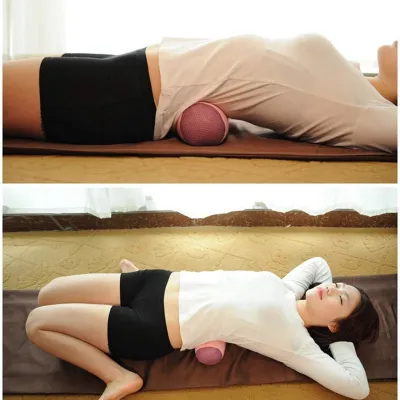
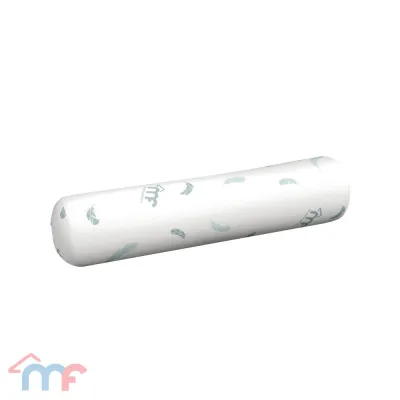
In contrast, cylindrical bolsters are rounded and excel at opening up specific areas of the body. Their contoured shape fits naturally under the curves of your knees, neck, or lower back, promoting gentle spinal extension and chest-opening postures. Because a cylindrical bolster can roll, it requires more active engagement or precise placement to stay secure, making it ideal for targeted stretching and dynamic restorative setups.
Products mentioned in this guide
![[COD]Bolster Pillow for Lumbar&Leg Support Half Moon Memory Foam Cushion with Washable Cover Back & Side Sleepers Pillow](https://img.lazcdn.com/g/p/053aea4c6e8538d0ae47791836109710.jpg_400x400q80.jpg_.webp)
Prices are valid at publication and may change. Please refer to the product page for the latest price.
Matching Dimensions to Your Body Type and Height
Selecting the correct bolster dimensions is essential for maintaining proper joint alignment and preventing physical strain. If a bolster is too short, your head or tailbone may hang off the edge during supine poses, placing unnecessary stress on your neck and lower back. For taller individuals or those with longer torsos, a longer bolster is necessary to support the entire length of the spine from the pelvis to the head.

The diameter or height of the bolster also directly impacts how your joints align in different positions. A bolster that is too tall can overextend your lower back in a supported bridge pose or strain your knees and ankles when placed underneath them. Conversely, a bolster that is too shallow may not provide enough elevation to release tension in tight hamstrings or hips. Always check the exact manufacturer dimensions and compare them against your torso length and flexibility levels rather than relying on generic labels like “standard” or “travel” size.
Evaluating Firmness and Fill Materials for Proper Support
The internal filling of a bolster determines its density, weight, and ability to maintain structural integrity under your body weight. Firm fills, such as organic buckwheat hulls, provide dense, uncompromising support that conforms slightly to your body shape without flattening. This level of firmness is highly beneficial for poses where the bolster must bear a significant portion of your weight, ensuring your joints remain elevated and aligned.
Softer fills, such as cotton batting, kapok, or recycled polyester fiber, offer a more cushioned, yielding surface. These materials are excellent for gentle restorative practices where comfort is prioritized over rigid structural elevation. However, softer fills tend to compress over time, so it is important to verify if the bolster features an adjustable inner liner. An adjustable zipper allows you to add or remove filling to customize the firmness to your specific body weight and practice requirements.
Practical Features to Verify Before Purchase
When practicing in warm or humid tropical climates, the material of the bolster cover becomes a key consideration for comfort and hygiene. Look for breathable, absorbent fabrics like cotton or canvas that offer a reliable grip on your yoga mat and prevent slipping when you sweat. Synthetic covers may trap heat, which can be uncomfortable during long, restorative holds in warm rooms.
Maintenance is another critical factor, so prioritize bolsters that feature a removable, machine-washable outer cover with a sturdy zipper. A carrying handle is also highly practical for transporting the bolster between your home and the studio, especially since dense fills can make these props surprisingly heavy. Before purchasing, always verify the manufacturer’s specified weight capacity and care instructions to ensure the materials can withstand regular washing without shrinking or losing their shape.
Frequently Asked Questions (FAQ)
Can I use a regular bed pillow instead of a yoga bolster?
Regular bed pillows are generally designed for cushioning rather than structural support, meaning they compress too easily under body weight. In restorative or Yin yoga, a collapsing pillow fails to keep your joints properly aligned, which can lead to muscle strain or joint discomfort. While a bed pillow can be used for minor cushioning, a dedicated yoga bolster provides the dense, reliable structure needed to safely hold your body weight in passive poses.
How do I clean and maintain my yoga bolster?
To clean your yoga bolster, always start by checking the manufacturer’s care label for specific instructions. Most high-quality bolsters feature a removable outer cover that can be machine-washed in cold water and air-dried to prevent shrinkage. The inner core, especially if filled with natural materials like buckwheat hulls or kapok, should never be submerged in water; instead, spot-clean the inner casing and allow it to dry completely in a well-ventilated area to prevent mold or mildew growth in humid conditions.
Community discussion
Share your experience or ask a question. Comments are reviewed before publication.