
To find the right size and fit for men’s diving fins, you must match the foot pocket to your actual foot dimensions while wearing your intended dive footwear, ensuring a snug fit that prevents movement without pinching. In tropical waters like those in the Philippines, where you might alternate between warm boat dives and rocky shore entries, the right fit is the single most important factor in preventing painful blisters, chafing, and debilitating leg cramps. A proper fit ensures that every kick translates directly into propulsion, conserving your energy and air supply. However, even the most advanced equipment cannot replace proper dive training, physical conditioning, and underwater judgment; if you experience severe discomfort or cramping during a dive, you must safely signal your buddy and terminate the dive.
Understand Full-Foot vs. Open-Heel Fins
Choosing the right fin style depends heavily on your diving environment and the footwear you plan to use. Full-foot fins feature a soft, flexible foot pocket that completely encloses your heel. These are ideal for warm-water environments, such as tropical reef dives, where you can wear them barefoot or with thin neoprene socks. Because they do not require heavy boots, they are lightweight, easy to pack, and generally align closely with your standard shoe size.
In contrast, open-heel fins feature a rigid sole and an open back secured by an adjustable strap. These are designed to be worn with thick neoprene dive boots. This setup is essential for cold-water diving or shore entries where you must walk over sharp rocks, hot sand, or rough terrain before submerging. The boot protects your feet during the entry, while the fin provides the necessary power once you are in the water.
Products mentioned in this guide
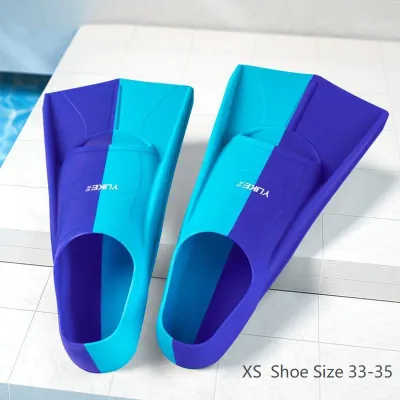
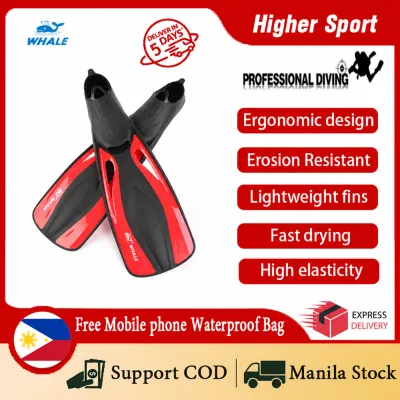
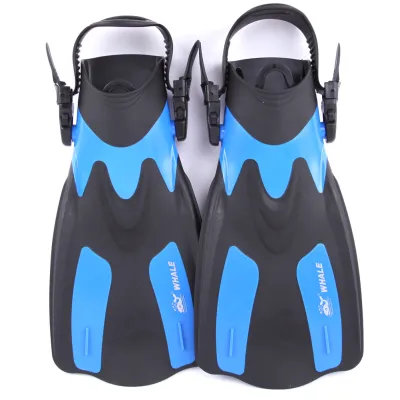
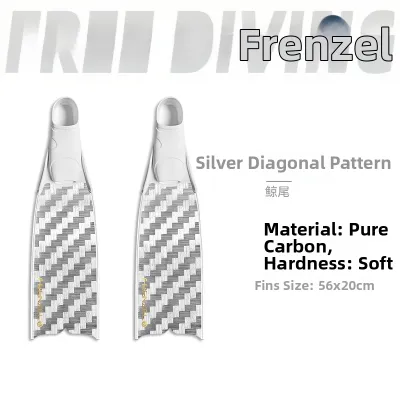
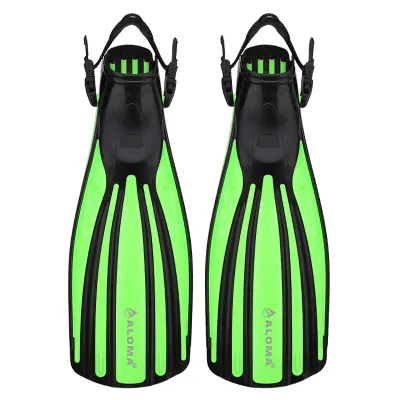
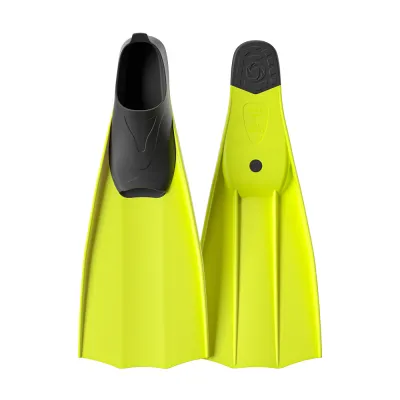
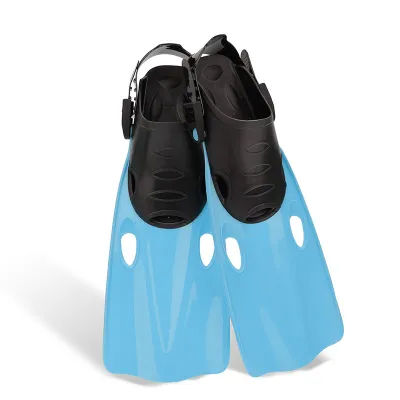
Prices are valid at publication and may change. Please refer to the product page for the latest price.
The style you choose dictates your entire measuring and fitting process. If you opt for full-foot fins, you must measure your bare foot to ensure a tight, glove-like fit. If you choose open-heel fins, you must measure your foot while wearing the exact dive boots you plan to use. Attempting to size an open-heel fin barefoot will result in a pocket that is far too large, leading to instability, poor power transfer, and severe chafing.
How to Measure Your Foot for the Correct Fin Size
To get an accurate measurement, place a piece of paper against a flat wall, step onto it with your heel touching the wall, and trace the outline of your foot. Measure the distance from the wall to the tip of your longest toe in millimeters, as most diving manufacturers use metric measurements for precise sizing. If you plan to use open-heel fins, perform this measurement while wearing your dive boots to account for the added length and volume of the sole.

Never assume your everyday sneaker size translates directly to a diving fin size. Sizing standards vary significantly between brands, and some manufacturers design their foot pockets with specific regional foot shapes in mind. Always consult the manufacturer’s specific size chart, comparing your actual foot length in millimeters to their recommended ranges rather than relying on generic shoe size conversions.
Men often have wider feet or higher insteps—the arch on top of the foot—than standard sizing templates accommodate. If a foot pocket is too narrow, it will compress the sides of your foot, restricting blood circulation and causing rapid cramping. If you have high-volume feet, look for brands known for wider foot pockets, or opt for open-heel fins with adjustable straps that allow for vertical expansion and a more customizable fit.
Evaluating Foot Pocket Shape and Strap Systems
Examine the construction of the foot pocket itself to ensure long-term comfort and efficiency. High-quality fins typically feature a dual-material design: soft, pliable rubber around the toes and instep for comfort, combined with a rigid sole plate to transfer power to the blade. Look inside the pocket to check for prominent internal ridges or seams that could rub against your skin. The heel cup depth should be sufficient to hold your heel securely without letting it slide vertically during the upward kick cycle.
The retention system on open-heel fins plays a critical role in fit and safety. Traditional rubber or silicone straps with plastic buckles are highly adjustable but can degrade over time and are difficult to adjust with thick gloves. Bungee cords or stainless steel spring straps are highly recommended; they automatically adjust to the compression of your boot at depth, maintain constant tension, and are much easier to slip on and off.
When trying on fins, pay close attention to potential pressure points. The most common areas for discomfort are the top of the instep, the tips of the toes, and the Achilles tendon. Any localized pressure or pinching while dry will intensify significantly under the resistance of water, potentially cutting off circulation or causing severe chafing within minutes of your dive.
Testing the Fit: In-Store and At-Home Checklists
Before taking your new fins into the water, perform a series of physical checks to verify the fit. To perform the shake test, put the fins on (with boots or socks if applicable) and sit on the edge of a chair. Lift your leg and shake your foot vigorously in a kicking motion. The fin should feel like an extension of your leg; if you feel the foot pocket sliding, shifting, or pulling away from your heel, the size is too large.
Next, stand up and gently rock forward onto your toes, then back onto your heels. Your toes should have enough room to wiggle slightly and should not be pressed hard against the front of the pocket. If your toes are curled or compressed, you need a larger size or a wider pocket shape.
If purchasing online, always verify the retailer’s return and exchange policy before ordering. Test the fins indoors on a clean, carpeted surface to avoid scratching the blades or soles, which could void your return privileges. Always test them with the exact thickness of neoprene socks or dive boots you intend to wear on your actual dives to ensure compatibility.
Troubleshooting Common Fit Issues
If you experience rubbing or blisters, it is usually a sign of a loose foot pocket allowing friction, or a rigid seam scraping your skin. You can resolve mild friction issues by wearing thin lycra or neoprene dive socks inside full-foot fins. For open-heel fins, adjusting the strap tension or switching to a softer boot can eliminate localized rubbing.
Cramping in the calves or arches is often caused by fins that are too stiff or heavy for your current leg strength, or a foot pocket that is too tight, restricting blood flow. If your sizing is correct but cramps persist, consider switching to a channel-thrust or split-fin design, which reduces the physical effort required for each kick.
A loose heel strap or a stretched-out bungee can cause your foot to slide out of the pocket during a dive, which is a serious safety hazard. Inspect your straps regularly for signs of wear, cracking, or loss of elasticity. If you are using full-foot fins and experience slippage, you may need to size down or use dedicated silicone fin keepers that wrap around your ankle and heel to lock the fin in place.
Frequently Asked Questions (FAQ)
Should I size up or down if I am between sizes?
If you are between sizes for full-foot fins, it is generally safer to size down for a snugger fit, provided your toes are not painfully compressed, as loose fins will cause blisters and can slip off in currents. For open-heel fins, size up to accommodate the bulk of your dive boots, and use the adjustable strap or bungee system to tighten the fit as needed.
Can I use the same fins for both scuba diving and snorkeling?
While you can use snorkeling fins for casual, shallow scuba diving in calm waters, dedicated scuba fins are typically longer, stiffer, and heavier to push against the drag of heavy scuba gear. If you participate in both activities, a lightweight, open-heel travel fin offers a balanced compromise, providing sufficient propulsion for scuba diving while remaining manageable and packable for snorkeling.
Community discussion
Share your experience or ask a question. Comments are reviewed before publication.