
Finding the perfect pair of roller skates for your son involves balancing safety, comfort, and longevity. To make the right choice, you must accurately measure his feet, decide between the stability of quad skates and the maneuverability of inline skates, and select a model that provides robust ankle support. In a tropical climate where outdoor play often happens on warm concrete driveways, local basketball courts, or subdivision roads, factors like boot breathability and wheel durability also play a major role in his skating experience.
By focusing on a precise fit and the right style for his current skill level, you can prevent discomfort and encourage a lifelong love for the sport. This guide breaks down the essential steps to select the ideal skates, ensuring your son stays safe, balanced, and excited every time he rolls out.
Step 1: Measure Your Son's Foot for the Correct Skate Size
Getting the right size is the most critical step in buying roller skates. Many parents make the mistake of relying on their child’s current school shoe or sneaker size, but skate sizing is rarely identical to everyday footwear. Because skates require a snug fit to control movement and prevent ankle injuries, you must measure your son’s feet physically before looking at any size charts.
Products mentioned in this guide
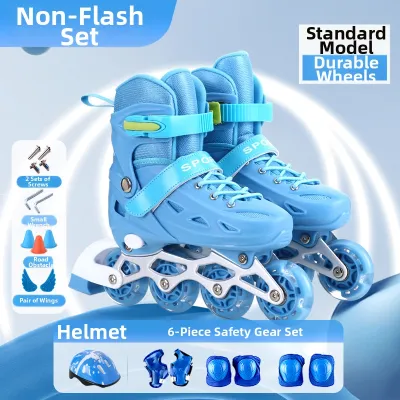
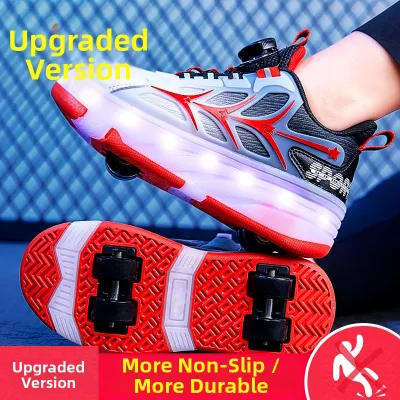
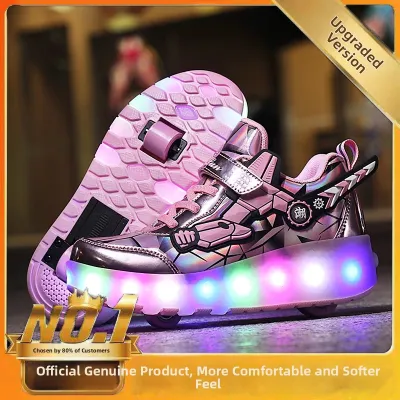
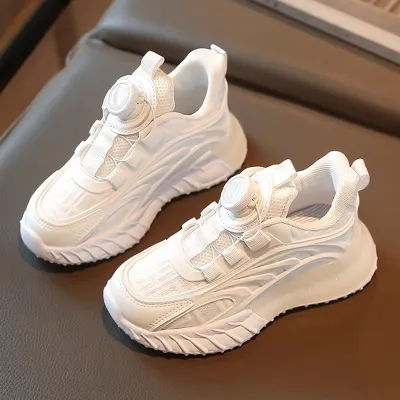
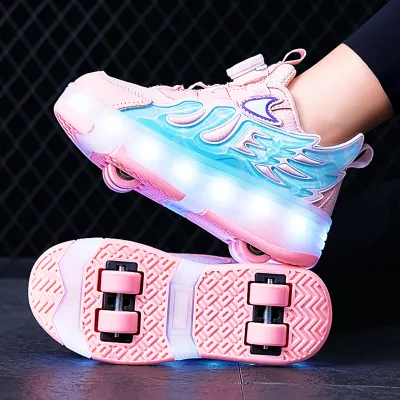
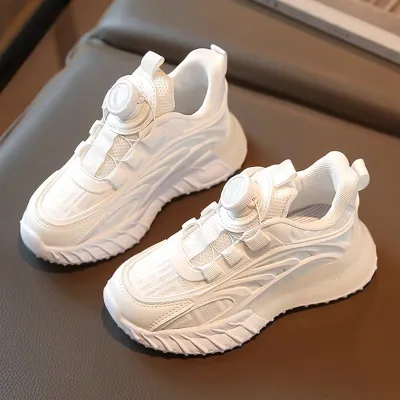
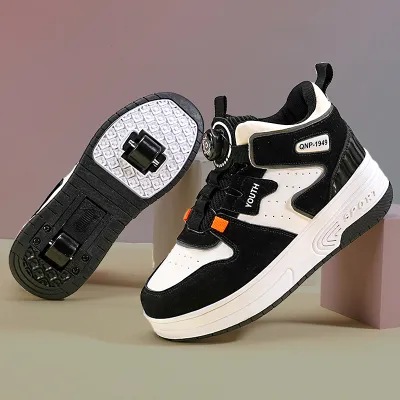
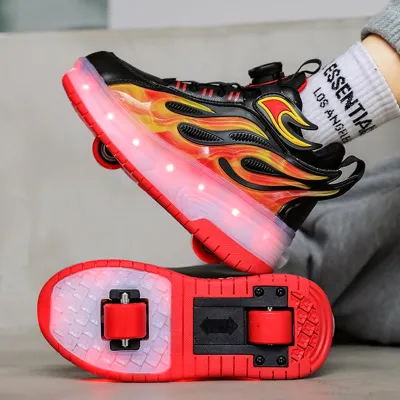
Prices are valid at publication and may change. Please refer to the product page for the latest price.
To measure his foot accurately at home, find a hard, flat floor and tape a blank sheet of paper against a wall. Have your son stand upright on the paper with his heel resting gently against the wall. Ensure he is wearing the exact socks he plans to use while skating, as thick athletic socks can significantly change how a boot fits. Mark the furthest point of his longest toe with a pencil, keeping the pencil completely vertical. Measure the distance from the edge of the paper to the mark in centimeters or millimeters, and repeat the process for both feet, as one foot is often slightly larger than the other.
Once you have the measurement in centimeters, compare it directly to the manufacturer’s specific size chart. Different brands use different sizing standards, so a size 3 in one brand might fit like a size 4 in another. Always prioritize the centimeter measurement over regional shoe sizes to ensure accuracy.
When choosing between fixed-size and adjustable-size skates, consider your son’s growth rate and skill level. Fixed-size skates offer a highly precise fit and maximum structural rigidity, making them excellent for advanced skaters who need immediate responsiveness. However, because young boys grow rapidly, these skates may only fit for a single season.
Adjustable-size skates are highly recommended for growing children. These models typically feature a push-button mechanism that allows the toe cap to slide forward, expanding the skate across three to four full sizes. This design offers excellent long-term value, but you must verify that the adjustment mechanism locks securely and does not slip under pressure during active use.
Step 2: Decide Between Quad Skates and Inline Skates
Choosing between quad skates and inline skates depends on your son’s age, physical coordination, and where he plans to skate. Both styles offer distinct advantages, and understanding how they interact with different surfaces will help you match the skate to his environment.

Quad skates feature four wheels arranged in a two-by-two square configuration, mimicking the stability of a car. This wide wheelbase provides excellent lateral stability when standing still, making quads highly reassuring for younger boys or absolute beginners who are still developing basic balance. They also feature a front-mounted toe stop, which offers an intuitive braking point for kids. Quad skates are highly suited for indoor roller rinks, smooth concrete carports, or flat, covered community courts.
Inline skates, often called rollerblades, feature wheels arranged in a single straight line. While they require more ankle strength and balance to stand still, they are much easier to maneuver once in motion. The narrow wheel profile reduces friction, allowing for higher speeds and smoother rolling over outdoor surfaces. If your son plans to skate on subdivision streets, rough asphalt, or park paths, inline skates are generally the better choice because the inline wheels roll over small pebbles, cracks, and debris much more easily than wide quad wheels.
To match the skate type to your son’s readiness, assess his overall coordination. If he is younger, struggles with balance, or primarily skates indoors, quad skates provide a stable foundation to build confidence. If he is slightly older, possesses strong ankles, or wants to keep up with friends on outdoor paths, inline skates will offer the speed and maneuverability he desires.
Step 3: Check Essential Fit and Support Features
Once you know the size and type of skate, you must evaluate the construction of the boot. Proper ankle support and a secure closure system are non-negotiable features that protect your son’s feet and joints from strain.
Begin by comparing hard-shell boots with soft boots. Hard-shell skates feature a molded plastic outer skeleton with a removable padded liner. This design provides maximum ankle support, preventing your son’s feet from rolling inward or outward while he learns to balance. Hard shells are highly durable, resistant to scrapes from falls, and ideal for beginners who need structural assistance. Soft boots, on the other hand, are made of canvas or mesh materials. They offer superior breathability, which is highly beneficial in hot and humid tropical weather, and are lighter and more flexible. However, they require stronger ankles to maintain proper form and are better suited for intermediate skaters.
Next, examine the closure system. A reliable skate should feature a triple-closure system to lock the foot securely in place. This system typically includes traditional laces at the bottom to customize the tightness across the forefoot, a wide Velcro power strap over the instep to pull the heel back into the heel pocket, and a micro-adjustable plastic buckle at the top of the cuff to stabilize the ankle. Avoid skates that rely solely on loose laces or weak straps, as foot slippage inside the boot can cause painful blisters and loss of control.
When trying on the skates, use this physical fit checklist to ensure they are safe to use:
- Toe Room: With the skates fully buckled, your son should stand up. His toes should lightly touch the front of the liner without feeling cramped or bent.
- Heel Lock: Have him bend his knees forward into a skating stance. His heel should remain locked firmly in the back of the boot without lifting up.
- Ankle Alignment: Look at him from behind. His ankles should stand straight up and down; if the boots buckle inward under his weight, the support is insufficient.
- Comfort: Keep the skates on for five to ten minutes indoors. Check his feet afterward for any red marks or pressure points that could indicate a poor fit.
Step 4: Prioritize Safety Gear and Practice Conditions
No skate purchase is complete without a full set of protective gear. Equipping your son with the right safety equipment not only prevents injuries but also boosts his confidence, allowing him to learn faster without the fear of falling.
A properly fitted helmet is the most crucial piece of safety gear. Ensure you select a helmet certified for wheeled sports, which covers the back of the head more extensively than a standard bicycle helmet. The helmet should sit level on his forehead, about two finger-widths above his eyebrows, and the chin strap should be adjusted so that no more than two fingers can fit between the strap and his chin.
In addition to a helmet, your son must wear a complete set of joint pads, including knee pads, elbow pads, and wrist guards. Wrist guards are especially vital for beginners, as children instinctively reach out with their hands to break a fall. Ensure the plastic splints on the wrist guards face downward to absorb the impact against the pavement. When buying pads, look for adjustable elastic straps that can be tightened securely over his limbs without cutting off circulation.
Before every skating session, perform a quick equipment check. Ensure all wheel axles are tight, the brake pad is securely attached and not worn down to the plastic bracket, and the buckles lock firmly.
For initial practice, choose a safe, flat, and traffic-free environment. A gated driveway, a quiet cul-de-sac, or a smooth, dry basketball court is ideal. Avoid areas with loose gravel, sand, wet leaves, or standing water, as these elements can ruin the wheel bearings and cause sudden slips. In humid climates, always wipe down the skates with a dry cloth after outdoor sessions to prevent moisture from rusting the metal components.
Frequently Asked Questions (FAQ)
Should I buy roller skates a size bigger so my son can grow into them? (FAQ)
No, you should never buy fixed-size roller skates that are too large for your son. Oversized skates allow his feet to slide around inside the boot, which leads to painful friction blisters, poor ankle support, and a significant loss of control that increases the risk of falls. If you want a skate that accommodates his growing feet, purchase adjustable roller skates. These models are specifically engineered to expand safely via a secure mechanical track, ensuring a snug, supportive fit at every size setting.
At what age can a boy start learning to roller skate? (FAQ)
Most boys can begin learning to roller skate between the ages of 4 and 5, but readiness depends more on individual physical development than a specific age. Look for key indicators of physical coordination, such as the ability to run smoothly without tripping, jump with both feet landing together, and follow basic safety instructions. If your child can balance on one foot for a few seconds and is enthusiastic about trying the sport, he is likely ready to start with stable quad skates or supportive beginner inline skates.
How do I know when it is time to replace my son's roller skates? (FAQ)
You should replace your son’s skates when his toes are cramped or curled at the front of the boot, even when adjustable skates are set to their maximum size. Additionally, inspect the structural integrity of the boot; if the plastic shell is cracked, or if the ankle support has become soft and allows his ankles to lean inward, the skates are no longer safe. Finally, check the hardware. If the wheels are worn down unevenly to sharp angles, or if the bearings make a grinding noise and fail to spin smoothly after cleaning, it is time to replace those components or upgrade to a new pair.
Community discussion
Share your experience or ask a question. Comments are reviewed before publication.