
Selecting the right paddle for swimming is a critical decision that directly impacts your technique, training efficiency, and joint health. While these training tools are highly effective for building upper-body strength and refining your stroke mechanics, using the wrong size or style can quickly lead to shoulder strain or severe injury. Finding the perfect match requires balancing your current physical conditioning, swimming experience, and hand measurements.
Whether you are training in a local community pool or preparing for open-water swims in coastal waters, understanding how to select and use this gear safely will help you maximize your performance. By matching the paddle’s surface area to your physical capability, you can enjoy the benefits of resistance training without compromising your shoulder stability.
Why the Right Paddle Size Protects Your Shoulders and Improves Stroke
A paddle for swimming works by artificially increasing the surface area of your hand. This modification amplifies water resistance during the underwater pull, forcing your upper-body muscles to work harder to propel you forward. When used correctly, this added resistance helps build specific swimming strength in your lats, shoulders, and chest, while also highlighting flaws in your stroke path by making slipping or slicing noticeable.
Products mentioned in this guide
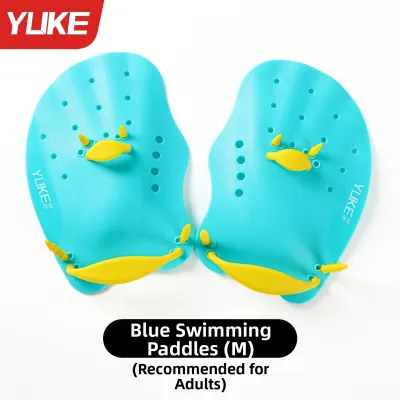
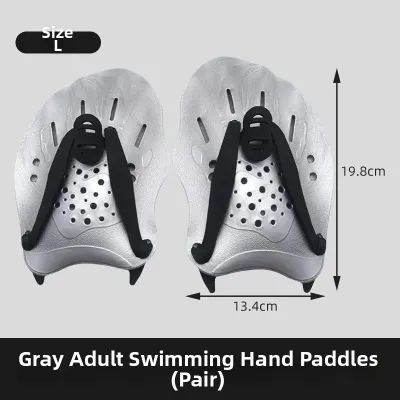
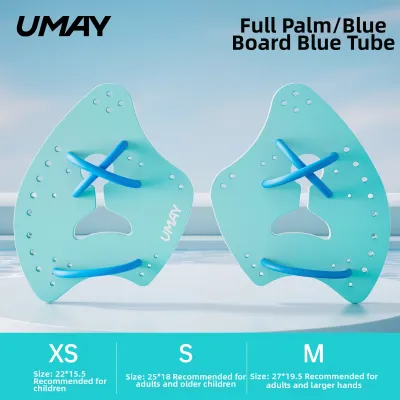
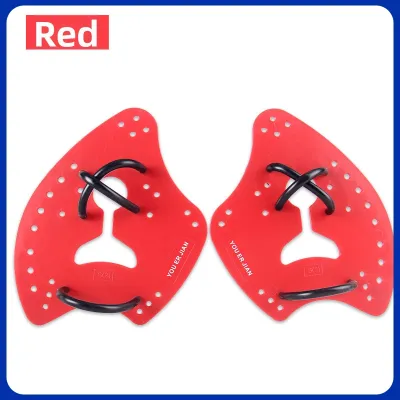
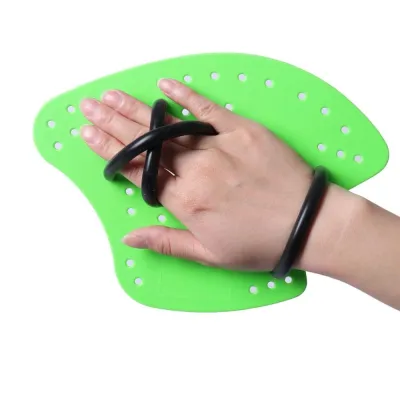
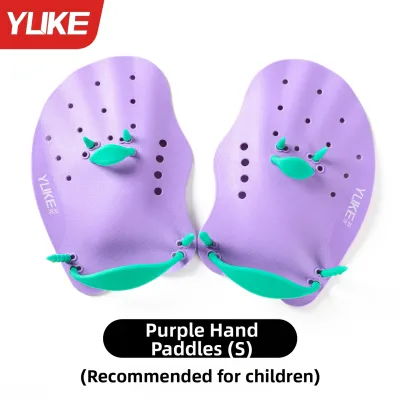
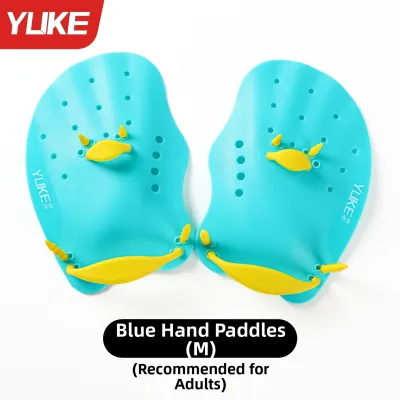
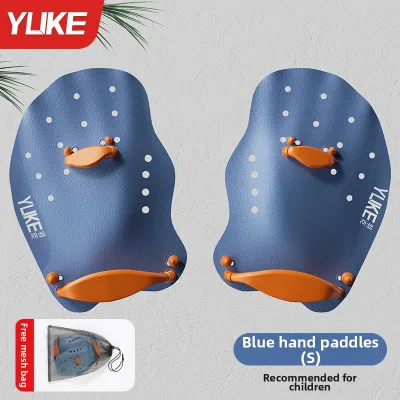
Prices are valid at publication and may change. Please refer to the product page for the latest price.
However, this increased resistance places a significantly higher load on your rotator cuff muscles and scapular stabilizers. If a paddle is too large or too rigid for your current strength level, your shoulders will compensate for the overload by altering your stroke mechanics. This compensation often leads to shoulder impingement, tendonitis, or chronic joint strain.
In swim training, bigger is rarely better. A paddle that exceeds your physical capacity forces your body to work against more resistance than your joints can safely handle. Prioritizing correct sizing over maximum surface area ensures that you build functional strength while protecting your joints for long-term athletic progress.
How to Measure and Match Your Hand to a Paddle for Swimming
To find a paddle that matches your anatomy, you must first measure your hand dimensions accurately. Using a standard ruler or measuring tape, measure the distance from the base of your wrist (the first crease) to the very tip of your middle finger. Keep your hand flat and your fingers naturally extended during this measurement.

Once you have your hand length, apply these general sizing rules based on your experience level:
- Beginners: Choose paddles that are slightly smaller than or equal to the actual footprint of your hand. Keeping the surface area modest prevents sudden joint overload.
- Intermediate Swimmers: Select paddles that extend no more than 0.5 to 1 centimeter beyond your fingertips.
- Advanced Swimmers: Highly conditioned athletes with excellent shoulder stability can transition to paddles that are up to 10% larger than their hand size (extending roughly 1.5 centimeters beyond the fingertips).
Because sizing conventions vary significantly across different gear brands, never rely solely on generic labels like “Medium” or “Large.” Always check the manufacturer’s specific dimension chart and compare it directly to your hand measurements before making a purchase. Remember that even a small increase in surface area exponentially increases the water resistance and physical load placed on your shoulders.
Matching Paddle Types to Your Swimming Skill Level
Different paddle designs cater to specific training goals, stroke styles, and experience levels. Choosing the correct category ensures you receive the right balance of technical feedback and physical resistance.
Beginner Paddles: Technique and Water Feel
For those who are still refining their stroke mechanics, training should focus on technique rather than raw power. Beginner-friendly options, such as finger paddles, cover only the fingers while leaving the palm fully exposed to the water. This design allows you to maintain a natural feel for the water, helping you correct the crucial catch phase of your stroke without placing excessive strain on your shoulders.
These paddles are typically made from highly flexible plastics that bend slightly under high pressure. This flexibility acts as a built-in safety buffer, absorbing excess force if your hand enters the water at an awkward angle. They are excellent tools for developing muscle memory and establishing a clean, efficient entry and pull.
Intermediate Paddles: Strength and Endurance
Swimmers who have developed a consistent stroke and solid baseline conditioning can transition to medium-sized, traditional-shaped hand paddles. These models are designed to cover the entire hand and are ideal for building muscular endurance and cardiovascular power during longer training sets.
Most intermediate models feature a contoured shape that mimics the natural curve of a relaxed hand, along with multiple drainage holes across the surface. These holes allow a small portion of water to flow through the paddle, which smooths out the resistance curve and reduces the peak shock load on your shoulders at the start of the pull phase. This balance of resistance and pressure relief makes them highly effective for structured fitness training.
Advanced Paddles: Power and Speed
Advanced paddles are designed strictly for highly conditioned competitive swimmers and triathletes who possess exceptional shoulder stability and flawless stroke mechanics. These paddles feature large surface areas, highly rigid materials like polycarbonate, and specialized shapes, such as asymmetrical or V-bottom designs.
These advanced shapes are engineered to maximize water displacement and force transfer, allowing swimmers to generate extreme power and speed during short, explosive sets. Because they offer zero flex and massive resistance, they require perfect form to use safely. They are not suitable for casual fitness swimming or high-volume endurance sets, as the physical toll on the shoulder joints is exceptionally high.
Decoding Straps, Holes, and Material Stiffness
Beyond the basic shape and size, several secondary design features influence how a paddle behaves in the water and how it affects your training.
- Strap Configurations: Traditional paddles use adjustable silicone or rubber straps to secure both the wrist and the middle finger. While dual straps provide maximum security, they can mask poor technique by holding the paddle in place even if your hand enters the water crookedly. In contrast, using only a finger strap—or opting for a completely strapless design—forces you to maintain constant, even water pressure against the paddle. If your hand entry or pull angle is incorrect, a strapless paddle will instantly slip off, providing immediate technical feedback.
- Drainage Holes: The presence and distribution of holes across the paddle face determine the fluid dynamics of your pull. A high density of drainage holes reduces overall resistance and eases the physical strain on your shoulders, particularly during the high-drag recovery phase when your hand exits the water. Fewer holes mean higher resistance and a heavier load.
- Material Stiffness: Flexible materials are highly forgiving and ideal for long endurance sessions or recovery days. Rigid materials provide instantaneous power transfer and are excellent for sprint sets, but they offer no shock absorption, making them high-risk for anyone prone to joint discomfort.
Safe Usage Rules to Prevent Shoulder Strain
To enjoy the benefits of resistance training while keeping your shoulders healthy, you must establish strict usage boundaries. Equipment cannot replace physical conditioning, and ignoring warning signs can lead to long-term injury.
Always perform a thorough, unresisted warm-up of at least 400 to 500 meters before putting on your paddles. This increases blood flow to the rotator cuff muscles and lubricates the shoulder joints. When you begin your paddle set, limit the distance to no more than 20% to 25% of your total workout volume (for example, a maximum of 500 meters during a 2,000-meter pool session). This constraint prevents fatigue-induced form breakdown, which is when most injuries occur.
If you feel any sharp, pinching, or localized pain in your shoulder, stop using the paddles immediately and finish your workout swimming easily without gear. To help balance your body position and reduce the workload on your upper body, consider pairing your paddles with a pull buoy or swim fins. These tools elevate your hips and legs, allowing you to focus on a controlled, technically sound arm stroke. Finally, if you have a history of shoulder injuries, always consult a physical therapist or a certified swim coach before incorporating paddles into your routine.
Frequently Asked Questions (FAQ)
Do I need straps on my swimming paddles?
You do not strictly need straps, and many swimmers actively benefit from strapless designs. Strapless paddles rely entirely on the hydrodynamic pressure of your hand moving forward through the water to stay in place. This design provides immediate feedback; if your hand entry is angled incorrectly or your pull slips, the paddle will fall off. Traditional strapped paddles are better suited for high-volume strength sets where maintaining maximum connection and security is your primary goal.
Can I use swimming paddles if I have a history of shoulder pain?
If you have a history of shoulder pain, you must exercise extreme caution. You should consult a physical therapist or a professional swim coach to evaluate your stroke mechanics before using any resistance gear. If you are cleared to use them, start with very small, flexible finger paddles rather than full-sized hand paddles. Limit your use to short distances of 50 to 100 meters per session, and stop immediately if you feel any discomfort.
Community discussion
Share your experience or ask a question. Comments are reviewed before publication.