
Choosing the right punching bag for an adult’s home training space requires balancing your body weight, your training goals, and the physical limits of your room. Generally, a heavy bag should weigh roughly half of your body weight to provide adequate resistance without putting excessive strain on your joints. However, the ideal setup also depends on whether you are training for power, speed, or cardio, as well as the structural capacity of your ceiling or floor. In tropical climates like the Philippines, where high humidity can affect materials and concrete walls are common, selecting the right mounting method and bag material is just as critical as choosing the weight itself.
Assessing Your Home Training Space and Clearance
Before purchasing a punching bag for adult training, you must measure your designated workout area. A heavy bag swings dynamically when struck. To determine the necessary clearance, measure the floor space and ceiling height of your room, accounting for the bag’s maximum swing plus your own arm and leg reach.
Identify potential structural obstacles. In many residential homes, ceiling fans, light fixtures, low-hanging beams, or decorative moldings can interfere with a swinging bag. Striking an obstacle can damage your home, ruin your equipment, or cause injury. Ensure there is a complete clearance zone free of these hazards.
Products mentioned in this guide
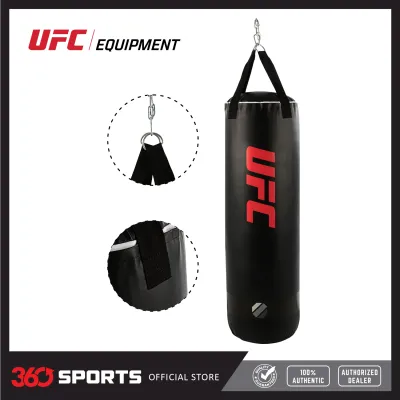
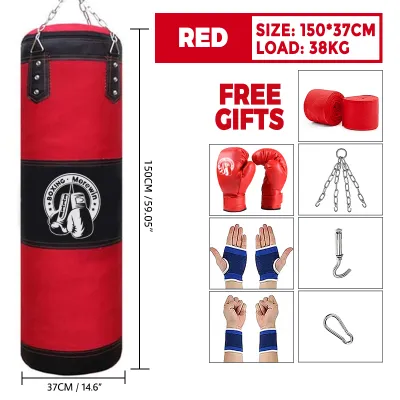

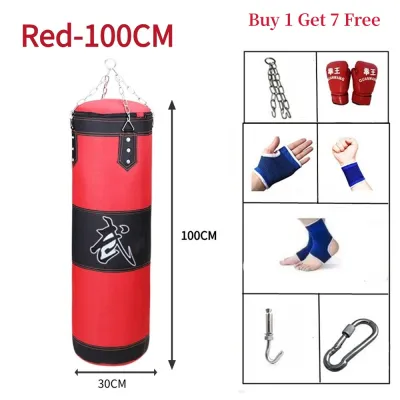
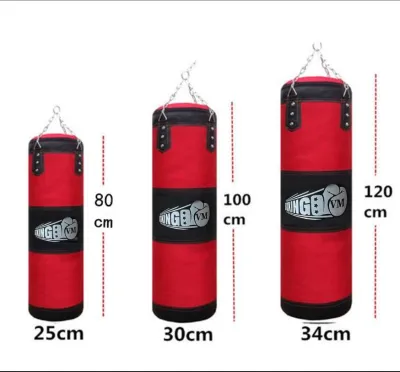
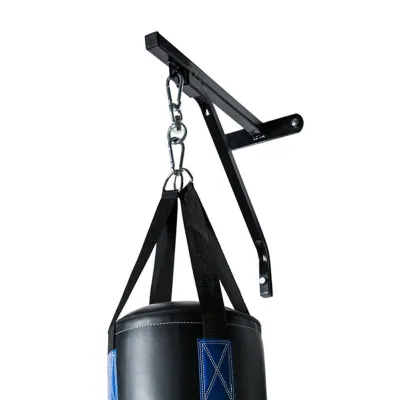
Prices are valid at publication and may change. Please refer to the product page for the latest price.
Aim for a minimum safe clearance zone of at least 1.5 to 2 meters of unobstructed space in all directions from the center of the bag’s hanging point. This space allows you to execute footwork drills, move around the bag, and throw combinations without hitting walls, windows, or furniture. If your space is tighter, consider a lighter bag with a shorter swing radius or a freestanding model.
Matching Bag Weight to Your Body Weight and Training Goals
The weight of your punching bag directly influences how it responds to your strikes. A common starting point for adults is to select a bag that is approximately half of their body weight. For example, an adult weighing 70 kilograms would typically look for a bag weighing around 35 kilograms. This ratio provides enough resistance to absorb punches without swinging wildly, while protecting your joints from impact injuries.

Your specific training goals should also guide your decision. If your primary focus is developing raw power, you may want a heavier bag that offers high resistance. Conversely, if your goals center on cardiovascular endurance, speed, and rapid footwork, a lighter bag that moves more freely will force you to react quickly and maintain a high tempo.
Always check the manufacturer’s weight specifications and filling instructions before making a purchase. Some bags are sold unfilled, allowing you to customize the weight using compressed rags or synthetic fibers. If you choose an adjustable bag, never exceed the manufacturer’s maximum weight limit, as overfilling can stress the seams and create hard spots that increase the risk of hand injuries.
Selecting the Right Bag Length and Diameter for Your Skill Level
The physical dimensions of a punching bag—specifically its length and diameter—determine what types of strikes you can practice. Standard boxing bags typically range from 90 to 120 centimeters in length. These are designed primarily for hand strikes, making them ideal for traditional boxing workouts. If you plan to incorporate low kicks, knee strikes, or mixed martial arts (MMA) techniques, you will need a longer bag, often referred to as a banana bag, which typically measures 150 to 180 centimeters.
Bag diameter also plays a crucial role in your training experience. A wider diameter provides a larger target area and absorbs impact more effectively, making it suitable for beginners developing their accuracy. Narrower bags require more precise targeting and tend to swing more, which helps intermediate and advanced users practice timing, head movement, and defensive positioning.
Before buying, review the product labels and specifications to ensure the bag’s dimensions align with your planned workouts. A bag designed strictly for boxing may not have the structural reinforcement at the bottom to withstand repeated heavy kicks, leading to premature wear. Matching the bag’s design to your specific discipline ensures both safety and equipment longevity.
Installation Requirements and Safety Checks for Home Use
Installing a heavy punching bag in a residential setting requires careful structural verification. A hanging bag exerts significant dynamic force—far exceeding its static weight—every time it is struck. Before installing a ceiling mount, verify that your ceiling joists or support beams are structurally capable of bearing this continuous, shifting load. Never mount a heavy bag directly into drywall or plaster, as this will lead to structural failure and potential injury.
Consider the trade-offs between different mounting options. Ceiling mounts offer the most natural swing and allow 360-degree movement, but require access to solid wooden joists or concrete slabs. Wall brackets are an excellent alternative if your ceiling cannot support the weight, though they limit your movement to a 180-degree arc. For homes where drilling is not permitted, a freestanding bag stand is often the most practical choice.
Regular safety inspections are essential to maintain a secure training environment. Periodically inspect all chains, swivels, D-rings, and mounting hardware for signs of metal fatigue, rust, or wear. In humid tropical environments, metal components can corrode quickly, making routine checks critical. If you are uncertain about the load-bearing capacity of your ceiling, consult a qualified contractor or structural engineer before hanging your bag.
Common Sizing and Space Mistakes to Avoid
One of the most common mistakes home fitness enthusiasts make is purchasing a bag that is too heavy or too long for their actual space. A bag that is too heavy for your skill level can lead to joint strain, while a bag that is too long for your ceiling height will pool on the floor, preventing proper swing. Always measure your ceiling height and subtract the length of the mounting chains to ensure the bag hangs at the correct target height.
Another frequent oversight is ignoring the floor surface beneath the training area. Striking a heavy bag requires solid footwork, and doing so on bare concrete, slippery tiles, or delicate wooden floors can lead to slips, joint fatigue, or floor damage. Installing high-density, impact-absorbing foam mats protects your joints during high-impact movements and prevents a freestanding stand from scratching your flooring.
Finally, never use improvised or non-rated hardware to hang your equipment. Standard hardware store hooks, thin ropes, or basic chains are not designed to withstand the dynamic, multi-directional forces of a boxing workout. Using unrated components increases the risk of the bag falling mid-workout. Always use heavy-duty, commercial-grade mounting hardware specifically rated for boxing equipment to ensure a secure training session.
Frequently Asked Questions (FAQ)
Can I use a heavy bag in an apartment or condo with limited space?
Yes, you can train effectively in smaller residential units by choosing space-saving alternatives. Freestanding punching bags are highly suitable for apartments because they do not require drilling into walls or ceilings and can be rolled into a corner when not in use. Lighter bags or speed bags can also provide an excellent cardio workout with minimal space requirements. Before setting up any equipment, check your building regulations regarding structural modifications, and consider using thick rubber floor mats to minimize noise and vibration transmission to your neighbors.
How do I know if my ceiling can support a heavy punching bag?
To determine if your ceiling can support a heavy bag, locate a solid structural member, such as a wooden ceiling joist or a reinforced concrete beam. You can use a stud finder to locate wooden joists behind drywall, ensuring you mount the bracket directly into the center of the beam. Drywall, drop ceilings, and thin wooden panels cannot support dynamic loads and will fail under the weight. If your home has concrete ceilings, you will need specialized masonry anchors. If you have any doubts about the structural integrity of your ceiling, consult a qualified contractor or structural engineer to perform a professional assessment.
Community discussion
Share your experience or ask a question. Comments are reviewed before publication.