
To find the correct size for a shift dobok, you must balance height, weight, and limb measurements against the brand’s specific sizing chart. A properly fitted dobok ensures complete freedom of movement for high kicks, blocks, and stances while maintaining a neat, professional appearance that complies with tournament standards.
Why Proper Dobok Sizing Matters for Training and Competition
A restrictive uniform is more than just an inconvenience; it actively limits your athletic potential. In Taekwondo, where high kicks, rapid footwork, and deep stances are fundamental, tight fabric around the thighs or shoulders can restrict your range of motion. This restriction forces your muscles to work harder against the material, leading to premature fatigue and reduced execution speed during training sessions.
Conversely, an excessively loose or baggy uniform introduces distinct safety hazards. Excess fabric can drape over your hands or feet, increasing the risk of slipping on puzzle mats or getting tangled during complex spinning kicks. In sparring, loose material provides easy handholds for opponents during close-range exchanges and can interfere with the proper placement of protective gear, such as shin guards or chest protectors.
Products mentioned in this guide
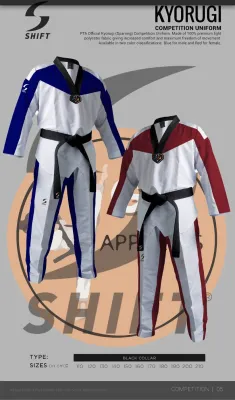
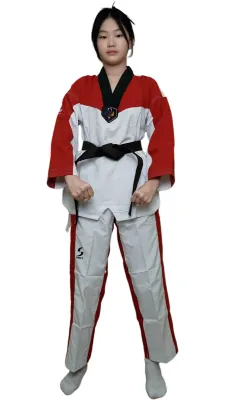
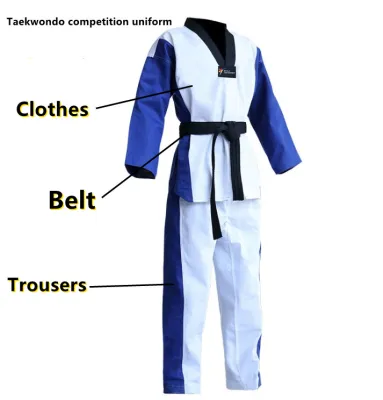
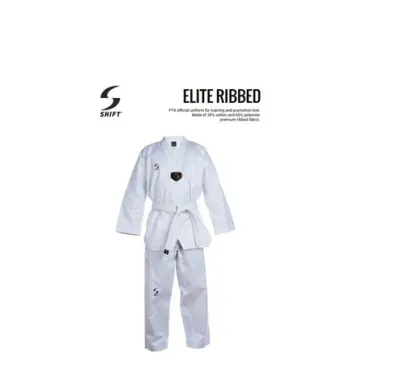
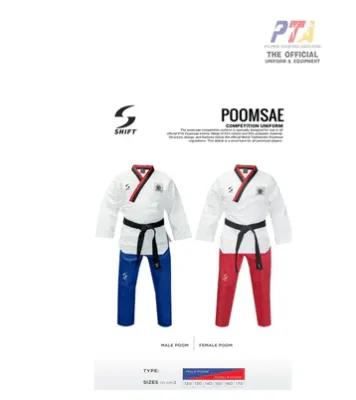
Prices are valid at publication and may change. Please refer to the product page for the latest price.
Furthermore, official tournaments enforce strict guidelines regarding uniform dimensions. Governing bodies, including World Taekwondo and local organizations like the Philippine Taekwondo Association, require uniforms to fit within specific parameters to ensure fair play and professional presentation. Wearing an ill-fitting dobok can result in disqualification from competition before you even step onto the mat.
Essential Body Measurements for Your Shift Dobok
To avoid the inconvenience of returns and ensure your uniform is ready for immediate use, you must take precise physical measurements before purchasing. Do not rely on your standard clothing sizes, as martial arts uniforms are cut differently to accommodate dynamic athletic movements.

Gather a soft, flexible measuring tape and ask a partner to assist you. Having another person take the measurements prevents you from bending or twisting, which can skew the numbers and lead to an inaccurate size selection. For the most accurate results, wear light, form-fitting athletic wear during the measurement process.
Core Metrics: Height and Weight
Height serves as the primary baseline for most martial arts sizing charts. To measure your height accurately, stand barefoot with your heels flat against a wall, keeping your shoulders relaxed and your gaze forward. Have your assistant mark the highest point of your head against the wall, then measure the distance from that mark straight down to the floor.
While height determines the length of the uniform, weight is a critical secondary metric that dictates the overall volume and drape of the fabric. Use a reliable digital scale to record your current weight. Body composition, such as broad shoulders or muscular thighs, can significantly affect how a dobok fits across the chest and hips. If your weight puts you in a higher bracket than your height suggests, you will need to prioritize the weight measurement to prevent the uniform from binding during deep stances.
Critical Details: Arm Span and Inseam
The inseam measurement is vital for ensuring your pants do not drag on the floor or restrict high kicks. Measure from the crotch seam straight down the inside of the leg to the center of the ankle bone. In humid training environments, pants that are too long will trap moisture and drag on the mats, creating a slipping hazard, while pants that are too short can look unprofessional and violate tournament rules.
To measure your arm span, extend your arms horizontally at shoulder height. Measure from the center of your spine, across the shoulder, and down to the wrist bone. This measurement ensures that the sleeves of your shift dobok will cover your forearms adequately without slipping past your knuckles when you punch or execute blocks. Proper sleeve length is also crucial for accommodating forearm guards comfortably underneath the fabric.
How to Read and Apply the Shift Dobok Size Chart
Once you have recorded your measurements, compare them directly to the official Shift dobok size guide. Avoid using generic martial arts size charts, as dimensions and cuts vary significantly between manufacturers. Shift doboks are engineered with specific athletic cuts that may not align with standard industry sizing.
When your measurements fall between two sizes, use a structured decision framework to choose the best fit. If you have broad shoulders, a wider chest, or longer limbs, always opt for the larger size. It is relatively simple for a local tailor to shorten the sleeves or pant hems of a larger uniform, but it is impossible to expand a dobok that is too tight across the torso or thighs.
You must also evaluate the fabric composition of the specific model you are purchasing. Traditional 100% cotton uniforms are prone to shrinkage, often losing up to ten percent of their original size after repeated washing. If you select a cotton dobok and prefer a relaxed fit, sizing up is highly recommended to account for this future shrinkage.
In contrast, modern polycotton blends or synthetic performance fabrics are highly resistant to shrinking. These materials are particularly well-suited for tropical climates, as they wick moisture away from the skin and dry quickly. If your shift dobok is made of a synthetic blend, you can confidently choose the size that matches your current measurements without worrying about significant changes after washing.
Adjusting Fit Preferences: Training vs. Competition
Your choice between a relaxed or tailored fit should depend on how you plan to use the uniform. For daily training in the dojang, a slightly looser fit is generally preferred. In warm and humid weather, a spacious dobok allows for better air circulation, keeping you cooler during intense conditioning drills. It also provides the flexibility to layer compression garments or rash guards underneath without feeling restricted.
For competitive events, a more tailored fit offers distinct advantages. In sparring (Kyorugi), a snugger uniform minimizes the amount of loose fabric an opponent can grab and ensures that electronic scoring protectors (PSS) fit securely against your body. In forms competition (Poomsae), a crisp, well-fitted dobok enhances your presentation by highlighting clean lines and sharp body alignment. The structured fabric of a competition-fit dobok also produces a louder, more distinct snapping sound during high-velocity strikes, which can positively influence the judges’ perception of your power.
Before finalizing your purchase for an event, consult the official rulebook of your governing athletic association. Both World Taekwondo and national bodies enforce strict limits on how far sleeves and pants can extend. Generally, sleeves must reach the wrist joint, and pants must cover the ankle bone, with only a small margin of tolerance allowed during official gear checks.
Common Sizing Mistakes and How to Avoid Them
One of the most frequent errors is selecting a size based solely on height while ignoring body weight and build. This oversight often results in a uniform that fits perfectly in length but is constricting across the back, chest, or waist, leading to ripped seams during deep stances like ap kubi.
Another common mistake is failing to account for washing habits. If you regularly use a machine dryer on high heat, even pre-shrunk fabrics can experience minor shrinkage over time. Always check the manufacturer’s care label and adjust your sizing choice if you prefer the convenience of machine drying over air-drying.
Finally, never assume that your size in another martial arts brand will translate directly to a Shift dobok. Sizing standards are not universal across the industry. A size 3 in one brand may correspond to a size 4 or a completely different physical measurement in another, making direct reference to the specific size chart essential for every purchase.
Frequently Asked Questions (FAQ)
Should I size up if my Shift dobok is made of 100% cotton?
Yes, sizing up is advisable if the uniform is made of 100% cotton and you plan to wash it in warm water or use a machine dryer. Cotton fibers naturally contract when exposed to heat, which can reduce the uniform’s overall length and width by several centimeters. If you prefer to air-dry your uniform and wash it exclusively in cold water, you can select your true size according to the chart.
How should the sleeves and pants fit when my arms and legs are fully extended?
When you execute a full punch, the sleeve cuff should rest near your wrist bone and should not pull back past the mid-forearm. When performing a high kick, the pants should allow your hips to open fully without binding, and the hem should remain near the ankle bone rather than riding up to your calf. If the fabric pulls tightly against your joints or restricts your extension, the uniform is too small.
Community discussion
Share your experience or ask a question. Comments are reviewed before publication.