
To choose the right size kickboxing shin guard, you must measure the length of your shin bone from just below the knee to the top of your ankle, and match this measurement to the manufacturer’s sizing chart while considering your training intensity. A proper fit ensures the guard covers your entire shin and instep without slipping during kicks or restricting your knee and ankle mobility. In the tropical climate of the Philippines, where high humidity leads to heavy sweating during intense training sessions, selecting a secure, breathable fit is crucial to prevent the gear from shifting mid-strike.
While high-quality protective gear is essential for minimizing the risk of bruises and impact injuries, it is important to remember that equipment cannot replace proper training, controlled technique, and sound judgment. Even the most advanced kickboxing shin guard will not protect you from injury if you throw uncontrolled strikes or spar beyond your skill level. Always prioritize learning correct kicking mechanics and defense under the supervision of a qualified coach before ramping up your sparring intensity.
Measure Your Shin for Accurate Sizing
Taking precise measurements of your lower leg is the most reliable way to find a kickboxing shin guard that fits your body shape. To begin, you will need a flexible fabric measuring tape, which easily contours to the shape of your leg. Avoid using stiff metal tape measures, as they do not bend around the calf and shin, often resulting in inaccurate, overly straight measurements. If you do not have a fabric tape, you can wrap a piece of non-stretch string around the key points of your leg, mark the lengths, and then measure the string flat against a standard ruler.
Products mentioned in this guide
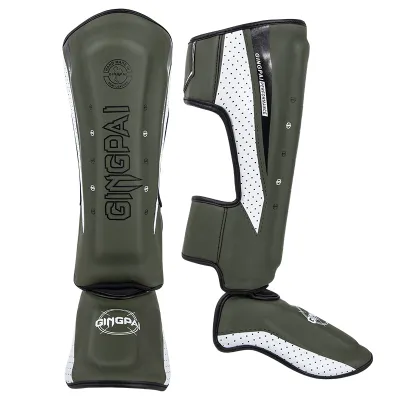
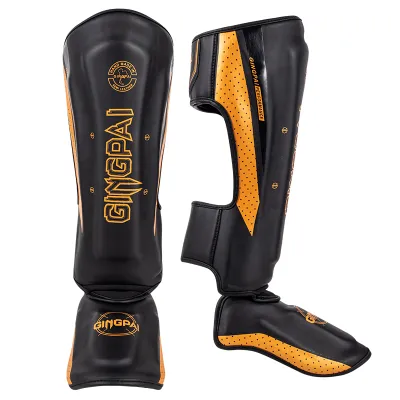
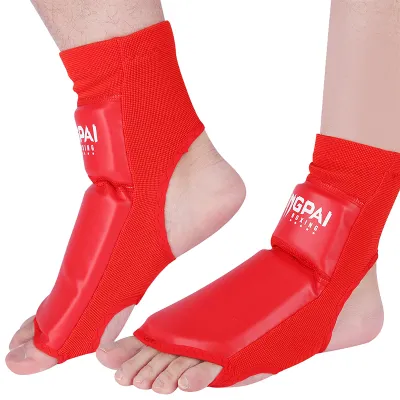
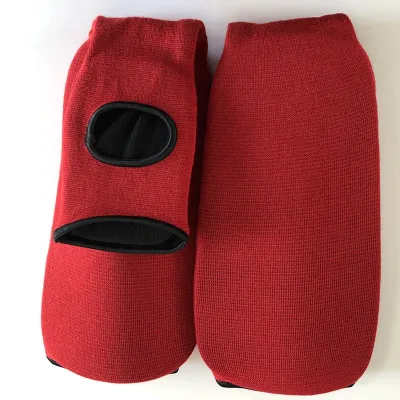
Prices are valid at publication and may change. Please refer to the product page for the latest price.
To take the measurement, sit comfortably on a chair with your feet flat on the floor and your knees bent at a 90-degree angle. Locate the bottom of your kneecap and move about two centimeters down to find the bony protrusion at the top of your shin bone. Place the start of the measuring tape at this point. Run the tape straight down the front of your shin, following the natural curve of your leg, and stop exactly at the crease where your ankle joint meets the top of your foot. This vertical measurement represents your shin length, which is the primary metric used by manufacturers to determine guard sizes.
In addition to shin length, some brands require you to measure your calf circumference to ensure the straps or sleeves can close properly. Wrap the measuring tape around the widest part of your calf muscle while your leg is relaxed. If your calf measurement is exceptionally wide or narrow relative to your shin length, you may need to adjust your size choice. For instance, individuals with highly developed calf muscles often find that sizing up provides a more comfortable strap fit, even if their shin length falls on the lower end of a size bracket.
Because sizing standards vary significantly between different brands and regions, you should never assume your size in one brand matches another. A medium-sized guard from a European brand may have completely different dimensions compared to a medium-sized guard from a Thai manufacturer. Always locate the specific brand’s sizing chart on the online marketplace or retailer’s website and compare your physical measurements to their recommended ranges before making a purchase.
Match the Guard Style to Your Training Intensity
The style of kickboxing shin guard you choose should align directly with your skill level, training environment, and the intensity of your workouts. The two primary designs available are slip-on sleeve guards and strap-on closure guards, each offering distinct trade-offs in terms of protection, stability, and convenience. Understanding these differences allows you to select a guard that supports your specific training goals without hindering your performance.

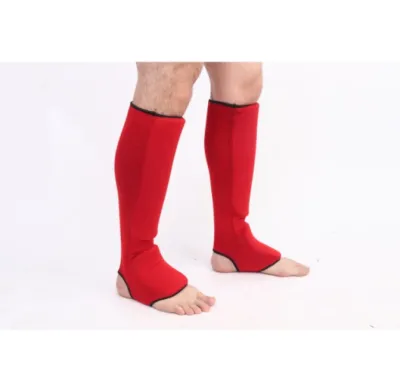
Slip-on sleeve guards are typically constructed from elasticized cotton, neoprene, or polyester blends, featuring a built-in foam pad over the shin and instep. These guards are lightweight, highly breathable, and offer a secure, sock-like fit that rarely shifts during rapid footwork. Because they rely on compression to stay in place, they are excellent for high-velocity movement and are commonly used in amateur competitions, light technical sparring, and cardio kickboxing classes. However, the padding in sleeve-style guards is generally thinner and less dense, meaning they offer limited protection against heavy, full-contact impacts.
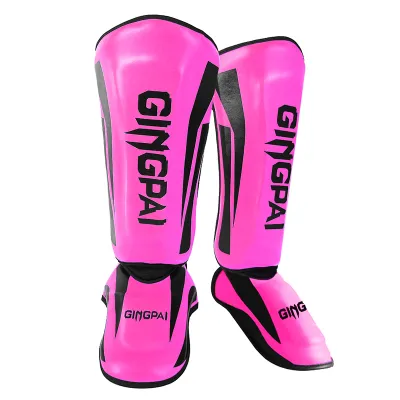
Strap-on closure guards, often referred to as Thai-style guards, are designed for heavy sparring and intense impact. They feature thick, multi-layered, high-density foam padding encased in durable synthetic or genuine leather, secured to the leg by wide hook-and-loop straps. This design provides exceptional shock absorption, protecting your shin bone and your training partner’s limbs during hard kicks and blocks. The trade-off is that strap-on guards are bulkier and heavier, which can increase fatigue during long training sessions and trap significant heat and sweat, a notable consideration in warm, humid climates.
When evaluating padding thickness, consider the type of drills you perform most frequently. If your routine consists almost entirely of heavy bag training and pad work with a trainer, you may not need the thickest sparring guards, as the targets themselves provide some cushioning. However, if you are engaging in live sparring where shin-to-shin or shin-to-elbow contact is common, high-density padding is non-negotiable. Look for guards that feature reinforced padding along the center ridge of the shin, as this area absorbs the brunt of the force during a strike.
Another critical decision is whether to choose guards with integrated instep protection, which covers the top of your foot and toes. For any form of sparring, instep protection is highly recommended because the small, delicate bones of the foot are highly vulnerable to fractures. If you only participate in non-contact fitness classes or focus mitt drills where your feet never make contact with a hard surface, a shin-only guard may be preferred for its lighter weight and superior floor grip.
Verify the Fit, Coverage, and Mobility
Once your kickboxing shin guards arrive, you must perform a series of physical checks to verify that they provide adequate coverage and allow for unrestricted movement. Do not simply put them on and assume they are ready for the gym; testing them in a controlled environment beforehand ensures you can return or exchange them if the fit is incorrect. Begin by standing in front of a mirror with the guards fully secured.
First, check the vertical coverage of the guard. The top edge of the shin protector should sit approximately one to two centimeters below your kneecap when your leg is straight. If the guard extends over your kneecap, it will press upward every time you bend your leg, causing discomfort and pushing the entire guard down your shin. At the bottom, the guard must cover the ankle joint completely, while the instep protector should drape smoothly over the top of your foot, ending just before the base of your toes to ensure your feet can flex without restriction.
Next, assess the security of the straps or sleeve compression. Fasten the hook-and-loop straps to a snug, comfortable tension. They should feel secure enough to hold the guard firmly against your leg, but not so tight that they pinch your skin, restrict blood flow, or cause muscle cramping in your calves. Try to grab the guard with your hands and twist it around your leg; if it rotates easily or slides down with minimal effort, the guard is too large or the straps are too loose, which will cause it to spin out of place when you land a kick.
Finally, perform a mobility test by shadowboxing and throwing light test kicks. Move around your space using your standard kickboxing footwork, stepping forward, backward, and laterally. Throw several light roundhouse kicks, front kicks, and knee strikes into the air, and practice lifting your leg to check a simulated kick. Pay close attention to whether the guard shifts, slides down your leg, or pinches the front of your ankle joint. If the guard remains centered on your shin and does not impede your natural range of motion, you have found the correct fit.
Adjust and Maintain Your Gear for Consistent Protection
Properly adjusting and maintaining your kickboxing shin guards is essential for ensuring consistent protection and extending the lifespan of your gear. When putting on strap-on guards, a systematic approach to fastening the straps can greatly improve stability. Start by securing the middle strap first, as this anchors the guard to the thickest part of your calf. Next, fasten the top strap near the knee, and finish with the bottom strap near the ankle. This sequence helps distribute pressure evenly and prevents the guard from shifting during movement.
In the tropical climate of the Philippines, high humidity and intense heat create an ideal environment for bacteria, mold, and unpleasant odors to develop in damp sports gear. To prevent this, establish a strict cleaning routine after every training session. Wipe down both the interior lining and the exterior surface of your shin guards with a clean, damp cloth and a mild, non-abrasive disinfectant spray. Avoid using harsh chemicals or bleach, as these can break down synthetic leather, dry out genuine leather, and degrade the internal foam padding.
Never leave your damp shin guards inside a closed gym bag, as this traps moisture and accelerates material decay. Instead, open all the straps fully and place the guards in a well-ventilated, shaded indoor area to air-dry completely. Do not expose your guards to direct sunlight or use artificial heat sources like hair dryers, as extreme heat can warp the internal protective foam, crack the outer casing, and weaken the adhesive bonds holding the guard together.
Regularly inspect your shin guards for physical signs of wear and tear that could compromise your safety. Over months of consistent training, the internal foam padding will naturally compress and lose its ability to absorb shock. Feel along the length of the guard for soft spots, deep creases, or areas where the foam feels significantly thinner. Additionally, check for fraying stitching, cracked outer materials, and hook-and-loop straps that no longer grip firmly. If you begin to feel the hard impact of kicks passing directly through to your shin bone, or if the straps repeatedly come undone during sparring, it is time to replace your guards to ensure you remain fully protected.
Frequently Asked Questions (FAQ)
Should I size up or down if my measurement is between sizes?
If your shin measurement falls directly between two sizes on a manufacturer’s chart, sizing up is generally recommended if you have wider, more muscular calves or if you prefer maximum vertical coverage over your knee and ankle joints. The larger size will provide more protective surface area, provided the top of the guard does not interfere with your kneecap when your knee is bent. However, if you have slender legs, narrow calves, or prefer a highly secure, locked-in feel, sizing down is often the better choice. A smaller guard will wrap more snugly around a thin leg, reducing the likelihood of the guard twisting or sliding during high-speed kicks. Always check the online marketplace or retailer’s return and exchange policy before purchasing, so you can easily swap sizes if the initial fit is not perfect.
Do I need instep protection for standard kickboxing classes?
For standard kickboxing classes that focus primarily on cardio, heavy bag work, and pad drills, instep protection is not strictly necessary, and lightweight shin-only guards or simple slip-on sleeves are often preferred. However, if your classes involve any form of partner sparring, Dutch drills, or technical blocking, instep protection is absolutely essential. The top of the foot contains many delicate bones that can easily fracture upon impact with an opponent’s shin, knee, or elbow. If you participate in a mix of both cardio and sparring classes, look for versatile guards with high-density padding and integrated instep protection to ensure you are fully prepared for any training scenario.
Community discussion
Share your experience or ask a question. Comments are reviewed before publication.