
Choosing the right size shin guard for kickboxing requires a careful balance between protective coverage and physical mobility. To find your ideal fit, you must measure the distance from just below your knee joint to the top of your ankle, then cross-reference this measurement with the manufacturer’s specific size chart. A properly sized shin guard stays securely centered during high-impact sparring, shielding your tibia and instep without slipping, twisting, or restricting your knee’s range of motion.
While height and weight are often used as quick reference points on retail packaging, they do not account for individual leg proportions. A skater or runner with shorter, thicker calves will require a completely different fit than a taller, leaner martial artist of the same weight. Taking the time to measure your legs and understand how different styles fit will protect you from painful training injuries and keep you focused on your technique.
Why Proper Shin Guard Sizing Matters for Kickboxing
Your shin bone, or tibia, sits directly beneath a thin layer of skin and tissue, making it highly vulnerable to painful impacts. In kickboxing, where checking kicks and throwing shin-to-shin strikes are fundamental, wearing ill-fitting protective gear significantly increases your risk of injury. Undersized guards leave critical areas of bone exposed, particularly near the lower ankle and the upper shin just below the knee. When these areas are left unprotected, a single misplaced block can result in severe bone contusions, deep muscle bruising, or hairline fractures that can sideline you for weeks.
Products mentioned in this guide
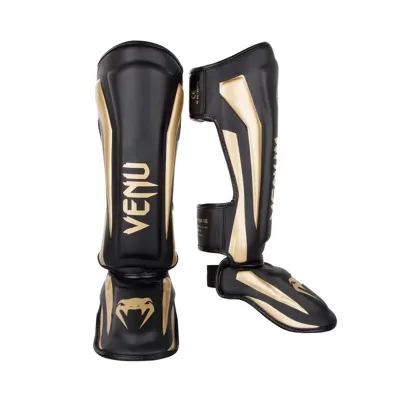
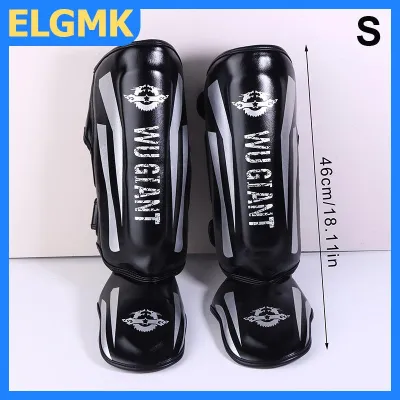
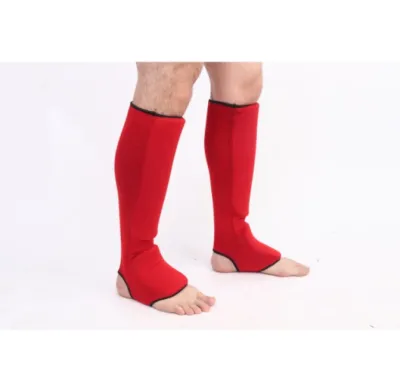
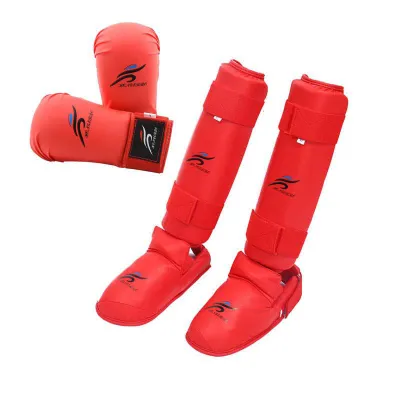
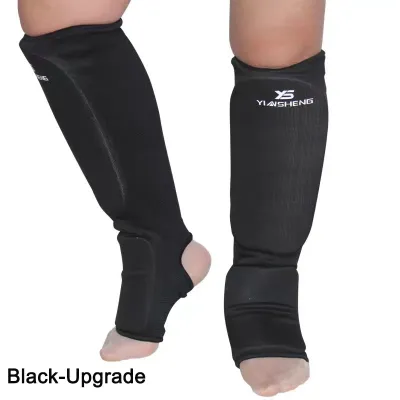
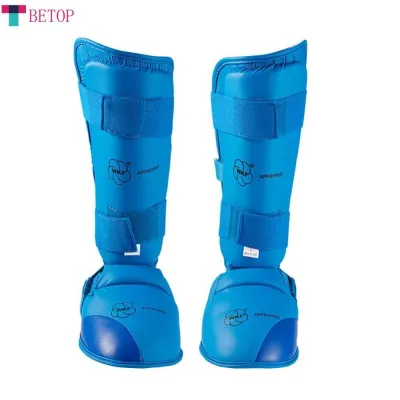
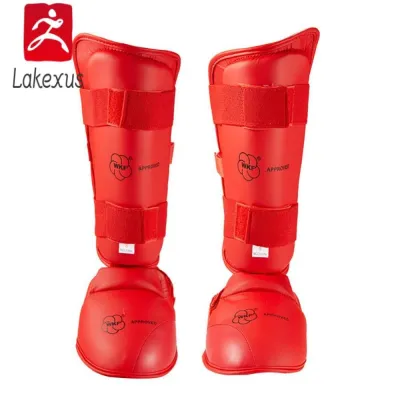
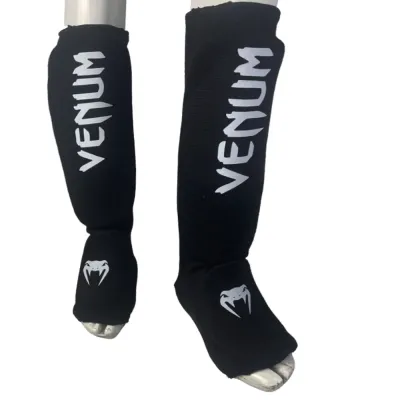
Prices are valid at publication and may change. Please refer to the product page for the latest price.
Conversely, oversized shin guards present a different set of safety and performance hazards. If a guard is too long, the top edge will press against your kneecap when you bend your leg, restricting your mobility and making it difficult to execute high kicks, knees, or defensive checks. Excessively long guards also tend to slide down over the foot, causing you to trip or lose your footing on the canvas. Furthermore, if the calf straps are too loose because the guard is designed for a larger frame, the entire protector will spin around your leg mid-strike, leaving the bare side of your shin exposed to incoming blows.
The ideal coverage zone for a kickboxing shin guard spans from approximately one to two fingers below the bottom of your kneecap down to the point where your ankle bends. If your guard features an integrated foot protector, this instep section should drape smoothly over the top of your foot, ending just before your toes. Achieving this precise coverage ensures that your joints can move freely through their full range of motion while keeping the hard, impact-absorbing foam centered over your bones.
How to Measure Your Shin Length Accurately
To gather the precise measurements needed for a perfect fit, you should establish a consistent measurement routine using the correct tools. Avoid using stiff metal construction tapes, as they cannot contour to the natural shape of your leg and will yield inaccurate, inflated numbers. Instead, use a flexible tailor’s measuring tape. If you do not have one, you can wrap a piece of non-stretch string along your leg, mark the points, and measure the string flat against a standard ruler.

For the most accurate reading, sit on a flat chair with your feet flat on the floor, bending your knees at a precise 90-degree angle. This seated position mimics the natural flexion of your leg during movement and ensures your calf muscles are relaxed. Locate the starting point for your measurement: the small bony bump directly below your kneecap, known as the tibial tuberosity. Place the zero mark of the tape measure at this point, then run the tape straight down the front of your shin bone, following its natural curve. Stop measuring at the exact point where your ankle bends—the crease where the top of your foot meets your lower leg.
When taking these measurements, avoid several common errors that can skew your results. Never measure over thick clothing, such as heavy sweatpants or thick compression gear; always measure on bare skin or over thin training shorts. Do not pull the measuring tape so tight that it compresses your skin, but do not let it sag or drape loosely. Finally, always measure both of your legs. Many people have slight anatomical asymmetries, and if one leg is slightly longer than the other, you should base your size selection on the larger measurement to ensure complete coverage.
Interpreting Brand Size Charts and Fit Variations
Once you have your shin length measurement, you can begin comparing it to manufacturer size charts. Most brands categorize their gear into standard sizes ranging from Small to Extra Large. While these charts almost always include height and weight recommendations, you should prioritize your actual shin length measurement. If your height suggests a Large but your shin length falls into the Medium category, choose the Medium to prevent the guard from interfering with your knee joint.
Different styles of shin guards also feature distinct sizing characteristics that affect how they fit on your leg:
- Slip-On Sleeve Guards: Typically made of elasticized cotton or neoprene with integrated foam padding. These are common in amateur MMA or light technical sparring. They offer a highly secure, compression-like fit that rarely slips, but they provide less impact absorption and can be difficult to pull on and off over sweaty calves.
- Strap-Based Guards (Muay Thai Style): Constructed from thick synthetic or genuine leather with heavy-duty hook-and-loop straps. These are the standard for kickboxing and heavy sparring, offering maximum impact protection. They sit on top of the shin and are secured around the back of the calf.
- MMA-Specific Guards: Sleeker and lighter than traditional Muay Thai guards, designed to allow for grappling and ground work without shifting. They often feature a more contoured, low-profile fit.
Because padding thickness, strap length, and the curvature of the instep plate vary significantly between manufacturers, never assume that a size Medium in one brand will fit the same as a Medium in another. Some brands design their gear with wider calf enclosures to accommodate muscular legs, while others feature a narrower, more cylindrical shape. Always consult the specific brand’s sizing guide and read user feedback regarding whether a particular model runs large or small.
Checking the Fit: Coverage, Mobility, and Security
When your new shin guards arrive, perform a thorough physical check before using them in a live training session. Start with a visual inspection while standing in front of a mirror. Ensure the protective padding completely covers the front of your shin bone from just below the knee to the ankle. The instep guard must cover the delicate metatarsal bones on the top of your foot, ending just before your toes. There should be no exposed gap between the bottom of the shin padding and the top of the foot protector.
Next, perform a series of mobility tests to ensure the guards do not restrict your movement. Stand in your fighting stance and lift your knee high toward your chest, simulating a knee strike or a defensive kick check. The top edge of the guard should not pinch, dig into, or press upward against your kneecap. If you feel the guard forcing your knee to remain slightly bent, or if it pinches the skin at the joint, the guard is too long. Throw a few light shadow kicks in the air; the guards should remain firmly centered on your shin bone without twisting to the side or sliding down toward your toes.
Evaluate the security of the fastening system. Wrap the straps around your calves and secure the hook-and-loop closures. The straps should feel snug and supportive without cutting off your circulation or pinching your skin. The Velcro should have full contact across its surface. If you have to pull the straps to their absolute limit to get a snug fit, leaving long tails of excess strap hanging off, the guards are too large. Conversely, if the straps barely reach the receiving Velcro pad, the guards are too small and may fly open during a hard kick.
Establish clear stop conditions for your gear. If the shin guards dig into your knee joint, restrict blood flow (causing tingling or numbness in your feet), or leave more than two inches of your lower shin exposed during leg flexion, do not use them for training. Return or exchange them immediately. Training with poorly fitting gear compromises your safety and can lead to chronic joint pain or acute impact injuries.
Adjusting and Maintaining Your Shin Guards Over Time
Even the highest-quality shin guards will degrade over time with consistent use. To maintain their protective integrity, inspect your gear regularly for observable signs of wear. Look for permanently compressed areas in the foam, particularly around the high-impact mid-shin zone. If the padding feels soft, thin, or bottomed-out when you press on it, it can no longer safely absorb and distribute impact forces. Additionally, check for frayed stitching, cracked outer material, and worn-out Velcro that no longer holds securely under tension.
Proper maintenance is especially critical in hot, humid tropical climates like the Philippines, where sweat and moisture can quickly degrade materials and harbor bacteria. After every training session, wipe down both the inner lining and the outer shell of your guards with a damp cloth and a mild, non-abrasive disinfectant. Never leave your damp shin guards inside a closed gym bag, as this creates a breeding ground for mold, mildew, and severe odors. Instead, allow them to air dry completely in a well-ventilated indoor space. Keep them away from direct sunlight and direct heat sources, which can dry out and crack synthetic or genuine leather and cause the internal foam to become brittle.
While investing ₱2,500 to ₱5,000 in a high-quality pair of shin guards is a significant commitment, attempting to repair compromised padding with tape or DIY padding is highly unsafe. Once the internal structure of the foam is broken down or split, it loses its ability to disperse energy, leaving your bones vulnerable to direct, concentrated impacts. When your guards show signs of structural failure, replace them immediately to ensure you can continue training safely and confidently.
Frequently Asked Questions (FAQ)
Should I size up if I am between sizes?
If your shin measurement falls exactly between two sizes, consider your calf circumference and your primary training style. If you have thicker, highly muscular calves, sizing up is generally recommended to ensure the straps can wrap fully and securely around your leg. However, if you have slender legs or prioritize a lightweight, highly secure fit for fast-paced technical sparring, sizing down is often the safer choice to prevent the guards from spinning or shifting during movement.
Do I need to wear instep guards for kickboxing?
Yes, instep protection is highly recommended for kickboxing. The small bones in the top of your foot are fragile and easily injured when striking an opponent’s hard elbow, knee, or shin bone. While some light conditioning drills or grappling-focused MMA sessions can be done with minimal foot protection, full-contact kickboxing sparring and heavy bag work require integrated instep guards to protect your feet from painful, long-lasting injuries.
Community discussion
Share your experience or ask a question. Comments are reviewed before publication.