
Selecting the right snorkel for diving—specifically for breath-hold activities like freediving and spearfishing—requires a shift in perspective from standard recreational snorkeling. In these disciplines, the snorkel is not a tool for continuous underwater breathing, but rather a vital piece of surface support equipment. It serves to facilitate efficient oxygenation and carbon dioxide clearance during your surface recovery intervals while minimizing drag and safety hazards during your descents. The ideal snorkel for diving must feature a low internal volume, a highly streamlined profile that hugs the side of your head, and a flexible structure that can be easily managed or stowed.
Why Freediving and Spearfishing Require a Specific Snorkel Design
When you transition from surface swimming to depth diving, hydrodynamic efficiency becomes a critical factor in conserving your oxygen reserves. A standard, bulky snorkel designed for casual reef viewing creates significant drag as you descend and ascend through the water column. This resistance forces your neck and head muscles to work harder to maintain alignment, which rapidly depletes your oxygen and shortens your breath-hold times. In contrast, a dedicated diving snorkel is designed to sit tightly against the contour of your skull, slicing through the water with minimal resistance.
During surface intervals, your primary goal is to recover from the previous dive and prepare your body for the next descent. This recovery phase relies on relaxed, unobstructed breathing to optimize gas exchange. A snorkel allows you to keep your face submerged, observing the underwater environment or monitoring your dive buddy, without needing to lift your head and disrupt your breathing rhythm. However, once you begin your descent, the snorkel becomes a potential liability. If it is rigidly attached or poorly positioned, it can snag on underwater structures like corals, rocks, or spearfishing lines, potentially pulling your mask loose and causing immediate flooding. Therefore, the design must prioritize easy detachment, flexibility, and a low profile to mitigate these safety risks in dynamic marine environments.
Products mentioned in this guide
Prices are valid at publication and may change. Please refer to the product page for the latest price.
Key Design Features to Evaluate
To find a snorkel that supports your diving performance rather than hindering it, you must evaluate several physical attributes. The primary design pillars to consider are the internal volume of the tube, its hydrodynamic shape and flexibility, and how it attaches to your mask. Each of these features directly influences your breathing efficiency, comfort, and safety during deep descents.

Tube Diameter and Internal Volume
Internal volume refers to the amount of air space contained within the snorkel tube. When you exhale through a snorkel, a portion of your exhaled breath—which is high in carbon dioxide—remains trapped inside the tube. This is known as “dead air space.” On your next inhalation, you draw this carbon dioxide-rich air back into your lungs before fresh air reaches you. For freedivers and spearfishers, minimizing this dead air space is crucial for preventing CO2 buildup, which can trigger an early urge to breathe and compromise your safety.
To balance this, you must consider the trade-off between tube diameter and length. A wider tube diameter, or bore, allows for lower breathing resistance, making it easier to draw in large volumes of air quickly during your recovery breaths. However, a wider bore also increases the internal volume and makes the snorkel harder to clear if water enters the tube, as it requires a stronger exhalation to displace the larger volume of water. Conversely, a very narrow tube reduces dead air space but increases breathing resistance, making you work harder to inhale. When selecting a snorkel for diving, look for a moderate bore diameter that matches your lung capacity and physical conditioning, ensuring you can clear the tube effortlessly with a single, relaxed breath even after a deep dive.
Flexibility and Hydrodynamic Shape
The material composition of the snorkel tube determines how it behaves under water pressure and in moving currents. Rigid plastic snorkels tend to vibrate or flutter when you swim against a current, which transfers movement to your mask and can break the silicone seal around your face. For depth diving, semi-flexible or fully flexible silicone tubes are highly preferred. These materials allow the snorkel to bend and flex freely when encountering water resistance, currents, or physical obstructions, preventing the tube from acting as a lever that pulls on your mask.
Hydrodynamic contouring is another essential feature. High-quality diving snorkels are anatomically curved to wrap closely around the side of your face and head. This curved profile keeps the tube within the slipstream of your head, reducing the catch profile of the snorkel during both descent and ascent. When testing a snorkel, observe how closely the tube aligns with your temple and the back of your head. A snorkel that flares outward will catch the water, causing noticeable drag and vibration that can distract you from your dive flow and relaxation.
Attachment Mechanisms and Mask Compatibility
How the snorkel connects to your mask strap plays a pivotal role in both comfort and safety. Traditional snorkels often use rigid plastic clips or quick-release keepers. While convenient for surface snorkeling, these rigid attachments can press painfully against your temple under the pressure of deep water, and they do not allow the snorkel to pivot freely. If the snorkel catches on a line or a rock, a rigid clip can easily tear the mask off your face.
To avoid these risks, many freedivers and spearfishers prefer simple silicone keepers, or they choose to tuck the snorkel tube directly under their mask strap. A simple silicone keeper—often shaped like a figure-eight—provides a secure yet flexible connection that allows the snorkel to rotate and slide as needed. Tucking the snorkel under the strap is a common practice in spearfishing, as it allows the diver to quickly discard the snorkel or stow it in a pocket during the dive. When evaluating compatibility, ensure that the attachment method does not distort the mask skirt. Any pulling force on the skirt can create micro-gaps, leading to slow, persistent mask flooding that ruins your concentration.
J-Tube vs. Semi-Dry vs. Dry Snorkels for Depth Diving
Snorkels generally fall into three design categories: classic J-tubes, semi-dry snorkels, and dry snorkels. Understanding the mechanical differences between these designs is critical, as choosing the wrong type can introduce significant safety hazards during depth diving.
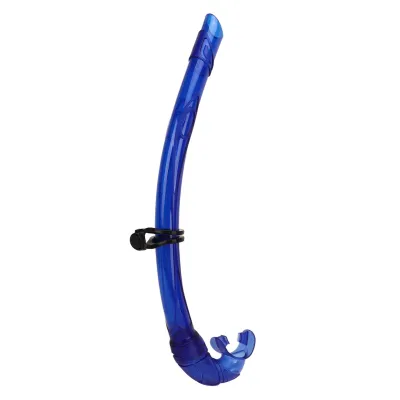
The classic J-tube is the undisputed standard for freediving and spearfishing. It consists of a simple, open-ended tube with a curved mouthpiece and no valves or mechanical parts. This minimalist design offers several distinct advantages: it has the lowest possible internal volume, creates minimal hydrodynamic drag, and has zero mechanical components that can fail due to sand, salt crystallization, or water pressure. Because there are no valves to restrict airflow, the J-tube provides the lowest breathing resistance, allowing for natural, unrestricted ventilation during surface recovery.
Dry snorkels feature a float valve at the top of the tube that automatically seals when submerged, preventing water from entering. While appealing to casual surface snorkelers, dry snorkels are highly unsuitable and potentially dangerous for depth diving. The float valve traps air inside the tube as you descend. Under hydrostatic pressure, this trapped air creates a significant pressure differential (squeeze) against your mouth and ears, and the buoyancy of the trapped air can pull forcefully on your mask. Furthermore, the complex valve mechanisms add substantial bulk, increase hydrodynamic drag, and are prone to jamming with sand or salt, which can block your airway when you return to the surface.
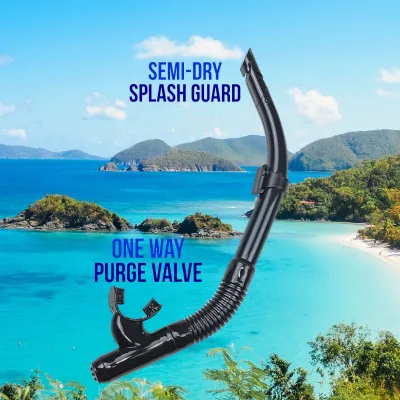
Semi-dry snorkels occupy a middle ground, featuring a splash guard at the top to deflect surface spray and sometimes a purge valve at the bottom to assist with clearing water. While they do not trap air like dry snorkels, the splash guards and purge valves still add unnecessary weight, bulk, and drag. For divers operating in choppy tropical waters or surface swells, a low-profile semi-dry snorkel with a simple splash guard can occasionally be useful to prevent water inhalation during surface swimming. However, for true depth diving, the simplicity and safety of a high-quality, flexible J-tube remain unmatched.
Building Your Shortlist: Fit, Comfort, and Field Checks
Before purchasing a snorkel for diving, you should conduct a series of dry-fit and in-water checks to ensure the gear matches your anatomy and diving style. A poorly fitting snorkel can cause jaw fatigue, mask leaks, and general discomfort that will cut your diving sessions short.
Begin with a dry-fit protocol to evaluate the mouthpiece and tube alignment. Place the mouthpiece in your mouth without attaching the snorkel to your mask. The bite tabs should sit comfortably between your teeth without requiring you to clench your jaw to keep the snorkel in place. If the mouthpiece is too large, it will press against your gums and cause soreness; if it is too small, you will constantly have to bite down, leading to rapid jaw fatigue. Next, attach the snorkel to your mask and put both on. The tube should naturally align with the side of your head without pulling the mouthpiece to one side or pushing the mask skirt away from your face.
Once you have verified the dry fit, perform in-water surface checks in a controlled environment, such as a shallow pool or a calm shoreline. While treading water, practice clearing the snorkel using both the blast clearing method (a sharp, forceful exhalation) and the displacement clearing method (exhaling gently as you look up while ascending). The snorkel should clear completely with minimal effort. Pay close attention to any water remaining in the tube, which can cause a gurgling sound and restrict your breathing. If you find yourself struggling to clear the tube, or if the snorkel constantly vibrates and pulls on your mask when you swim forward, these are clear rejection criteria, and you should look for a model with a lower profile or a more flexible tube.
Pre-Dive Safety and Maintenance Boundaries
To ensure your snorkel remains a reliable piece of safety equipment, you must establish a routine of pre-dive inspections and proper post-dive maintenance. Because snorkels are exposed to harsh marine environments, UV radiation, and physical stress, regular care is essential to prevent material failure.
Before every dive session, perform a thorough visual inspection of your snorkel. Closely examine the silicone mouthpiece for any signs of tearing, cracking, or material degradation, particularly around the bite tabs and the connection point to the tube. Check the flexible sections of the tube for micro-tears that could allow water to leak in during inhalation. If you use a snorkel keeper or clip, inspect it for wear, stretching, or cracks that could cause the snorkel to detach and become lost during a dive.
Proper maintenance is especially critical in tropical climates where high humidity and intense sunlight can accelerate the breakdown of silicone and plastics. After every dive, rinse your snorkel thoroughly with fresh, clean water to remove salt, sand, and organic debris. Pay special attention to the inside of the tube and the mouthpiece, where salt crystals can accumulate and create abrasive surfaces. Allow the snorkel to dry completely in a shaded, well-ventilated area before storing it. Never leave your snorkel exposed to direct sunlight on a boat deck or in a hot car, as prolonged UV exposure will cause the silicone to become brittle and discolor. If you notice any structural compromise, such as a split tube or a torn mouthpiece, do not attempt temporary repairs with tape or glue; retire the snorkel immediately and consult the manufacturer for authorized replacement parts.
Frequently Asked Questions (FAQ)
Can I use a standard scuba snorkel for freediving?
While you can physically use a standard scuba snorkel, it is highly inefficient and potentially problematic for freediving. Scuba snorkels are typically designed with large purge valves, corrugated flexible joints, and dry-top valves, all of which add significant bulk, weight, and hydrodynamic drag. This extra drag can pull on your mask during descents, increasing the risk of mask flooding and neck strain. Additionally, the larger internal volume of scuba snorkels increases dead air space, making carbon dioxide clearance much more difficult during the critical recovery breathing phases of a breath-hold dive.
Should I keep the snorkel in my mouth during the descent?
No, you should always spit the snorkel out of your mouth before initiating your descent. Keeping the snorkel in your mouth during a dive poses a severe safety risk. If you experience a blackout or loss of motor control near the surface, a snorkel held in your mouth acts as an open conduit, allowing water to flood directly into your lungs and airway. Removing the snorkel allows your airway to close naturally via the laryngospasm reflex, providing your dive buddy with critical time to rescue you. Furthermore, removing the snorkel helps relax your jaw muscles, facilitates easier equalization, and prevents water from entering the tube during the dive.
Community discussion
Share your experience or ask a question. Comments are reviewed before publication.