
Choosing the right soccer ball requires matching your physical development to the correct ball dimensions and aligning the ball’s construction with your playing environment. In the Philippines, where players regularly transition between indoor futsal courts, synthetic turf fields, and concrete barangay multi-purpose courts, selecting the wrong ball can ruin your gameplay, damage your gear, or even cause injuries. Finding the perfect match ensures optimal ball control, consistent flight, and long-term durability under local tropical conditions.
Using a ball that is too heavy or too large for your age group can lead to poor kicking habits and unnecessary physical strain. Conversely, playing with a standard outdoor ball on a hard concrete court will quickly shred the outer cover and pop the bladder. By understanding how size, surface compatibility, and material specs interact, you can make an informed decision that elevates your performance and maximizes your budget.
Decoding Soccer Ball Sizes by Age and Skill Level
Matching a soccer ball’s weight and circumference to a player’s physical development is crucial for building proper technique and protecting growing joints. Using a ball that is too heavy forces young players to use improper biomechanics to move it, which can strain underdeveloped leg muscles and ankle joints. Standardizing ball sizes ensures that players of all ages can practice foot-eye coordination, passing accuracy, and shooting power safely.
Products mentioned in this guide
![[SALE] Size 4/5 Soccer Ball Textured Dot Game Ball Teens Soccer Ball Training Football World Cup Football Soccer](https://img.lazcdn.com/g/p/ee988388cdbed3ea3bfc32ef20dbcca6.jpg_400x400q80.jpg_.webp)
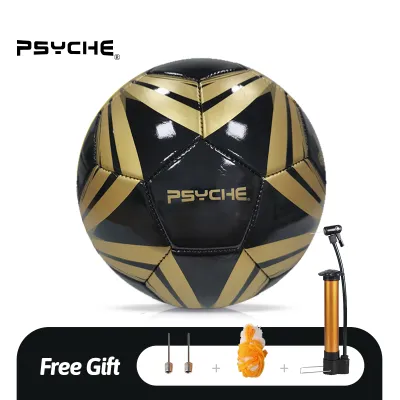
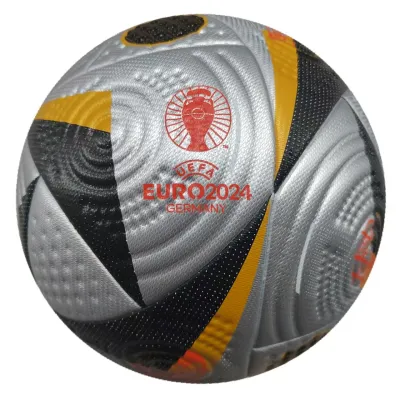
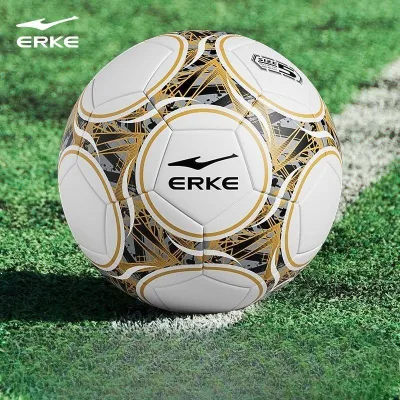
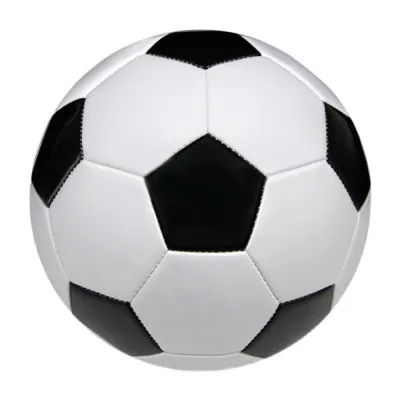
Prices are valid at publication and may change. Please refer to the product page for the latest price.
Size 3 (Ages 8 and Under)
Designed specifically for toddlers and young children, Size 3 balls typically feature a circumference of 58 to 60 centimeters and a lighter weight of 310 to 340 grams. This smaller profile allows young players to easily get their feet around the ball, helping them learn the basics of dribbling and passing without feeling overwhelmed by a heavy object. The reduced weight significantly lowers the risk of joint strain during repetitive kicking drills.
Size 4 (Ages 8 to 12)
Size 4 serves as the transitional ball for pre-teens, measuring 63.5 to 66 centimeters in circumference and weighing between 350 and 390 grams. This size bridges the gap between youth development and adult play, offering a realistic feel that prepares players for standard gameplay while remaining manageable for their growing frames. It allows players to refine their control, lofted passes, and shooting techniques with a weight that matches their physical strength.
Size 5 (Ages 12 and Up)
Size 5 is the official global standard for adult, high school, and professional play, with a circumference of 68 to 70 centimeters and a weight of 410 to 450 grams. Anyone aged 12 and older should use this size to adapt to regulation match conditions and develop realistic muscle memory. Training with a Size 5 ball ensures that your passing power, ball control, and shooting trajectory translate perfectly to competitive, organized matches.
Matching Ball Types to Your Playing Surface
Different playing environments dictate the required bounce, weight, and outer durability of a soccer ball. Using a ball designed for grass on a hard indoor court makes the game chaotic and difficult to control, while using a premium match ball on concrete will quickly ruin your investment. Choosing a ball designed for your specific playing surface ensures optimal performance and longevity.

Natural Grass and Artificial Turf
Standard outdoor soccer balls are engineered specifically for natural grass and synthetic turf pitches. These balls feature a highly responsive bounce and water-resistant outer layers to handle wet grass or damp turf conditions, which are common during the rainy season in the Philippines. The outer covers are optimized to glide smoothly over grass blades without losing momentum or changing trajectory unexpectedly.
Indoor Courts and Hardwood (Futsal)
Futsal is highly popular in local gymnasiums and indoor courts, requiring a specialized ball that behaves differently from outdoor models. Futsal balls are smaller (typically equivalent to a Size 4) but are filled with foam or polyester fiber to create a low-bounce bladder. This reduced bounce and heavier feel keep the ball on the hard floor, promoting quick, short passes and close-control dribbling skills in confined spaces.
Concrete and Street Surfaces
Playing on concrete, asphalt, or local barangay multi-purpose courts exposes a ball to extreme abrasion. Standard match balls will quickly scuff, tear, and puncture on these rough surfaces. To survive street play, you should look for heavy-duty rubber balls or canvas-reinforced street balls designed specifically to resist tearing and maintain their shape on abrasive ground.
Material Specs That Actually Affect Your Game
Understanding the materials used in a soccer ball’s construction helps you determine what you are paying for beyond the brand logo. A ball’s cover, bladder, and panel construction directly influence its responsiveness, air retention, and flight path accuracy.
Cover Material (PU vs. PVC)
Polyurethane (PU) and Polyvinyl Chloride (PVC) are the two primary synthetic materials used for soccer ball covers. PU offers a softer touch, superior responsiveness, and a more natural feel on the foot, making it the standard choice for high-quality match and training balls. PVC is stiffer, more affordable, and highly durable, making it an excellent option for entry-level recreational balls that need to withstand rough handling.
Bladder Type (Latex vs. Butyl)
The bladder inside the ball determines its air retention and responsiveness. Latex bladders offer superior surface tension, resulting in a softer, highly responsive feel and a very consistent bounce, though they lose air quickly and require inflation before almost every session. Butyl bladders provide excellent air retention, holding pressure for weeks at a time, which makes them highly practical for daily training and casual play in hot, humid climates.
Panel Construction (Stitched vs. Thermally Bonded)
How the panels are joined together affects the ball’s aerodynamic stability and water resistance. Machine-stitched panels are durable, cost-effective, and commonly found in everyday training balls. Thermally bonded panels are fused together using heat, creating a seamless surface that prevents water absorption during heavy downpours, ensures a perfectly round shape, and provides a highly predictable flight path.
Match vs. Training Balls: Where to Invest Your Budget
Deciding between a premium match ball and a durable training ball depends on your playing frequency, skill level, and budget. Match balls prioritize flight stability, soft touch, and strict weight tolerances, while training balls focus on durability, air retention, and cost-efficiency for repetitive daily drills.
For competitive players, official league matches, and advanced technical training, investing in a high-quality match ball is highly recommended. These balls typically cost between ₱1,500 and ₱8,000+, depending on the level of certification, such as FIFA Quality Pro standards. They offer the best possible tactile feedback and flight accuracy, which are essential for high-level play.
If you are looking for a ball for daily practice, casual kickabouts, or youth players who will soon outgrow their current size, a training ball is the smarter choice. Training balls generally range from ₱500 to ₱1,500, offering excellent durability on rougher surfaces and requiring much less maintenance. They withstand repetitive impact against walls or fences without losing their structural integrity.
Before inflating your new ball, always check the recommended pressure rating (usually printed in PSI or bar near the valve opening) to avoid over-inflation, which can damage the seams and bladder. If you notice any conflicts between the ball’s care label and general maintenance advice, always defer to the manufacturer’s specific guidelines.
Frequently Asked Questions (FAQ)
Can a younger player use a larger ball to build strength?
No, younger players should not use a larger or heavier ball to build strength. Using an oversized ball forces children to strain their joints and use incorrect kicking mechanics to move the extra weight, which increases the risk of injury and hinders their technical development. It is always best to stick to the recommended sizes for each age group to build proper muscle memory and coordination.
How do I know if my soccer ball needs replacing instead of just inflating?
Your soccer ball needs to be replaced if you observe deep cuts in the outer cover, exposed stitching, or separated seams that compromise its structural integrity. Additionally, if the ball becomes visibly misshapen or lopsided when fully inflated, or if the bladder loses significant air pressure within a few hours of inflation despite a clean valve, the ball has reached the end of its usable lifespan.
Does a higher panel count always mean a better soccer ball?
No, a higher panel count does not automatically make a soccer ball better. While traditional balls used a 32-panel design, modern premium match balls often use fewer, larger, or irregularly shaped panels (such as 14 or 20 panels) joined by thermal bonding. These modern designs reduce the overall seam length, which improves aerodynamic stability, minimizes water absorption, and provides a more consistent striking surface.
Community discussion
Share your experience or ask a question. Comments are reviewed before publication.