
Selecting a reliable underwater light is one of the most critical gear decisions you will make as a diver. A high-quality sofirn diving flashlight can transform a dark, muted underwater landscape into a vivid display of marine life, while also serving as a vital safety tool for communication and navigation. Because diving environments vary wildly—from shallow, sun-drenched coral reefs to dark, silty shipwrecks—no single flashlight is perfect for every scenario. Finding the right model requires a clear understanding of your typical diving conditions and how specific torch features perform under pressure.
Assess Your Diving Depth, Environment, and Duration Needs
Before comparing specific product listings, you must evaluate where and how you plan to dive. Water depth is the most immediate factor because hydrostatic pressure increases by one atmosphere (approximately 14.7 psi) for every 10 meters of depth. This pressure exerts immense force on a flashlight’s housing, searching for any microscopic gap in the seals. If you primarily dive within recreational limits of 18 to 30 meters, your structural requirements will differ significantly from those of technical divers descending past 40 meters.
The clarity of your local waters also plays a major role in determining the ideal beam characteristics. In crystal-clear tropical waters, light travels efficiently, allowing you to use wide, high-color-rendering beams to appreciate the natural pigments of corals and fish. However, if you frequently dive in murky coastal waters or areas with heavy plankton blooms, a wide beam will backscatter off suspended particles, creating a blinding wall of white glare. In these conditions, you need a highly focused beam that can pierce through the silt to provide usable visibility.
Products mentioned in this guide
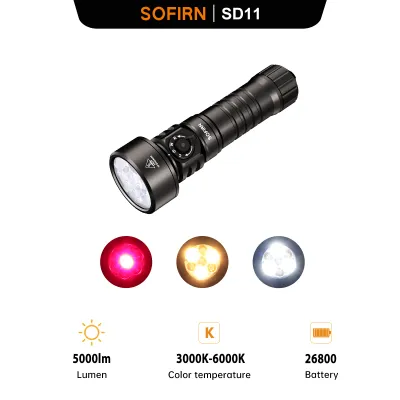
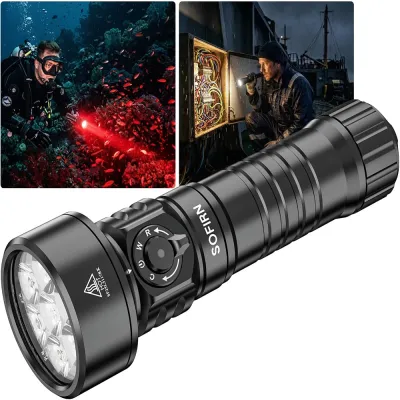
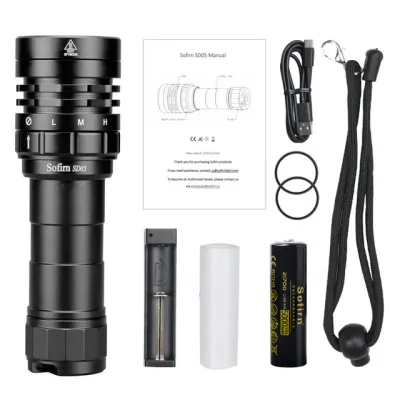
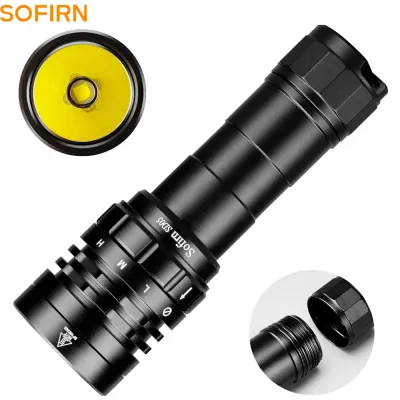
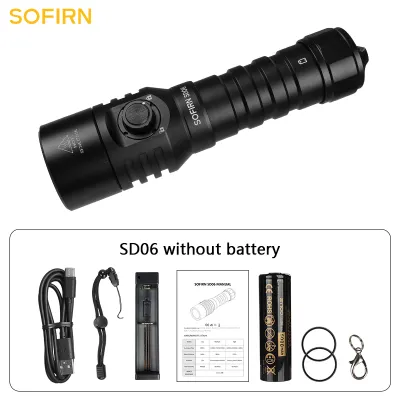
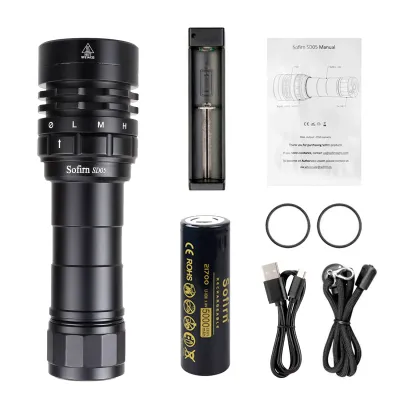
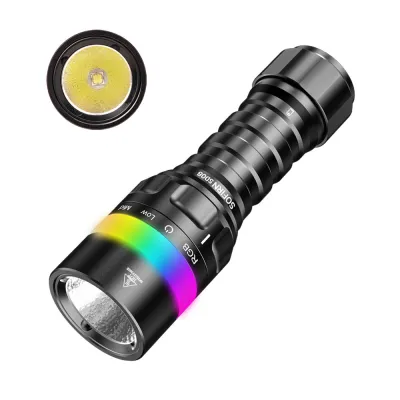
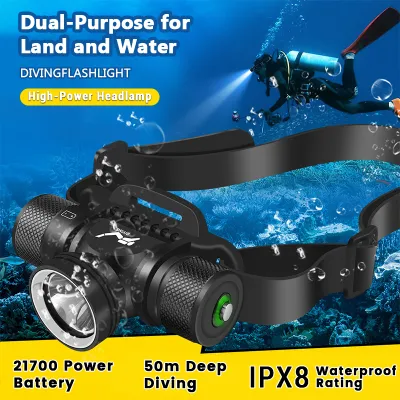
Prices are valid at publication and may change. Please refer to the product page for the latest price.
Finally, consider your typical bottom time and how many dives you perform per day. A standard single-tank recreational dive rarely exceeds an hour, meaning a compact light with a moderate runtime is perfectly sufficient. However, if you are planning night dives, liveaboard trips with multiple daily dives, or extended technical profiles, battery management becomes a primary safety concern. You must choose a flashlight that offers either a long continuous runtime or a design that allows for quick, safe battery swaps between dives.
Essential Specifications to Verify on Sofirn Diving Flashlights
When evaluating a sofirn diving flashlight, you must look closely at the manufacturer’s technical specifications to ensure the light can withstand the rigors of the underwater environment. The first specification to verify is the waterproof depth rating. While standard outdoor flashlights often carry an IPX8 rating, which only guarantees protection against continuous immersion in shallow water, dedicated diving lights are built to much stricter standards. Look for a clear, depth-specific rating—such as 50 meters, 100 meters, or more—and ensure your planned dives never approach or exceed this physical limit.

Brightness, measured in lumens, must be balanced against the beam angle to understand how the light will actually perform underwater. High lumen counts look impressive on paper, but a 3,000-lumen light with a very wide 120-degree flood beam will have a much shorter effective reach than a 1,000-lumen light with a tight 8-degree spot beam. For general utility and signaling, a tight spot beam is highly effective, whereas wide flood beams are better suited for close-up inspection, macro photography, or wide-angle videography.
Battery type and overall capacity directly dictate your light’s runtime and reliability. Most modern diving torches utilize rechargeable lithium-ion cells, with the 18650 and 21700 sizes being the most common. A 21700 battery generally offers significantly higher capacity compared to an 18650 cell, providing longer runtimes at higher brightness settings. Keep in mind that deep water is often much colder than surface water; these lower temperatures can cause battery voltage to drop more rapidly, making high-capacity cells a safer choice for deep or prolonged dives.
The structural build of the flashlight housing is your primary defense against the corrosive nature of the ocean. Ensure the flashlight is constructed from high-grade, CNC-machined aluminum alloy with a Type III hard-anodized finish. This specialized coating protects the underlying metal from rapid galvanic corrosion in saltwater and resists the inevitable scratches and impacts that occur when climbing back onto a dive boat.
Matching Flashlight Features to Your Diving Scenarios
Shallow Reef Diving and Snorkeling
For daytime reef diving and snorkeling within the first 15 meters of water, your primary goal is to restore the warm colors that are absorbed by the water column. Since red and orange light waves are filtered out near the surface, a compact flashlight with a high Color Rendering Index (CRI) is incredibly valuable. In these shallow, high-visibility environments, you do not need extreme depth ratings or ultra-high power settings that can drain your battery unnecessarily.
A wide, soft flood beam is ideal for this type of diving because it illuminates broad coral structures evenly without creating harsh, distracting shadows. Moderate brightness levels, ranging from 500 to 1,000 lumens, are more than enough to highlight hidden marine life in crevices without blinding sensitive creatures or washing out the natural beauty of the reef. Additionally, a smaller, lighter torch is much easier to carry on a wrist lanyard or tuck into a BCD pocket.
Night Diving and Low-Visibility Conditions
Once the sun sets, your flashlight is no longer just a tool for color restoration; it becomes your primary life-support instrument for navigation, buddy awareness, and signaling. For night diving, you need a robust primary light that offers a balanced beam profile, combining a bright central hotspot for long-distance visibility with a wide, gentle spill that illuminates your immediate surroundings.
Look for a flashlight that features multiple brightness levels, allowing you to drop down to a lower setting when reading your gauges or communicating with your buddy to avoid blinding them. A reliable power indicator, such as a multi-colored LED on the switch, is essential so you can monitor your remaining battery life in real time. Most importantly, never enter the water at night with only one light source. Standard safety protocols dictate carrying a primary torch and at least one independent, compact backup light secured to your buoyancy compensator (BCD) to ensure you can safely ascend if your main light fails.
Technical, Cave, or Deep Wreck Diving
Technical diving in overhead environments or at extreme depths carries a much higher level of risk, where equipment failure can quickly escalate into a life-threatening emergency. In these demanding scenarios, you must choose a flashlight rated to at least 100 meters, featuring redundant double or triple O-ring seals and a highly reliable magnetic control switch. Physical clicky switches can fail under extreme pressure, making magnetic rings or sliders the preferred choice for technical divers.
A narrow, piercing spot beam with an angle of 10 degrees or less is mandatory for technical operations. This concentrated column of light is necessary to cut through heavy silt, illuminate distant structures inside a wreck or cave, and execute clear, standardized hand and light signals with your dive team. The light must also feature a regulated driver that maintains a constant, flat output level rather than gradually dimming as the battery voltage drops.
Remember that specialized high-performance gear is never a substitute for proper training and experience. Before attempting any technical, cave, or wreck dives, you must obtain the appropriate certifications and master the specific safety protocols required for these environments. This includes adhering to strict redundant lighting rules, which dictate carrying a minimum of three independent light sources—one primary and two backups—on every single dive.
Pre-Dive Safety Checks and Underwater Usage Boundaries
Preventing a flashlight flood starts long before you step onto the dive boat. The most critical step in your pre-dive routine is a thorough inspection of the sealing O-rings. Unscrew the flashlight’s tail cap or bezel, carefully remove the O-rings using a blunt tool to avoid scratching the groove, and inspect them under a bright light. Look closely for any signs of cracking, flattening, hair, lint, or tiny grains of sand, as even a single strand of hair can create a pathway for high-pressure water to bypass the seal.
Once you have verified that the O-rings and their grooves are completely clean, apply a very small amount of manufacturer-recommended silicone grease. The goal is to lightly coat the rubber so it appears shiny and remains supple; do not apply excessive grease, as this will actually attract abrasive sand and dirt during gear setup. Gently press the O-rings back into their grooves, ensuring they are seated perfectly flat without any twists or loops.
Before entering the water, perform a quick function test by turning the light on and cycling through all the brightness modes. Keep this dry test brief, as high-power diving flashlights generate significant heat and rely on the surrounding water to act as a heat sink. Running a high-output torch on land for more than a minute can cause the internal thermal protection to kick in, or worse, permanently damage the LED and driver board due to overheating.
While underwater, you must remain vigilant and establish clear stop conditions for your equipment. If you notice your flashlight flickering, dimming unexpectedly, or showing signs of internal condensation behind the lens, treat it as an active failure. Turn the unit off immediately to prevent electrolysis from destroying the internal components, switch to your backup light, and safely terminate the dive with your buddy according to your dive plan.
Post-Dive Maintenance to Prevent Saltwater Corrosion
Proper post-dive care is essential to protect your investment and ensure your flashlight performs reliably on your next underwater adventure. Saltwater is incredibly aggressive, and as it dries, it leaves behind microscopic salt crystals that can lock up threads, corrode aluminum, and damage delicate rubber seals. As soon as you return from a dive, submerge the fully assembled, closed flashlight in a tub of clean, fresh water. Let it soak for at least 15 to 30 minutes, occasionally pressing or rotating the switch to flush out any salt trapped in the moving parts.
After soaking, remove the flashlight from the water and dry it thoroughly with a soft, clean towel. Allow the unit to air dry completely in a cool, shaded area with plenty of ventilation; never leave your dive light sitting in direct, intense tropical sunlight, as the extreme heat can degrade the lithium-ion battery cells and dry out the silicone grease on your O-rings.
If you do not plan to use the flashlight for several weeks or months, always remove the batteries before storing the unit. Leaving lithium-ion batteries inside a closed metal tube for extended periods can lead to slow parasitic drain, and in rare cases of battery failure, corrosive chemicals can leak and completely ruin the flashlight’s internal circuitry. Store the flashlight and batteries in a cool, dry place out of direct sunlight, ready for your next dive.
Frequently Asked Questions (FAQ)
Can I pack my Sofirn diving flashlight and its batteries in my checked luggage for flights?
Aviation safety regulations are incredibly strict regarding the transport of lithium-ion batteries due to the potential risk of short circuits and thermal runaway fires. You must pack all loose or spare lithium-ion batteries in your carry-on luggage, ensuring that their terminals are insulated with tape or stored in individual plastic cases. The physical flashlight body, with the battery completely removed, can be safely packed in your checked baggage along with your other diving gear. Always verify the specific luggage policies of your airline and the local aviation authorities, such as the Civil Aviation Authority of the Philippines (CAAP), before arriving at the airport to ensure a smooth check-in process.
Community discussion
Share your experience or ask a question. Comments are reviewed before publication.