
Spearfishing is an immersive and physically demanding sport that combines breath-hold diving with selective harvesting. Because it takes place in a dynamic underwater environment, spearfishing carries inherent risks that no piece of equipment can fully eliminate. Your safety and success depend entirely on formal freediving training, physical conditioning, and underwater judgment; a speargun is simply a tool, not a substitute for proper instruction. For beginners, selecting the right speargun for fishing involves finding a balance between maneuverability, power, and your physical ability to load the weapon safely.
Assess Your Diving Environment and Target Species
Before looking at specific gear, you must evaluate the typical conditions of the waters you plan to dive. In tropical environments like the Philippines, water visibility can change dramatically depending on seasonal monsoons, tidal movements, and coastal runoff. High-visibility days allow you to spot fish from a distance, which requires a longer shooting range to close the gap. Conversely, when diving in murky or sediment-heavy waters, your visibility is limited, meaning you will only encounter fish at close range where a long, unwieldy gun is a distinct disadvantage.
The behavior and physical characteristics of your target species also dictate your gear requirements. Reef-dwelling fish such as grouper or small snapper often seek shelter inside caves, crevices, and coral overhangs. Hunting in these tight spaces requires a compact gun that can be easily maneuvered without damaging the delicate reef structure or the gun itself. Pelagic species or larger reef fish like jacks have thicker scales and stronger bones, requiring a heavier shaft and greater penetration power, whereas smaller reef fish can be easily taken with a lighter, standard setup.
Products mentioned in this guide
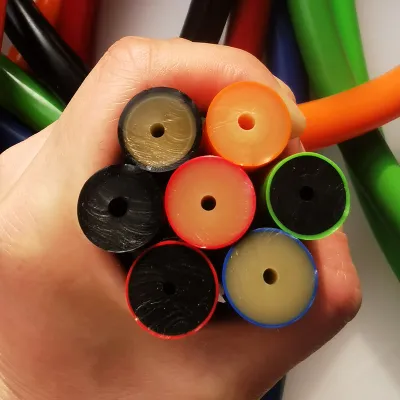
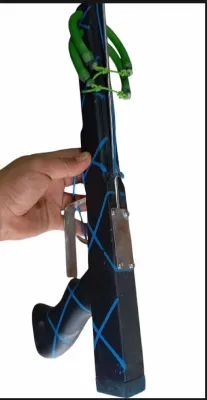
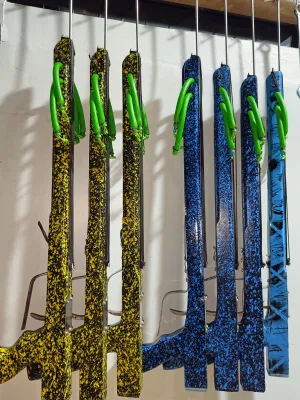
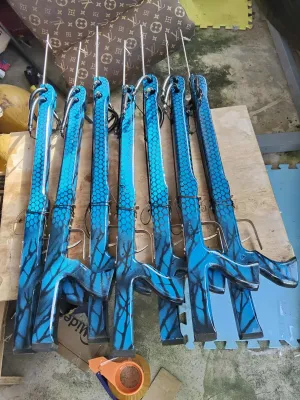
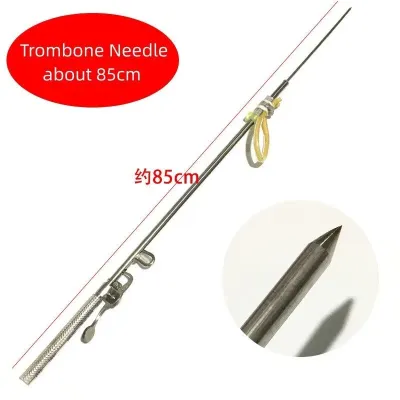
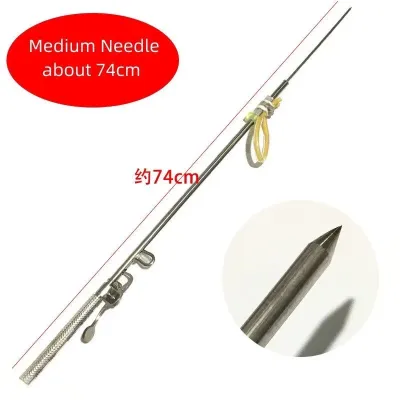
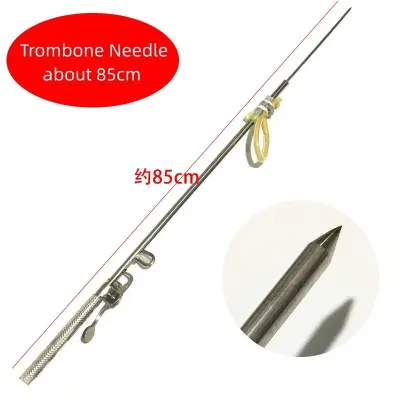
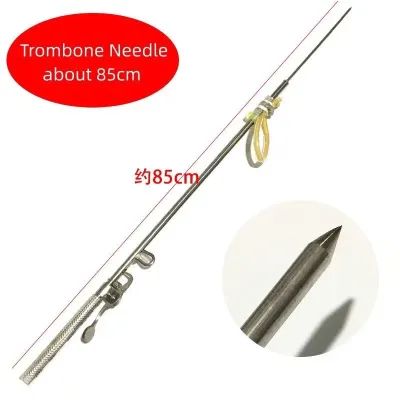
Prices are valid at publication and may change. Please refer to the product page for the latest price.
Maneuverability is a critical factor when navigating different underwater terrains. If you are swimming through dense coral gardens or shallow rocky reefs, a long barrel will constantly catch on obstructions, slowing your response time and potentially scaring away your target. Open-water hunting, or blue-water diving, offers unlimited space to swing a long barrel but provides no cover, meaning fish will remain highly alert and keep their distance. For beginners, mastering reef hunting with a highly maneuverable setup is the safest and most practical way to build fundamental hunting skills.
Match Speargun Length to Your Dive Conditions
The overall length of a speargun directly influences its range, accuracy, and handling characteristics under water. Shorter guns, typically measuring between 55 cm and 75 cm, excel in low-visibility conditions and tight reef spaces. They are incredibly easy to swing, track quickly through the water, and require less effort to load. However, their shorter barrels limit the length of the rubber bands, resulting in a shorter effective range and less penetration power for larger fish.

Longer guns, ranging from 90 cm to 110 cm or more, are designed for clear water where fish are skittish and keep a safe distance. The extended barrel allows for longer bands and a heavier shaft, providing the velocity and momentum needed for long-range shots. For most novice spearfishers, a mid-sized gun between 75 cm and 90 cm offers the most versatile compromise. This intermediate length provides sufficient range for clear-water reef hunting while remaining compact enough to maneuver around coral heads and shallow structures.
When selecting a gun, always verify the manufacturer’s specifications rather than relying on visual estimates. The labeled length of a speargun usually refers to the barrel or tube length, not the total length including the handle and muzzle. Check the product labels to confirm the overall dimensions and inspect the balance point of the unloaded gun. A well-balanced speargun should feel relatively neutral in your hand; a front-heavy gun will strain your wrist and forearm during a long dive, leading to fatigue and poor shot accuracy.
Balance Band Power and Loading Effort
A speargun’s propulsion system relies on heavy rubber bands that store elastic energy when stretched. For beginners, a single-band configuration is highly recommended because it simplifies the loading process and minimizes the risk of tangles or mechanical complications. Single 16mm bands provide ample power for most reef species while keeping the loading sequence straightforward. Multi-band setups, such as dual 14mm bands, can offer higher shaft velocity and are sometimes easier to load incrementally, but they increase recoil and require more handling care.
Evaluating band thickness and stretch ratios is essential to avoid over-powering your setup. Standard band diameters range from 14mm to 19mm, with thicker bands delivering more force but requiring significantly more physical strength to load. Refer to the manufacturer’s guidelines to verify the correct band length and thickness for your specific barrel length. Attempting to use bands that are too short or too thick can warp the barrel, damage the trigger mechanism, or make the gun impossible to load safely in the water.
Managing recoil and ensuring you can load the gun safely are vital safety considerations. Loading a speargun requires placing the loading butt firmly against your chest or hip and pulling the bands back with a controlled, continuous motion. If you cannot reach the bands comfortably or lack the upper-body strength to lock the wishbone into the shaft notch, the gun is too powerful for your current physical conditioning. Excessive recoil from an overpowered gun can cause the handle to kick back violently upon firing, leading to wrist injuries or highly inaccurate shots.
Inspect Materials and Essential Safety Features
The physical construction and materials of a speargun determine its durability, buoyancy, and maintenance requirements. Aluminum barrels are the most common choice for beginners because they are lightweight, highly durable, and cost-effective. While they can feel slightly heavy in the water once loaded with a steel shaft, they require minimal upkeep beyond a thorough freshwater rinse. Wooden barrels, often crafted from teak or mahogany, possess natural buoyancy that helps neutralize the weight of the shaft, but they require regular oiling and careful storage to prevent warping in humid, tropical climates.
Before purchasing any speargun, carefully inspect the trigger mechanism and safety catch. The trigger sear and internal components should be constructed from high-quality stainless steel to withstand the high tension of loaded bands without slipping. Test the mechanical safety switch to ensure it engages and disengages smoothly, locking the trigger completely when activated. Always treat a mechanical safety as a secondary precaution; sand, salt, and wear can cause these mechanisms to fail, meaning you must never rely on them to prevent accidental discharge.
The rigging components, including the wishbone, shaft, and tip, must also be thoroughly examined. Modern spearguns often utilize Dyneema wishbones, which are soft, high-strength fiber loops that connect the bands. Dyneema wishbones are significantly safer than traditional metal wire wishbones, which can cause severe finger cuts or scratch the barrel if they slip during loading. Ensure the shaft is perfectly straight and made of corrosion-resistant spring steel, and verify that the flopper—the hinged barb near the tip—swings freely to prevent the fish from sliding off the shaft.
Perform Pre-Dive Checks and Safe Handling
Establishing a strict pre-dive inspection routine is critical to mitigating the physical dangers of spearfishing. Before entering the water, conduct a thorough visual check of your entire setup. Inspect the rubber bands for any signs of cracking, dry rot, or tearing, particularly near the knots and wishbone connections. Ensure the shaft is straight and seats securely into the trigger mechanism with a clear, audible click, and verify that the shooting line is free of knots, frays, or tangles.
Safe handling practices must be maintained at all times, both on land and in the water. Never load a speargun on land, on a boat, or while wading in shallow water. The density of water is necessary to absorb the energy of the firing band; discharging a speargun in the air can cause the shaft to recoil violently, snap the shooting line, or cause catastrophic gear failure that can result in severe injury. Always load and unload your speargun while fully submerged, keeping the muzzle pointed down and away from yourself, your dive buddies, and any boats.
Knowing when to abort a dive is a fundamental skill that every beginner must develop. If water visibility drops below the length of your speargun, cease hunting immediately, as you cannot safely identify your target or track your dive buddy. Stop using your gear if you notice any structural damage, such as a sticky trigger, a bent shaft, or a fraying line. Physical fatigue, muscle cramping, or difficulty loading the bands are also immediate stop conditions; diving while exhausted increases the risk of blackouts and accidental misfires.
Frequently Asked Questions (FAQ)
Should a beginner start with a wooden or aluminum speargun?
For most beginners, an aluminum speargun is the most practical and reliable choice. Aluminum barrels are highly durable, require very little maintenance beyond a freshwater rinse after each dive, and are generally more affordable for those entering the sport. Wooden spearguns offer excellent natural buoyancy and help absorb recoil, but they require periodic sanding, oiling, and careful storage to prevent the wood from warping in tropical humidity. Starting with an aluminum model allows you to focus on mastering your diving safety and shooting technique without the added burden of intensive gear maintenance.
How do I know if a speargun is too powerful for my current skill level?
A speargun is too powerful if you cannot load it smoothly in a single, controlled motion while floating in the water. If you find yourself struggling, bruising your chest, or needing to use your entire body weight to stretch the band, the setup is unsafe for your current physical conditioning. Additionally, if the gun produces a violent kickback that causes your wrist to bend or makes it difficult to maintain your grip upon firing, the recoil is excessive. Prioritizing a manageable, easily loaded gun ensures you can hunt safely and shoot accurately without risking muscle strain or accidental misfires.
Community discussion
Share your experience or ask a question. Comments are reviewed before publication.