
Selecting the correct speargun rubber is a balancing act between your gun’s dimensions, your target fish, and your physical loading capacity. A band that is too long or thin will fail to penetrate tough scales, while a band that is too short or thick can cause excessive recoil, bend your shaft, or damage the trigger mechanism. To find the ideal setup, you must calculate the active stretch distance of your specific gun, select a stretch ratio that matches your strength, and choose a rubber diameter that delivers the necessary penetration power without compromising accuracy.
Understand the Relationship Between Gun Length and Rubber Stretch
To optimize your speargun’s performance, you must understand how the physical length of the gun dictates the length of the rubber band. The energy that propels the shaft is stored when you stretch the rubber from its relaxed state to its loaded position on the shaft’s notch or shark fin. This relationship is governed by the stretch ratio, which is the ratio of the stretched length of the band to its relaxed length.
Standard stretch ratios for speargun rubber typically range from 300% (3.0 times its relaxed length) to 380% (3.8 times its relaxed length). A lower stretch ratio, such as 300% to 320%, offers a smoother load and is suitable for beginners or long diving sessions where muscle fatigue is a factor. Higher stretch ratios, from 340% to 380%, store more energy and deliver a faster shot, but they require substantial physical strength to load and place higher stress on the equipment.
Products mentioned in this guide
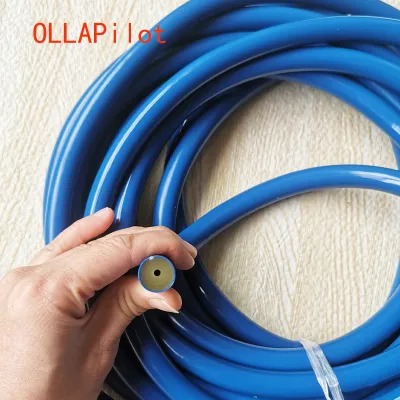
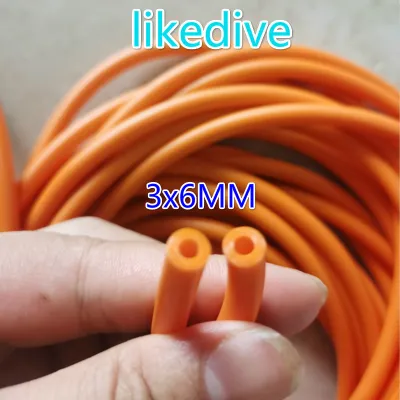
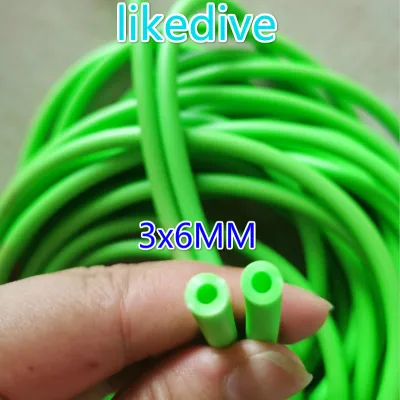
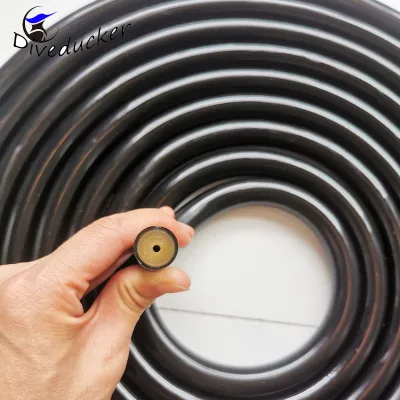
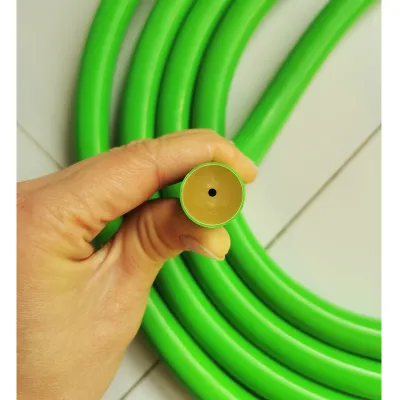
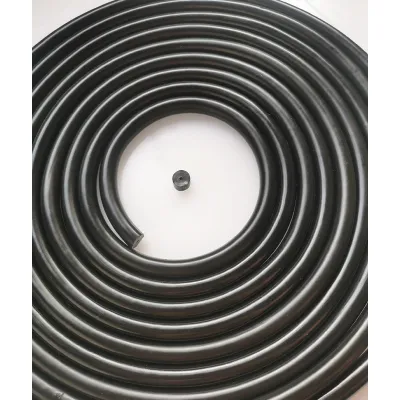
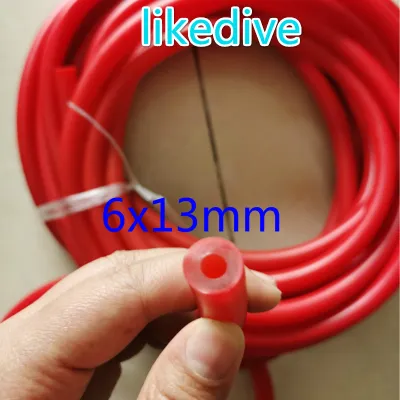
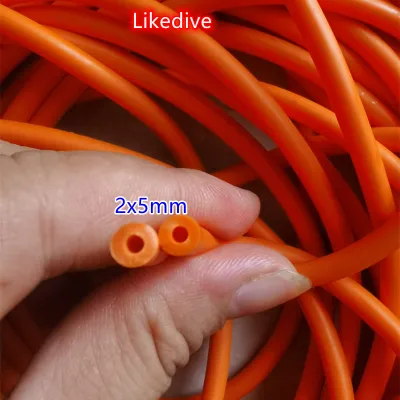
Prices are valid at publication and may change. Please refer to the product page for the latest price.
To determine the correct band length, measure the active stretch length of your speargun. This is the distance from the center of the band slot to the loading notch or shark fin on the shaft. Because this measurement varies depending on the specific design of your muzzle and shaft, taking an accurate physical measurement is far more reliable than relying on generic charts.
Over-stretching your rubber bands by cutting them too short can lead to performance issues. When rubber is stretched beyond its elastic limit, the internal polymer chains break down, resulting in rapid power loss during the dive—a phenomenon known as band stretch. Furthermore, excessive tension increases muzzle flip and recoil, which throws off your aim. Conversely, under-stretching your bands by leaving them too long results in a sluggish shot with a looping trajectory, failing to provide the penetration power needed to secure your catch.
Match the Draw Weight to Your Target Fish and Environment
The draw weight of your speargun rubber must be matched to the specific fish species you are targeting and the environmental conditions of your dive. Draw weight refers to the force required to pull the band to the loading notch, and it is determined by both the diameter of the rubber (typically ranging from 14mm to 20mm) and the stretch ratio.

When hunting smaller reef fish with delicate flesh, such as surgeonfish or small snappers, a lighter draw weight is preferred. Excessive power can blow completely through the fish, tearing the flesh and allowing it to escape, while also risking damage to your shaft if it strikes nearby rocks or coral. For larger, thick-scaled target fish like giant trevally or Spanish mackerel, you require a high draw weight to ensure the shaft has enough momentum to penetrate tough scales and bone, allowing the floater or slip-tip to deploy securely.
Environmental factors such as water current, surge, and visibility also dictate your rubber configuration. In strong currents or heavy surge, a streamlined setup is essential; bulky, thick bands create additional drag, making it difficult to track fast-moving fish quickly. In clear water, fish are often more skittish and keep their distance, requiring longer shots that necessitate a higher-powered setup. In murky water, where visibility is limited, shots are taken at close range, making a shorter gun with a single, easily loaded band highly effective.
Before increasing your draw weight, always verify the maximum load capacity of your speargun’s trigger mechanism and barrel. Lightweight aluminum or carbon fiber railguns can flex under excessive band tension, which misaligns the shaft and ruins accuracy. Consult the manufacturer’s official specifications to ensure your gun’s trigger sear and barrel can safely handle the combined tension of your chosen bands.
Evaluate Rubber Band Materials and Construction
The material composition and construction of speargun rubber directly affect its performance, durability, and ease of use. Most high-quality speargun bands are made from natural latex, which is favored for its progressive power delivery and excellent elastic memory. Natural latex stretches smoothly and releases its stored energy evenly, resulting in a more consistent and accurate shot.
However, natural latex is highly susceptible to degradation from ultraviolet (UV) light, ozone, and saltwater. To combat this, manufacturers often use a co-extrusion process to produce dipped or jacketed rubber. These bands feature a natural latex core protected by a thin outer layer of synthetic rubber, often pigmented black, amber, or red. This outer layer acts as a shield against UV rays and physical abrasion, significantly extending the lifespan of the band in tropical environments.
You must also choose between solid and tubular rubber construction. Tubular rubber is the industry standard for modern spearguns because it allows for the insertion of internal wishbones, which are secured inside the bore of the rubber. Tubular rubber also provides a more consistent wall thickness, ensuring even stretch and power delivery.
When selecting tubular rubber, pay attention to the inner diameter (ID) of the tubing. Standard tubing typically has a 3mm inner diameter, while small-ID tubing features a 1.6mm inner diameter. Small-ID tubing provides more rubber material for the same outer diameter, allowing you to achieve higher draw weights and power without increasing the physical bulk or drag of the band in the water.
Step-by-Step Guide to Sizing and Rigging Your Bands
Sizing and rigging your own speargun bands allows you to customize your setup for optimal performance. Follow this step-by-step process to measure, cut, and rig your bands safely and accurately.
First, calculate the required rubber length using your active stretch distance and target stretch ratio. Use the following formula: Band Length = (Active Stretch Distance x 2) / Target Stretch Ratio. For example, if your measured active stretch distance is 90 cm and you desire a comfortable 330% (3.3) stretch ratio, the calculation is (90 x 2) / 3.3, which equals approximately 54.5 cm. From this number, subtract the length of your wishbone bridge (typically 2 to 5 cm) to find your final cut length of approximately 50 to 52 cm.
Next, measure and cut your tubular rubber. Use a very sharp utility knife or a razor blade to ensure clean, square edges. Wetting the blade with soapy water helps the knife glide through the rubber smoothly, preventing jagged edges or tears. A clean, perpendicular cut is critical, as any imperfections can become stress concentration points where the rubber may split under tension.
To install the wishbone, lubricate the wishbone beads and the inner bore of the rubber with a small amount of soapy water or silicone grease; avoid petroleum-based lubricants, as they chemically degrade latex. Insert the wishbone beads deep into the bore of the rubber using a specialized wishbone insertion tool or needle-nose pliers. Once the beads are positioned, tie a tight constrictor knot over the rubber where the bead is located using a high-strength line such as 1.5mm to 2mm Dyneema. Pull the knot extremely tight using pliers to compress the rubber securely around the bead, then trim the excess line and singe the ends with a lighter.
Before entering the water, perform a thorough safety check and tension verification. Inspect the constrictor knots to ensure they are tight and have not slipped. Check the rubber around the wishbone for any signs of pinching or micro-tears. Never load or test-fire your speargun out of the water, as this is extremely dangerous and can cause catastrophic gear failure or severe personal injury.
Maintenance and Signs It Is Time to Replace Your Rubber
Proper post-dive maintenance is essential to maximize the lifespan of your speargun rubber and prevent dangerous band failures. Saltwater, heat, and sunlight are the primary enemies of latex, causing it to degrade over time.
After every dive, thoroughly rinse your speargun bands with clean, fresh water to remove salt crystals, sand, and organic debris. Allow the bands to dry completely in a shaded, well-ventilated area away from direct sunlight. Store your speargun and spare bands in a cool, dark place. For long-term storage, placing dry bands in an airtight plastic bag can help protect them from ozone exposure and oxidation.
Inspect your bands before every dive for visual and tactile signs of degradation. Look for micro-cracks (crazing) near the wishbone knots and where the band passes through the muzzle slot. Feel the rubber along its entire length; if it feels sticky, gummy, or has a powdery residue, the latex is undergoing chemical breakdown. Another warning sign is permanent deformation, where the band remains stretched out and loses its snap.
If you observe any deep cracks, cuts from coral, or frayed wishbone lines, stop using the band immediately. A band snapping under full tension can cause severe injury to your hands, face, or eyes, and will cut your dive short. Replacing your bands proactively ensures a safe and successful hunt.
Frequently Asked Questions (FAQ)
Can I use multiple thinner bands instead of one thick band?
Yes, using multiple thinner bands (such as two 14mm bands) instead of a single thick band (such as one 18mm or 20mm band) is a highly effective configuration. This setup distributes the draw weight, making the gun much easier to load in stages while providing a smoother release with less felt recoil. However, you must verify that your speargun’s muzzle and band slot are designed to accommodate multiple bands without crowding, and that the trigger mechanism is rated to handle the combined tension safely.
How often should I replace my speargun rubber bands?
There is no fixed calendar schedule for replacing speargun rubber, as its lifespan depends on usage frequency, UV exposure, and storage conditions. In tropical environments with intense sun and high salinity, active divers often need to replace their bands every six to twelve months. Rather than relying on a time-based rule, perform a thorough visual and tactile inspection before every dive, and replace the bands immediately if you detect cracking, stickiness, or a noticeable loss of tension.
Community discussion
Share your experience or ask a question. Comments are reviewed before publication.