
Setting up a dedicated workout space at home requires balancing training efficiency with the physical limitations of your living environment. Choosing a standing punching bag allows you to engage in high-intensity cardiovascular workouts and martial arts training without drilling heavy anchors into your ceiling or walls. Unlike traditional hanging heavy bags, a standing model relies on a heavily weighted base to absorb impact and remain upright. However, selecting the wrong model can lead to a frustrating experience of sliding bases, excessive noise, or a bag that tips over after a single strong kick.
To find the right equipment, you must evaluate a primary decision matrix: the base fill type (water versus sand), the height adjustability range, and the striking surface density. Your optimal choice depends strictly on your available floor space, your home flooring type, and your primary training goal, such as cardio conditioning or power striking. While a standing bag offers unmatched convenience and portability, careful selection of the base stability is essential to mimic realistic resistance and ensure a safe, productive workout.
Key Features to Evaluate Before Buying
Selecting a standing punching bag requires looking beyond aesthetics to analyze the structural components that dictate how the equipment responds to physical force. Understanding these engineering details helps you avoid common purchasing mistakes and ensures your gear matches your physical stature and athletic goals.
Products mentioned in this guide
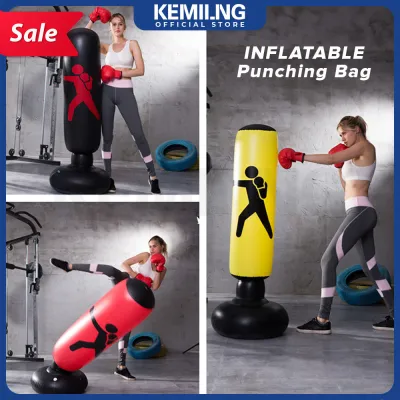
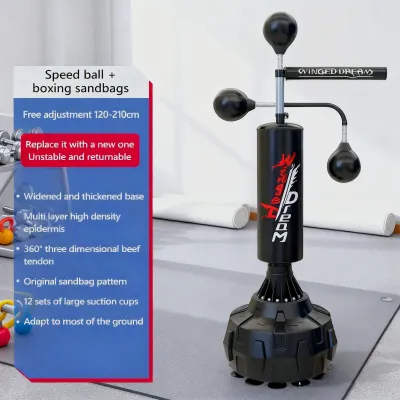
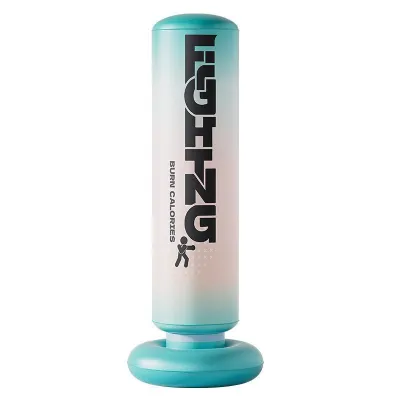

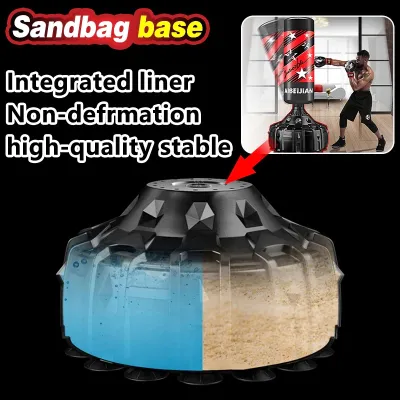
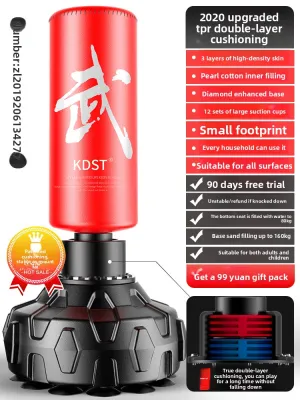
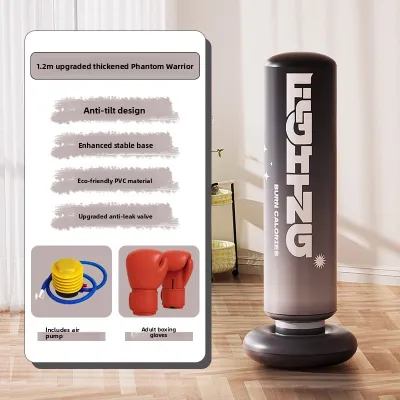
Prices are valid at publication and may change. Please refer to the product page for the latest price.
Base Stability and Weight Capacity
The mechanics of base stability rely on a simple physical principle: a wider, heavier base provides greater resistance to tipping. When you strike the bag, the kinetic energy transfers down the central pole to the base, which must distribute that force across its footprint. If the base diameter is too narrow, the center of gravity shifts too easily, causing the entire unit to tilt, slide, or fall over during heavy combinations.
Before finalizing a purchase, check the manufacturer’s maximum fill weight and physical base dimensions. Standard residential bases typically hold between 60 to 120 kilograms of fill material. Wider bases offer superior stability for powerful kicks and heavy punches, making them ideal for experienced martial artists. Conversely, narrower bases save valuable floor space but require you to moderate your strike intensity to prevent the unit from shifting.
Height Adjustability and Striking Zones
A bag that does not match your height can compromise your form and increase the risk of joint strain. Most high-quality standing bags feature adjustable telescopic poles secured by heavy-duty locking mechanisms. These systems generally use either pin locks, which slide a steel bolt through pre-drilled holes, or collar twist locks, which compress the pole to hold it in place. Pin locks are highly secure and prevent vertical slippage during downward strikes, while twist locks offer more micro-adjustments.
To determine your required height range, measure your personal strike zone from your head height down to your midsection. Compare these measurements against the bag’s minimum and maximum height specifications. For optimal ergonomic training, adjust the telescopic pole so that the center of the striking surface aligns directly with your chest or chin, allowing you to execute straight punches and hooks with proper alignment.
Striking Surface Material and Shock Absorption
The exterior cover and internal padding of the bag directly affect both hand safety and equipment longevity. Common outer materials include high-grade vinyl and synthetic polyurethane (PU) leather. Vinyl is exceptionally durable and highly resistant to moisture, making it an excellent choice for humid tropical climates where sweat accumulation can degrade weaker fabrics. Synthetic leather offers a realistic tactile feel similar to professional gym bags but requires regular maintenance to prevent cracking.
Internal shock absorption is typically managed by multi-layered foam or high-density solid foam cores. Softer, multi-layered foam is highly forgiving, making it suitable for beginners, cardiovascular conditioning, or light bare-knuckle work. High-density solid foam provides firmer resistance, which is necessary for heavy strikers to prevent the bag from bottoming out against the inner plastic core. Always check the manufacturer’s guidelines to verify if the bag requires the use of hand wraps and gloves or if bare-handed training is permitted.
Matching the Bag to Your Training Level and Space
Your home setup introduces unique physical boundaries that dictate which standing bag will function safely and effectively. Aligning the equipment with your physical space and training style prevents property damage and optimizes your workout flow.

Assessing Your Available Space and Flooring
Before assembling your training corner, you must measure the physical clearance radius of your designated workout area. Calculate this by taking the radius of the bag’s base and adding the length of your fully extended arm or leg, plus a safety buffer of at least one meter. This clearance ensures that you will not strike nearby walls, furniture, or glass windows during high-energy training sessions.
Your flooring material plays a critical role in how the bag behaves under impact. Hard, smooth surfaces such as ceramic tiles, polished concrete, or hardwood are prone to base slippage and can amplify vibrations throughout your home. To mitigate this, place a high-density rubber equipment mat underneath the base to increase friction and absorb operational noise. If you are placing the bag on thick carpeting, be aware that the uneven surface can compromise the suction cups found on some bases, requiring careful leveling to maintain stability.
Aligning Bag Type with Training Goals
Different martial arts disciplines require distinct bag shapes to facilitate proper technique. Traditional cylindrical standing bags feature a uniform, straight column that is highly suited for general boxing, fluid footwork drills, and continuous combinations. These models allow you to move 360 degrees around the target, simulating realistic ring movement.
If your training focuses on precision striking, self-defense, or anatomical targeting, a human-shaped dummy bag may be more appropriate. These models provide immediate visual feedback for targeting the chin, solar plexus, and ribs, though they often have a smaller overall striking surface. Beginners should prioritize highly stable, forgiving cylindrical surfaces to build confidence and technique, while advanced practitioners and heavy kickers should opt for reinforced central poles and firmer foam densities designed to withstand maximum impact.
Water vs. Sand Base: Choosing the Right Fill
Deciding how to fill your standing bag’s base is one of the most critical steps in your setup process. This choice directly affects the portability, stability, and overall performance of your equipment.
- Water Base: Filling the base with water is the fastest and most convenient method. It is highly practical for renters, apartment dwellers, or individuals who anticipate moving the equipment frequently, as the base can be easily drained using a standard garden hose. However, water is less dense than sand, resulting in a lighter overall base weight. This lower weight can lead to noticeable base movement, sliding, or a sloshing sound during heavy workouts.
- Sand Base: Dry play sand is significantly denser than water, providing maximum weight capacity and superior stability. A sand-filled base is highly resistant to sliding and tipping, making it the preferred choice for heavy kickers and powerful punchers. The primary trade-off is the labor-intensive filling process, which often requires a funnel and patience to pour the sand through a narrow opening. Once filled, a sand base is extremely difficult to move and should be considered a semi-permanent fixture in your home.
To make your decision, evaluate your living situation and training intensity. If you live in an urban condominium where you must minimize noise and floor vibrations, a sand-filled base placed on a rubber mat offers the quietest operation. If you require the flexibility to store the bag in a closet after use, water is the only practical option.
Safety Warning: Never mix water and sand inside the base, and avoid using unauthorized fill materials such as gravel or dirt unless explicitly permitted by the manufacturer’s instructions. Mixing water and sand creates a dense, cement-like sludge that is nearly impossible to remove, which can permanently damage the base structure and void your product warranty.
Setup, Safety, and Maintenance for Home Use
Proper installation and routine care are essential to extend the lifespan of your standing punching bag and ensure a safe training environment. Neglecting basic maintenance can lead to structural failures or premature wear on the materials.
Assembly Safety and Torque Specifications
When assembling your standing bag, pay close attention to the connection points between the central pole and the base. Use the specific tools provided by the manufacturer and follow all torque guidelines to avoid over-tightening, which can strip plastic threads or crack metal collars. Ensure that all locking pins, bolts, and washers are seated flush against the frame to prevent wobbling or cross-threading during use.
Usage Boundaries and Structural Checks
Standing punching bags are precision training tools designed to develop speed, accuracy, and cardiovascular endurance; they are not indestructible targets. Avoid striking the bag with maximum force if the base is not filled to its recommended capacity, as this places excessive bending stress on the central pole. If you notice the central pole showing signs of bending, cracking, or severe wobbling, stop training immediately and inspect the structural joints before resuming.
Routine Maintenance and Cleaning
Establish a regular maintenance schedule to keep your equipment in peak condition. In warm, humid environments, human sweat can quickly accumulate on the synthetic leather or vinyl cover, leading to bacterial growth and material degradation. After every workout, wipe down the entire striking surface with a clean, damp cloth and a mild, non-abrasive soap solution. Avoid harsh chemical cleaners, bleach, or alcohol-based sprays, as these can dry out the synthetic materials and cause them to crack.
Periodically inspect the base plug and the surrounding seams for micro-leaks or stress fractures. If you are using a water-filled base, checking these seals prevents water damage to your home flooring. Additionally, check all locking pins and connection bolts every few weeks, tightening any hardware that has vibrated loose during your training sessions.
Proper Storage Conditions
To prevent premature aging of the synthetic outer shell, store your standing bag away from direct sunlight and areas prone to extreme temperature fluctuations. Prolonged exposure to ultraviolet (UV) rays can dry out vinyl and polyurethane, leading to unsightly cracking and peeling. If you must store the bag in a garage or near a window, cover it with a breathable fabric sheet to protect it from dust and sun exposure while allowing moisture to escape.
Frequently Asked Questions (FAQ)
Can I use a standing punching bag without gloves?
Whether you can train bare-knuckle depends entirely on the bag’s surface material and internal foam density. High-density solid foam bags require the use of hand wraps and boxing gloves to protect the small bones in your hands and prevent wrist hyperextension. Training without protection on firm surfaces can cause skin abrasions and joint injuries. Specialized soft-foam or air-filled cardio bags may permit light, bare-handed striking, but you should always consult the manufacturer’s guidelines to confirm safe usage boundaries.
How do I stop my standing punching bag from sliding on hard floors?
To prevent your bag from sliding on smooth surfaces like ceramic tiles or polished concrete, place a high-density rubber equipment mat directly underneath the base. The rubber material increases friction and absorbs the kinetic energy that causes the base to travel. Additionally, ensuring that your base is filled to its maximum capacity with dry sand rather than water will significantly reduce sliding. Avoid using strong chemical adhesives, double-sided tapes, or industrial glues on your floors, as these can permanently ruin your home’s flooring finish.
Is a standing bag better than a hanging heavy bag for home training?
Neither option is universally superior; instead, they serve different residential constraints and training goals. Standing bags are ideal for rental properties, apartments, and multi-purpose spaces because they require no structural installation, offer adjustable heights, and can be moved when necessary. Hanging heavy bags provide a more realistic swinging motion, allow for better footwork angles, and can handle maximum power strikes without shifting. However, hanging bags require permanent ceiling joist mounting and a dedicated, spacious training zone.
Community discussion
Share your experience or ask a question. Comments are reviewed before publication.