
Finding the right starting dumbbell weight is the foundation of a safe, effective strength training routine. For men looking to build muscle, tone up, or improve functional fitness at home or in the gym, selecting the correct load is not about picking the heaviest weight on the rack. It requires balancing your current physical capability, your specific fitness goals, and the mechanics of the exercises you plan to perform. Because different movements target muscles of vastly different sizes, you will ultimately need a range of weights rather than a single pair of dumbbells to complete a full-body workout.
Assess Your Current Fitness Level and Baseline Strength
Before purchasing equipment or lifting your first weight, you must objectively evaluate your current physical condition. A beginner is someone who has done little to no structured resistance training within the past six months. An intermediate lifter has consistently trained for six months to two years, mastering basic movement patterns. Advanced lifters have multiple years of continuous, structured strength training and possess a high level of neuromuscular coordination.
To establish a practical baseline without equipment, you can use standard bodyweight movements as a diagnostic tool. Your proficiency in standard push-ups is an excellent indicator of upper-body pressing strength. If you can perform fewer than ten controlled, full-range push-ups with strict form, your starting dumbbell weight for upper-body exercises should remain highly conservative. If you can easily complete twenty or more clean push-ups, your baseline upper-body strength is higher, allowing you to start with slightly heavier loads.
Products mentioned in this guide
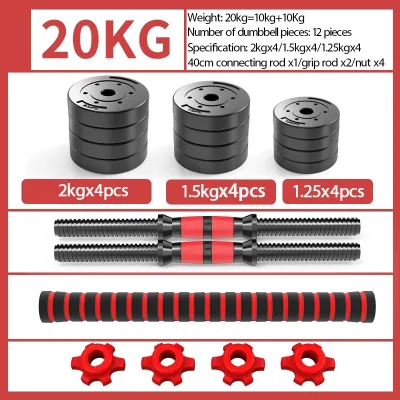
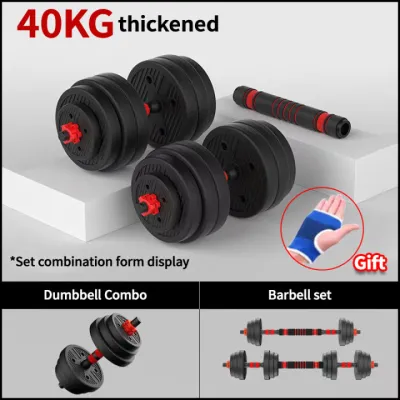
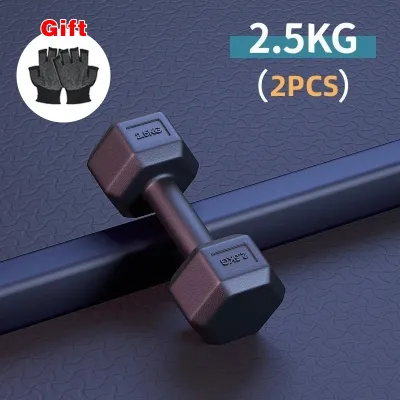
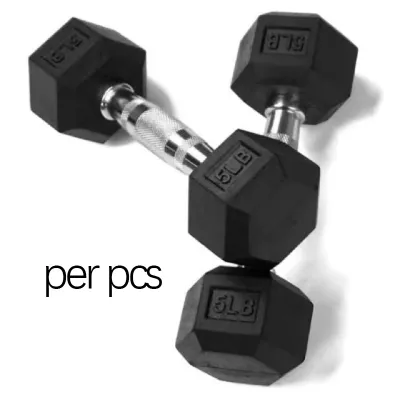
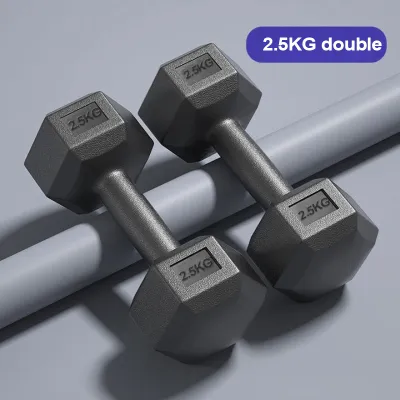
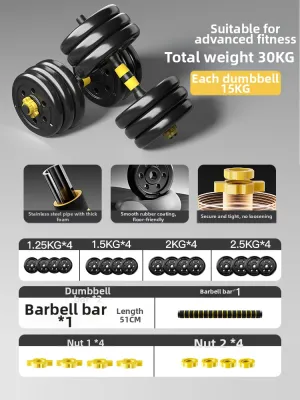
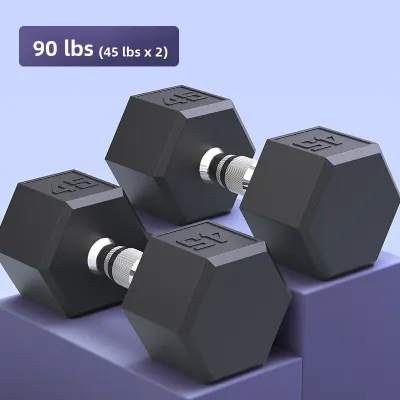

Prices are valid at publication and may change. Please refer to the product page for the latest price.
Prioritizing a conservative start is essential for long-term progress and injury prevention. Your muscles adapt to resistance training much faster than your joints, tendons, and ligaments. Lifting weights that are too heavy too soon places excessive stress on these connective tissues, leading to chronic issues like tendinitis. Starting light allows your nervous system to map the correct movement patterns, ensuring your joints adapt safely before you increase the load.
Align Your Dumbbell Weight With Specific Training Goals
Your choice of dumbbell weight must directly align with what you want to achieve in your workouts. Different fitness goals require different repetition ranges, which in turn dictate how heavy your dumbbells should be. If your primary goal is muscular endurance or cardiovascular conditioning, you will target higher repetitions, typically fifteen to twenty reps per set. This requires lighter weights that allow you to maintain a continuous, steady tempo without early muscle failure.

If your goal is hypertrophy—building muscle size—the standard target is eight to twelve repetitions per set. For this range, you need a moderate weight that challenges your muscles significantly by the final few repetitions. For those focusing on maximal strength, the target drops to one to six repetitions, requiring much heavier loads. However, beginners should avoid maximal strength training until they have established a solid foundation of form and joint stability.
To ensure you are using the correct weight for your target rep range, apply the “reps in reserve” (RIR) concept. RIR measures how many more repetitions you could have completed with good form before reaching absolute failure. For muscle building, you should aim to finish each set with one to three reps in reserve (1-3 RIR). If you finish a ten-repetition set feeling like you could have easily completed ten more, the dumbbell is too light to stimulate adaptation.
It is also vital to recognize that your body requires different weights for different movements. Large, multi-joint compound exercises like squats, lunges, and Romanian deadlifts engage massive muscle groups in your lower body. These movements naturally require much heavier loads to trigger adaptation. Conversely, smaller isolation exercises like bicep curls, lateral raises, and tricep extensions target small muscle groups with less mechanical leverage, requiring significantly lighter dumbbells to prevent form breakdown.
A Practical Testing Method to Find Your Exact Starting Weight
To find your exact starting weight without guessing, you can perform a simple, structured physical test. This trial is best conducted in a local gym or a fitness store with a wide selection of weights. Begin by selecting a weight that feels exceptionally light—one you are certain you can lift easily. Perform a warm-up set of five to ten repetitions focusing entirely on slow, controlled movement and perfect posture.
If the warm-up set feels effortless and your form is flawless, rest for one to two minutes, then select the next increment up. Perform another set, paying close attention to how your muscles and joints feel. Continue this gradual upward progression until you reach a weight where the final repetitions of your target range become challenging, but still allow you to maintain strict control. This challenging yet manageable weight is your starting point for that specific exercise.
During this testing process, you must remain highly sensitive to failure and stop signals. The moment you experience joint discomfort, sharp pain, or a breakdown in posture, stop the set immediately. Common signs of excessive weight include using momentum to swing the dumbbells, arching your lower back excessively, or shrugging your shoulders to cheat the weight up. If you cannot control the descent of the dumbbell, the weight is too heavy and poses a safety risk.
Testing your strength in a controlled environment before purchasing equipment prevents costly mistakes. It ensures you do not buy a set of dumbbells that is either too light to provide a workout or too heavy to lift safely. If you are training at home in a humid, tropical environment, also take this opportunity to test different handle grips, as sweaty hands require textured knurling or non-slip coatings to maintain a secure hold.
When and How to Increase Your Dumbbell Weight
As your body adapts to strength training, the initial weights you selected will begin to feel lighter. To continue making progress, you must apply the principle of progressive overload, which involves gradually increasing the stress placed on your musculoskeletal system. A reliable signal that it is time to increase your dumbbell weight is when you can easily exceed your target repetition range with perfect form for two consecutive workouts. For example, if your goal is ten repetitions and you can comfortably perform twelve reps on all sets, you are ready to move up.
When upgrading your equipment, transitioning from fixed-weight pairs to an adjustable dumbbell system is often the most practical choice for a home gym. In the Philippines, purchasing multiple pairs of individual dumbbells can quickly become expensive and take up valuable living space. Budgeting for a quality adjustable dumbbell set—which can range from ₱3,000 for basic selectorized models to over ₱15,000 for heavy-duty systems—provides a wide range of weight increments in a single, compact footprint.
To make objective, data-driven decisions about when to increase your weights, keep a detailed workout log. Record the exercise, the weight used, the number of repetitions completed, and how difficult the set felt. Tracking this data over time removes the guesswork from your fitness journey. It prevents you from lifting the same weight indefinitely out of habit, while also warning you if you are trying to progress too quickly before your body is ready.
Frequently Asked Questions (FAQ)
Should I buy fixed or adjustable dumbbells for my home gym?
Choosing between fixed and adjustable dumbbells depends on your budget, available space, and training style. Fixed dumbbells are highly durable, have no moving parts to wear out, and are ideal if you have dedicated storage racks and prefer quickly switching weights between exercises. However, they require significant physical space and can become very expensive as you buy heavier pairs. Adjustable dumbbells are highly space-efficient, replacing up to fifteen pairs of individual weights in a single set. While they require a higher initial investment in ₱, they are far more cost-effective over time as your strength progresses.
Why do I need lighter dumbbells for some exercises and heavier for others?
Your body consists of muscle groups of varying sizes and mechanical advantages, meaning a single dumbbell weight cannot serve your entire workout. Large compound movements like dumbbell squats or chest presses utilize multiple large joints and muscle groups working together, allowing you to lift heavier loads safely. In contrast, isolation movements like lateral raises or bicep curls isolate small muscles across a single joint with poor mechanical leverage. Attempting to use your squat weight for a lateral raise will result in immediate form breakdown and potential shoulder injury, highlighting the necessity of a multi-weight setup.
Community discussion
Share your experience or ask a question. Comments are reviewed before publication.