
Finding the right starting dumbbell weight is not about choosing a single magic number, but rather matching different weights to your current physical baseline and the specific exercises you plan to perform. For women beginning a strength training journey, a single pair of dumbbells will rarely cover all movements. A weight that feels challenging for a shoulder press might feel completely weightless during a squat.
To build a sustainable and effective routine, you need to understand how your body responds to resistance. Starting too heavy can lead to compromised form and joint strain, while starting too light might delay the strength adaptations you want to achieve. By learning how to assess your baseline, match weights to specific movement patterns, and safely test your limits, you can confidently select the ideal equipment to kickstart your fitness journey.
Assess Your Current Fitness Level and Goals
Your ideal starting weight depends heavily on your personal fitness background. A complete beginner who has never picked up a weight before will have different structural needs than someone returning to fitness after a long break. If you are completely new to resistance training, your initial focus is neuromuscular coordination—teaching your brain how to efficiently recruit muscle fibers. Starting with very light weights allows you to master movement paths without overloading your connective tissues.
Products mentioned in this guide
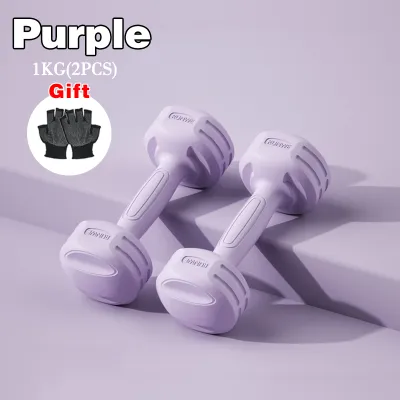
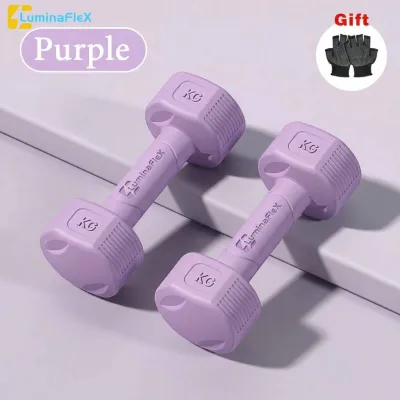
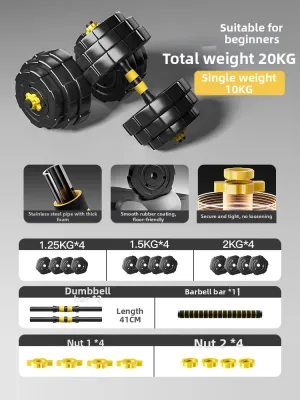
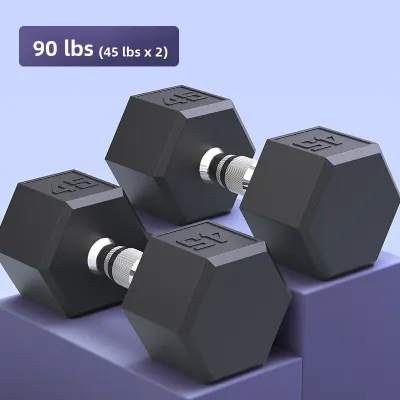
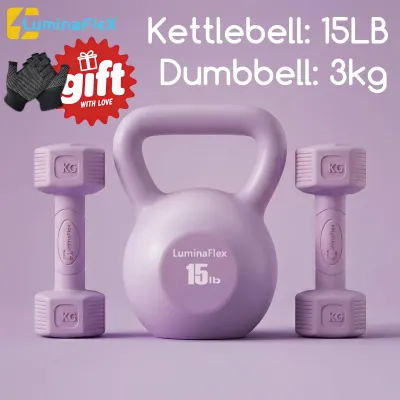
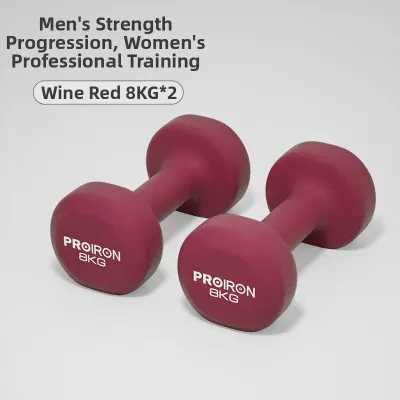
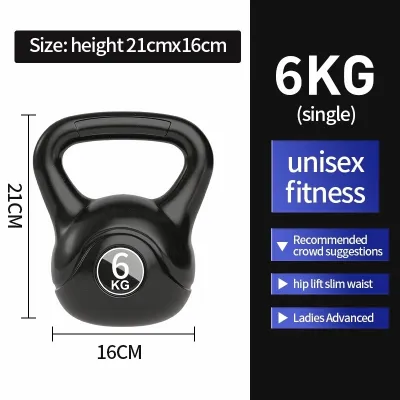
Prices are valid at publication and may change. Please refer to the product page for the latest price.
If you have prior athletic experience or are returning to exercise, your muscles and joints may adapt more quickly to resistance. Even if you have been inactive for months, previous training leaves a foundation of motor skills and joint integrity. However, it is still wise to start conservatively to avoid overuse injuries as your body readies itself for regular lifting.
Your specific fitness goals also dictate your weight selection. If your primary objective is muscular endurance or general conditioning, you will generally perform higher repetitions with lighter weights. If your goal is hypertrophy (muscle growth) or building maximum strength, you will need moderate to heavy weights that challenge your muscles within lower repetition ranges.
Ultimately, weight selection is highly individual and shaped by personal biomechanics, joint health, and lever lengths rather than gender. There is no universal standard for what a woman “should” lift. Two people of the same height and weight may require completely different starting dumbbells based on their natural joint structures and daily activity levels.
Match Dumbbell Weights to Specific Exercises
Different muscle groups possess vastly different power capacities, meaning your dumbbell selection must adapt to the exercise at hand. Lower-body and compound movements utilize the largest muscle groups in your body, including your glutes, quadriceps, and hamstrings. Exercises like goblet squats, lunges, and Romanian deadlifts involve multiple joints working in unison, allowing you to safely handle significantly heavier loads.

In contrast, upper-body and isolation movements target smaller, single muscle groups. Exercises such as lateral raises, triceps extensions, and bicep curls isolate specific joints. Because these smaller muscles have less leverage, they require much lighter starting weights. Attempting to use your squat weight for a lateral raise will almost certainly force you to swing your body, shifting the work away from the target muscle and risking shoulder strain.
To accommodate these differences, avoid searching for a single, universal pair of dumbbells. Instead, think in terms of a three-tier system consisting of light, medium, and heavy pairs. This variety ensures you have the correct resistance for every movement pattern in your routine.
Your light pair will primarily serve isolation movements for the shoulders and arms, as well as warm-ups. Your medium pair is ideal for compound upper-body movements like chest presses and bent-over rows. Your heavy pair will provide the necessary resistance to challenge your lower body during squats, deadlifts, and lunges.
How to Test and Select Your Starting Weight
Finding your starting point requires a systematic, hands-on test. Before you begin, choose a target exercise and select a conservative weight that you are highly confident you can lift. It is always safer to start too light and adjust upward than to start too heavy and risk losing control of the weight.
To perform the test, execute a single set of 10 to 12 repetitions of your chosen exercise while maintaining strict form. For example, if you are testing a bicep curl, keep your elbows pinned to your sides and avoid rocking your torso. Perform each repetition slowly, taking about two seconds to lift the weight and two seconds to lower it.
Once you complete the set, evaluate how the final repetitions felt. If you reached the 12th repetition feeling like you could easily perform another five or ten reps without stopping, the weight is too light. If you struggled to maintain proper posture, had to swing your body, or felt your joints clicking uncomfortably by the 8th repetition, the weight is too heavy. The ideal starting weight should make the last two repetitions feel highly challenging, yet entirely manageable with perfect technique.
During any test, pay close attention to immediate physical feedback. Stop the exercise immediately if you experience sharp pain, sudden joint discomfort, or an inability to control the descent of the weight. Muscle fatigue and a mild burning sensation are normal signs of exertion, but joint pain is a clear signal to stop and re-evaluate.
Signs You Need to Adjust the Weight
As you progress through your workouts, you must continuously monitor whether your chosen weights are still serving your goals. A common sign that your dumbbells are too heavy is compromised form. If you find yourself arching your lower back during an overhead press, shrugging your shoulders during a bicep curl, or shortening your range of motion, your body is compensating for an excessive load.
Another indicator of excessive weight is the inability to complete your minimum target repetitions. If your workout plan calls for three sets of 10 repetitions, but your muscles completely fail by the 6th repetition of the first set, you need to drop to a lighter pair. Forcing your way through a set with poor form to hit a arbitrary number increases your risk of injury.
Conversely, you will know a weight is too light when you complete your entire target repetition range with absolute ease. If you finish your sets without feeling any muscle fatigue, an elevated heart rate, or a sense of physical effort, the stimulus is insufficient to trigger strength adaptations. Your body requires a reasonable level of challenge to grow stronger.
To make consistent progress, apply the principle of progressive overload. Once you can complete all your planned sets and repetitions with perfect form and minimal struggle, it is time to safely move up to the next weight increment. This gradual increase keeps your muscles challenged and ensures continued development over time.
Building a Starter Dumbbell Set for Your Workouts
When assembling your initial home workout setup, you will generally choose between fixed-weight and adjustable dumbbells. Fixed-weight options, such as rubber-coated or neoprene hex dumbbells, are incredibly durable, simple to use, and require no setup time between exercises. However, buying multiple pairs of fixed dumbbells can quickly become expensive and require significant storage space in your home.
Adjustable dumbbells offer a highly versatile alternative, especially if you have limited space or a set budget. These systems allow you to change the weight plates on a single handle using spin-lock collars or dial mechanisms. While they require a brief pause to adjust between exercises, a single adjustable set can replace an entire rack of fixed dumbbells, making them a highly efficient investment.
Regardless of the style you choose, pay close attention to the physical construction of the dumbbells. In warm, humid tropical environments, sweat can quickly make smooth handles slippery and difficult to control. Look for dumbbells featuring textured metal handles, known as knurling, which provide a secure grip even when your hands are wet.
Coating materials also play a major role in durability and comfort. Neoprene and high-quality rubber coatings protect your floors from scratches, reduce noise when setting the weights down, and resist moisture. Avoid cheap, plastic-shelled dumbbells filled with sand or concrete; these are often bulky, prone to cracking, and can become dangerously slippery during intense, sweaty workouts.
Whether you are budgeting ₱1,500 for a basic starter pair or investing more in a comprehensive adjustable system, prioritizing grip security and material durability will ensure your equipment remains safe and functional for years to come.
Frequently Asked Questions (FAQ)
Should women avoid heavy dumbbells to prevent getting bulky?
No, lifting challenging weights will not make you bulky. Developing large, bulky muscle mass requires a specific combination of high caloric surpluses, targeted high-volume training, and high levels of testosterone. Women naturally possess much lower levels of testosterone than men, making rapid or extreme muscle hypertrophy highly unlikely under normal training conditions.
Instead of causing bulkiness, lifting challenging weights helps build lean muscle tissue, improves bone density, and enhances joint stability. It also boosts your resting metabolic rate, helping your body burn energy more efficiently. Choosing weights that genuinely challenge your muscles is key to achieving a toned, strong, and functional physique.
What if I only have one pair of dumbbells at home?
If you only have access to a single pair of dumbbells, you can still effectively manipulate your workout intensity without changing the physical weight. To make a light weight feel more challenging, you can slow down your movement tempo. For example, take four seconds to lower the weight during a squat, pause at the bottom for two seconds, and then rise.
To make a heavy weight more manageable, you can perform unilateral (one-sided) variations or adjust your leverage. You can also increase the number of repetitions, shorten your rest periods between sets, or perform compound movements that combine exercises to keep your muscles working harder for longer periods.
Community discussion
Share your experience or ask a question. Comments are reviewed before publication.