
Quick Answer: Finding Your Starting Kettlebell Weight
Finding the right starting kettlebell for women depends on your current physical activity level and joint stability. For absolute beginners with no prior strength training, a starting weight of 4 kg to 6 kg is generally recommended to master basic movements safely. If you are already active or have experience with resistance training, a starting weight of 8 kg to 10 kg often provides the right amount of resistance without overloading your joints.
The two-hand swing and the goblet squat serve as the primary exercises to test your initial weight. These movements engage your posterior chain and core, allowing you to gauge how your body handles the off-center center of gravity. Always prioritize movement quality, spinal alignment, and joint stability over lifting a heavier load, as a kettlebell that is too heavy can quickly compromise your form.
Assessing Your Current Strength Baseline
Before purchasing a kettlebell for women, you can evaluate your baseline strength at home using bodyweight exercises and everyday household items. This initial assessment helps you avoid buying a weight that is either too light to stimulate muscle growth or too heavy to control safely.
Products mentioned in this guide
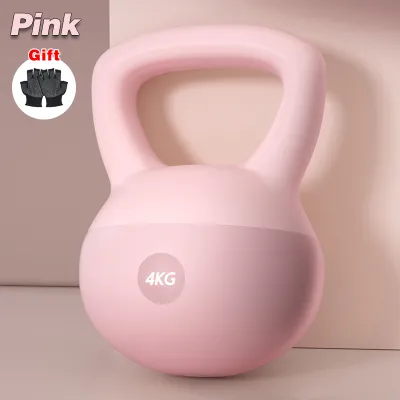
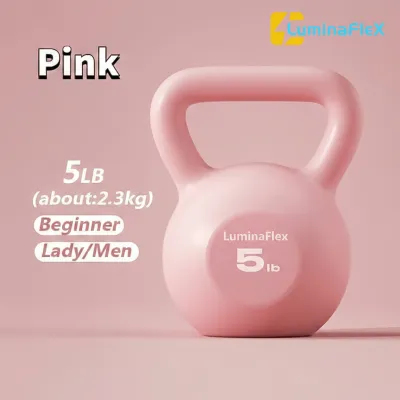
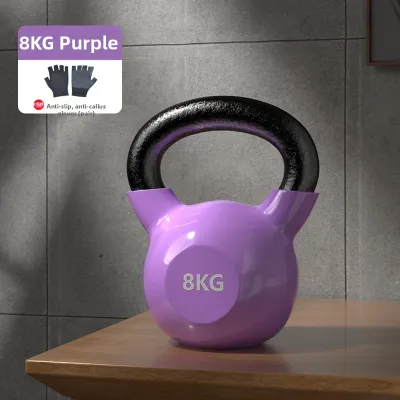
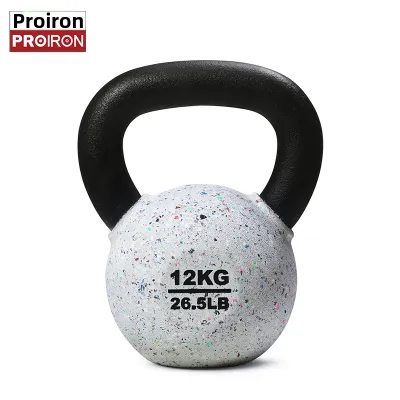
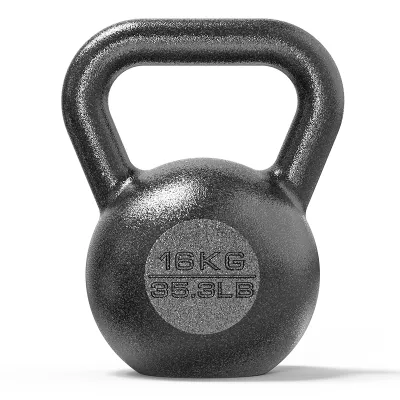
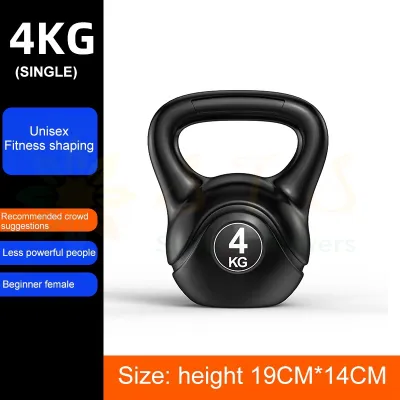
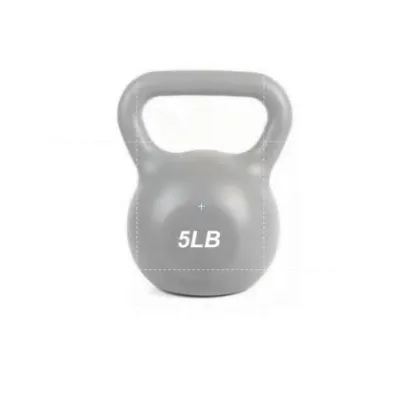
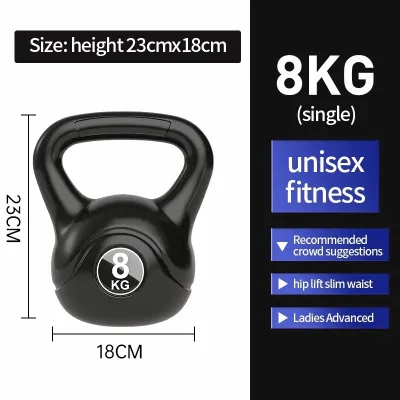
Prices are valid at publication and may change. Please refer to the product page for the latest price.

Start with bodyweight benchmarks to test your foundational movement patterns. Perform ten unassisted squats and ten lunges while observing your balance and knee alignment. If you can complete these repetitions with upright posture and no joint discomfort, your lower body is ready for external resistance. Next, attempt five to ten modified push-ups to gauge your upper body and core stability.
To simulate the unique, off-center gravity of a kettlebell, fill a sturdy backpack with books or use a large water jug. Lift the object from the floor to chest height using both hands, keeping your spine neutral. Pay close attention to how your wrists and shoulders stabilize the shifting weight, as this mimics the dynamic balance required during kettlebell training.
Grip strength and forearm endurance are critical limiting factors for beginners. In tropical climates like the Philippines, high humidity can make handles slippery, increasing the demand on your grip. If your hands fatigue rapidly or your wrists bend backward during household lifting tests, you should opt for a lighter starting weight to build forearm endurance gradually.
Matching Weight to Your Primary Exercises
Different kettlebell movements target distinct muscle groups, meaning a single weight may feel perfect for one exercise but unsafe for another. Understanding this distinction is key to planning an effective and safe home workout routine.
Lower body and hinge movements, such as deadlifts, goblet squats, and two-hand swings, utilize the largest muscle groups in your body, including your glutes, hamstrings, and core. Because these muscles are naturally strong, they require a heavier load to stimulate adaptation. Starting too light on these movements often leads to using your arms to lift the bell, which defeats the purpose of the exercise.
Conversely, upper body and overhead movements like overhead presses, halos, and snatches rely on the smaller, more delicate muscles of the shoulder girdle. The shoulder joint is highly mobile but inherently less stable than the hips. To protect your rotator cuff and maintain proper alignment, you must use a significantly lighter weight for overhead work.
This discrepancy presents a common dilemma for beginners: should you buy one versatile middle-ground weight or invest in a pair of different sizes? A single, moderate weight can work as a compromise, but it may feel slightly heavy for overhead presses and light for swings. Investing in two different sizes—such as a lighter bell for upper body work and a heavier one for lower body hinges—provides a safer and more progressive training experience.
Practical Testing Strategies Before Purchasing
Physically testing a kettlebell before committing to a purchase is the most reliable way to ensure a proper fit. Visiting a local physical sporting goods store allows you to interact with different designs and materials firsthand.
When testing a kettlebell in person, pay close attention to the handle thickness and window size. The handle should allow you to grip it comfortably with both hands during a swing without pinching your fingers. Ensure there is sufficient clearance between the top of the bell and the handle so your wrists do not rub against the iron during overhead movements.
If you cannot visit a store, consider trying out different weights at a local gym or borrowing equipment from a friend. Performing a full sequence of swings and squats will give you a realistic sense of how the weight feels when fatigue sets in, which is difficult to estimate from a brief lift.
When ordering from an online marketplace, always verify the seller’s return and exchange policies. Shipping heavy iron weights can incur significant delivery fees, so look for retailers that offer flexible exchange options or local pickup points to minimize the financial risk of choosing the wrong size.
Diagnostic Signs Your Kettlebell is the Wrong Weight
Once you begin training, your body will provide clear physical feedback indicating whether your kettlebell is suitable for your current strength level. Learning to read these signs is essential for preventing injury and ensuring consistent progress.
Signs your kettlebell is too heavy:
- Your lower back rounds or arches excessively during swings or deadlifts.
- You cannot control the descent of the bell, letting it pull your shoulders out of alignment.
- Your grip fails completely before you reach your target number of repetitions.
- You experience sharp pain in your wrists, elbows, or shoulders rather than muscular fatigue.
Signs your kettlebell is too light:
- You do not feel your glutes or hamstrings engaging during hip hinges.
- You can easily muscle the kettlebell upward using only your arms during a swing.
- You complete your set of exercises without feeling any muscular fatigue or elevation in heart rate.
- The bell floats upward effortlessly without requiring a powerful hip snap.
Transition to a heavier weight only when you can perform all your target repetitions with perfect form, complete control over the descent, and minimal joint strain. If you experience any of the warning signs of an excessive load, immediately stop the exercise and downgrade to a lighter bell to protect your joints.
Frequently Asked Questions (FAQ)
Should I buy a competition or cast-iron kettlebell as a beginner?
Cast-iron kettlebells change in physical size and handle thickness as they get heavier, which can make transitioning between weights challenging for small hands. Competition kettlebells maintain the exact same dimensions, handle diameter, and window size regardless of their weight, allowing you to keep your technique consistent as you progress. For female beginners, cast-iron bells are often more budget-friendly and offer a comfortable grip for two-handed movements, while competition bells are ideal if you plan to focus on one-handed exercises and long-term strength progression.
Are adjustable kettlebells a good starting option for women?
Adjustable kettlebells are highly cost-effective and space-saving, making them an appealing choice for home gyms where storing multiple weights is impractical. However, some adjustable models feature bulkier designs, shifting internal plates, or wider handles that can interfere with proper exercise mechanics. Before using an adjustable model, always perform a thorough safety check on the locking mechanism to ensure the weight plates are securely fastened and will not shift during dynamic movements like swings.
Community discussion
Share your experience or ask a question. Comments are reviewed before publication.