
Choosing the right starting kettlebell weight is the most critical decision you will make when transitioning to this highly effective training tool. Unlike traditional dumbbells or gym machines, a kettlebell features an offset center of gravity that demands continuous stabilization from your core, shoulders, and grip. Selecting a weight that is too heavy can quickly lead to compromised form and injury, while choosing a weight that is too light won’t provide enough resistance to trigger muscle growth or athletic adaptation.
For most men, the ideal starting kettlebell weight ranges from 12 kg to 16 kg for dynamic, lower-body movements like swings and goblet squats. For slower, upper-body movements like strict overhead presses, a lighter range of 8 kg to 12 kg is generally recommended. Your starting point depends on your current fitness level, lifting experience, and the mechanical demands of the exercises you plan to perform.
Assess Your Current Fitness and Strength Baseline
Before purchasing a kettlebell or selecting one from a gym rack, you must objectively evaluate your physical baseline. Kettlebell training is inherently dynamic and ballistic. The load moves through multiple planes of motion, requiring your joints and stabilizer muscles to absorb and redirect force rapidly. This is highly distinct from training with chest press machines or bicep curl bars, which isolate specific muscles along a fixed path.
Products mentioned in this guide
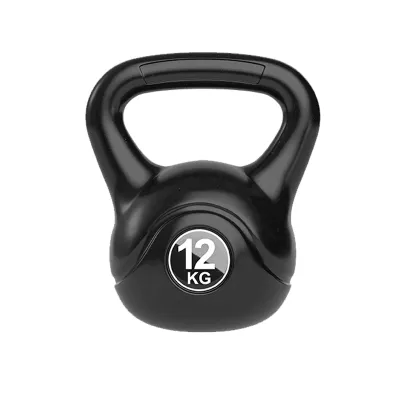
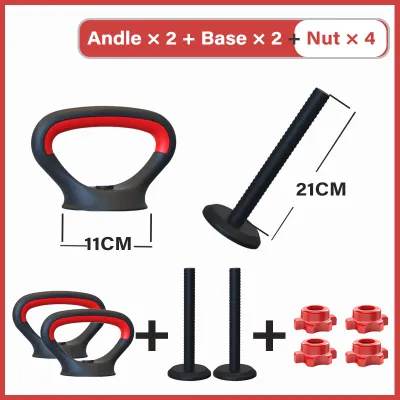
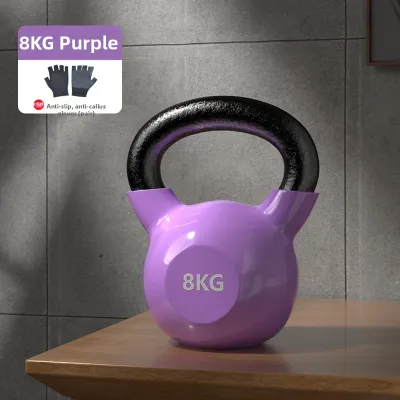
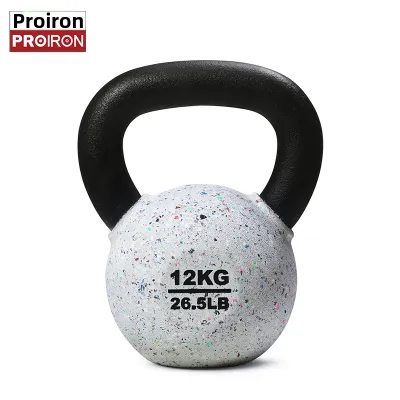
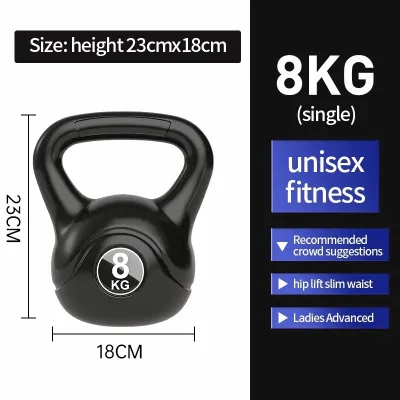
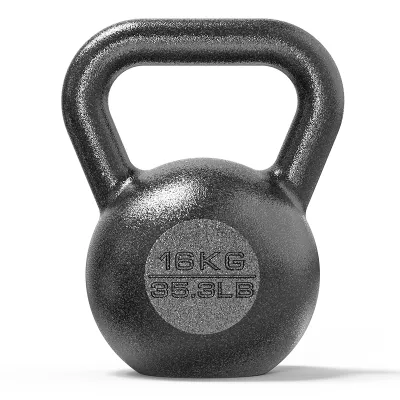
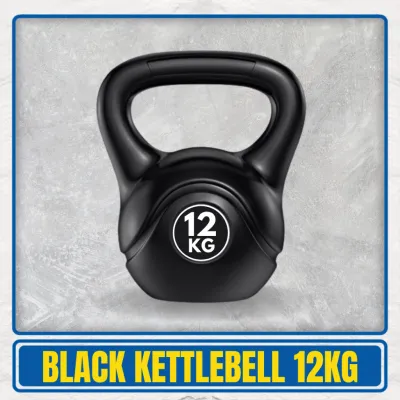

Prices are valid at publication and may change. Please refer to the product page for the latest price.
In tropical environments like the Philippines, where high humidity is a constant factor during home or garage workouts, grip strength and core stability are tested even further. A sweaty palm on a smooth iron handle can quickly compromise your control over the weight. Therefore, your baseline assessment must account not only for your raw muscular strength but also for your grip endurance and joint mobility.
To determine where you stand, use the following self-assessment criteria to categorize your current fitness level:
- True Beginner: You have little to no consistent strength training experience over the past year. You struggle to perform 10 consecutive bodyweight squats with proper form (hips below knees, chest upright) or cannot complete 5 strict, chest-to-floor push-ups.
- Active Intermediate: You lift weights or perform structured resistance training 2 to 3 times per week and have done so for at least six months. You can comfortably perform 20 continuous push-ups, execute a clean bodyweight squat, and have basic familiarity with dumbbell or barbell movements.
- Advanced Strength Athlete: You have years of dedicated strength training experience, such as powerlifting, Olympic weightlifting, or high-intensity cross-training. You can deadlift at least 1.5 times your body weight, possess excellent shoulder mobility, and regularly train with heavy compound movements.
In addition to these categories, you must account for your personal injury history. If you have a history of rotator cuff tears, lower back strains, or wrist instability, these joint limitations take precedence over your muscular strength. In such cases, safety dictates starting one or two sizes lighter than the standard recommendations to allow your connective tissues to adapt without pain. Remember that no piece of equipment can replace sound physical judgment; if you experience joint pain or discomfort, stop immediately and consult a qualified healthcare professional.
Recommended Starting Kettlebell Weights for Men
Kettlebells are traditionally manufactured in specific metric increments, stemming from the traditional Russian measurement unit known as the pood (equivalent to approximately 16 kg). Consequently, the most common standard weights you will encounter in retail stores and commercial gyms are 8 kg (18 lbs), 12 kg (26 lbs), 16 kg (35 lbs), 20 kg (44 lbs), 24 kg (53 lbs), and 32 kg (70 lbs).

These standard increments require significant jumps in strength compared to the small 1 kg to 2 kg steps found in dumbbell sets. Because of these large gaps, matching your fitness level to the correct starting range is essential for a safe progression.
Beginners (Little to No Strength Training Experience)
If you are new to resistance training or are returning after a multi-year hiatus, your primary goal is to build neuromuscular coordination and grip endurance. For this group, the recommended starting weights are:
- Upper-Body Movements (Presses, Rows, Halos): 8 kg to 12 kg
- Lower-Body and Ballistic Movements (Swings, Squats, Deadlifts): 12 kg to 16 kg
Starting with an 8 kg or 12 kg kettlebell might feel light initially, but it is necessary for mastering the hip hinge and overhead stabilization. At this stage, your nervous system is learning how to brace your core and keep your spine neutral while a weight moves dynamically around your body. Prioritizing movement mechanics over heavy loads ensures you build a foundation that prevents lower back strain.
Intermediate (Active Lifters with Solid Baseline Strength)
Men who regularly lift weights but are new to kettlebells often make the mistake of selecting a weight that matches their dumbbell lifting capacity. However, the ballistic nature of kettlebell exercises introduces centrifugal force, making the weight feel significantly heavier in motion. For intermediate lifters, the recommended starting weights are:
- Upper-Body Movements (Presses, Rows, Turkish Get-Ups): 12 kg to 16 kg
- Lower-Body and Ballistic Movements (Swings, Cleans, Goblet Squats): 16 kg to 20 kg (or 24 kg for highly active individuals)
While your primary muscle groups (like your chest and quadriceps) can easily handle these weights, your smaller stabilizing muscles—such as the rotator cuff, middle trapezius, and forearm flexors—require time to adapt. Starting within these intermediate ranges allows your connective tissues to strengthen gradually, reducing the risk of tendonitis in the elbows and shoulders.
Advanced (Experienced Strength Athletes)
If you are an advanced lifter with a background in heavy barbell training, your muscles and cardiovascular system are already highly conditioned. However, kettlebell training requires unique rotational control and explosive hip power that barbell lifts do not fully replicate. For advanced athletes, the recommended starting weights are:
- Upper-Body Movements (Presses, Snatching, Windmills): 16 kg to 20 kg
- Lower-Body and Ballistic Movements (Heavy Swings, Double Cleans, Squats): 24 kg to 32 kg
Even with an advanced strength baseline, ego-lifting is a major hazard when transitioning to kettlebells. A heavy barbell squat is a linear movement, whereas a heavy kettlebell swing or snatch requires precise timing and coordination at high speeds. Starting with a 24 kg bell for lower-body work allows you to master the rapid transitions and ballistic catches before moving up to the 32 kg level.
Adjusting Weight Based on the Exercise Type
A single kettlebell is rarely sufficient for a complete, well-rounded fitness routine because different exercises place vastly different mechanical demands on your body. To optimize your workouts, you must understand how to scale your weight selection based on the specific movement patterns you are performing.
Ballistic and Lower-Body Movements
Exercises such as the kettlebell swing, clean, snatch, and goblet squat are driven by the posterior chain—the glutes, hamstrings, and spinal erectors. Because these are the largest and most powerful muscle groups in the human body, they are capable of moving substantial loads. Furthermore, ballistic movements rely on explosive hip extension to project the weight forward, meaning your arms act primarily as straps rather than the primary movers. For these exercises, you can safely use your heavier recommended weight range (such as 16 kg for intermediates or 24 kg for advanced lifters) to ensure there is enough resistance to force a proper hip hinge.
Grind and Upper-Body Movements
“Grinds” are slow, controlled strength exercises where the weight is pushed or pulled against gravity without the aid of momentum. Examples include the strict overhead press, bent-over row, and floor press. Because these exercises isolate smaller muscle groups like the deltoids, triceps, and lats, your lifting capacity is naturally lower. To perform these movements safely without arching your lower back or flaring your elbows, you must use a lighter kettlebell (typically 4 kg to 8 kg lighter than your swing weight).
Complex and Full-Body Stabilization
The Turkish Get-Up (TGU) and the windmill are highly technical exercises that require you to hold a kettlebell locked out overhead while changing your body’s position relative to the floor. These movements demand exceptional shoulder stability, thoracic mobility, and core coordination. Because the weight remains directly above your head and face throughout the movement, safety is paramount. You should always use your absolute lightest kettlebell (often 8 kg or 12 kg) to practice these patterns. Only progress to heavier weights once you can perform the entire sequence smoothly and without any shaking or loss of control.
The Two-Kettlebell Strategy for Home Gyms
For men setting up a home gym in the Philippines, purchasing a massive rack of kettlebells is often impractical due to space constraints in urban condos or the cost of shipping heavy iron. A highly practical and budget-friendly solution is the “two-bell system.” By purchasing just two carefully selected kettlebells, you can cover almost every exercise in a standard program:
- The Light Bell: Selected based on your upper-body and stabilization capacity (e.g., 12 kg for an intermediate lifter). This is used for strict presses, Turkish Get-Ups, and technical warm-ups.
- The Heavy Bell: Selected based on your lower-body and ballistic capacity (e.g., 16 kg or 20 kg for an intermediate lifter). This is used for swings, goblet squats, and deadlifts.
This two-bell approach typically costs between ₱3,000 and ₱7,000 depending on the brand and material, providing a highly versatile, space-saving workout setup that fits easily into a bedroom or balcony.
Signs You Need to Change Your Kettlebell Weight
As you progress through your training, your body will adapt to the physical stress, and your starting weights will eventually need adjustment. To maintain steady progress and avoid injury, you must learn to recognize the clear, physical signals that indicate whether your kettlebell is too heavy, too light, or ready to be upgraded.
Signs the Weight is Too Heavy
If you experience any of the following red flags during your workout, the kettlebell you are using is too heavy for your current technique, and you should immediately scale down to a lighter size:
- Lower Back Rounding: Your lumbar spine curves or flexes during the bottom portion of a swing, deadlift, or squat, indicating that your core muscles are failing to maintain a neutral spine under the load.
- Wrist Collapse: During overhead presses or when holding the kettlebell in the rack position (against your chest), your wrist bends backward under the weight of the bell. Your wrist should always remain straight and vertical.
- Excessive Momentum: You must lean your torso backward or use a jumping motion with your legs to complete a strict overhead press.
- Shoulder Shrugging: Your shoulder blade rises toward your ear during presses or swings, which indicates that your upper trapezius is compensating for weak lower stabilizers.
- Joint Discomfort: Any sharp, pinching, or radiating pain in your shoulders, elbows, wrists, or lower back. If this occurs, stop the exercise immediately.
Signs the Weight is Too Light
Conversely, if your kettlebell does not provide enough resistance, your workouts will become inefficient, and you will miss out on the strength-building benefits of the tool. Look for these indicators that your weight is too light:
- No Muscle Fatigue: You can easily complete 15 to 20 continuous repetitions of an exercise without feeling any muscular burn or physical challenge in the target muscles.
- Lack of Core Engagement: You can swing the kettlebell using only your arm strength without needing to actively brace your abdominal muscles or snap your hips forward.
- Cardiovascular Dominance: The exercise feels entirely like light cardiovascular training (like jogging) rather than a strength workout, with no noticeable muscular tension.
Progression Triggers
To transition safely to the next standard kettlebell size (typically moving up by 4 kg), you should meet specific performance benchmarks. Do not upgrade your weight simply because you have completed a certain number of weeks in a program. Instead, wait until you can comfortably complete 3 sets of 10 strict overhead presses with perfect form on both arms, or perform 100 high-quality, explosive swings in under 5 minutes with rapid recovery. When you do step up to a heavier weight, reduce your total workout volume (sets and reps) by 30% to 50% for the first two weeks to allow your body to adapt to the new load safely.
Frequently Asked Questions (FAQ)
Can I just buy one adjustable kettlebell to start?
An adjustable kettlebell is an excellent, space-saving option for home gyms, particularly for those living in compact apartments or condos in urban areas like Metro Manila. It allows you to quickly change the weight of a single unit using plates or a dial system, replacing up to five or six individual kettlebells.
However, adjustable models do have notable drawbacks. They tend to have bulkier handle dimensions and a slightly different center of mass compared to solid cast-iron bells. Additionally, changing the weight plates can be time-consuming during fast-paced circuit workouts where you need to transition rapidly between a heavy swing and a light overhead press.
Should I buy competition or cast-iron kettlebells for general fitness?
For most men focusing on general fitness, strength, and conditioning, traditional cast-iron kettlebells are the superior choice. Cast-iron kettlebells feature handles that grow wider as the weight increases, providing ample room for comfortable two-handed grips, which are essential for learning the basic two-handed swing safely. They are also generally more affordable and widely available.
Competition kettlebells, on the other hand, maintain the exact same physical dimensions, handle diameter, and bell size regardless of whether they weigh 8 kg or 32 kg. They are constructed from steel and are designed specifically for high-rep, single-handed Olympic-style kettlebell sport lifts (like snatches and jerks). Unless you plan to compete in kettlebell sport, the varying handle sizes of cast-iron kettlebells offer a more intuitive and cost-effective training experience.
Community discussion
Share your experience or ask a question. Comments are reviewed before publication.