
Finding the right starting kettlebell weight is the most critical decision you will make when transitioning to this dynamic form of training. Unlike dumbbells, where the weight is balanced in your hand, a kettlebell features an offset center of gravity that sits several inches outside your grip. This unique design means that a weight that feels light during a standard bicep curl can feel incredibly heavy and unstable during a dynamic swing or an overhead press. To choose the correct starting load, you must look beyond generic age or gender charts and instead evaluate your current physical baseline, the specific movements you plan to perform, and how your body manages momentum.
In the warm and humid climate of the Philippines, where home workouts are popular but sweat can quickly compromise your grip, selecting the right weight is also a matter of safety. A bell that is too heavy can easily slip or strain your lower back, while one that is too light will fail to teach you the essential hip-hinge mechanics required for ballistic movements. By taking a systematic approach to assessing your strength, matching the load to your exercises, and testing the equipment before you buy, you can make a smart investment that supports your fitness journey without risking injury.
Assess Your Current Strength Baseline
To establish a safe starting point, compare your experience with traditional weightlifting to the demands of kettlebell training. If you already perform dumbbell exercises, look at your working weights for strict overhead presses and goblet squats. A beginner kettlebell for upper-body movements should feel significantly lighter than the combined weight of the dumbbells you use for similar exercises, as the off-center load requires much more stabilization from your rotator cuff and core.
Products mentioned in this guide
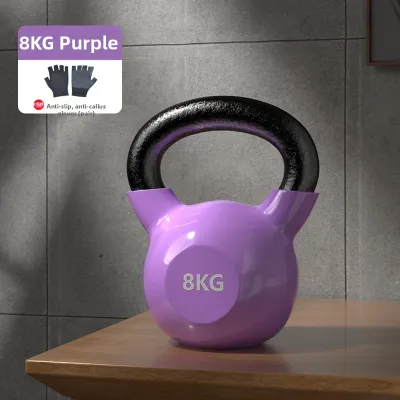
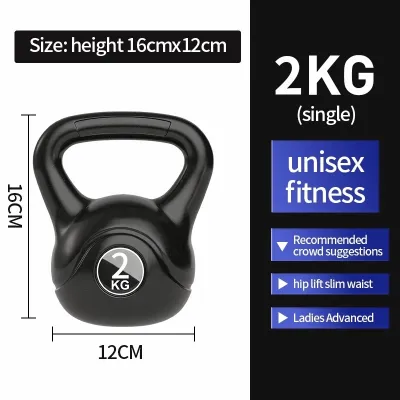
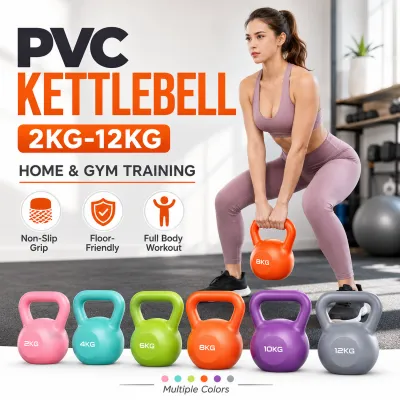
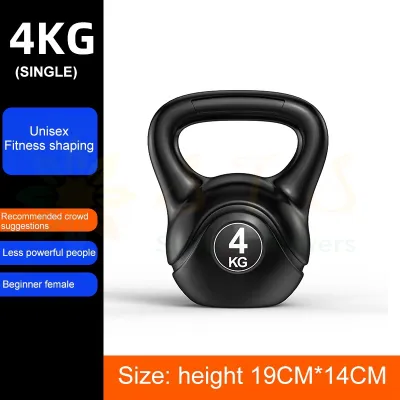
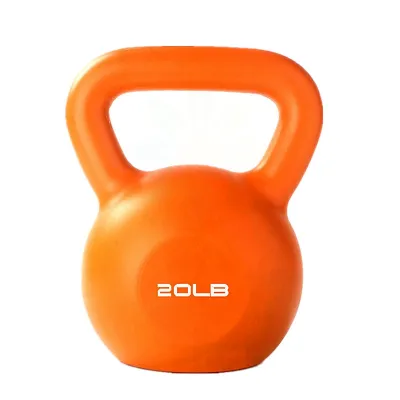
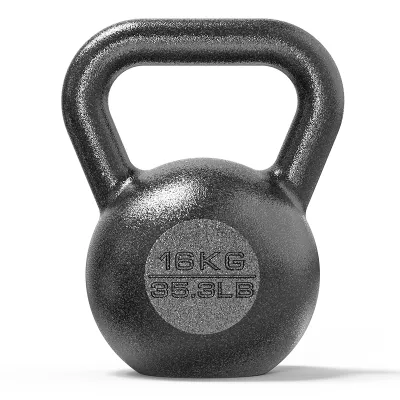
Prices are valid at publication and may change. Please refer to the product page for the latest price.
Next, evaluate your grip strength and forearm endurance, which are often the first failure points for beginners. The thick handle of a kettlebell forces your fingers, hands, and forearms to work continuously to keep the bell stable, especially during high-repetition ballistic movements. If your hands fatigue quickly during daily tasks, starting with a lighter, more manageable weight will allow your grip strength to catch up to your larger muscle groups.
Your overall physical activity level and core stability also play a major role in determining your starting weight. If you are transitioning from a sedentary lifestyle, your primary focus should be on learning movement patterns rather than lifting heavy loads. Individuals with pre-existing shoulder, lower back, or knee sensitivities should err on the side of caution, selecting a lighter bell to verify that their joints can handle the rotational and ballistic forces of kettlebell training.
Finally, consider how your body handles stabilization during unilateral movements. Kettlebell training frequently involves working one side of the body at a time, which challenges your obliques, hips, and ankles to maintain balance. If you struggle to stand on one leg or notice significant strength imbalances between your left and right sides, a lighter starting weight will help you correct these discrepancies safely before you progress to heavier loads.
Match the Weight to the Exercise Type
A common mistake is assuming that a single kettlebell weight will work optimally for every exercise in your routine. In reality, kettlebell movements fall into two distinct categories: lower-body ballistic exercises and upper-body grind exercises. Because these movements utilize completely different muscle groups and mechanical leverages, they require different weights to be performed effectively and safely.

Lower-body ballistic movements, such as two-handed swings, deadlifts, and goblet squats, rely on the powerful muscles of your posterior chain, including your glutes, hamstrings, and lower back. These exercises require a moderately heavy weight to force your body to use its hips rather than trying to muscle the bell up with your arms. If the kettlebell is too light, you will likely default to bad form, pulling the weight with your shoulders instead of driving it forward with your hips.
Conversely, upper-body and overhead movements, such as strict presses, Turkish get-ups, and windmills, require a much lighter weight. These exercises place a high demand on the delicate stabilizing muscles of the shoulder joint and require steady control throughout the entire range of motion. Using a weight that is even slightly too heavy for an overhead press can lead to shoulder impingement, wrist hyperextension, or a loss of balance that compromises your safety.
The mechanical difference between single-arm and two-handed exercises also dictates your weight selection. A two-handed swing allows you to share the load across both arms and shoulders, making a heavier bell feel manageable. When you transition to single-arm swings or cleans, the rotational force on your core doubles, meaning you may need to drop down in weight to maintain proper alignment and prevent your torso from twisting under the load.
The "Test and Adjust" Strategy Before Buying
Before spending your hard-earned money on a kettlebell, perform a physical test at a local gym, fitness studio, or sporting goods store. Testing the weight in person allows you to feel how the offset mass interacts with your body during actual movement. This hands-on trial is a highly reliable way to ensure you do not end up with an expensive piece of iron sitting unused in your living room.
Begin your test with a basic deadlift to assess how the weight feels when lifted directly from the floor. Stand over the kettlebell, hinge at your hips, and lift it to a standing position while keeping your spine neutral and your shoulders packed. If you feel an immediate strain in your lower back, or if you cannot keep your chest lifted, the weight is too heavy for your current core and posterior chain strength.
Next, perform a strict overhead press to test your upper-body stability and shoulder mobility. Clean the kettlebell to the rack position, keeping your wrist straight and your forearm vertical, then press it straight overhead until your arm is fully locked out. If your wrist bends backward under the weight of the bell, or if you have to arch your lower back to complete the press, you need to select a lighter weight to protect your joints.
Finally, use a simple repetition and breathing test to evaluate your endurance with the target weight. Try to perform five slow, controlled repetitions of your chosen exercise while maintaining a steady, nasal breathing pattern. If you find yourself gasping for air, losing your grip, or rushing through the movements to get them over with, the weight is too heavy for a beginner training volume.
Common Beginner Mistakes to Avoid
One of the most frequent pitfalls for beginners is falling into the ego trap and purchasing a kettlebell that is far too heavy. While lifting heavy weights is a great long-term goal, kettlebell training is highly dynamic, and momentum multiplies the effective force of the weight. Starting too heavy compromises your hip-hinge mechanics, turning what should be a fluid swing into a dangerous lower-back pull that can lead to acute strain or chronic injury.
On the other hand, starting with a weight that is too light is equally counterproductive. If a kettlebell offers no physical resistance, your body will not feel the need to engage your glutes and hamstrings to move it. You will end up lifting the bell with your upper body, which defeats the purpose of ballistic training and prevents you from learning the correct trajectory and timing of the swing.
Beyond the weight itself, beginners often overlook the physical design of the kettlebell, which can drastically affect usability. Pay close attention to the handle diameter, the spacing of the horns, and the surface texture of the bell. A handle that is too thick for your hands will prematurely fatigue your grip, while a rough, unpolished seam on a cheap cast-iron bell can easily tear your skin during high-repetition workouts.
In tropical environments like the Philippines, where high humidity leads to sweaty palms, the finish of the kettlebell is particularly important. A smooth powder-coated or vinyl-wrapped handle can become incredibly slick when wet, making it difficult to maintain a secure grip. Look for a high-quality matte finish that holds gym chalk well, or ensure you have a reliable towel nearby to dry your hands and the handle between sets.
Frequently Asked Questions (FAQ)
Can I use just one kettlebell for all beginner exercises?
While it is possible to start with a single kettlebell, doing so requires some compromise because your lower body is naturally much stronger than your upper body. If you must purchase only one bell due to budget or space constraints, prioritize a weight that is challenging but manageable for a two-handed swing. This weight will likely be too heavy for strict overhead pressing, but you can bridge the gap by modifying your upper-body training.
To work your upper body with a heavier single bell, focus on bilateral movements like the goblet squat, two-handed overhead presses, or bent-over rows. As your strength and technique improve, you can save up to purchase a second, lighter kettlebell specifically for single-arm overhead work, or a heavier one to progress your swings and deadlifts.
How do I know when it is time to buy a heavier kettlebell?
You will know it is time to upgrade to a heavier kettlebell when you can complete your target sets and repetitions with proper form, controlled breathing, and a low rate of perceived exertion. If you can perform twenty clean, powerful two-handed swings in a row without your form breaking down or your heart rate spiking uncontrollably, your body has adapted to the load.
Another clear indicator is mastering specific technical milestones, such as transitioning from a two-handed swing to a seamless single-arm swing. Once you can control the rotational forces of a single-arm swing and safely perform a clean and press, you are ready to explore heavier weights. Always remember that progression should be gradual; upgrading your weight should never come at the expense of joint comfort or technical precision.
Community discussion
Share your experience or ask a question. Comments are reviewed before publication.